Cream of tartar can remain usable for many years when it stays dry and sealed. Its printed best-by date gives you a quality reference, while the powder's condition and storage history tell you whether an older jar deserves a test or the trash.
Opening the container does not start a short spoilage clock. Moisture, mold, pantry pests, foreign odors, and a damaged package matter more than age alone.

Dry, sealed cream of tartar can keep working well beyond its best-by date. Inspect an old jar for moisture or contamination, then test a small amount with fresh baking soda and warm water before an important bake.
How Long Does Cream of Tartar Last?
A clean unopened container can remain useful for years because cream of tartar is a dry mineral acid salt. The date on the package marks the maker's expected quality period rather than a moment when the powder suddenly becomes unsafe.
| Container state | Likely quality | Best next step |
|---|---|---|
| Sealed and dry | High confidence near the printed date | Inspect, then use as directed |
| Opened but tightly capped | Often stable for years | Check aroma, color, and reaction |
| Decanted and labeled | Depends on lid and storage | Confirm identity and test performance |
| Wet or steam-exposed | Lower confidence | Inspect closely and discard contamination |
| Unlabeled white powder | Identity unknown | Discard without tasting |
An opened jar does not behave like opened milk or sauce. Air enters, but the powder has no oil to turn rancid and very little available water for microbes.
Storage history changes the answer. A jar closed with a dry cap in a quiet pantry deserves more confidence than one left open beside a steaming kettle.
A best-by date still helps when you know nothing else. Replace a very old jar before a costly cake, meringue, or candy batch when failure would waste more than a new spice bottle.
For ordinary cleaning or a small test recipe, condition may matter more than the calendar. Inspect the powder first and run the reaction test when its performance remains uncertain.
Do not write a new date on top of an old label without recording when you opened or decanted it. A clear name and date prevent a later white-powder guessing game.
Why Does Cream of Tartar Keep So Well?
Cream of tartar is potassium acid tartrate, also called potassium bitartrate. The FDA describes it as a white crystalline powder and recognizes its roles in leavening, pH control, thickening, and stabilization.
The powder is an acid salt rather than dairy cream. Its name comes from the pale crystals left during wine production, not from milk fat.
Dry cream of tartar contains no fat that can oxidize into a rancid smell. It also lacks the free water that bacteria and mold need for rapid growth.
That stability changes when water enters the jar. Moisture can dissolve small patches, create hard masses, carry dirt, and support mold or other contamination introduced by a utensil.
Small soft clumps do not always mean the product is bad. Fine powder can pack together under pressure, and a clean dry lump that crushes easily may still work.
A hard damp mass tells a different story because you cannot know what entered with the water. Visible mold, insects, webbing, or an off odor settles the decision without a performance test.
Cream of tartar also stays acidic over time when it remains clean. Its acid reacts with baking soda in liquid and helps stabilize whipped egg-white foam, which is why bakers keep a small jar for years.
How Can You Test Whether It Still Works?
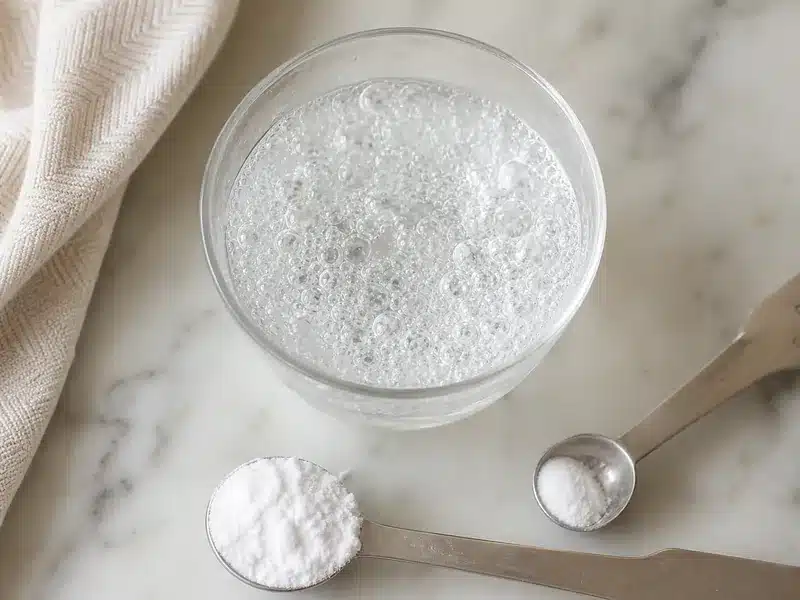
Start with inspection because a bubble test cannot clear mold, pests, or unknown contamination. The powder should look white or slightly off-white and smell nearly neutral with a faint clean acidic note.
- Use a clean clear cup. Add about one-half cup of warm water.
- Add cream of tartar. Stir in one-half teaspoon of the powder.
- Add fresh baking soda. Use about one-quarter teaspoon from a known active box.
- Watch immediately. A clear burst of bubbles shows that acid and base are reacting.
- Judge the baking risk. Replace uncertain powder before a recipe where exact lift or foam matters.
The bubbles are carbon dioxide released when the acid and baking soda meet in water. That same gas helps leaven a batter when a recipe pairs the two ingredients.
The test needs active baking soda. If both pantry products are old, a weak reaction cannot tell you which one caused the problem.
Testing also does not measure every recipe function. Cream of tartar may stabilize egg-white foam or control sugar crystals, and a simple cup cannot reproduce those exact conditions.
Use the test as a practical confidence check for clean old powder. When a wedding cake, large meringue, or candy batch depends on precision, a fresh inexpensive jar gives a stronger guarantee.
Do not taste an unidentified powder to decide whether it is cream of tartar. Many pantry powders look alike, and tasting cannot establish identity or cleanliness.
What Is the Best Way to Store Cream of Tartar?
Storage starts with the measuring spoon. A dry clean spoon keeps water, batter, grease, and food particles out of the jar.
Close the lid as soon as you finish measuring. A loose cap lets humid air and kitchen steam reach the fine powder.
A Cool Dry Pantry
Keep the original jar or a labeled airtight container in a cupboard away from the stove, sink, dishwasher, and direct sun. Stable room temperature works well.
Beside the Stove
Heat alone may not ruin the salt, but rising steam enters an open jar and creates moisture pockets. Move the container before cooking.
A Bulk Package
Keep most powder sealed and fill a small working jar. Reopening the large package less often reduces humidity and utensil contact.
Glass, food-safe plastic, and sound metal spice tins can all work when the closure stays tight. Replace a cracked lid, rusted interior, or damaged seal instead of wrapping the container in several loose bags.
Write the product name and decanting date on any plain jar. Include the lot or best-by date when the original package still has it.
Keep cream of tartar away from strong odors and cleaning chemicals. The powder may not absorb every smell, but a contaminated pantry location makes safe identification harder.
Do not store a measuring spoon inside unless it remains completely dry and the lid closes correctly. A spoon handle can hold the cap open or carry moisture back after use.
Should You Refrigerate or Freeze Cream of Tartar?
Normal cream of tartar does not need refrigeration or freezing. A dry pantry already gives the stable powder the condition it needs.
Cold storage can create a new moisture problem. When you open a cold jar in warm humid air, condensation can form on the container and powder.
Freezing does not restore weak performance or remove contamination. It also adds repeated temperature changes each time the container moves between freezer and counter.
A very hot humid home may justify an exceptionally well-sealed cool location. The moisture barrier matters more than the low temperature.
If the jar has already been refrigerated or frozen, keep it closed while it returns to room temperature. Opening after the temperature equalizes reduces condensation inside.
Let a sealed cold jar warm before opening it. Warm room air can leave condensation on cold powder and start hard clumping.
When Should You Throw Cream of Tartar Away?
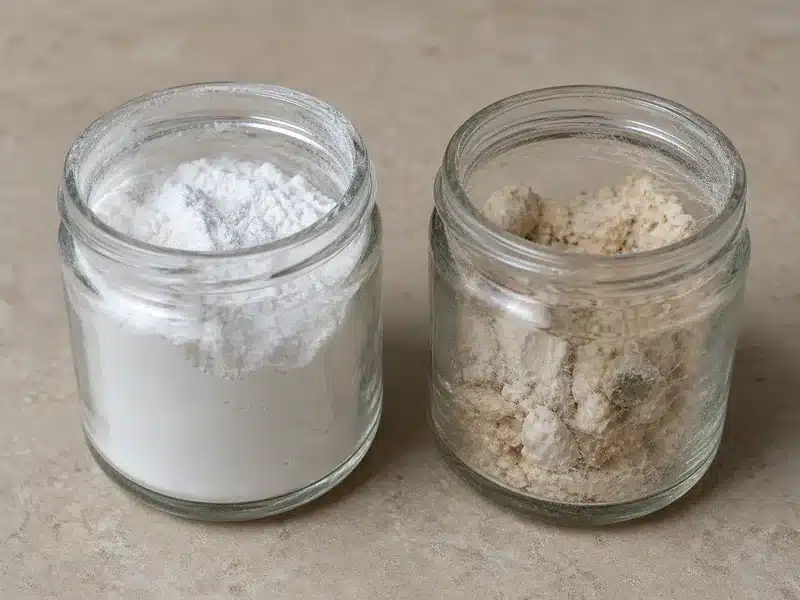
Dry clumps that crush between clean fingers can come from packing and mild humidity. Sift clean powder when texture is the only concern and the jar has no other warning signs.
Hard wet masses, color streaks, and a damp basement odor suggest water entered the container. Water creates uncertainty that a baking test cannot remove.
- Visible mold means discard the entire container without scooping around it.
- Insects, larvae, webbing, or droppings show pantry-pest contamination.
- Strong foreign odor can point to food, chemical, smoke, or moisture exposure.
- A broken or rusty container can add debris and remove the moisture barrier.
- An unknown white powder should be discarded without smelling closely or tasting.
- A failed reaction test supports replacement when both the soda and test method are reliable.
Do not rely on color alone because cream of tartar can look white or slightly opaque. Judge color change against the protected powder inside the same jar when possible.
A printed date by itself does not prove danger. It tells you to inspect and consider replacement, while contamination signs give a direct reason to throw the powder away.
Clean the shelf after a pest problem and inspect nearby flour, spices, and grains. Throwing away one jar will not solve insects that remain in other packages.
Sources
- Electronic Code of Federal Regulations, 21 CFR 184.1077, potassium acid tartrate identity and approved food uses
- American Society of Baking, cream of tartar function and baking history
- King Arthur Baking, acid-base freshness testing principles
No. Cream of tartar is a dry acid salt used in baking, while tartar sauce is a wet mayonnaise-based condiment that needs refrigerated storage.
Pressure and humidity can make the fine powder clump. Soft dry clumps may be sifted, while damp hard masses need a contamination review.
Age alone is less concerning than mold, pests, moisture, chemicals, or an unknown identity. Discard any jar with those warning signs.
Cream of tartar supplies acid but does not supply the baking soda base by itself. A tested recipe must balance both ingredients for reliable leavening.
It is an acid salt with a naturally tart taste. Recipes use small measured amounts so the acid changes structure without creating an unpleasant sour result.

Carrie is a food writer and editor with more than 15 years of experience. She has worked for some of the biggest names in the food industry, including Bon Appétit, Food & Wine, and Martha Stewart Living.
As the Editor in Chief of EpicureDelight, Carrie oversees all of the content on the site. She also manages the team of contributing writers and editors, who help to create delicious recipes, helpful tips, and informative articles that you’ll find on the site.
A native of the Chicago area, Carrie is passionate about all things food. She loves trying new restaurants and experimenting with new recipes in her kitchen. She’s also a graduate of the Culinary Institute of America, so she knows a thing or two about food!