
Dates do three jobs at once. They sweeten, they add a dense chewy body, and they bring those dark caramel-like notes that hold a recipe together.
Finding a good date substitute means figuring out which of those three jobs matters most in your recipe. Nail that, and the swap is easy.
The best date swaps depend on your recipe's goal. Prune paste and raisin paste are the closest matches for sticky chew and dark sweetness. Applesauce covers moisture. Maple syrup and brown sugar handle caramel sweetness without the paste. Use ratios below to guide your first batch.
5 Best Date Substitutes Ranked by Role
Each substitute below targets a specific role dates play. Read the ratio column first, then match it to what your recipe actually needs, whether that's sticky body, dark sweetness, or just added moisture.
| # | Substitute | Best For | Ratio | Key Note |
|---|---|---|---|---|
| 1 | Prune paste | Both | 1:1 | Closest dark fruit body |
| 2 | Raisin paste | Both | 1:1 | Soak first, blend smooth |
| 3 | Applesauce | Baking | ¾:1 | Less chew, good moisture |
| 4 | Maple syrup | Baking | ½:1 | Reduce other liquids |
| 5 | Brown sugar | Both | 1:1 | Add 1-2 teaspoon water |
If you work with Medjool dates specifically, Medjool-specific swaps deserve their own look since those are larger and softer than most dried varieties.
1. Prune Paste
Prune paste is the closest thing to date paste you'll find in a standard kitchen. It's dark, sticky, and blends into batter without leaving chunks, so it holds up in cookies, energy bars, and no-bake bites without changing the structure much.
Prune Paste
Works for: dense bars, baked cookies, date-sweetened sauces, and no-bake balls where you need chewy body
Skip if: your recipe needs a lighter or brighter fruit note, since prunes lean figgy and deep, not fresh
Use it at a 1:1 ratio and blend until fully smooth before adding to your batter.
- Texture match: Prune paste is dense and sticky, almost identical to date paste in consistency.
- Flavor: Expect a deeper, slightly more "figgy" note compared to dates, but the caramel darkness is very close.
- Blending tip: Add 1 tablespoon warm water per ½ cup prune paste if it stiffens during blending.
- Best recipes: Energy bars, date-sweetened brownies, and no-bake cookie bases all work well.
- Sweetness check: Prunes are slightly less sweet than Medjool dates, so taste and add 1 teaspoon honey if needed.
2. Raisin Paste
Soaked raisins blended smooth are a surprisingly good date stand-in. The soak is not optional.
Dry raisins don't blend evenly and the result is gritty, which will ruin the texture of bars or batters.
Soak raisins in hot water for 10 minutes, drain most of the liquid (save 1-2 tablespoon to help blending), then blend until fully smooth. For recipes where swapping moisture-heavy ingredients changes the batter, keep that reserved soaking liquid nearby to loosen the paste if needed.
- Ratio: Use 1:1 by weight or volume for date paste.
- Flavor note: Raisin paste is sweeter and lighter than date paste, with less caramel depth.
- Grit prevention: Blend for at least 90 seconds in a high-speed blender or food processor.
- Best recipes: Granola bars, oat-based cookies, and muffins where sweetness matters more than dark fruit flavor.
Skip if: your recipe needs the deep molasses-like note that dates carry. Raisin paste is fruity-sweet but won't replicate that darker depth.
3. Unsweetened Applesauce
Applesauce is a practical swap when dates are doing moisture work in a recipe, not chew work. Think brownies, quick breads, and muffins.
It won't give you body or dark sweetness, but it keeps the bake from drying out.
Use ¾ cup applesauce for every 1 cup of date paste. The flavor is mild, which is mostly a good thing here.
It won't fight with your other ingredients.
- Moisture balance: Applesauce adds liquid, so reduce other wet ingredients by 2 tablespoon per ¾ cup used.
- Sweetness gap: Add 1-2 tablespoon brown sugar or maple syrup to compensate for the missing date sweetness.
- Texture: Expect a softer, more cake-like crumb instead of a dense, chewy one.
- Best recipes: Muffins, banana bread, and spice cake work best with this swap.
Skip if: your recipe depends on date chew for structure, like dense no-bake bars. Applesauce won't hold those together.
4. Maple Syrup
Maple syrup works when dates are acting more like a sweetener than a paste. It carries a caramel note that reads similarly to dates, and it blends into wet batters without any prep.
Understanding the flavor profile of maple helps you judge how much to use before the batter gets too sweet.
- Ratio: Use ½ cup maple syrup for every 1 cup of date paste called for.
- Liquid adjustment: Maple syrup adds significant moisture, so cut other liquid by at least 2 tablespoon per ½ cup used.
- Sweetness level: Maple is sweeter than dates by volume, so taste the batter before adding other sweeteners.
- Best recipes: Glazes, salad dressings, oatmeal bakes, and soft cookies where chew is not the goal.
If you ever run low on maple syrup itself, maple-based swaps cover the most common substitutes. Skip if: your batter already has significant liquid. Adding maple syrup on top of eggs, oil, and milk will make the bake too wet to set properly.
5. Brown Sugar
Brown sugar is a quick fix when you need caramel notes and some density but don't have any paste-style ingredients on hand. It won't replicate sticky fruit body, but picking the right brown sugar makes a real difference in how close the flavor lands.
Use 1:1 by volume and add 1-2 teaspoon of water per ½ cup to get a little of the moisture dates would have contributed.
- Dark vs light: Dark brown sugar is closer to date flavor. Use it over light brown sugar when possible.
- Moisture add-back: Mix brown sugar with 1 teaspoon water before adding to get a slight paste quality.
- Baking spread: Cookies may spread a little more without date paste's binding weight, so chill dough for 15 minutes first.
- Best recipes: Baked cookies, granola, spiced cakes, and caramel glazes work well here.
| Use | Ratio | Notes |
|---|---|---|
| Baked cookies | 1:1 + 1 teaspoon water | Dark brown sugar; chill dough 15 min |
| Granola bars | 1:1 + 2 teaspoon water | Press firmly; less binding than date paste |
| Spiced cake | 1:1, no water needed | Batter already has enough liquid |
Skip if: you need date-like chew in no-bake bars. Brown sugar dissolves into the recipe and reads as sweetness, not fruit body.
Making Date Substitutes Work
The swap itself is only half the job. Once you pick a substitute, you need to match the batter's thickness and sweetness back to where it was with dates.
Paste swaps (prune, raisin) are usually drop-in. Liquid and dry swaps need one or two small adjustments.
- For paste swaps: Start at the table ratio, then check batter thickness. If it feels stiff, add water 1 teaspoon at a time until you reach the original consistency.
- For liquid swaps (maple syrup): Reduce other wet ingredients first, taste for sweetness, then bake a test cookie or small muffin before committing the full batch.
- For dry swaps (brown sugar): Add the water noted in the ratio, mix well, and watch for over-spreading in cookies. A 15-minute chill fixes most spread issues.
Frequently Asked Questions
Yes, both work at a 1:1 ratio. Prune paste is the closer flavor match. Raisin paste is lighter and sweeter, so taste before adding extra sweeteners.
Brown sugar or maple syrup works best here. Both add caramel sweetness without paste-like body, and neither requires blending.
Reduce other wet ingredients by 2 tablespoon for every ½ cup of maple syrup you add. Check batter thickness before baking and adjust from there.
Molasses can work in small amounts for flavor, but neither binds the way date paste does. Add an extra tablespoon of nut butter or oats to compensate.
Soak raisins in hot water for 10 minutes before blending. Blend for at least 90 seconds until completely smooth, with no visible skin pieces remaining.
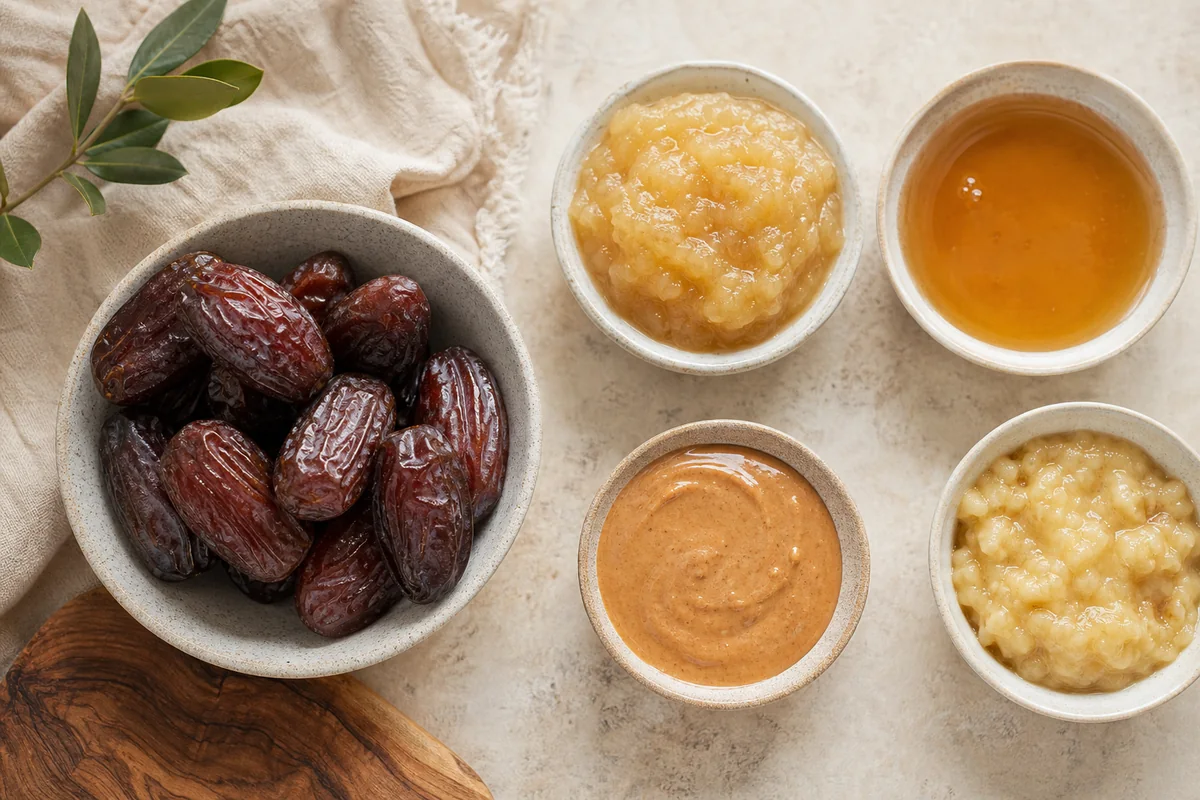
5 Best Date Substitutes (Tested)
Ingredients
Equipment
Method
- Identify your recipe goal: moisture (cakes/brownies), chew/body (cookies/bar-like bakes), or caramel sweetness (glazes).
- Choose the closest swap from the table, using the ratio (e.g., 1:1 for prune/raisin pastes; lower ratios for syrups/molasses).
- If your substitute is paste-free (applesauce/syrup), adjust by thickening (less liquid) or loosening (a splash of water/milk) to match batter thickness.
- If your substitute is fruit-based, blend/soak until smooth so it distributes like date paste and prevents gritty texture.
- Taste once the batter is mixed: add a pinch of salt to balance, or reduce added sweeteners to keep the final sweetness from jumping.
Notes
- Use paste-style swaps (prune/raisin paste) when you need date-like stickiness.
- Use syrup/sugar swaps when you mainly need caramel sweetness, then compensate for missing moisture/chew.
Tried this recipe?
Let us know how it was!
Carrie is a food writer and editor with more than 15 years of experience. She has worked for some of the biggest names in the food industry, including Bon Appétit, Food & Wine, and Martha Stewart Living.
As the Editor in Chief of EpicureDelight, Carrie oversees all of the content on the site. She also manages the team of contributing writers and editors, who help to create delicious recipes, helpful tips, and informative articles that you’ll find on the site.
A native of the Chicago area, Carrie is passionate about all things food. She loves trying new restaurants and experimenting with new recipes in her kitchen. She’s also a graduate of the Culinary Institute of America, so she knows a thing or two about food!



