
Delicata squash earns its fans fast. It roasts in under 25 minutes, sweetens at the edges without much help, and skips the tedious peeling step.
When it's gone from the market, though, you still have solid options that match its two key traits: tender flesh and caramelized sweetness.
The best delicata squash substitute is one that gets soft and browned without turning watery. That rules out some vegetables right away.
The five picks below each come with a skip-if note, so you can avoid mismatches before they happen.
For roasting, acorn or butternut squash are your closest matches. For oven-baked softness, kabocha or sweet potato work well. For a quick sauté, zucchini keeps things moving. Cut smaller than you think, season generously, and roast until edges brown for the best result.
Delicata Squash Substitutes: Quick Match Guide
Not every squash swap is equal. The table below lets you pick fast based on what your dish needs: roasting, sautéing, or baking.
Pay attention to the cook-time column, since denser squashes need more time than delicata.
| # | Substitute | Best For | Ratio | Key Note |
|---|---|---|---|---|
| 1 | Acorn Squash | Roast / Sauté | 1:1 | Cut smaller, roast longer |
| 2 | Butternut Squash | Roast / Bake | 1:1 | Dense; use ¾-inch cubes |
| 3 | Kabocha Squash | Roast / Sauté | 1:1 | Score skin for even cooking |
| 4 | Sweet Potato | Roast / Bake | 1:1 | Softens fast; keep ¾-inch |
| 5 | Zucchini | Sauté / Quick Roast | ¾:1 | Pat dry; high heat only |
For dishes where sweetness matters most, lean on the squash-type picks in rows 1 through 3. If you're short on time and just need something tender-crisp, zucchini is the fastest path.
5 Delicata Squash Swaps That Actually Work
1. Acorn Squash
Acorn squash is the most direct swap here. Its flavor is a little deeper and earthier than delicata's, but it caramelizes at the same roasting temperature and develops similar browned edges.
- Prep: Peel and cut into ¾-inch cubes or thin wedges for faster cooking
- Roast temp: 400°F for 25-30 minutes, flipping once at the halfway point
- Flavor nudge: A light brush of olive oil and a pinch of nutmeg closes the gap with delicata's mild sweetness
If you want to understand how acorn's flavor compares before you commit, acorn's flavor profile breaks it down clearly. For dishes where acorn itself falls short, choosing beyond acorn gives you more options to consider.
Acorn vs. Delicata
Works for: roasted sheet-pan dishes, grain bowls, stuffed squash, and hearty salads where browning matters
Skip if: you need the exact thin-skinned, delicate bite - acorn flesh is firmer and needs smaller cuts to reach the same tenderness
2. Butternut Squash
Butternut is the sweetest squash at most grocery stores, and that sweetness is exactly what makes it a strong stand-in here. It browns well on a sheet pan and holds its shape through longer roasting.
Butternut is denser than delicata, so cut sizes matter more here. Aim for ¾-inch cubes and spread them in a single layer.
Crowding the pan steams them instead of roasting. If you want to know more about this orange-fleshed squash before using it, that page covers flavor and texture in detail.
- Cut size: ¾-inch cubes for standard roasting; ½-inch for quicker sautéing
- Temperature: 400-425°F for 25-35 minutes until edges are golden
- Seasoning: Salt, pepper, and a small drizzle of maple syrup mirrors delicata's natural caramel edge
Skip this if your recipe calls for very quick sautéing. Butternut needs more time to soften than delicata, and underdone cubes are chalky.
Either pre-roast them or cut much smaller.
3. Kabocha Squash
Kabocha's interior is sweet and almost chestnut-like when roasted, making it one of the more satisfying swaps on this list. It roasts beautifully in wedges with the skin on, similar to how many people prepare delicata.
For a look at kabocha's roasted sweetness, there's a full breakdown worth reading before you cook. Slice into small wedges, score the flesh side lightly with a knife, and roast at 400°F for 30-35 minutes.
The skin softens enough to eat in most cases, though it stays a bit thicker than delicata's paper-thin rind.
Skip this if skin texture is a dealbreaker in your dish. Kabocha skin is edible but noticeably more substantial than delicata's.
For soups or purées, peel it first.
4. Sweet Potato
Sweet potato is the easiest swap when squash varieties simply aren't at the store. It caramelizes quickly, hits a similar sweetness level, and works in both roasting and baking contexts.
Picking a root swap is worth checking if sweet potato itself is unavailable and you want to stay in that sweet, starchy lane. Sweet potato softens faster than any squash on this list, so watch your oven time carefully.
- Best for: Sheet-pan roasting, baked grain dishes, and autumn salads
- Key adjustments: Keep cubes at ¾ inch; roast at 400°F for 20-25 minutes to avoid mush
- Flavor balance: Reduce added sweeteners by half and add a squeeze of lemon to keep it from reading overly sugary
Skip this if you need a neutral squash flavor. Sweet potato reads noticeably sweeter and earthier than delicata, which can compete with savory seasonings.
Add extra salt and a splash of acid to rebalance.
5. Zucchini
Zucchini is not a flavor twin for delicata. It's mild, slightly grassy, and holds almost no sweetness.
But it cooks fast and stays tender-crisp, which makes it a practical emergency option.
Cut zucchini into thick half-moons, at least ½ inch, so they keep structure. If you're swapping winter squash in a recipe and zucchini is all you have, boost the seasoning hard.
- Prep: Slice into ½-inch half-moons and pat very dry with paper towels before cooking
- Cook method: High heat, 425°F or a hot skillet, for 10-15 minutes maximum
- Seasoning boost: Add smoked paprika, a pinch of brown sugar, and extra salt to approximate the sweet-savory depth of roasted squash
Skip this if your recipe expects deep caramel edges. Zucchini releases water instead of browning, and no amount of high heat fully compensates.
Use it only when tender-crisp is acceptable.
Making Delicata Squash Substitutes Work (Texture + Timing)
The gap between a good swap and a watery, bland one almost always comes down to cut size and oven heat. For this thin-skinned sweet squash, the standard roasting window is short - most swaps need a small adjustment.
Start with the right cut, give the pan enough room, and season more than you think you need to.
- Cut smaller for denser swaps: Butternut and acorn squash should be cut to ¾ inch or smaller to reach the same tenderness delicata delivers at ½ inch
- Single layer is non-negotiable: Crowded pans trap steam and prevent browning; use two sheet pans if needed
- Season twice: Toss in oil and salt before roasting, then taste and adjust with acid or sweetness after - most substitutes need a finishing correction
Frequently Asked Questions
Acorn squash is the closest match for roasting. It caramelizes at the same temperature and delivers a similar sweet, nutty flavor when the edges brown.
Yes, sweet potato works well in baked dishes. Reduce added sweeteners slightly and keep cubes at ¾ inch so they don't turn soft before the dish finishes cooking.
Pat zucchini slices very dry before cooking and use high heat with plenty of pan space. Avoid covering the pan, which traps steam and speeds up water release.
Yes, peel both. Unlike delicata's thin, edible skin, butternut and acorn skins stay tough even after roasting and are unpleasant to eat.
Cut denser squashes like butternut to ¾ inch or smaller and add 5-10 extra minutes at 400°F. Check for fork-tenderness and browned edges before pulling from the oven.
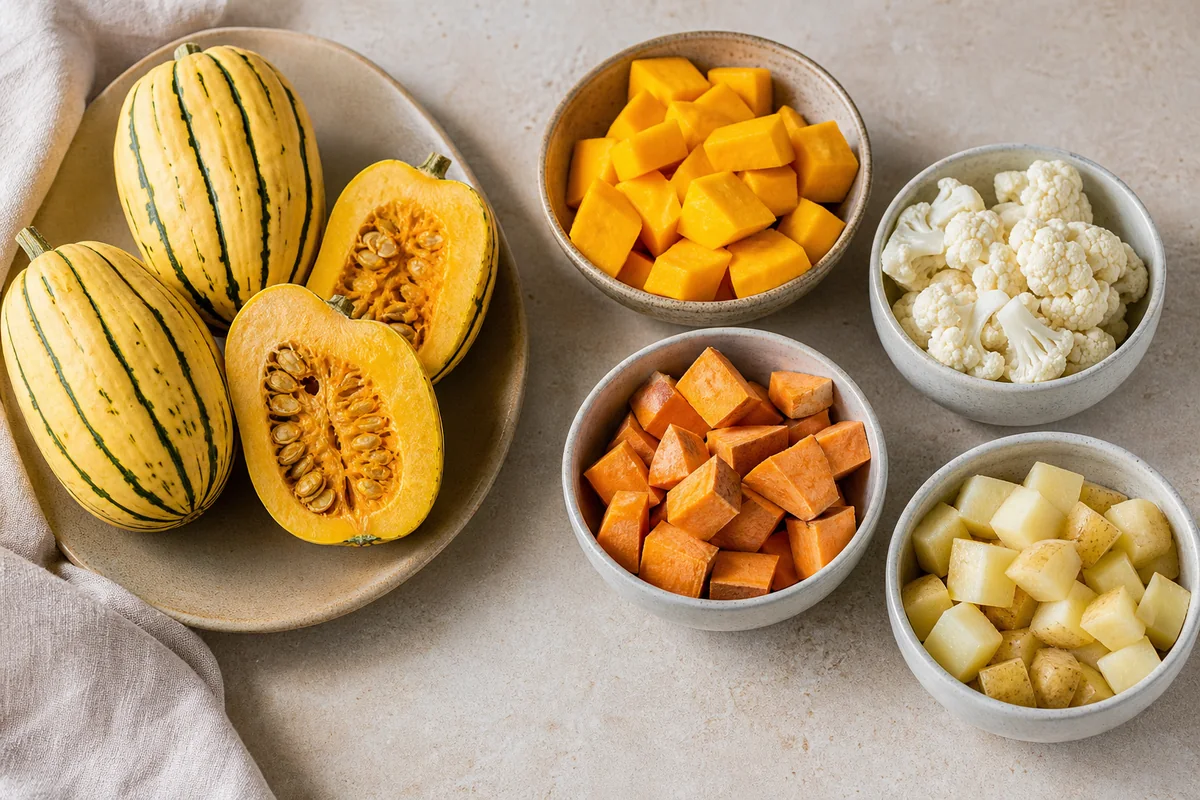
5 Best Delicata Squash Substitutes Worth Trying
Ingredients
Equipment
Method
- Match the job: for roasting, pick a squash-type substitute; for a quick tender-crisp, use zucchini; for baking-style softness, use sweet potato.
- Use the listed ratio and cut size to mimic delicata’s cook time—smaller pieces cook faster and stay less watery.
- Season to compensate for differences: squash swaps typically need a little extra salt to pop, while zucchini needs stronger seasoning to avoid tasting bland.
- Cook until the substitute matches delicata’s texture: browned edges for roasted wedges/cubes, and fork-tender centers for creamy varieties.
- Taste at the end and adjust with acid or sweetness (a squeeze of lemon or a touch of honey) if the swap tastes flatter than delicata.
Notes
- Cut size is the quickest way to match delicata’s tenderness—aim for similar bite size across substitutes.
- If your substitute releases a lot of moisture (like zucchini), use higher heat and shorter cook time to avoid steaming.
Tried this recipe?
Let us know how it was!
Carrie is a food writer and editor with more than 15 years of experience. She has worked for some of the biggest names in the food industry, including Bon Appétit, Food & Wine, and Martha Stewart Living.
As the Editor in Chief of EpicureDelight, Carrie oversees all of the content on the site. She also manages the team of contributing writers and editors, who help to create delicious recipes, helpful tips, and informative articles that you’ll find on the site.
A native of the Chicago area, Carrie is passionate about all things food. She loves trying new restaurants and experimenting with new recipes in her kitchen. She’s also a graduate of the Culinary Institute of America, so she knows a thing or two about food!



