
That toffee-scented crunch on top of a scone or shortbread is almost entirely demerara sugar's doing. The demerara sugar substitute you choose matters because this sugar brings two distinct things: a mild molasses warmth and large, partially translucent crystals that stay intact through heat.
Swap in the wrong sugar and you lose one or both. A soft brown sugar keeps the caramel notes but melts flat.
A coarse raw sugar keeps the crunch but reads slightly sharper in flavor.
Turbinado sugar is the closest match at a 1:1 ratio, keeping the large crystals and light molasses character. For caramel flavor without crunch, light brown sugar works well. Need to DIY it? Stir 1 teaspoon molasses into 2 tablespoon granulated sugar for a reliable backup.
Best Demerara Sugar Swaps, Based on Flavor and Texture
These five substitutes cover the full range, from coarse-crystal toppings to deep molasses bakes. Match your swap to the goal: crunch, caramel flavor, or both.
| # | Substitute | Best For | Ratio | Key Note |
|---|---|---|---|---|
| 1 | Turbinado Sugar | Both | 1:1 | Closest crystal texture |
| 2 | Light Brown Sugar | Baking | 1:1 | Caramel flavor, soft melt |
| 3 | Muscovado Sugar | Baking | 1:1 | Deeper molasses, darkens goods |
| 4 | Raw Sugar | Both | 1:1 | Good sparkle on toppings |
| 5 | Granulated + Molasses | Cooking | 1:1 | DIY caramel depth, no crunch |
1. Turbinado Sugar
Turbinado is the most direct swap for demerara. The crystals are large, golden, and coated in a thin layer of cane molasses, which means crystal flavor notes land very close to demerara's signature warmth.
One thing to watch: turbinado dissolves a touch faster under heat. For cookie or scone toppings, press the crystals gently into the dough so they grip and hold their crunch through the bake.
Turbinado vs. Demerara
Works for: cookie toppings, scone crusts, caramelized edges, crème brûlée-style finishes
Skip if: you need a deep, almost smoky molasses note - turbinado is milder than muscovado or dark brown sugar
- Topping cookies or scones: Use 1:1 and press crystals in firmly before baking
- Caramelized edges: Results are nearly identical to demerara in color and crunch
- Wet batters: Reduce by 1 tablespoon per ¼ cup if batter is very loose, to prevent pooling
- Browning: Slightly less golden than demerara but still reliably amber
Skip if: You need a strong molasses flavor. Turbinado is subtle, so reach for muscovado or brown sugar instead.
2. Light Brown Sugar
Light brown sugar keeps all the caramel warmth but trades the crunch for a softer, more even melt. That makes it ideal when texture on the surface is secondary, like in cake batters, muffin doughs, and pie crust recipes where you're folding the sugar in.
The added moisture in packed brown sugar is the key variable. It speeds up browning and produces edges that are tender rather than crisp.
If you're swapping brown sugar in a recipe that calls for demerara in the batter, you likely won't notice a difference in flavor at all.
- Cakes and muffins: 1:1, no adjustment needed; caramel notes stay strong
- Pie crust filling: Works well; just expect a slightly moister crumb
- If topping needs crunch: Mix in a small amount of turbinado or raw sugar at a 1:2 ratio to add texture back
- Cookie edges: Expect soft spread rather than a crisp sugar crust
Skip if: The recipe depends on a crunchy sugar topping. Brown sugar melts flat and won't replicate that biscuit-top sparkle.
3. Muscovado Sugar
Muscovado is demerara turned up. It has significantly more molasses clinging to each grain, which means a darker color, stickier texture, and a flavor that reads closer to toffee or even mild liquorice.
This dark sugar comparison shows exactly how the two differ in baked goods.
Use it at 1:1, but expect your finished bake to be a shade or two darker than it would be with demerara. The stickiness also means cookies spread a little more.
- Best for: Gingerbread, dark chocolate brownies, sticky toffee pudding, BBQ sauces
- Watch out: Blond bars or vanilla shortbread will turn darker than intended
- Stickiness fix: Break up any clumps before measuring; muscovado packs firmly
- Flavor intensity: Start with ¾ of the called amount, taste, then add the remaining quarter
Skip if: You're making a light-colored cookie or pale bar where minimal darkening matters.
4. Raw Sugar
Raw sugar is another crystal-based option that gives demerara's visual appeal on toppings. The grains are coarse, golden-brown, and dissolve unevenly during baking, which is actually what creates those little pockets of crunch on muffin tops and crumbles.
The flavor is slightly less molasses-forward than demerara, reading a touch sharper and cleaner. For most baked toppings, that difference is hard to notice once everything is warm and baked through.
If you're unsure how choosing between coarse sugars changes the result, the short answer is: raw sugar performs very close to turbinado for toppings.
- Muffin and quick bread tops: Sprinkle 1 teaspoon per muffin just before baking for crunch
- Mixing into batter: Works at 1:1 but produces a slightly sharper sweetness than demerara
- Pressing into dough: Push crystals lightly into cookie dough tops for the best grip
- Uneven melt: Expect some crystals to stay intact - that's the intended texture
Skip if: You need uniform sweetness throughout a batter. Raw sugar's uneven dissolving can create textural inconsistency inside a delicate crumb.
5. Granulated Sugar + Molasses
This is the pantry-rescue option. Stir 1 teaspoon of molasses into every 2 tablespoon of granulated sugar and you get a blend that reads very close to demerara in caramel depth.
It won't have the same crystal size, but the flavor is surprisingly accurate for sauces, quick breads, and baked batters. If you're also managing dark syrup options in a recipe, this blend gives you a consistent base to work from.
Mix it thoroughly. Uneven mixing leaves dark streaks in pale batters and creates bitter pockets where molasses concentrates.
| Use | Ratio | Notes |
|---|---|---|
| Sauces & glazes | 2 tablespoon sugar + 1 teaspoon molasses | Stir over low heat until dissolved |
| Cake or muffin batter | 2 tablespoon sugar + 1 teaspoon molasses | Mix dry before adding wet ingredients |
| Cookie batter | 2 tablespoon sugar + ½ teaspoon molasses | Reduce molasses slightly to avoid spread |
- Mixing method: Combine in a small bowl and stir for 30 seconds until no streaks remain
- Bitterness check: Stick to 1 teaspoon per 2 tbsp; more molasses tips into bitter territory quickly
- Best for: Sauces, marinades, quick breads, and any batter where crystal texture is irrelevant
Skip if: Your recipe counts on visible sugar crystals for crunch. This swap produces a uniform, fine-grained blend with no surface sparkle.
Making Your Demerara Sugar Substitute Turn Out Right
The biggest variable with any swap is whether you're using the sugar as a topping or mixing it in. Toppings need crystal-based substitutes to get any crunch.
Batters and sauces are far more forgiving, and almost any substitute works at 1:1 with minor tweaks. Knowing how this amber sweetener behaves in heat is the first step to getting the swap right.
- For toppings: Always press crystals lightly into the dough surface before baking so they bond rather than roll off during spreading
- Color cues: Darker substitutes like muscovado brown goods 3-5 minutes faster; start checking at ⅔ of the listed bake time
- Wet batter adjustment: Brown sugar adds moisture, so reduce other liquids by 1 tablespoon per ½ cup of brown sugar used in a soft batter
Also check your storing brown sugar habits before baking. Clumped or dry brown sugar measures unevenly and throws off the ratio before you even start.
FAQ About Demerara Sugar Substitutes
Frequently Asked Questions
Yes, turbinado is a direct 1:1 swap. Crystal size and mild molasses flavor are nearly identical, though turbinado may dissolve slightly faster in wet batters.
Turbinado or raw sugar are your best options. Both have large crystals that hold shape during baking and produce a similar toffee-like crunch.
Bake time stays roughly the same, but edges will be softer and may brown 1-2 minutes faster due to the added moisture in packed brown sugar.
Stir 1 teaspoon molasses into every 2 tablespoon of granulated sugar before adding to the sauce. Mix until fully combined to avoid bitter streaks.
Muscovado darkens goods the most due to its high molasses content. Start checking for doneness 3-5 minutes earlier than the recipe states.
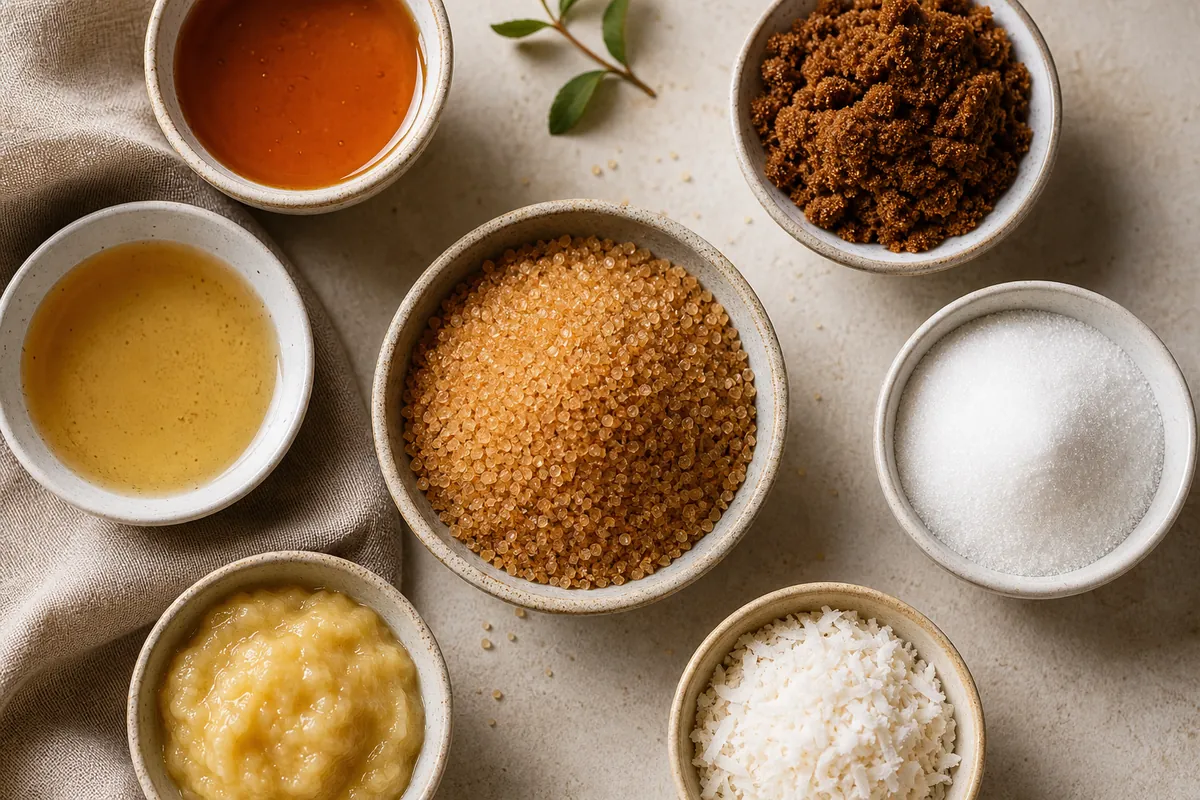
5 Best Demerara Sugar Substitutes (Easy Swaps)
Ingredients
Equipment
Method
- Choose your goal: keep crunchy crystals (turbinado/raw) or keep caramel flavor (brown/muscovado).
- Use the 1:1 ratio first, then adjust for texture: if your substitute is softer, reduce by 10–15% for less pooling.
- For “granulated + molasses,” stir until fully dissolved so you don’t get dark streaks in batter.
- Taste-test sweetness in wet batters: brown-leaning swaps can read sweeter and darker, especially in quick breads.
- If you’re topping (cookies/scones), press the crystals lightly onto the dough so you get a crisp edge.
Notes
- Texture priority (crunch) → turbinado or raw sugar.
- Flavor priority (caramel depth) → brown sugar or muscovado.
- Topping applications benefit most from crystal-based substitutes.
Tried this recipe?
Let us know how it was!
Carrie is a food writer and editor with more than 15 years of experience. She has worked for some of the biggest names in the food industry, including Bon Appétit, Food & Wine, and Martha Stewart Living.
As the Editor in Chief of EpicureDelight, Carrie oversees all of the content on the site. She also manages the team of contributing writers and editors, who help to create delicious recipes, helpful tips, and informative articles that you’ll find on the site.
A native of the Chicago area, Carrie is passionate about all things food. She loves trying new restaurants and experimenting with new recipes in her kitchen. She’s also a graduate of the Culinary Institute of America, so she knows a thing or two about food!



