
That crisp, pleasantly sharp bite you get from endive is hard to fake. It sits somewhere between lettuce and a bitter green, mild enough for a raw platter but bold enough to hold its shape in a braise.
Endive substitutes in cooking work best when you match two things: texture first, then bitterness level. Swap blind and you'll get a soggy salad or a dish that tastes flat.
The five options below cover raw and cooked applications. Some are near-matches on flavor.
Others trade bitterness for crunch. Each one gets a note on how to prep it so it behaves like endive on the plate, not just beside it.
Endive is a crisp, mildly bitter leaf used raw in salads or cooked in braises. Your best cooked swap is escarole. For raw crunch with real bitterness, radicchio is closest. Romaine hearts and iceberg give crunch without the bite, so add acid to compensate.
5 Best Endive Substitutes Ranked by Texture and Bite
The table below is a quick scan before you commit. Each substitute is rated on its best use case, bitterness match, and how its texture holds up.
| # | Substitute | Best For | Ratio | Key Note |
|---|---|---|---|---|
| 1 | Escarole | Cooked | 1:1 | Add acid at the end |
| 2 | Radicchio | Both | 1:1 | Rinse to reduce harshness |
| 3 | Broccoli Rabe | Cooked | 1:1 | Blanch 30-60 seconds first |
| 4 | Romaine Hearts | Raw | 1:1 | Add vinegar for bitterness |
| 5 | Iceberg (cups) | Raw | 1:1 | Dry well, dress last minute |
1. Escarole
Escarole is the most practical cooked swap for endive. Its broad, slightly ruffled leaves soften without collapsing, and when you're braising leafy greens at medium heat, it keeps a gentle chew that endive would normally provide.
Escarole
Works for: braises, sautés, soups, hot grain bowls
Skip if: you need a firm, mild raw leaf for a no-cook platter
The bitterness is real but softer than radicchio. It responds well to garlic and olive oil in a pan.
- Leaf size: Tear into endive-sized pieces so cooking time matches your original recipe
- Bitterness fix: Add a small splash of lemon juice or white wine vinegar at the very end of cooking
- Salt timing: Season more aggressively than you would with endive, since escarole absorbs salt slowly
Finish with a pinch of red pepper flakes if you want to replicate endive's sharper edge in a braise.
2. Radicchio
Radicchio bites harder than most endives. That intensity is actually the point.
The radicchio versus cabbage differences are worth knowing here, because radicchio's peppery sharpness is what makes it endive's closest salad stand-in.
Pair it with a creamy dressing, a sweet fruit component, or blue cheese to keep the bitterness balanced.
- Prep: Separate individual leaves and rinse under cold water for 30 seconds to soften harshness
- Cut: Slice into thin strips rather than whole leaves if the bitterness still feels aggressive
- Size match: Cut leaf pieces to roughly the same width as endive spears for consistent mouthfeel
Skip this if you're building a mild, delicate salad where endive's subtlety is the point.
3. Broccoli Rabe
Rapini carries a sharp, grassy bitterness that reads much like endive when cooked. What makes this assertive green so useful is that blanching gives you direct control over how bitter the final dish actually tastes.
Drop it into boiling salted water for 30 to 60 seconds, then transfer to ice water immediately. That step alone softens the edge without making the flavor disappear.
In a sauté, treat it exactly like endive: high heat, olive oil, garlic, and a short cook time. It wilts faster than endive, so pull it from the pan about a minute earlier than your recipe suggests.
Skip this one if your recipe calls for endive cups or a no-cook platter. Rapini is strictly a cooked substitute.
4. Belgian Endive (Salvaged)
If you have endive in the fridge that looks slightly tired, don't replace it yet. You can often recover it, and the endive variety breakdown is useful context here for understanding which portions are worth keeping.
Trim only the outer leaves that look brown or limp. The tighter inner leaves almost always stay firm.
- Trim: Slice off the base by 2-3mm and pull away discolored outer layers
- Rinse: Rinse under cold water, then pat completely dry before dressing or plating
- Revive: Soak trimmed leaves in ice water for 10 minutes to restore crispness
Skip this approach if the endive is slimy to the touch, has a strong off-smell, or has fully collapsed from the inside.
5. Romaine Hearts
Romaine gives you the crunch. It does not give you the bitterness.
That's the honest trade-off, and the crisp lettuce options page covers this gap well if you need more detail on texture-first swaps.
Romaine Hearts
Works for: raw salads, cups, platters where crunch matters more than bite
Skip if: bitterness is a key flavor in the dish, not just background texture
Use only the hearts, not the outer leaves. Cut them into pieces that match your endive measurements.
- Acid fix: Add ½ teaspoon lemon zest or 1 teaspoon white wine vinegar per 2 cups of romaine to mimic endive's brightness
- Salt: Season lightly with flaky salt right before serving so it doesn't wilt
- Size: Halve or quarter the hearts lengthwise so the leaf shape stays close to endive spears
Making Endive Substitutes Work (No-Wilt Prep + Flavor Balancing)
Two levers control every endive swap: texture and bitterness. For raw dishes, texture comes first.
Leaves need to be bone-dry before dressing, and the right chilled dressing applied at the last minute keeps everything from going limp. For cooked dishes, bitterness control takes priority: rinse harsher greens first, then season with acid at the finish rather than the start.
- Match leaf size: Cut or tear your substitute into pieces the same size as endive spears so cooking time and dressing coverage stay consistent
- Dry before dressing: Spin or pat leaves completely dry. Wet leaves dilute dressing and turn limp within minutes, especially with iceberg or romaine
- Bitterness dial: For bitter green swaps, rinse before cooking and add a small acid (lemon juice, vinegar) only at the very end to land the balance you want
Raw or cooked, the prep steps above apply universally. The substitute changes.
The approach stays the same.
Frequently Asked Questions
Romaine hearts give the most reliable raw crunch. Add a small amount of white wine vinegar or lemon zest to replace the mild bitterness endive normally contributes.
Yes, but rinse the radicchio well first and expect deeper color bleed into the dish. It softens quickly, so reduce cooking time by about one minute compared with endive.
Blanch rapini in boiling salted water for 30 to 60 seconds, then transfer to ice water immediately. That step trims the sharpest bitter notes before you sauté or braise.
Escarole is the closest match for cooked applications. Its leaf structure and controlled bitterness behave almost identically to endive in a braise or quick sauté.
Dry iceberg thoroughly after rinsing and dress it only seconds before serving. Thin-cut pieces also release less water than thick chunks, so they stay crisper longer.
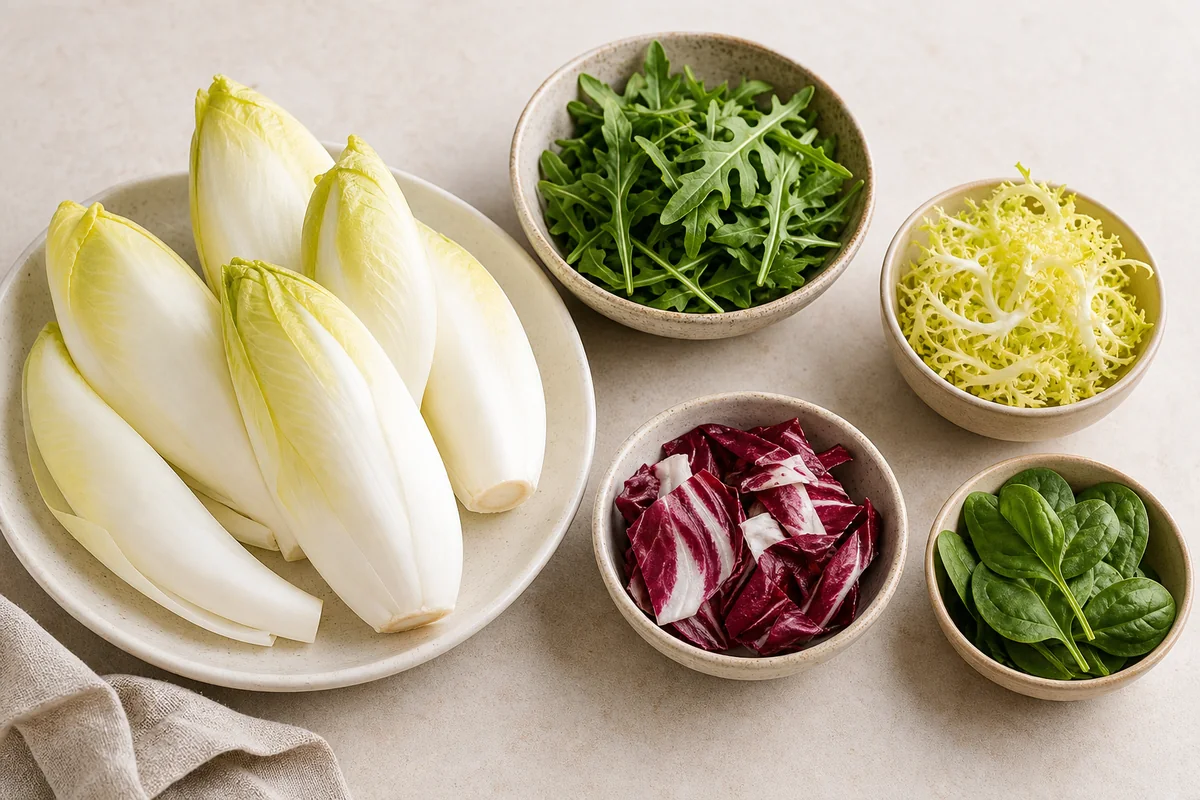
5 Best Endive Substitutes Worth Trying
Ingredients
Equipment
Method
- Decide whether your recipe needs raw crunch (salad/cups) or cooked leaf tenderness (braise/sauté).
- For cooked dishes, choose escarole or radicchio; for extra-bitter flavor control, rinse radicchio leaves well.
- For raw substitutes, pick romaine hearts (mild) or iceberg (very mild); to imitate endive’s bite, add a small acidic boost.
- Trim tough centers, then prep by matching bite size to your endive leaves (quarters for cups, shred for salads).
- Taste after seasoning: increase salt or acid in small steps if your substitute is milder than endive.
Notes
- Use 1:1 by leaf volume; if the substitute is more bitter (radicchio, rapini), rinse and season to balance rather than switching ratios.
- If cooking, cut leaves to similar size to keep tenderness consistent with endive.
Tried this recipe?
Let us know how it was!
Carrie is a food writer and editor with more than 15 years of experience. She has worked for some of the biggest names in the food industry, including Bon Appétit, Food & Wine, and Martha Stewart Living.
As the Editor in Chief of EpicureDelight, Carrie oversees all of the content on the site. She also manages the team of contributing writers and editors, who help to create delicious recipes, helpful tips, and informative articles that you’ll find on the site.
A native of the Chicago area, Carrie is passionate about all things food. She loves trying new restaurants and experimenting with new recipes in her kitchen. She’s also a graduate of the Culinary Institute of America, so she knows a thing or two about food!



