
That mild, slightly bitter backbone is the whole point of escarole. Without it, a white bean soup feels flat, a braise loses its edge, and even a simple salad turns one-dimensional.
Finding a good escarole substitute means matching two things at once: the leaf's gentle bitterness and its ability to stay tender without turning to mush.
How you're cooking matters. A soup or braise needs leaves that wilt cleanly and hold some body.
A salad needs crunch and enough flavor to stand without dressing doing all the work. The five options below are ranked by how closely they match both qualities.
The best escarole substitutes are endive, romaine hearts, spinach, radicchio, and kale. Match the substitute to your cooking method: pick endive or radicchio when bitterness matters, romaine or spinach when you need a milder leaf, and kale when the dish needs a heartier green that holds up under long heat.
Best Escarole Substitute Options (Texture + Bitterness Guide)
| # | Substitute | Best For | Ratio | Key Note |
|---|---|---|---|---|
| 1 | Endive | Both | 1:1 | Closest mild bitterness |
| 2 | Romaine Hearts | Both | 1:1 | Add acid for depth |
| 3 | Spinach | Both | 1:1 | Not bitter; add lemon |
| 4 | Radicchio | Both | ¾:1 | Use less; it bites harder |
| 5 | Kale (Lacinato) | Both | ¾:1 | Slice thin; cook longer |
Read the table by texture first, then bitterness. Endive sits closest to escarole on both scales.
Radicchio and kale score higher on bitterness but need adjustment. Use the ratio column as a starting point, then taste and correct.
1. Endive
Belgian endive is the tightest match for escarole's mild-bitter character. Both come from the chicory family, so the flavor profile is close enough that most recipes need little or no seasoning correction.
The leaves are narrower than escarole, but that only matters if you're plating whole-leaf salads.
The crisp chicory leaf holds its shape well in soups and braises without turning slimy. It wilts in roughly the same time as escarole, so you don't need to adjust cook time.
Endive vs. Escarole
Works for: soups, white bean braises, mixed salads, sautéed greens
Skip if: you need escarole's wide, ruffled leaves for visual presentation
- Soups: Add in the last 5 minutes, same timing as escarole
- Braises: Use full leaves; they soften evenly without breaking apart
- Salads: Slice crosswise for smaller pieces or use whole leaves as cups
- Seasoning: No bitterness correction needed; a touch of olive oil and salt is enough
2. Romaine Hearts
Romaine hearts give you a crisp-tender bite that reads similar to raw escarole, but they wilt faster once heat is applied. The bitterness is noticeably milder, closer to neutral.
That gap is easy to close with a little lemon juice or a splash of white wine vinegar.
For salads, romaine works immediately with no adjustment. For soups, the timing window is tighter.
Add romaine in the last 2 to 3 minutes of cooking, not at the same point you'd add escarole, or it softens past the point of return.
- Soups: Stir in during the final 2-3 minutes; taste for bitterness and add a squeeze of lemon
- Salads: Dress close to serving time to keep the crunch intact
- Braises: Use only the inner leaves; outer leaves go watery fast under heat
- Storage: Keep romaine dry before using, since excess moisture speeds up wilting in warm dishes
Skip if: your recipe depends on escarole's bitter note. Romaine is much milder, and acid alone may not fully bridge the gap in strongly flavored braises.
3. Spinach
Spinach is the volume substitute, not the bitterness substitute. It wilts faster than escarole and has almost no bitter edge on its own.
That doesn't disqualify it. It means you need to do a little flavor work before it earns its place.
Add a small squeeze of lemon or a half-teaspoon of Dijon mustard to your dish when using spinach. If you're leaning toward other mild leaf options, that page covers the texture comparisons well.
For soups, use mature spinach rather than baby leaves; it holds up better under heat without disappearing entirely.
| Use | Ratio | Notes |
|---|---|---|
| Soups | 1:1 | Mature spinach; add in last 3 min |
| Sauté | 1:1 | High heat, short time; season with acid |
| Salads | 1:1 | Baby spinach; dress just before serving |
- Soups: Use mature chopped spinach and add it 3 minutes before serving
- Sauté: Cook over high heat for 60-90 seconds to avoid waterlogging the pan
- Bitterness fix: A small squeeze of lemon or a pinch of red pepper flakes adds the edge spinach lacks
- Watery results: Dry spinach thoroughly before using in braises; excess water thins your sauce
Skip if: you need natural mild bitterness. Spinach won't replicate it on its own.
4. Radicchio
Radicchio sits on the bolder end of the chicory spectrum. It has the same family roots as escarole, but the bitterness is sharper and more persistent.
The trick is starting with about three-quarters of what your recipe calls for, then tasting before you add more.
For cooked dishes, radicchio softens and mellows noticeably. A splash of lemon juice or a small pour of balsamic can pull it into balance.
If you want to understand how it stacks up against other similar heads of leaves, the radicchio versus cabbage breakdown is a useful reference.
Radicchio vs. Escarole
Works for: braised dishes, grain salads, sautéed sides where bitterness is welcome
Skip if: you're making a delicate broth where you can't easily correct strong bitterness
- Salads: Shred finely and mix with a milder green to soften the bitterness
- Braises: Start with ¾ of the escarole amount; taste at the halfway point
- Bitterness balance: Add lemon juice, a small splash of balsamic, or a pinch of sugar
- Timing: For soups, add in the last 4-5 minutes; it wilts close to the same rate as escarole
5. Kale (Lacinato)
Lacinato kale is tougher than escarole, but it earns its place in soups and long braises where other substitutes fall apart. The bitterness is present, though earthier than escarole's clean chicory bite.
Thin slicing and proper cook time are the two moves that make this work.
Remove the ribs entirely before slicing. Stack the leaves, roll them, and cut into thin ribbons.
For storage before use, this hardy leafy green keeps well for up to a week in the fridge when stored dry. In soups, add kale 8 to 10 minutes before the end of cooking, not at the last minute like escarole.
- Prep: Strip ribs, stack leaves, slice into thin ribbons no wider than ¼ inch
- Soups: Add 8-10 minutes before serving; test a piece for tenderness before plating
- Braises: Works well; the longer cook time actually helps it reach escarole-like tenderness
- Seasoning: A squeeze of lemon at the end brightens kale's earthier flavor profile
Skip if: your recipe needs leaves that wilt quickly. Kale will stay firm well past the point where escarole would be perfectly tender.
Making Escarole Substitutes Work (Timing + Taste Fixes)
Three variables decide whether your substitute succeeds: when you add it, how much acid you use, and whether you taste before serving. Milder swaps like romaine and spinach almost always need a small acid correction, either lemon or a light vinegar.
Stronger swaps like radicchio need a smaller starting volume. For dishes where bitterness needs precise control, the guidance on picking the right acidic balance can help you dial in the flavor without overshooting.
- Add timing: Romaine and spinach go in 2-3 minutes before serving; endive and radicchio at 4-5 minutes; kale at 8-10 minutes
- Acid correction: Start with 1 teaspoon of lemon juice per 4 cups of greens and taste before adding more
- Tenderness test: Pull one leaf, press it between two fingers - it should yield without being slippery or stringy
Frequently Asked Questions
Endive is the closest match. It shares escarole's chicory bitterness and wilts in roughly the same time, so most recipes need no seasoning adjustment at all.
Romaine hearts give the best crisp-tender texture for salads. Add a little lemon juice to the dressing to compensate for romaine's milder flavor.
Add a pinch of sugar or a small splash of balsamic vinegar to mellow excess bitterness. For radicchio especially, a little fat like olive oil also helps coat and soften the sharp edge.
Add both greens in the final 2-3 minutes of cooking and make sure they are dry before going into a hot pan. Excess moisture causes rapid wilting and a watery result.
No. Kale needs 8-10 minutes to reach the tenderness escarole achieves in 4-5. Slice it thin and add it earlier in the cooking process.
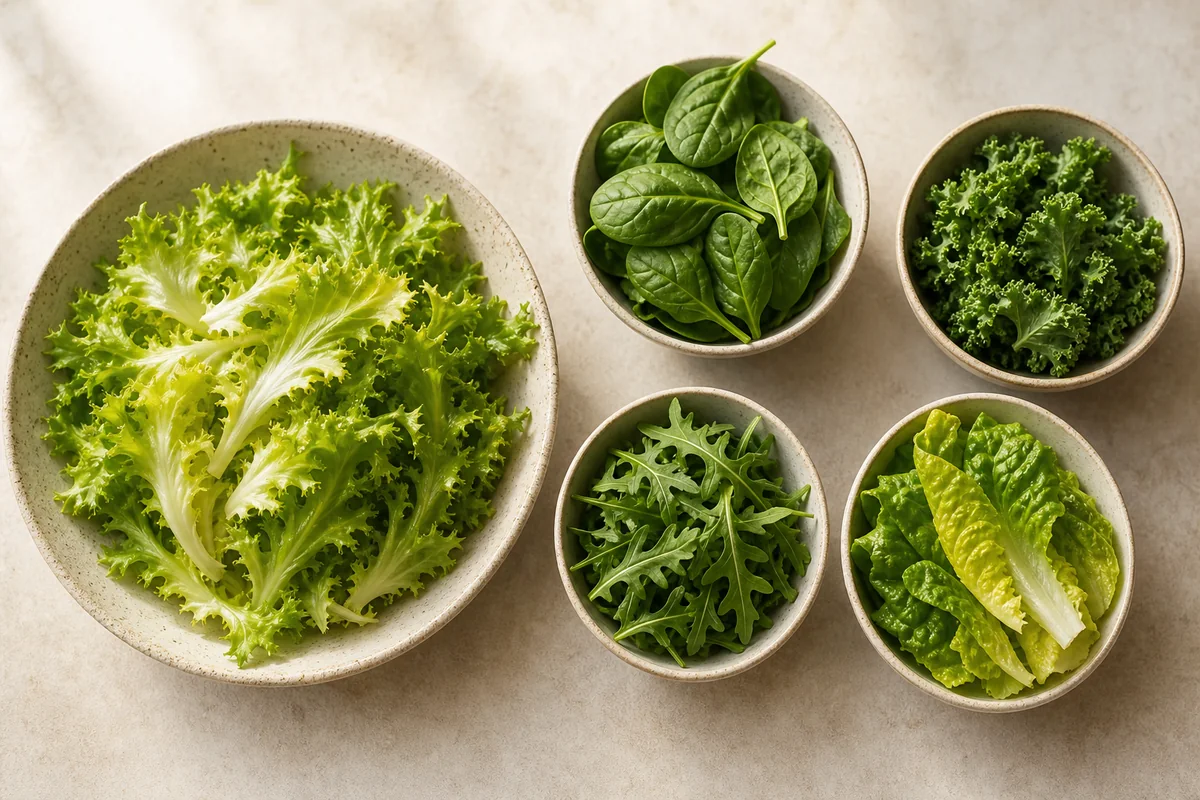
5 Best Escarole Substitutes You Can Trust
Ingredients
Method
- Decide your cooking style: braise/soup (needs wilt-tender leaves) or salad (needs crisp-tender bite).
- Choose the substitute with the closest texture first: endive for closest bitterness/leaf feel, romaine for crisp-tender, radicchio/kale for stronger leaf character.
- Use the listed ratio; if your substitute is naturally more bitter (like radicchio), start with less than escarole.
- Adjust bitterness and balance: add a small splash of lemon/vinegar (or a pinch of sugar) to match escarole’s mild tang.
- Adjust cooking time: romaine wilts faster than escarole, while kale needs more time; test tenderness before serving.
Notes
- For soups/braising: wilt until tender but not mushy.
- For salads: keep leaves crisp and dress after rinsing/draining well.
Tried this recipe?
Let us know how it was!
Carrie is a food writer and editor with more than 15 years of experience. She has worked for some of the biggest names in the food industry, including Bon Appétit, Food & Wine, and Martha Stewart Living.
As the Editor in Chief of EpicureDelight, Carrie oversees all of the content on the site. She also manages the team of contributing writers and editors, who help to create delicious recipes, helpful tips, and informative articles that you’ll find on the site.
A native of the Chicago area, Carrie is passionate about all things food. She loves trying new restaurants and experimenting with new recipes in her kitchen. She’s also a graduate of the Culinary Institute of America, so she knows a thing or two about food!



