
That silky, smooth bowl of hot cereal is only possible when the grain behind it hydrates fast and stays creamy. Farina does that job almost effortlessly.
The right farina substitute matches that fast-thickening, lump-resistant behavior, whether you're making a spoonable breakfast or using it to thicken a sauce.
Farina is finely milled wheat. It cooks into a porridge-like texture with almost no grit.
The swaps below all share one quality: they're fine enough to hydrate quickly and stir smooth without much fight.
For hot cereal, cream of wheat (fine semolina) or oat flour are the closest matches. For thickening, rice flour slurry or all-purpose flour work well when fully cooked. Fine polenta is a solid middle option. All swaps need constant stirring early on to stay lump-free.
5 Best Farina Substitutes Ranked by Texture Match
Smooth means spoonable without graininess. It means the substitute thickens within a few minutes and coats the back of a spoon.
The table below maps each swap to its best job and the ratio that gets you there fastest.
| # | Substitute | Best For | Ratio | Key Note |
|---|---|---|---|---|
| 1 | Cream of Wheat (fine semolina) | Both | 1:1 | Closest mouthfeel |
| 2 | Oat flour (fine-milled) | Both | 1:1 | Simmer 2-4 min longer |
| 3 | Polenta (very fine grind) | Cereal | ¾:1 | Stir often, simmer longer |
| 4 | Rice flour (slurry) | Thickening | ½:1 | Cold slurry prevents lumps |
| 5 | All-purpose flour | Thickening | 1:1 | Cook 3-5 min fully |
For thickening applications, knowing how swapping fine starches changes a dish's body helps you make the right call before you start cooking.
1. Cream of Wheat (Fine Semolina)
Fine semolina is the closest thing to farina in texture and cook time. Both are milled wheat products, and both produce a pale, smooth, creamy bowl that thickens in under five minutes.
We prefer this swap above all others for hot cereal, and this pale warm grain behaves almost identically in a pot.
- Best use: Hot breakfast cereal, creamy porridge
- Texture match: Nearly identical; smooth, spoonable, mild grit
- How to cook: Whisk into warm liquid slowly, simmer 3-5 minutes on medium-low
- Adjustment: If it thickens faster than expected, add 2 tablespoon warm milk and stir
- Adjustment: For a looser bowl, reduce semolina by 1 tablespoon per cup of liquid
Skip if: you want a gluten-free option, since fine semolina is still wheat.
2. Oat Flour (Fine-Milled)
Oat flour hydrates fast and turns creamy with consistent stirring. It won't taste like wheat, but the bowl it produces is smooth, mild, and satisfying in the same way.
If you're deciding between oat-based alternatives, picking the right oat swap depends on how close to neutral you want the flavor.
- Best use: Hot cereal, porridge-style bowls
- Ratio: 1:1 replacement for farina by volume
- Cook timing: Simmer 2-4 minutes longer than farina; oat flour needs more time to fully hydrate
- Too thick: Add warm water or milk in 1 tablespoon increments until you reach the right consistency
- Too loose: Simmer an extra minute uncovered; oat flour continues to thicken off heat
Skip if: you want the exact wheaty taste of farina, since oat flour reads noticeably different.
3. Polenta (Very Fine Grind)
Fine polenta can get surprisingly close to farina's creaminess, but it takes more work. The corn base means a slightly different flavor, and even fine-ground polenta needs longer simmering to lose its grit.
Coarse polenta won't get there no matter how long you cook it.
Fine Polenta
Works for: creamy hot cereal, savory farina-style bowls, mild thickening
Skip if: you only have coarse cornmeal, or you want a neutral wheat-like flavor
- Ratio: Use ¾ the amount of polenta compared to farina; it thickens more aggressively
- Stirring: Stir every 30-45 seconds for the first 4 minutes to prevent sticking
- Simmer time: At least 8-10 minutes on low for the graininess to fully mellow
- Still grainy? Add a splash of warm liquid and keep stirring; don't rush the heat
4. Rice Flour (Slurry Method)
Rice flour is the cleanest thickener of this group when you need a neutral, silky result without wheat. The mild starchy base disappears into whatever you're cooking, leaving texture without flavor interference.
| Use | Ratio | Notes |
|---|---|---|
| Cereal-style porridge | ½:1 | Rice flour + cold milk slurry; whisk in and heat slowly |
| Sauce thickening | ½:1 | Mix with cold water first; add to hot liquid and stir constantly |
| Baked porridge | ¾:1 | Slightly more flour needed; add extra liquid to compensate |
- Lump prevention: Always whisk rice flour into cold liquid before adding to any heat source
- Texture: Smooth and glossy when fully cooked; slightly gel-like at higher ratios
- Adjustment: If too thick after cooling, stir in warm liquid 1 tablespoon at a time
Skip if: you need a true wheat-based flavor or only have coarse rice flour.
5. All-Purpose Flour
Raw flour tastes pasty and starchy. Fully cooked flour, whisked into liquid and simmered properly, thickens into a smooth, neutral base that works well for thickening.
The difference is entirely in cook time. For more on how flour-based thickening changes texture and flavor, it's worth a quick read before you start.
All-Purpose Flour
Works for: thickening soups, gravies, sauces, or porridge-style dishes when no grain is available
Skip if: you need gluten-free, or you can't cook it long enough to remove the raw taste
- Ratio: 1:1 by volume for farina in thickening applications
- Cook time: Simmer at least 3-5 minutes on medium after adding; raw flour taste needs heat to disappear
- Smoothness: Whisk into cold liquid first, then add to your hot pot to prevent clumps
- Tastes pasty? Keep cooking; reduce heat to medium-low and stir for another 2 minutes
Making Farina Substitutes Work
The biggest mistake with any of these swaps is adding them to hot liquid without whisking first. A cold slurry or a slow stream of powder into warm liquid prevents the clumps that form when starch hits heat all at once.
For choosing the right warm grain when texture is everything, that page covers the key differences in detail.
- Lump prevention: Always mix your substitute into cold water or milk first, then pour the slurry into your hot pot while whisking steadily
- Texture adjustment: If the result is too thick, add warm liquid in 1 tablespoon increments; if too thin, simmer uncovered for 1-2 minutes more
- Doneness check: Your substitute is ready when it coats the back of a spoon cleanly and holds its shape for 3-4 seconds after you drag a finger through it
Frequently Asked Questions About Farina Substitutes
Cream of wheat (fine semolina) is the closest match. It's the same category of finely milled wheat, cooks in under five minutes, and produces an almost identical smooth, spoonable texture.
Yes, at a 1:1 ratio for thickening. Whisk it into cold liquid first, then add to your hot pan and cook at least 3-5 minutes to eliminate the raw flour taste.
Simmer oat flour 2-4 minutes longer than you would farina. It needs extra time to fully hydrate and reach a smooth, creamy consistency.
Always make a cold slurry first. Whisk the rice flour into cold water or milk before adding it to any heat; this prevents clumping and produces a smooth, glossy texture.
Yes. Oat flour (certified gluten-free), rice flour, and fine polenta are all gluten-free options. Cream of wheat and all-purpose flour both contain gluten.
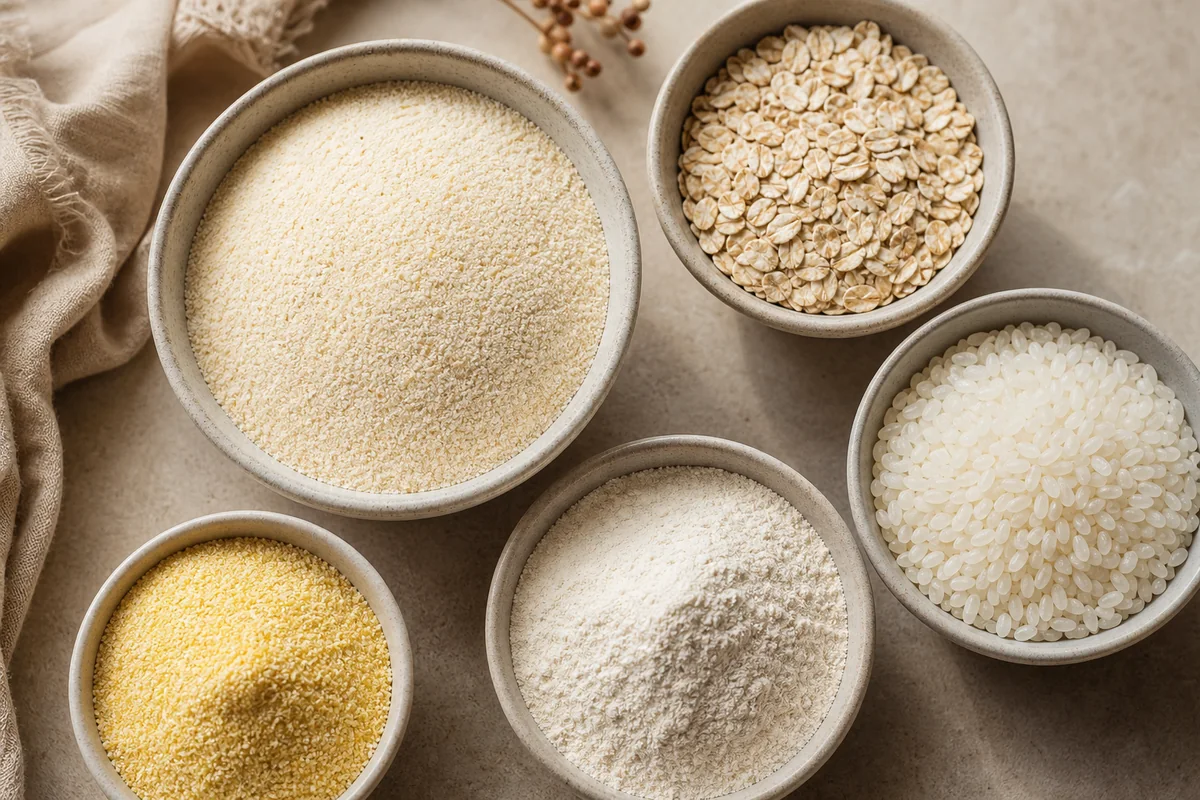
5 Best Farina Substitutes (Easy Swaps)
Ingredients
Equipment
Method
- Pick the goal: creamy hot cereal (choose semolina/cream of wheat or oat flour) or thickening (choose rice flour slurry or all-purpose flour).
- Start with the table ratio and use cold whisking for flour-based options to prevent lumps.
- Heat and stir constantly for the first 60-90 seconds, then simmer until your texture matches farina (smooth and spoonable).
- Adjust thickness: add a splash of warm liquid if too thick, or simmer 1-2 minutes more if too loose.
- For best mouthfeel, keep stirring as it thickens—most substitutes set faster once they’re hot.
Notes
- Texture matters most: fine-milled grains and early whisking help mimic farina’s smoothness.
- If your substitute is grainier, simmer longer and stir more frequently to reduce grit.
Tried this recipe?
Let us know how it was!
Carrie is a food writer and editor with more than 15 years of experience. She has worked for some of the biggest names in the food industry, including Bon Appétit, Food & Wine, and Martha Stewart Living.
As the Editor in Chief of EpicureDelight, Carrie oversees all of the content on the site. She also manages the team of contributing writers and editors, who help to create delicious recipes, helpful tips, and informative articles that you’ll find on the site.
A native of the Chicago area, Carrie is passionate about all things food. She loves trying new restaurants and experimenting with new recipes in her kitchen. She’s also a graduate of the Culinary Institute of America, so she knows a thing or two about food!



