
That warm, slightly bitter aroma fenugreek seeds release in hot oil is genuinely hard to fake. But the right swap, used at the right moment, gets you surprisingly close.
Fenugreek seed substitutes work best when you match two things: the bitterness level and the timing of when you add the spice. Get both right and most tasters won't notice the difference.
This list covers 5 reliable options with exact ratios, prep notes, and honest "skip if" guidance for each one.
Fenugreek seed brings warm, malty bitterness that blooms beautifully in hot oil. The closest swap is fenugreek powder at a 1:1 ratio. Celery seed works for aromatic lift. Mustard seed adds pungent bite. Turmeric gives warmth but not full bitterness. A black tea infusion is the emergency fallback.
5 Best Fenugreek Seed Substitutes (and How to Use Them)
| # | Substitute | Best For | Ratio | Key Note |
|---|---|---|---|---|
| 1 | Fenugreek Powder | Both | 1:1 | Bloom 30-60 sec in oil |
| 2 | Celery Seed | Savory | 1:1 | Crush lightly before adding |
| 3 | Ground Mustard Seed | Savory | ¾:1 | Pungent; add early in paste |
| 4 | Ground Turmeric | Savory | ½:1 | Warmth only; pair bitter spice |
| 5 | Black Tea Infusion | Liquid | Small | Emergency; taste as you go |
Understanding the seed's bitter aroma profile helps you pick the right swap before you even open a jar. Each item below explains what the substitute does well and where it falls short.
1. Fenugreek Powder (Ground)
Fenugreek powder is the same spice in a different form. That makes it the fastest, most reliable option when you're out of whole seeds.
The risk is intensity. Powder has more surface area than whole seeds, so it can release bitterness faster in hot oil.
We recommend blooming it for no more than 60 seconds and tasting before you add more.
- Ratio: Replace fenugreek seed with fenugreek powder at a 1:1 ratio.
- Blooming method: Add to hot oil for 30-60 seconds, stirring constantly, before adding other ingredients.
- Bitterness check: Taste after blooming. If it tastes sharp, reduce by ¼ teaspoon next time.
- Grinding note: If you have partially whole fenugreek seeds but ran out, crush them fine in a mortar first for even extraction.
Skip if: your recipe calls for whole seeds you plan to infuse and then strain out. Powder disperses fully and can't be removed.
2. Celery Seed (Lightly Crushed)
Celery seed reads savory and herbal rather than malty, but it carries a warm aromatic lift that sits close to fenugreek's gentler side. Crushed seeds bloom quickly in oil and fill that "background warmth" role well.
It won't make your curry taste like celery. The seeds are far more concentrated and earthy than fresh celery.
If you want better swaps when choosing herbal seeds, that comparison covers the full spectrum. Use celery seed at a 1:1 ratio for most curry profiles, but start slightly under and taste at the end.
The herbal note does come through more in lighter dishes. In a heavily spiced dal or a tomato-based curry, it blends in almost invisibly.
Skip if: you specifically need that malty bitterness. Celery seed gives aromatic lift, not depth. A light savory dish will taste off if the missing bitterness was the point.
3. Ground Mustard Seed
Mustard seed brings real pungency. It has a bitter edge that fenugreek shares, but mustard's bite is sharper and more upfront.
The pungent seed flavor notes on mustard are well-documented, and the key rule here is restraint. Use ¾ teaspoon mustard for every 1 teaspoon fenugreek seed called for.
Going over that line turns the dish sharp fast.
Ground Mustard Seed vs. Fenugreek Seed
Works for: dry rubs, spice pastes, pickles, robust curries where a pungent bitter edge fits
Skip if: the dish is dairy-based, delicate, or cream-forward - mustard's sharpness clashes with mild bases
- Ratio: Use ¾ teaspoon ground mustard per 1 teaspoon fenugreek seed.
- Blooming: Add to hot oil for 30 seconds, or stir into the spice paste early so heat mellows the sharpness.
- Grinding tip: If using whole mustard seeds, grind fine so they blend evenly into sauces.
4. Turmeric (Warmth and Color)
Turmeric gives you earthy warmth and that familiar yellow color, but it doesn't replicate fenugreek's malty bitterness on its own. Think of it as half the job.
The warm golden spice's flavor is distinct, and pairing it with a small bitter element is what makes this swap work.
Add a tiny pinch of ground mustard alongside the turmeric if your dish tastes flat without fenugreek. That combination covers both warmth and bite.
- Ratio: Use ½ teaspoon turmeric per 1 teaspoon fenugreek seed.
- Pairing: Add ⅛ teaspoon ground mustard alongside turmeric to compensate for missing bitterness.
- Best dishes: Stews, lentil soups, and curries where color and warmth matter as much as bitterness.
- Caution: Skip the mustard pairing in sweet or coconut-milk dishes - the mustard will clash.
Skip if: your recipe depends on fenugreek's malty-bitter character specifically. Turmeric alone won't get you there.
5. Black Tea Infusion
This one is an emergency move, not a first choice. When fenugreek seeds are completely unavailable and your recipe steeps them in liquid, a small black tea infusion can stand in for the astringent bitterness.
Brew ¼ cup of strong black tea, then add a tiny pinch of sweetener (about ¼ teaspoon sugar or honey) to round out the malt-like note fenugreek carries. The tea comparison between different black tea styles matters here: use plain black tea only, not flavored varieties.
Start with 2 tablespoons of the infusion and add more only after tasting.
| Use | Ratio | Notes |
|---|---|---|
| Simmered curry or stew | 2-3 tablespoon infusion | Add early; let liquid reduce to concentrate flavor |
| Marinade | 1-2 tablespoon infusion | Pair with salt and acid to balance astringency |
| Spice paste | 1 tablespoon infusion | Use sparingly; tea bitterness amplifies as paste cooks down |
Skip if: your dish is a savory gravy without balancing sweetness or acid. Tea bitterness ramps quickly in reduced sauces, and the swap will taste noticeably different.
Making Fenugreek Seed Substitutes Taste Like the Real Thing
Getting the substitute right is one step. Knowing when to add it and how to adjust the finish is what separates a dish that tastes "close" from one that tastes right.
Bloom timing and end-of-cook tasting are the two moves that do the most work. If you need a broader reference on the technique side, swapping ground spices in general follows the same core logic.
- Bloom early: Add seed-based substitutes (celery seed, mustard seed, fenugreek powder) to hot oil for 30-60 seconds before other ingredients. This releases aroma compounds that stay locked in if you skip the bloom.
- Adjust ratio at the end: Taste the dish 5 minutes before it's done. If bitterness is low, add a small extra pinch - no more than ⅛ teaspoon - and stir in off heat so it doesn't over-intensify.
- Balance with salt or acid: A small squeeze of lemon or a pinch of salt can sharpen perceived bitterness without adding more spice. In cream-based dishes, a drop of honey balances any sharpness from mustard-based swaps.
Frequently Asked Questions
Fenugreek powder is the closest option for curry. Use it at a 1:1 ratio, bloom in hot oil for 30-60 seconds, and taste before adding more.
Use 1 teaspoon of fenugreek powder for 1 teaspoon of whole seeds. Powder is more concentrated, so taste after blooming and reduce if needed.
Yes. Celery seeds are concentrated and earthy, not fresh-celery flavored. In a spiced curry or dal, the celery note blends in almost undetectably.
Mustard seed adds significantly more bitterness than turmeric. Turmeric is primarily earthy and warm; it contributes almost no bitter edge on its own.
Add the substitute to hot oil at the start of cooking, before any wet ingredients. Bloom for 30-60 seconds, stirring constantly, until fragrant.
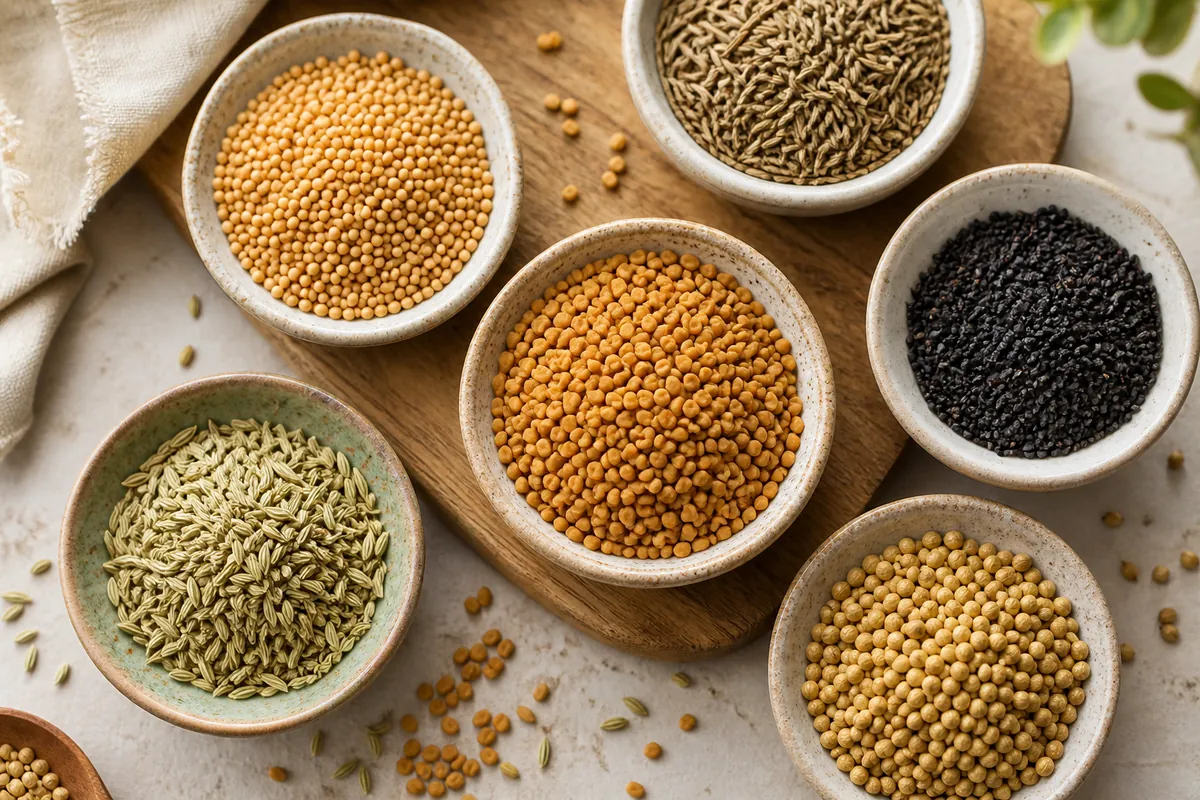
5 Best Fenugreek Seed Substitutes You Can Trust
Ingredients
Equipment
Method
- Identify whether your recipe needs fenugreek for bitterness/aroma (curry, spice rub) or for a specific fenugreek-forward profile.
- Choose the substitute from the table based on how close you need the flavor: closest (fenugreek powder/celery seed) or backup (mustard/turmeric).
- Use the listed ratio (fenugreek seed equivalents). Grind celery or mustard seed fine to blend evenly.
- Bloom for 30–60 seconds in hot oil if your dish uses tempering; this carries aroma like whole fenugreek seeds.
- Taste at the end and adjust: add a pinch more of the substitute for bitterness or balance with a small amount of salt/sugar depending on the dish.
Notes
- Fenugreek seed flavor is warm, slightly bitter, and malty—whole vs ground can differ in intensity.
- Blooming in hot oil helps most substitutes behave like fenugreek seed in curries.
Tried this recipe?
Let us know how it was!
Carrie is a food writer and editor with more than 15 years of experience. She has worked for some of the biggest names in the food industry, including Bon Appétit, Food & Wine, and Martha Stewart Living.
As the Editor in Chief of EpicureDelight, Carrie oversees all of the content on the site. She also manages the team of contributing writers and editors, who help to create delicious recipes, helpful tips, and informative articles that you’ll find on the site.
A native of the Chicago area, Carrie is passionate about all things food. She loves trying new restaurants and experimenting with new recipes in her kitchen. She’s also a graduate of the Culinary Institute of America, so she knows a thing or two about food!



