
Fontinella has a pull that's hard to replicate exactly: creamy melt, a quiet nuttiness, and just enough savory bite to make a dish feel complete. Finding a good fontinella cheese substitute means deciding first whether you need that smooth melt or that nutty top-note flavor, because not every swap does both equally well.
Most cheeses in the Alpine family get close on one dimension. The list below picks the five strongest options and tells you when each one holds up and when it doesn't.
Fontinella is an Alpine-style cheese with a creamy melt and nutty, savory flavor. For melt, provolone and Gruyère are the most reliable swaps. For grating and flavor intensity, aged asiago is the closest match. All five substitutes work 1:1 by weight as a starting point.
5 Best Fontinella Cheese Substitutes Ranked by Use
| # | Substitute | Best For | Ratio | Key Note |
|---|---|---|---|---|
| 1 | Asiago (aged) | Both | 1:1 | Closest nutty flavor |
| 2 | Provolone (mild/med) | Melt | 1:1 | Milder, reliable melt |
| 3 | Gruyère | Both | 1:1 | Stronger nutty depth |
| 4 | Emmental (Swiss) | Melt | 1:1 | Mild; season well |
| 5 | Cheddar (sharp) | Both | 1:1 | Tangier; use less first |
Gouda (medium) is a strong runner-up for melt-heavy applications like grilled cheese or baked pasta, and it appears in the section below as a practical alternative where asiago or Gruyère feel too sharp.
1. Asiago (aged), Shredded
Aged asiago is the closest thing to Fontinella's nutty, slightly sharp character. It grates easily and melts smoothly when shredded fine, so it works for both topping a gratin and folding into a hot sauce.
When you're deciding between asiago options, picking the right asiago grade makes a real difference: fresher asiago is milder and softer, while aged is closer to Fontinella's savory bite.
- Shred fine: Coarse pieces resist even melting; fine shreds distribute faster and more evenly.
- Best dishes: Gratins, baked pasta, flatbreads, and cheese topping for soups.
- Flavor balance: Aged asiago reads slightly sharper than Fontinella, so pair it with mild ingredients to keep balance.
Skip if: you need a mild, buttery background note-aged asiago will read noticeably sharper than Fontinella in delicate cream sauces.
2. Provolone (mild/medium), Shredded
Provolone is the most dependable melt substitute on this list. Its flavor stays quiet enough that it won't pull focus in a dish, which is exactly what you want when the sauce or other toppings are carrying the recipe.
When swapping in provolone for Fontinella, stick to mild or medium aged varieties rather than sharp provolone, which can develop a pungent edge under heat.
- Shred it yourself: Pre-shredded provolone has added starch that slows melting; fresh-shredded works better in baked dishes.
- Best dishes: Casseroles, baked sandwiches, stuffed peppers, and lasagna layers.
- Flavor boost: Add a pinch of black pepper or smoked paprika if the dish needs more depth without changing the cheese.
Skip if: you're relying on Fontinella's nutty intensity as the main flavor-provolone may taste noticeably flat in comparison.
3. Gruyère, Shredded
Gruyère is the strongest nutty-melt option on this list. It has consistent melt behavior and a pronounced savory depth that works especially well in gratins, baked mac, and anything that gets a long time in the oven.
Gruyère vs. Fontinella
Works for: gratins, baked pasta, onion soup, cheese sauces where bold nutty flavor is welcome
Skip if: the recipe calls for a subtler cheese background-Gruyère's flavor is more assertive than Fontinella
Gruyère belongs to the same broader Alpine-style family as Fontinella. If you want a sense of how these cheeses relate in flavor, this nutty Alpine profile explains the shared characteristics well.
- Start with less: Reduce by 10-15% on the first try, then add more if the dish needs more punch.
- Best dishes: Gratin dauphinois, French onion soup, baked macaroni, croque monsieur.
Skip if: you're making a delicate cream sauce where the cheese should be subtle-Gruyère's assertiveness can take over quickly.
4. Emmental (Swiss), Shredded
Emmental melts cleanly and evenly, with a mild, slightly sweet flavor that stays in the background. It won't deliver Fontinella's nuttiness on its own, but it handles melt-heavy applications well when the other ingredients carry the seasoning.
The mild, hole-riddled Swiss wheel has lower fat than many Alpine cheeses, so it can melt slightly more watery if overheated-keep temperatures moderate.
- Shred size: Use medium shreds; too fine and it can clump before fully melting.
- Best dishes: Quiches, egg bakes, chicken cordon bleu, and mild cheese sauces.
- Seasoning boost: Add a small amount of white pepper or a pinch of nutmeg to bring the depth closer to Fontinella.
Skip if: your recipe depends on Fontinella's nutty savoriness-Emmental needs extra seasoning support to get anywhere near that flavor.
5. Cheddar (sharp), Shredded
Sharp cheddar is the easiest fallback when nothing else is available. It melts well and adds a strong savory presence, but its tang is distinctly different from Fontinella's nutty finish.
The dish will taste good-just different.
| Use | Ratio | Notes |
|---|---|---|
| Baked pasta or gratin | Start at 75% | Sharp cheddar; add more after tasting |
| Sandwich or melt | 1:1 | Flavor difference is minor when melted hot |
| Cheese sauce | Start at 80% | Cheddar tang builds as sauce reduces |
If you're regularly working with sharp cheddar alternatives, white cheddar is a slightly softer swap that melts similarly but reads a little less acidic than yellow varieties.
- Shred cold: Cold cheddar shreds cleanly without smearing, especially important for fine shreds.
- Best dishes: Mac and cheese, baked potatoes, quesadillas, and hearty baked casseroles.
- Reduce salt elsewhere: Sharp cheddar is saltier than Fontinella, so hold back on added salt until you taste.
Skip if: you want a nutty Alpine flavor profile-cheddar's tang will steer the dish in a noticeably different direction.
Gouda (medium), Shredded
Medium Gouda melts smoothly and blends easily into baked dishes. Its flavor reads slightly buttery and sweet compared with Fontinella's more savory finish, so it works best in dishes where that sweetness won't feel out of place.
If you want to explore buttery melting-cheese options beyond Gouda, several Dutch and semi-soft cheeses follow a similar profile.
- Best dishes: Grilled cheese, baked macaroni, stuffed chicken, and savory hand pies.
- Counter the sweetness: A pinch of smoked paprika or white pepper keeps the flavor in savory territory.
- Avoid aged Gouda: Aged varieties become drier and more caramel-flavored, which drifts further from Fontinella's profile.
Skip if: you're making a dish where Fontinella's nuttiness is the star-use Gruyère or asiago instead for that flavor role.
Making Fontinella Cheese Substitutes Work
The rule is simple: match the substitute to the job first. Melt-heavy dishes (gratins, baked pasta, sandwiches) reward provolone, Emmental, or Gouda.
Flavor-forward applications (toppings, mix-ins, cheese boards) are better served by asiago or Gruyère. Knowing how long pre-shredded cheese stays fresh also matters here, since aged, freshly shredded cheese melts more evenly than bagged shreds that have been sitting.
- Start 1:1, then adjust: All five substitutes work at a 1:1 swap by weight; if the sub is sharper (cheddar, Gruyère), reduce by 10-25% and taste before adding more.
- Shred your own: Fresh-shredded cheese melts faster and more evenly than store-bought pre-shredded, which contains anti-caking starch.
- Season to close the gap: Milder subs like provolone or Emmental benefit from a pinch of salt, black pepper, or nutmeg to pull their flavor closer to Fontinella's savory finish.
Frequently Asked Questions
Provolone (mild or medium) is the most reliable melt swap. It distributes evenly in baked dishes and sandwiches without dramatically changing the overall flavor of the recipe.
Yes for most swaps. Start 1:1, then reduce by 10-25% for stronger cheeses like sharp cheddar or Gruyère, and add more only after tasting.
Aged asiago is the closest flavor match. It shares Fontinella's nutty, savory bite and works for both grating and melting when shredded fine.
Gouda is the gentler choice for melt-heavy dishes. Sharp cheddar works too but use about 80% of the amount called for, since its tang builds quickly under heat.
Often yes. A small pinch of salt, plus black pepper or a touch of nutmeg, closes the flavor gap between mild Swiss or provolone and Fontinella's more assertive finish.
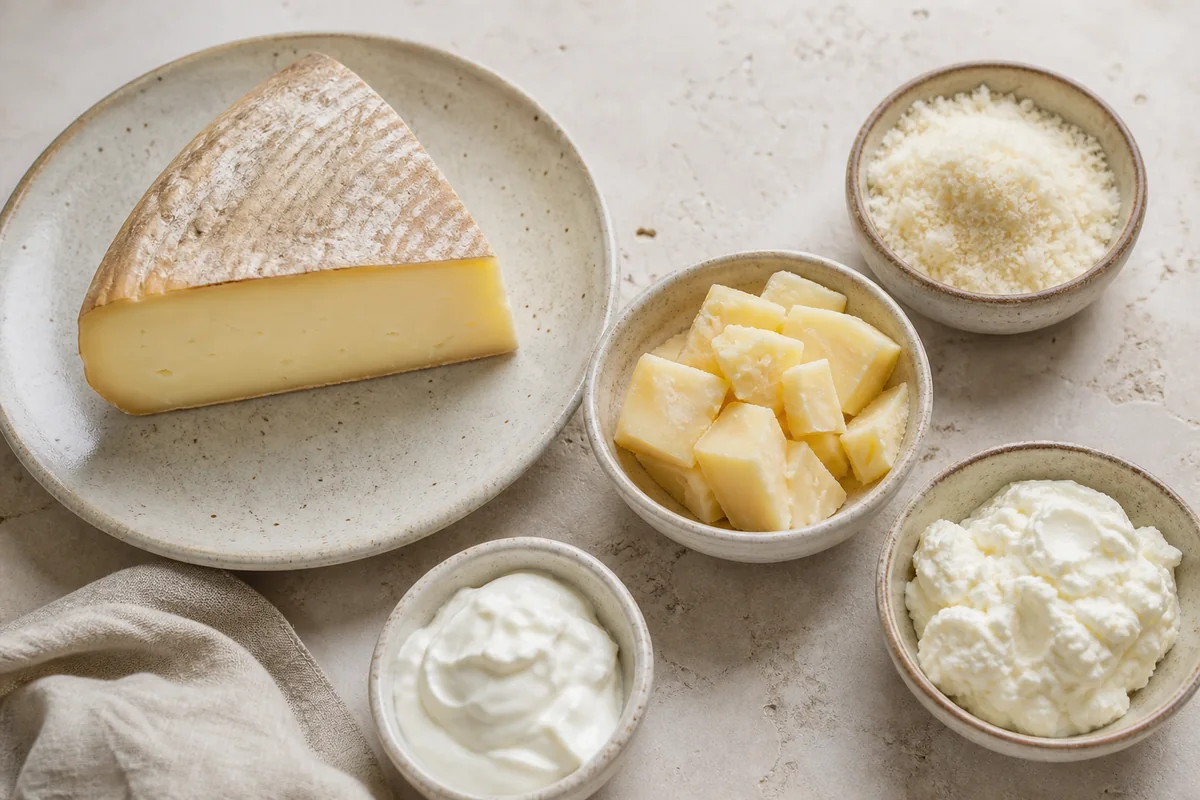
5 Best Fontinella Cheese Substitutes (Honest Picks)
Ingredients
Equipment
Method
- Decide how you’re using Fontinella: melting (bake/grill) or grating (topping/mix-ins), because that determines the closest texture match.
- Choose your top pick from the table below, then substitute 1:1 by weight (or by amount) in the recipe.
- If your swap is milder than Fontinella (Swiss/provolone), boost flavor with a pinch of salt, black pepper, or added herbs suited to the dish.
- If your swap is sharper or funkier (cheddar/gruyère), reduce the amount by 10–25% first, then add more only if the dish still needs punch.
- For grating: use finely shredded cheese to mimic Fontinella’s melt speed; for baking: shred to help it distribute evenly.
Notes
- Fontinella is typically chosen for nutty flavor and creamy melt—your substitute should match one of those jobs first.
- Always shred for more even melt and more similar bite in the final dish.
Tried this recipe?
Let us know how it was!
Carrie is a food writer and editor with more than 15 years of experience. She has worked for some of the biggest names in the food industry, including Bon Appétit, Food & Wine, and Martha Stewart Living.
As the Editor in Chief of EpicureDelight, Carrie oversees all of the content on the site. She also manages the team of contributing writers and editors, who help to create delicious recipes, helpful tips, and informative articles that you’ll find on the site.
A native of the Chicago area, Carrie is passionate about all things food. She loves trying new restaurants and experimenting with new recipes in her kitchen. She’s also a graduate of the Culinary Institute of America, so she knows a thing or two about food!



