
Goji berries have a flavor that's hard to pin down: part sweet, part tangy, slightly herbal. They show up in trail mixes, smoothie bowls, teas, and baked goods, but they're not always easy to find.
When you need a swap, the right choice depends on whether you're after color, chew, tartness, or nutritional value.
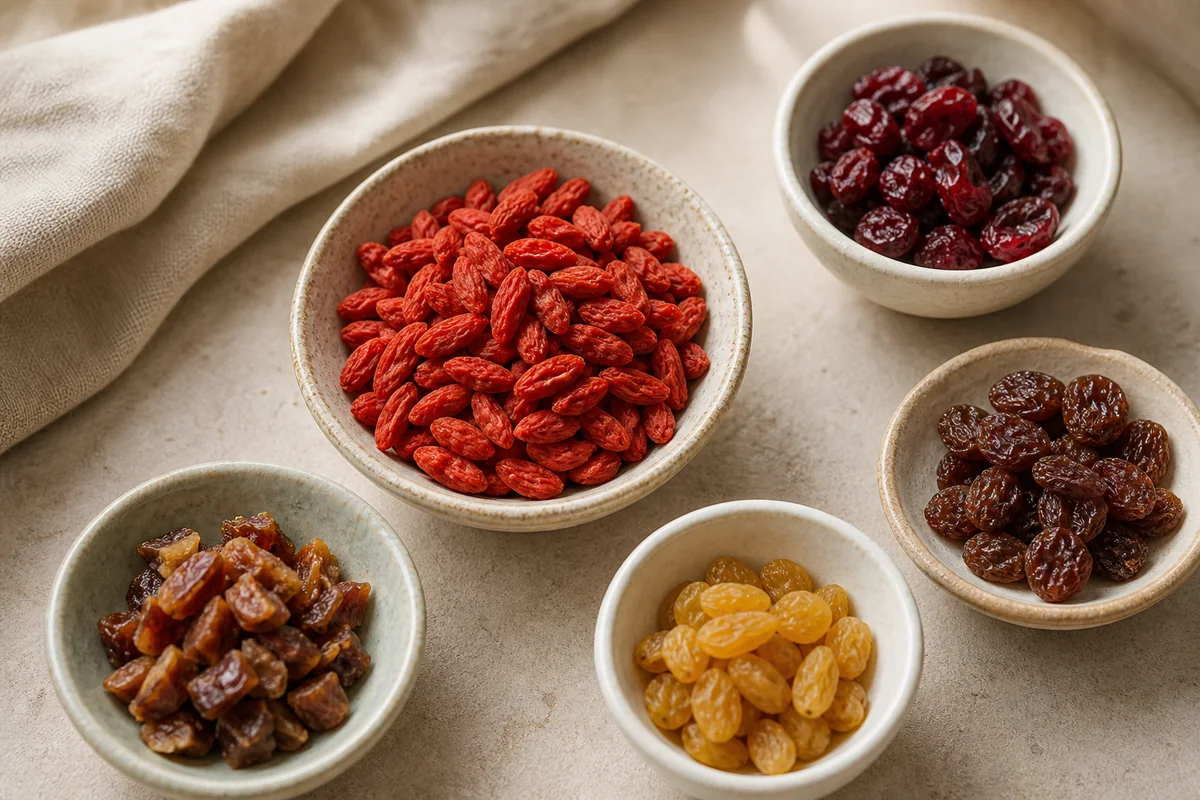
The best goji berry substitutes are dried cranberries, dried cherries, and dried blueberries. Each delivers a similar chew and sweetness. For color-forward dishes, cranberries match goji's red hue most closely. For antioxidant-focused recipes, acai powder or dried mulberries are strong picks.
Why Goji Berries Are Tricky to Replace
Goji berries are small and chewy with a mild tang. Their flavor isn't intense, which actually makes them easy to swap in most recipes.
The bigger challenge is texture. Fresh goji berries have a soft, slightly waxy skin, while dried ones are dense and chewy, much like a small raisin.
When you swap in another dried fruit, match that chew level first.
Color is the second issue. Goji berries are a distinct orange-red, so in granola, salads, or any dish where looks matter, you want something in that same visual range.
The 7 Best Goji Berry Substitutes
1. Dried Cranberries
Dried cranberries are the closest match most home cooks already have. They're red, chewy, and tart with a hint of sweetness, which lines up well with goji's flavor.
- Ratio: 1:1 in all uses
- Flavor: Tangier than goji, so reduce any added lemon or vinegar by a small amount
- Texture: Similar chew, especially if you buy unsweetened varieties
- Watch: Most store-bought cranberries are sweetened; grab unsweetened if your recipe is already sweet
Skip if you need a very mild, low-acid berry, since cranberries bring more pucker than goji.
2. Dried Cherries
Dried cherries are slightly less tart than cranberries and have a deeper, almost jammy flavor. They work especially well in baked goods like muffins, scones, and granola bars.
Dried Cherries vs. Goji Berries
Works for: baking, trail mixes, oatmeal, grain bowls
Skip if: you need exact color match (cherries go darker, not orange-red)
The texture is spot-on. Dried tart cherries in particular have that same dense, slightly sticky chew goji berries bring to a recipe.
Skip if you're making something visually styled around goji's orange-red color. Cherries turn dark and pull focus in the wrong direction.
3. Dried Blueberries
Dried blueberries are a quieter swap. They're small, chewy, and mildly sweet, making them useful when you don't want the swap to dominate the flavor.
If you're already curious about blueberry-based swap options, dried blueberries work just as well in these kinds of applications.
- Ratio: 1:1
- Flavor: Milder and sweeter, with less tang than goji
- Texture: Good match for dried goji; can be chewy to slightly crunchy depending on brand
- Color: Deep purple-blue, not orange-red
Skip if your recipe is specifically tea-based or brewed, since dried blueberries don't rehydrate as cleanly as goji berries.
4. Dried Mulberries
Dried mulberries are an underrated option. They're light, airy, and naturally sweet with almost no acidity.
They're common in health food stores and often positioned next to goji berries on the shelf.
The texture is fluffier than goji's, so they're better in dry preparations than in soups or teas. For any recipe where goji is stirred into something hot, mulberries may dissolve rather than hold their shape.
Skip if you need a berry with any tartness. Mulberries are sweet through and through.
5. Dried Rosehips
Rosehips are the fruit of the rose plant, and they have a tart, slightly floral flavor that mimics goji well in teas and infusions. They're also high in vitamin C, which makes them a solid swap when you're using goji for its nutritional properties.
When swapping tart berry flavors in brewed drinks, rosehips are one of the most direct options available. Use about ¾ of the amount called for, since they're more intensely flavored than goji.
- Ratio: ¾:1 (use less than the original amount)
- Best in: Teas, syrups, tonics, infused waters
- Flavor: Tart, floral, slightly fruity
Skip if your recipe calls for whole berries in a salad or grain bowl. Rosehips have seeds and require processing before they're edible.
6. Acai Powder or Dried Acai
If you're using goji berries in a smoothie bowl or energy recipe for the antioxidant boost, acai powder is the strongest nutritional parallel. It won't replicate the chewy texture, but it will add a dark berry flavor and deep color.
For anyone already weighing picking the right acai option, the powder format is easiest to measure into recipes. Start with 1 teaspoon of powder for every tablespoon of dried goji berries.
| Use | Ratio | Notes |
|---|---|---|
| Smoothie bowls | 1 teaspoon powder per 1 tablespoon goji | Blend or swirl in at the end |
| Energy balls | 1 teaspoon powder per 1 tablespoon goji | Add extra oats to absorb moisture |
| Yogurt topping | ½ teaspoon powder per 1 tablespoon goji | Adjust for color intensity |
Skip if you need whole berry texture. Powder has no chew.
7. Dried Raspberries
Dried raspberries bring a sharp tartness and bright red color that works in granolas, baked goods, and snack mixes. They're more assertive than goji, but they hold up well in baking.
When choosing a tart berry swap, dried raspberries are worth considering for their color payoff alone.
The texture is slightly different: dried raspberries are crunchier and more fragile than goji's dense chew. They can crumble into batters rather than staying whole.
- Ratio: 1:1 by volume
- Best in: Granola, trail mix, cookies, muffins
- Flavor: Sharply tart, more intense than goji
- Texture note: Crumbles more easily; fold in gently
Swapping Goji in Baking
Baking narrows your options because texture and moisture matter more. Goji berries are semi-dry with a firm chew.
A substitute that's too wet will throw off your dough. One that's too dry will turn to dust.
Dried cranberries and dried cherries are your best bets here. They hold shape during baking and don't release too much liquid. If you're working with a recipe that also calls for wheat-like grains alongside the goji, you may already know how much swapping in different grains matters; the same principle applies to dried fruits, and substituting whole grains follows a similar texture-first logic.
Chop any large dried fruits to roughly goji-berry size before folding them in. This keeps the distribution even.
Frequently Asked Questions
Yes, raisins work in a pinch for texture and chew, but the flavor is sweeter and less tart. They're better in baked goods than in health bowls or teas.
Dried cranberries come closest in terms of tart-sweet balance and red color. Dried rosehips match the flavor in brewed applications like tea.
Yes. Wolfberry is another name for the same fruit. Any substitute listed here works for wolfberry recipes too.
Fresh blackberries or cherries can replace dried goji in salads or bowls, but they add moisture. Pat them dry first, and don't use them in baking without adjusting liquid.
Dried rosehips are the best tea substitute. They steep well, release color, and have a similar tart flavor. Use about ¾ the amount of the original goji quantity.
Tried this recipe?
Let us know how it was!
Carrie is a food writer and editor with more than 15 years of experience. She has worked for some of the biggest names in the food industry, including Bon Appétit, Food & Wine, and Martha Stewart Living.
As the Editor in Chief of EpicureDelight, Carrie oversees all of the content on the site. She also manages the team of contributing writers and editors, who help to create delicious recipes, helpful tips, and informative articles that you’ll find on the site.
A native of the Chicago area, Carrie is passionate about all things food. She loves trying new restaurants and experimenting with new recipes in her kitchen. She’s also a graduate of the Culinary Institute of America, so she knows a thing or two about food!



