
Gorgonzola has a specific job in a recipe: it brings saltiness, a tangy blue-milk sharpness, and a soft creaminess that melts rather than strings. Lose that balance and the whole dish shifts.
Whether you need a gorgonzola cheese substitute in baking, a quick sauce swap, or just something workable from your fridge, the right replacement depends on two things: how bold you want the blue flavor, and how smooth you need the texture.
Understanding blue cheese flavor notes helps you pick the right lane before you start. Some blues are sharp and crumbly; others are soft and mild.
Gorgonzola sits in the middle, which is why it works in so many recipes.
The five substitutes below are ordered by how closely they mimic that balance. The first two are direct matches.
The last two are emergency pantry options.
The best gorgonzola cheese substitutes are dolce gorgonzola, Danish blue, and Roquefort for true blue flavor. For milder results, use cream cheese blended with a pinch of blue. Feta works as a last resort when creaminess matters less than tang and salt.
5 Best Gorgonzola Cheese Substitutes Ranked by Flavor and Texture
The table below covers the five strongest options. The key variables are blue intensity, how crumbly or creamy the cheese is, and salt level.
A crumbly substitute used in a smooth sauce will break the texture unless you blend it first with something soft, like the tangy spread or a chilled dairy dollop.
| # | Substitute | Best For | Ratio | Key Note |
|---|---|---|---|---|
| 1 | Dolce Gorgonzola | Both | 1:1 | Mildest; seamless swap |
| 2 | Danish Blue | Both | 1:1 | Blend for smoother texture |
| 3 | Roquefort | Both | ¾:1 | Saltier; reduce quantity |
| 4 | Cream Cheese + Blue | Both | ¾:1 | Creamy base; mild blue |
| 5 | Feta | Cooking | 1:1 | No melt; crumble finely |
Salt level matters more than most cooks expect. If your substitute is sharper or saltier than gorgonzola, cut back by 2 tablespoons and taste before adding any other salt to the dish.
1. Dolce Gorgonzola
Dolce gorgonzola is the milder, younger version of the same cheese. It has a soft, almost buttery texture and a gentle tang that won't overpower delicate pasta sauces or baked tarts.
When warmed, dolce gorgonzola melts smoothly without separating. That makes it ideal for cream-based risottos, flatbreads, and any recipe where you want the cheese to disappear into the background rather than announce itself.
Use it as a direct 1:1 swap.
- Pasta sauces: Stir in at the very end, off-heat, for a silky finish
- Baked dishes: Dollop over the top before the final 5 minutes in the oven
- Salad dressing: Blend with olive oil and a squeeze of lemon for a mild, creamy vinaigrette
- Flatbreads and pizza: Scatter directly; it melts faster than aged gorgonzola
If you want to understand creamy cheese options beyond this one, that resource covers the wider blue-cheese family. Skip if your recipe calls for a strong, bold blue punch-dolce is too gentle for that job.
2. Danish Blue Cheese
Danish blue is sharper and saltier than gorgonzola. It works as a 1:1 swap when you want punch, but the texture needs managing in warm dishes.
- Flavor strength: Noticeably bolder than gorgonzola; reduce by 1 tablespoon if the dish is already salty
- Texture fix: Blend with cream cheese or sour cream before adding to warm liquids
- Timing: Add off-heat or in the final minute; high heat turns it grainy fast
- Dressings: Works beautifully crumbled straight in; no blending needed for cold applications
- Salt balance: Taste the dish before adding any extra salt-Danish blue usually covers it
Skip if you need a mild, delicate flavor. Danish blue will dominate lighter dishes like cream soups or mild vegetable gratins.
3. Roquefort
Roquefort is the most intense option on this list. It is saltier than gorgonzola and has a sharper, almost peppery blue note that works best in dishes with bold, competing flavors.
For a useful side-by-side look at these two cheeses, the Roquefort side-by-side page breaks down the differences clearly. Start with about ¾ of the quantity your recipe calls for, then taste.
- Intensity: Stronger and saltier than gorgonzola; always start with less
- Best uses: Pasta sauces, bold dressings, baked gratins with other strong flavors
- Adjustment tip: If too sharp, stir in 1 tablespoon cream or cream cheese to round the edge
- Avoid in: Lightly seasoned dishes where it will overpower everything else
Skip if your recipe is already salty. Roquefort added to a salty broth or cured-meat dish will tip it past the point of rescue.
4. Cream Cheese + Blue Cheese Pinch
This combo is the best gorgonzola cheese alternative for baking when you want spreadable creaminess and controlled tang. The cream cheese handles the body; the blue cheese is just seasoning.
Cream Cheese Base
Works for: Smooth sauces, cheesecakes, baked tarts, spreads
Skip if: You need visible blue crumble in the finished dish
Blue Cheese Pinch
Works for: Adding tang and depth without full blue intensity
Skip if: Your audience is sensitive to blue-cheese flavor entirely
When storing soft cheese for later use, keep the two components separate and blend fresh. That keeps the blue pinch from overpowering the base over time.
- Step 1 (Base): Soften ¾ cup cream cheese to room temperature
- Step 2 (Blue add): Crumble in 1-2 teaspoon of any blue cheese; mix well
- Step 3 (Taste): Too mild? Add another pinch. Too sharp? Fold in more cream cheese
- Ratio: Use ¾ of this blend to replace every 1 part gorgonzola called for
Skip if you need a fully blue, crumbly topping. This blend is smooth and pale-it won't look or behave like crumbled gorgonzola on a salad.
5. Feta
Feta is not a blue cheese. It provides tang and salt, but it won't replicate gorgonzola's creamy, blue-ripened body.
Still, it is the most common grocery-store option when nothing else is available.
The key is crumbling it very finely and distributing it evenly through warm sauce or baked layers. Feta doesn't melt-it softens and releases salt.
If you add it to a sauce and stir gently, it breaks into small pieces that approximate the texture well enough.
- Best uses: Baked pasta, stuffed peppers, pizza, warm grain bowls
- Texture fix: Crumble as finely as possible before adding; avoid large chunks
- Flavor fix: Add a tiny pinch of black pepper and a few drops of lemon juice to mimic blue sharpness
- Skip for sauces: Feta won't melt into a smooth, cohesive cream sauce
If you're open to swapping to a stronger blue instead, that is always a closer result than feta. Skip feta if your dish depends on a smooth, melted cheese finish.
Making Your Gorgonzola Substitute Work
Every substitute in this list has one or two weaknesses: too sharp, too crumbly, or not tangy enough. The fix is almost always the same-adjust one variable at a time before the dish is done.
For blue-intensity, reduce quantity first and taste. For texture, pull the pan off heat before adding cheese and stir gently.
For tang, a few drops of lemon juice or a dash of white vinegar closes the gap fast. You can also check how long to keep your blue component fresh by reading up on storing blue cheese safely-an old, dried-out blue will taste harsher and saltier than a fresh one.
- Flavor intensity: Choose by boldness first-mild dishes need dolce or cream-cheese blend; bold dishes handle Danish blue or Roquefort fine
- Texture and melt: Add all substitutes off-heat or in the final minute; crumbly blues need blending with cream cheese first for smooth sauces
- Final adjustment: Taste after adding the substitute, then dial in with a squeeze of lemon (for more tang) or a spoonful of cream (to soften sharpness) before serving
Frequently Asked Questions
Dolce gorgonzola is the closest match for sauces. It melts smoothly and won't overpower the dish. Danish blue works if you want more punch, but blend it with cream cheese first to avoid a grainy texture.
Yes for dolce gorgonzola and feta. Reduce by about 25% for Roquefort or Danish blue, since both are saltier and more intense than gorgonzola in baked applications.
Add the cheese off-heat and stir gently. Blending crumbly blues with 1-2 tablespoon of cream cheese or sour cream before adding them to warm liquid also prevents graininess.
Use the cream cheese and blue cheese blend. Start with ¾ cup cream cheese and just 1 teaspoon of any mild blue, then taste and adjust the blue pinch up or down.
Feta is a workable last resort. Crumble it very finely, add a few drops of lemon juice for tang, and avoid using it in any dish that needs the cheese to melt smoothly.
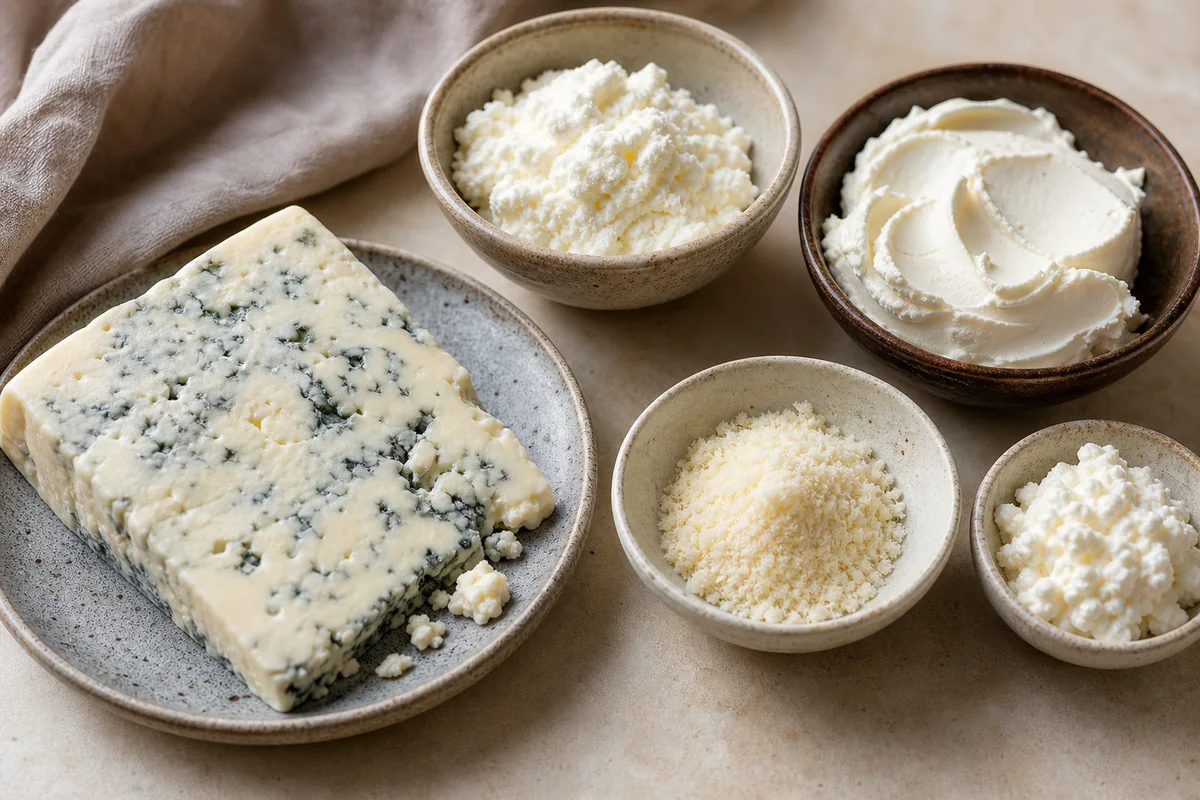
5 Best Gorgonzola Cheese Substitutes (Pantry Swaps)
Ingredients
Equipment
Method
- Decide how bold you need the flavor: if you want mild, aim for dolce/creamier swaps; if you want punch, choose a stronger blue (roquefort/danish blue).
- Choose your substitute and measure with the listed ratio; for crumbly blues, blend briefly with cream cheese or sour cream to match gorgonzola’s spreadable texture.
- If your swap is too sharp or salty, reduce the amount slightly and add a small amount of cream/cream cheese to round it out.
- If your swap is not tangy enough, add a tiny squeeze of lemon or a dash of vinegar, then taste and adjust before serving.
- Use the substitute in the same step as gorgonzola (stir into warm sauces off-heat; melt in casseroles briefly) to avoid breaking texture.
Notes
- For baking and hot dishes, add gorgonzola-style substitutes off-heat or at the very end to prevent graininess.
- If the substitute is crumbly (feta/blue), crumble finely and stir to distribute flavor evenly.
Tried this recipe?
Let us know how it was!
Carrie is a food writer and editor with more than 15 years of experience. She has worked for some of the biggest names in the food industry, including Bon Appétit, Food & Wine, and Martha Stewart Living.
As the Editor in Chief of EpicureDelight, Carrie oversees all of the content on the site. She also manages the team of contributing writers and editors, who help to create delicious recipes, helpful tips, and informative articles that you’ll find on the site.
A native of the Chicago area, Carrie is passionate about all things food. She loves trying new restaurants and experimenting with new recipes in her kitchen. She’s also a graduate of the Culinary Institute of America, so she knows a thing or two about food!



