
That dried-chile fruitiness in a great mole or taco marinade? It almost always comes from the guajillo pepper substitute you reach for when the real thing runs out.
Guajillos bring a mild-to-medium heat, a berry-like tang, and a thin skin that blends into silky sauces. The best swaps are other dried Mexican chiles, rehydrated and blended the same way.
Most guajillo recipes call for the pepper to be toasted, soaked in hot water, then blended into a paste. Your substitute should follow the same process.
Skipping the rehydration step leaves you with gritty texture and muted flavor.
Ancho chile is the closest swap at a 1:1 ratio, rehydrated and blended. New Mexico chile matches heat well. Mulato and pasilla go darker and richer. California chile is the gentlest option. All work best as blended paste, not whole chiles.
5 Best Guajillo Pepper Substitutes (with Ratios)
| # | Substitute | Best For | Ratio | Key Note |
|---|---|---|---|---|
| 1 | Ancho Chile | Sauces / Mole | 1:1 | Sweeter, slightly milder |
| 2 | New Mexico Chile | Sauces / Marinades | 1:1 | Savory, slight tang |
| 3 | Mulato Chile | Mole / Braises | 1:1 | Cocoa-raisin depth |
| 4 | Pasilla Chile | Sauces / Chili | 1:1 | Reduce by ¼ if needed |
| 5 | California Chile | Crowd-friendly sauces | 1:1 | Mild; boost with powder |
1. Ancho Chile
Ancho is a dried poblano, and it sits in the same flavor family as guajillo. Use a 1:1 ratio: rehydrate one ancho for every guajillo called for, seed it, then blend smooth with some of the soaking liquid.
The main difference is sweetness. Ancho trends richer and softer, while guajillo has a sharper, fruitier edge.
For ancho-based earthy pepper swaps, that difference is easy to fix with a pinch of cayenne or a drop of apple cider vinegar.
Ancho Chile
Works for: mole, enchilada sauce, marinades, red chile braises
Skip if: your recipe needs a bright, tangy salsa where guajillo's fruity edge is the whole point
- Ratio: 1:1 dried, rehydrated and seeded before blending
- Heat fix: Add a pinch of cayenne if the sauce tastes too mellow
- Sweetness fix: A small splash of white vinegar or lime juice sharpens the flavor
- Texture: Ancho skin blends very smoothly, so expect a silky paste
2. New Mexico (Hatch) Chile
New Mexico chile is one of the most practical swaps here. It matches guajillo in heat range and has a savory, slightly tangy flavor that sits well in everyday sauces.
This mildly earthy dried chile needs the same rehydration treatment: hot water, 15-20 minutes, seed, then blend.
Start at 1:1 for blended paste and taste before adding more. If you're choosing a different swap and want to know more, the best Hatch chile alternatives are worth a look too.
- Ratio: 1:1 (dried, stemmed, seeded) for sauce and paste use
- Heat: Mild-to-medium, close to guajillo, but can vary by batch
- Flavor: Slightly more savory than fruity, which works well in moles and braising liquids
- Skip if: You only have New Mexico chile powder and your recipe needs a smooth, thick blended paste, since powder won't give you the same body
3. Mulato Chile
Mulato is the pick when you want guajillo's color and body with more darkness behind it. It has cocoa and dried-fruit notes, making it a natural fit for mole negro, slow braises, and chili sauces.
When blending darker dried chiles, use the same soaking method and keep the ratio at 1:1.
- Ratio: 1:1, rehydrated and blended; use the soaking liquid sparingly so the sauce doesn't go bitter
- Flavor shift: Expect richer, less bright results; guajillo's tangy fruit note fades here
- Sweet/acid fix: A small squeeze of lime after blending restores some brightness
- Best uses: Mole, posole, dark chili, and braised short ribs
- Skip if: You're making a fresh, tang-forward salsa where fruitiness leads the flavor
4. Pasilla Chile
Pasilla brings a deeper, more savory direction than guajillo. Where guajillo reads fruity and aromatic, pasilla leans earthy with a hint of dried herb.
That's useful in chili and braised meats, but it can make a quick salsa feel heavy.
Start at 1:1 for rehydrated, seeded, blended pasilla. If your recipe depends on guajillo's lighter quality, pull back to about ¾ of the called-for amount and add a splash of lime juice after blending.
For a closer look at what pasilla does to a sauce, this dried-chile flavor profile helps compare the two side by side.
Pasilla Chile
Works for: chili, dark enchilada sauce, braises, posole
Skip if: you're making a quick taco salsa where brightness matters and you don't want to add acidity
- Standard ratio: 1:1 dried, rehydrated and seeded
- Lighter recipes: Reduce to ¾ and add 1 teaspoon lime juice or a splash of vinegar after blending
- Simmer time: Let the blended paste simmer 2-3 minutes before final seasoning so the earthy edge mellows
5. California Chile
California chile is the friendly option in this group. It is mild and slightly sweet with a clean dried-chile flavor, which makes it easy to use when heat tolerance is a concern.
Use a 1:1 ratio, seed it, rehydrate if blending, and go from there.
The trade-off is that California chile can read almost too gentle next to guajillo's more pronounced aroma. A pinch of ancho powder or regular chile powder after blending closes that spice gap without overpowering the sauce.
| Use | Ratio | Notes |
|---|---|---|
| Blended sauce / mole | 1:1 | Rehydrate 15-20 min; blend with soaking liquid |
| Marinade | 1:1 | Blend smooth; thin with a little olive oil or citrus juice |
| Dry rub base | 1:1 (powder) | California chile powder works; add pinch of cayenne for heat |
- Too mild? Add a pinch of chile powder or a small dried árbol chile to the blend
- Too thick? Add the soaking water 1 tablespoon at a time until the paste moves freely in the blender
- Skip if: Your dish is chile-forward and depends on guajillo's strong dried-fruit aroma for its backbone
Making Guajillo Pepper Substitutes Taste Right
The goal when swapping is to match three things: color, fruitiness, and heat. Most of the chiles above land close on color and heat but need a small adjustment for brightness.
A squeeze of lime or a splash of white vinegar after blending usually handles that, and you can check how well a substitute held up by storing it correctly. Knowing how storing dried chiles properly affects flavor before you even start is worth a moment of your time.
- Rehydrate right: Cover dried chiles with just-boiled water for 15-20 minutes, then seed and blend with a few tablespoons of the soaking liquid for body
- Heat off? Adjust with a pinch of chile powder or cayenne, not extra water, which dilutes flavor without adding heat
- Flavor too round? Add acidity first (lime or apple cider vinegar, about 1 teaspoon at a time), then taste; add a small pinch of sugar only if the sauce tastes harsh after the acid goes in
Frequently Asked Questions
Ancho chile is the closest match at a 1:1 ratio. Rehydrate, seed, and blend it the same way you would guajillo for a smooth, earthy sauce.
Yes. Use about 1 teaspoon of ancho or New Mexico chile powder per dried guajillo called for. The texture won't match a blended paste, but flavor stays close.
Yes, always rehydrate for blended sauce or paste. Soak in hot water for 15-20 minutes; skipping this step leaves gritty texture and dull flavor.
Balance smoke with a small squeeze of lime or a pinch of sugar. Cut heat by blending in a small piece of seeded California or ancho chile.
New Mexico chile or California chile work best. Both are mild enough to let meat flavor lead, and they blend into a smooth, clingy marinade paste.
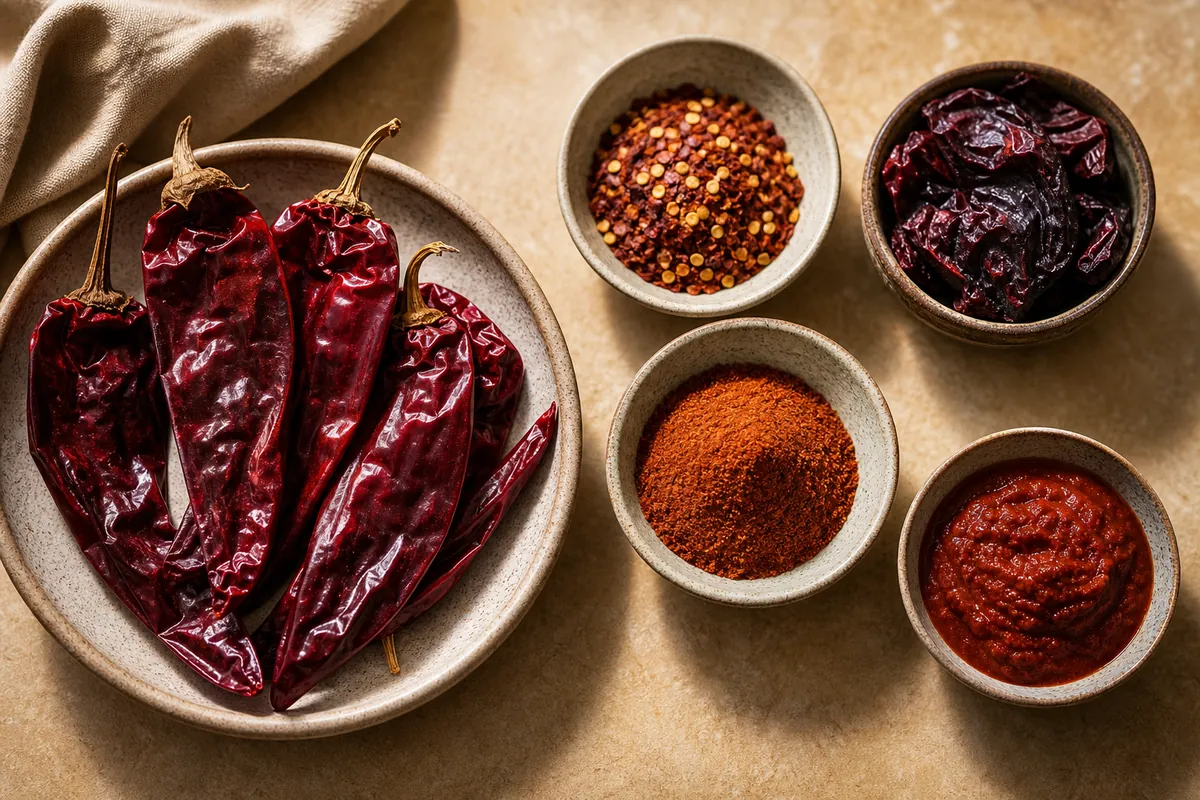
5 Best Guajillo Pepper Substitutes (with Ratios)
Ingredients
Equipment
Method
- Choose the substitute that matches your goal: closest flavor (ancho/New Mexico), deeper richness (mulato/pasilla), or smoky shortcut (chipotle).
- Rehydrate dried chiles (cover with hot water 15–20 minutes) if your recipe uses blended guajillo paste; then seed and blend smooth with the same cooking liquid.
- Use the ratio from the table to start (most are 1:1; chipotle start at ¾).
- Adjust after blending: add a pinch more heat (extra chile powder) if flat, or add acidity (lime/vinegar) if it tastes too round or sweet.
- Taste in-context: simmer the blended chile 2–5 minutes in the sauce so the flavors meld before final seasoning.
Notes
- For the closest match in sauces/marinades, rehydrate dried chiles and blend into a paste.
- Heat varies by brand and freshness—always taste after simmering and adjust.
Tried this recipe?
Let us know how it was!
Carrie is a food writer and editor with more than 15 years of experience. She has worked for some of the biggest names in the food industry, including Bon Appétit, Food & Wine, and Martha Stewart Living.
As the Editor in Chief of EpicureDelight, Carrie oversees all of the content on the site. She also manages the team of contributing writers and editors, who help to create delicious recipes, helpful tips, and informative articles that you’ll find on the site.
A native of the Chicago area, Carrie is passionate about all things food. She loves trying new restaurants and experimenting with new recipes in her kitchen. She’s also a graduate of the Culinary Institute of America, so she knows a thing or two about food!



