
Mulato chile has a flavor profile that most dried chiles simply don't share. It sits somewhere between dark chocolate and dried plum, with heat so mild it almost reads as a seasoning rather than a spice.
That combination is what makes finding a good mulato chile substitute genuinely tricky. You're not just replacing heat.
You're replacing body, sweetness, and a faint cocoa finish.
The chiles below are ranked by how closely they match that flavor family. Some hit the cocoa-fruit note almost perfectly.
Others trade smoke for depth, which works in braises but not in delicate sauces. Each entry includes a ratio and a skip-if note so you can make the call fast.
Ancho chile is the closest 1:1 swap for mulato, sharing its dried-fruit and cocoa base. Pasilla matches its earthy depth. Morita and chipotle in adobo add smoke, so use them at a reduced ratio. Guajillo needs a pinch of cocoa powder to close the flavor gap.
5 Best Mulato Chile Substitutes Ranked by Flavor Match
| # | Substitute | Best For | Ratio | Key Note |
|---|---|---|---|---|
| 1 | Ancho Chile | Both | 1:1 | Closest cocoa-fruit match |
| 2 | Pasilla Chile | Both | 1:1 | Earthy-fruity, needs simmer |
| 3 | Morita Chile | Sauce | ¾:1 | Smoky; reduce ratio carefully |
| 4 | Guajillo + Cocoa | Both | 1:1 | Bright tang; add ¼ teaspoon cocoa |
| 5 | Chipotle in Adobo | Marinade | ½:1 | Fast swap; smoky and tangy |
1. Ancho Chile
Ancho chile is dried poblano, and its flavor sits closest to mulato's: sweet, mildly chocolatey, with a dried-fruit finish that blends smoothly into sauces. The difference is subtle.
Ancho leans a touch sweeter, while mulato has a slightly darker, earthier finish. For most mole-style dishes, that gap is undetectable.
If you find yourself swapping dried anchos out in a recipe too, the same toasting rule applies across the whole dried chile family.
- Best use: Mole base, enchilada sauce, braised meats
- Ratio: 1:1 for ground chile in sauces; start at ¾:1 for dry rubs and adjust up
- Application tip: Toast whole, then soak in hot water 15 minutes before blending with soaking liquid for a smoother paste
Skip if: your recipe needs mulato's darker, earthier finish and extra sweetness would throw off the balance.
2. Pasilla Chile
Pasilla has a deeper, more grape-skin earthiness compared to ancho, and that actually places it close to mulato's profile in braises and long-cooked sauces. It won't taste quite as chocolatey, but the body is right.
Soaking and a short simmer are both needed to soften its slight bitterness. The dried, wrinkled skin on pasilla signals its dense, concentrated flavor before you even open the bag.
- Flavor direction: Earthy, raisin-forward, slightly more tannic than mulato
- Ratio: 1:1 for blended paste; reduce to ¾:1 for seasoning if you notice sharpness
- To mellow bitterness: Soak in hot water 20 minutes, drain, and blend with fresh broth rather than the soaking water
Skip if: you're making a quick no-simmer sauce and don't have time to mellow its natural bitterness.
3. Morita Chile
Morita is a dried, smoked jalapeño, which puts it in the chipotle family. It keeps some of the fruity depth mulato has, but smoke is its dominant note rather than cocoa.
Use it at a reduced ratio in sauces where that smoke can merge into the background. In delicate marinades, it will take over.
Mulato Chile
Works for: Cocoa-forward mole, mild braises, delicate sauces
Skip if: You need pronounced smoke or bold heat
Morita Chile
Works for: Smoky red sauces, braised pork, hearty bean dishes
Skip if: Your dish can't handle noticeable smokiness (e.g., light fish sauces)
When choosing a hotter option, picking a milder heat level first is always the safer move before scaling up.
- Ratio: ¾:1 for sauces; drop to ½:1 for marinades
- Smoke control: Add one ancho alongside morita to dilute smoke and restore cocoa tone
- Best dishes: Braised pork, red chile enchilada sauce, black bean soup
4. Guajillo Chile + Pinch of Cocoa Powder
Guajillo alone is fruity and tangy, with a clean heat that reads nothing like mulato's muted, cocoa-laced warmth. Adding a small amount of unsweetened dark cocoa closes that gap quickly without making the dish taste like dessert.
The cocoa adds body, not sweetness, which is exactly what mulato brings.
- Ratio: 1:1 guajillo for mulato; add ¼ teaspoon unsweetened cocoa powder per chile's worth
- When to add cocoa: Blend it in with the soaking liquid, not after cooking, so it integrates smoothly
- Simmer adjustment: This combo needs at least 8-10 minutes of simmering to lose the raw cocoa edge
Skip if: your recipe already contains chocolate or mole paste. Doubling the cocoa note tends to flatten the other flavors.
5. Chipotle in Adobo
Chipotle in adobo is the fastest swap in this list, and the one that changes the flavor most. The adobo sauce adds vinegar tang and tomato sweetness on top of smoke, so it's genuinely an emergency substitute rather than a true flavor match.
Blending a mild dried red chile alongside chipotle can soften the sharp adobo edge.
Chipotle in Adobo
Works for: Quick marinades, braised meats, weeknight red sauces
Skip if: You want the smooth, mild mulato profile without a smoky or tangy edge
- Ratio: ½:1 to start; blend with extra broth to thin the paste and reduce intensity
- To reduce tang: Add 1 teaspoon brown sugar or a small drizzle of honey per 2 tablespoon paste
- Best for: Braised chicken thighs, beef tacos, chipotle-style marinades where smoke is welcome
Making Mulato Chile Substitutes Work
Dried chile substitutes all follow the same basic preparation path: toast, soak, and blend. Toasting for 30-45 seconds per side in a dry pan opens up the oils and deepens whatever flavor is already there.
For chipotle in adobo, skip toasting and instead thin the paste with warm broth before adding it to your recipe. The difference in texture and intensity between a blended dried chile paste and a straight adobo paste is significant, so adjusting liquid matters.
Good finished mole sauce is worth storing correctly once you've built it.
- Building paste consistency: Blend soaked chiles with 2-3 tablespoon of their soaking liquid (or fresh broth if bitterness is a concern) and strain through a fine mesh sieve for a smooth, even paste
- Heat and ratio control: Always start at the lower end of the ratio and add more after tasting; dried chile intensity varies by batch and age
- Confirm after simmering: Taste the sauce after 8-10 minutes of simmering; smoke softens, bitterness rounds out, and the overall profile settles into its final balance
Frequently Asked Questions
Ancho chile is the closest match at a 1:1 ratio. It shares mulato's dried-fruit and cocoa base, making it nearly undetectable in a finished mole sauce.
Yes, at a 1:1 ratio for blended sauces. Soak pasilla in hot water and simmer the finished sauce to soften its mild bitterness before serving.
It can if you use a full 1:1 ratio. Start at ¾:1 and blend one ancho alongside it to dilute the smoke and restore cocoa tone.
Use about ¼ teaspoon unsweetened cocoa powder per chile's worth of guajillo. Blend it in with soaking liquid and simmer at least 8 minutes.
It works in a pinch, but expect more smoke and tang. Use half the amount called for and add a small sweetener to compensate for the adobo's acidity.
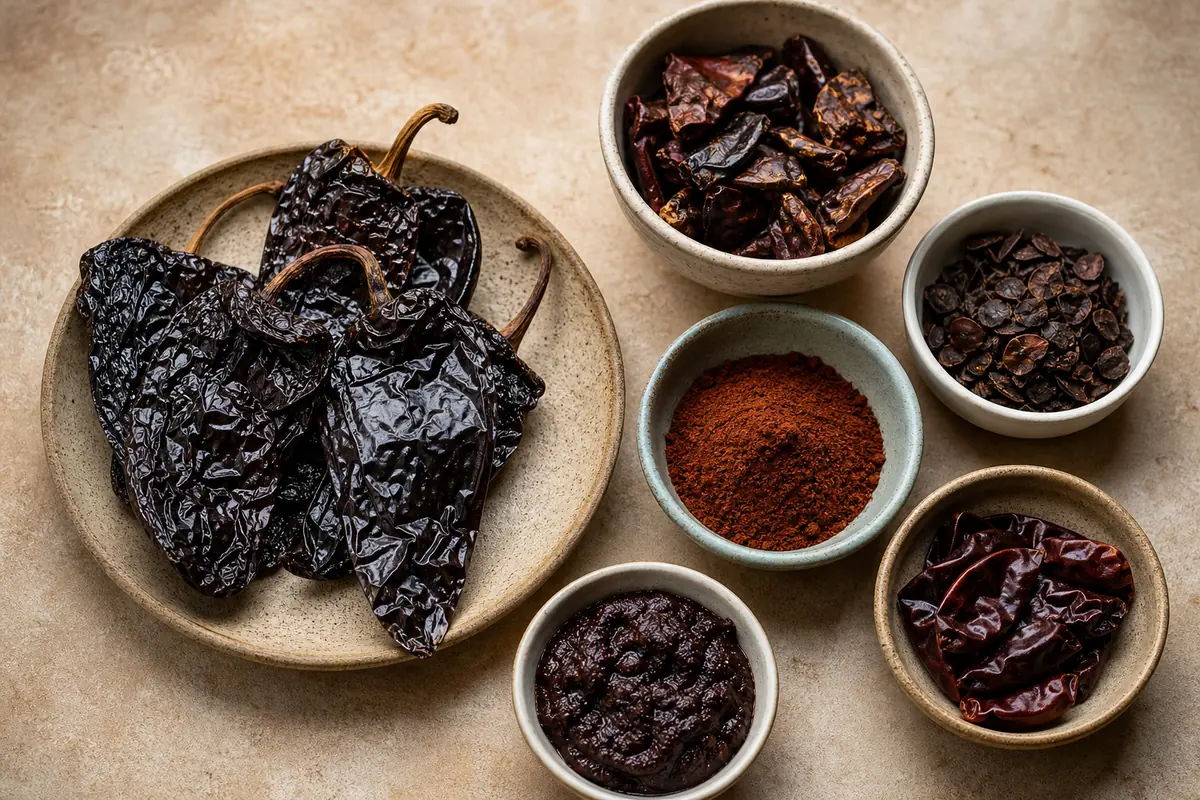
5 Best Mulato Chile Substitutes (Closest Match)
Ingredients
Equipment
Method
- Decide how mulato is used in your recipe: whole chile steeped/softened, ground into mole/sauce, or used as a spice rub.
- Choose the closest flavor-family substitute from the list and use the listed ratio relative to mulato (start at the lower end if you’re heat-sensitive).
- Toast dried chiles briefly (30–45 seconds) or warm the adobo paste so the flavor blooms, then blend with soaking liquid or broth until smooth.
- Taste early: if the sauce feels too smoky, increase ancho/pasilla by 1–2 tablespoons per cup; if too sharp, add a teaspoon of brown sugar.
- Proceed with cooking and re-check after simmering—mole-style flavors round out after 5–10 minutes.
Notes
- Mulato is usually mild to medium heat; prioritize sweetness and cocoa-like depth for the closest match.
- For sauces, blend the ground chile with enough liquid to achieve a smooth paste, then simmer to mellow bitterness.
Tried this recipe?
Let us know how it was!
Carrie is a food writer and editor with more than 15 years of experience. She has worked for some of the biggest names in the food industry, including Bon Appétit, Food & Wine, and Martha Stewart Living.
As the Editor in Chief of EpicureDelight, Carrie oversees all of the content on the site. She also manages the team of contributing writers and editors, who help to create delicious recipes, helpful tips, and informative articles that you’ll find on the site.
A native of the Chicago area, Carrie is passionate about all things food. She loves trying new restaurants and experimenting with new recipes in her kitchen. She’s also a graduate of the Culinary Institute of America, so she knows a thing or two about food!



