
Guava paste has that sticky, concentrated sweetness with a sharp tangy edge that most fruit spreads just don't match. When your recipe calls for it and the store shelf is bare, the fix isn't impossible.
A good guava paste substitute needs to hit two targets at once. It should carry that bright, sweet-tart fruitiness, and it should be thick enough to spread, slice, or hold its shape in a pastry filling.
Thin jams are the most common stumbling block. They taste close but behave wrong, so knowing when to reduce, when to thicken, and when to add a splash of citrus is what separates a passable swap from a seamless one.
The best guava paste substitutes are thick fruit jams or preserves with a sweet-tart profile. Guava jam is the closest match. Passion fruit jam, apricot jam, strawberry jam, and mango jam all work when paired with a squeeze of lime. Match both flavor and texture before swapping.
5 Best Guava Paste Substitutes for Better Results
| # | Substitute | Best For | Ratio | Key Note |
|---|---|---|---|---|
| 1 | Guava Jam | Both | 1:1 | Reduce if pourable |
| 2 | Passion Fruit Jam | Both | 1:1 | Tangier, add pinch of salt |
| 3 | Apricot Jam + Lime | Baking | 1:1 | Reduce if thin |
| 4 | Strawberry Jam + Lime | Spreads | 1:1 | Sweeter, lime needed |
| 5 | Mango Jam + Lime | Both | 1:1 | Reduce if loose |
Each option below includes exactly how to adjust it for your recipe.
1. Guava Jam
Guava jam is the obvious first move, and it earns that position. The flavor of this concentrated spread is nearly identical to guava paste, carrying the same floral-fruity sweetness with that characteristic tangy finish.
- Ratio: Use 1:1 in any recipe.
- If it's pourable: Simmer over medium-low heat for 5-10 minutes, stirring often, until it mounds on a spoon instead of dripping.
- For baking: Let it cool fully after reducing before adding it to dough or pastry fillings-hot jam spreads unpredictably.
- For spreading: Use straight from the jar if thick; a quick stir loosens it just enough for even spreading.
Skip this if your only available jar is a thin, pourable syrup-style jam and you have no time to reduce it. The texture will be watery inside baked goods.
2. Passion Fruit Jam
Passion fruit jam punches with tropical tartness that reads closer to guava paste than most people expect. It's sharper and more aromatic, but when you need that bright, fruit-forward tang, this longer-lasting preserve is a smart pantry backup.
- Ratio: 1:1 in spreads, fillings, and glazes.
- Flavor adjustment: Add a small pinch of salt to round out the sharp tang and make it taste fuller, closer to guava's mellower sweetness.
- Texture check: If the jam is looser than guava paste, simmer 5 minutes to tighten it before using.
- Best applications: Works well in glazes, thumbprint cookies, and pastry fillings where tang is welcome.
Skip this if you're making a traditional dish where guava flavor is central, like a Cuban pastelito. Passion fruit is noticeably more aromatic and will shift the profile.
3. Apricot Jam + Lime Juice
Apricot jam is mild, golden, and sweet, but it lacks the tang that makes guava paste distinctive. Adding lime juice is what closes that gap.
If you're already familiar with swapping apricot in other recipes, this method feels natural.
| Use | Ratio | Notes |
|---|---|---|
| Baking (filling) | 1:1 jam, 3-4 drops lime | Reduce first if jam is thin |
| Glaze | 1:1 jam, 1 teaspoon lime juice | Warm gently and stir until glossy |
| Spread | 1:1 jam, 2-3 drops lime | Stir well; no heat needed |
- Adding lime: Go drop by drop, tasting between each addition, until the flavor tips from purely sweet to sweet-tart.
- If jam is thin: Reduce the jam first, then add lime after it cools-this prevents the citrus from thinning it further.
- For glazes: Use 1 teaspoon lime juice per 3 tablespoons jam; more than that and the glaze may not set properly.
Skip this if your apricot jam is already thin and you have no way to reduce it. The lime will loosen it further and the texture won't hold in a filling.
4. Strawberry Jam + Lime Juice
Strawberry jam is sweeter and softer-flavored than guava paste, but it is thick, widely available, and takes lime well. It works best in spreads and pastry fillings where a mild fruit flavor is fine.
For glazes or baked goods, give the jam a quick 5-minute simmer first. That reduces water content and makes it behave more like citrus-brightened fruit paste rather than a loose spread.
- Ratio: 1:1, with lime juice added to taste.
- Tang balance: Start with 3-4 drops of lime per tablespoon of jam; strawberry is sweet enough that too much lime can overpower it.
- For spreading: Use as-is from the jar if thick; stir in lime right before serving so it stays glossy.
- Consistency goal: It should hold its shape when spooned, not run across the plate.
Skip this if your recipe involves no cooking and your jam separates when stirred. Choose a thicker preserves-style jar, not a standard supermarket jam, for cleaner results.
5. Mango Jam + Lime Juice
Mango jam brings a tropical sweetness that is softer and less tart than guava paste, but the texture is usually thick enough to work without much adjustment. It's the best option for warm dishes like glazes, sauces, and baked fillings.
Too Sweet (Mango-Forward)
Works for: glazes, sauces, casual pastry fillings
Fix: Add lime juice a few drops at a time until it reads sweet-tart
Too Loose (Runny Jam)
Works for: glazes after a quick reduction
Fix: Simmer 5 minutes, cool, then add lime to finish
- Ratio: 1:1; taste and add lime a few drops at a time until the profile shifts from sweet to sweet-tart.
- Reducing: Only reduce if the jam is noticeably loose; over-reducing mango jam can make it sticky and hard to spread.
- Best applications: Ham glazes, empanada fillings, and fruit tart centers all work well with mango jam.
Skip this if you need a neutral fruit base. Mango has a distinct flavor note that some recipes amplify rather than absorb.
Making Guava Paste Substitutes Work
The two levers in every swap are flavor and texture, and you rarely need to fix both at once. Most thick jams just need a little citrus to get the tang right, while most runny jams just need a short simmer.
Knowing which problem you're solving first saves a lot of second-guessing.
- Consistency check first: Spoon the substitute onto a plate. If it holds a mound for 10 seconds, it's ready. If it spreads flat, reduce it before adding anything else.
- Adjustment levers: For tang, use lime juice in small drops. For thickness, reduce over medium-low heat or use a cornstarch slurry in tiny increments. Don't combine both fixes at once.
- By recipe type: For baking, the substitute must be thick and cool before it goes in. For spreads, you have more flexibility. For glazes, a slightly looser consistency is fine since heat will tighten it on the food.
A pinch of salt added to any fruit swap rounds out the flavor. It makes sweet-tart alternatives taste more complete, less one-dimensional.
Frequently Asked Questions
Guava jam is the closest option for baking. Choose the thickest jar available, and reduce it 5-10 minutes if it's pourable before adding it to your dough or filling.
Only if the jam is already thick and holds its shape on a spoon. Runny jam will make baked fillings watery and can prevent pastry from sealing properly.
Add lime juice drop by drop, tasting between each addition. A small pinch of salt also helps balance sweetness without thinning the jam.
Start with 1 teaspoon cornstarch mixed with 1 teaspoon cold water per ¼ cup preserves. Stir it in while simmering and cook fully to avoid a starchy taste.
Yes, heat concentrates sweetness and softens tang slightly. Taste your substitute after warming and add a few extra drops of lime if the tart edge has faded.
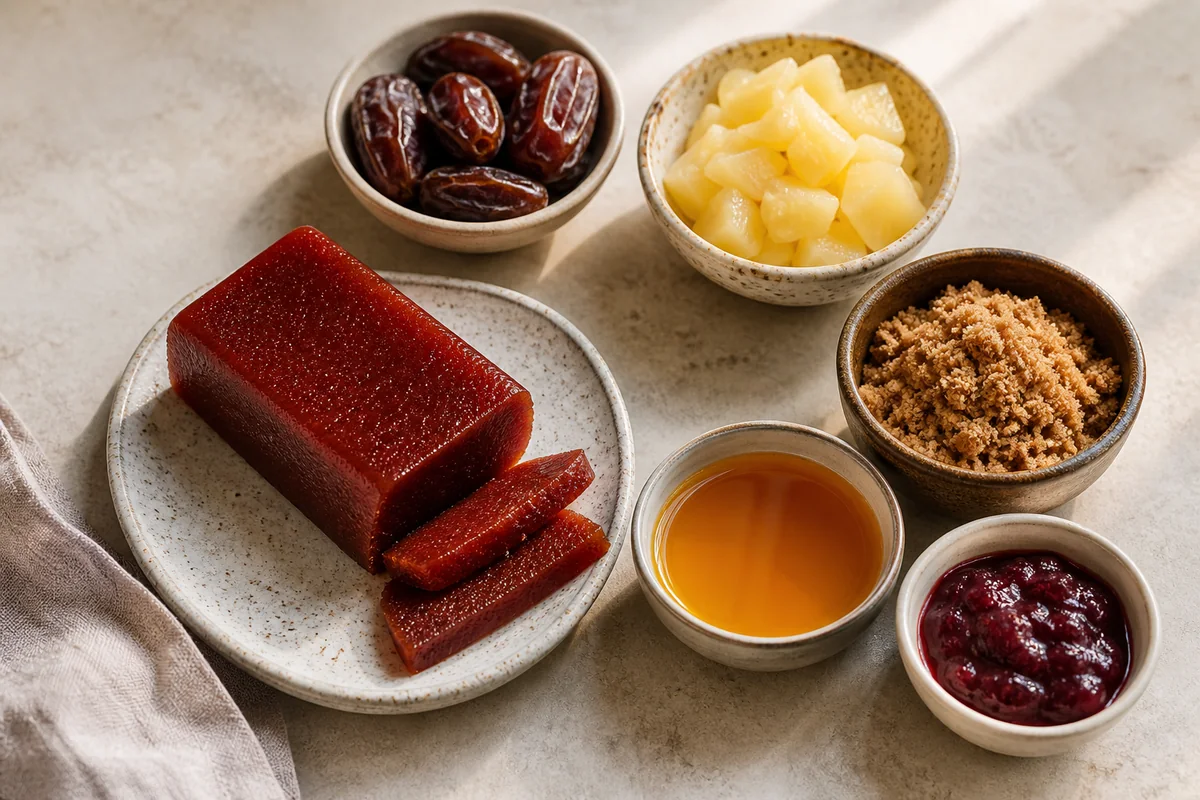
5 Best Guava Paste Substitutes for Better Results
Ingredients
Equipment
Method
- Choose a substitute based on texture: use the thickest jam/preserves first; only use thickeners if your jar is pourable.
- Start with the listed ratio (most swaps are 1:1). If adding a squeeze of citrus, add a few drops at a time so you don’t thin the paste.
- For baking or glazing, gently warm the substitute 20–40 seconds so it spreads evenly, then stir until glossy.
- If the substitute doesn’t feel “sliceable,” simmer it 5–10 minutes to reduce, or thicken with a cornstarch slurry in small increments.
- Taste and adjust: add a pinch of salt to boost fruit flavor or a tiny bit more citrus for a guava-like tang.
Notes
- Guava paste is thick and concentrated—flavor match matters, but texture match is what makes the swap work in baking.
Tried this recipe?
Let us know how it was!
Carrie is a food writer and editor with more than 15 years of experience. She has worked for some of the biggest names in the food industry, including Bon Appétit, Food & Wine, and Martha Stewart Living.
As the Editor in Chief of EpicureDelight, Carrie oversees all of the content on the site. She also manages the team of contributing writers and editors, who help to create delicious recipes, helpful tips, and informative articles that you’ll find on the site.
A native of the Chicago area, Carrie is passionate about all things food. She loves trying new restaurants and experimenting with new recipes in her kitchen. She’s also a graduate of the Culinary Institute of America, so she knows a thing or two about food!



