
Guindilla peppers have a specific personality. Mild heat, a clean peppery snap, and (if you're working from a jar) a tangy brine that clings to everything it touches.
Finding the right guindilla pepper substitute means matching whichever part of that personality your dish actually needs.
The fresh-vs-pickled question matters more than anything else here. Fresh guindilla are about blisterable, thin-skinned peppers with gentle heat.
Jarred guindilla bring acidity and brine. Pick the wrong substitute category and the dish tastes off, even if the heat level is fine.
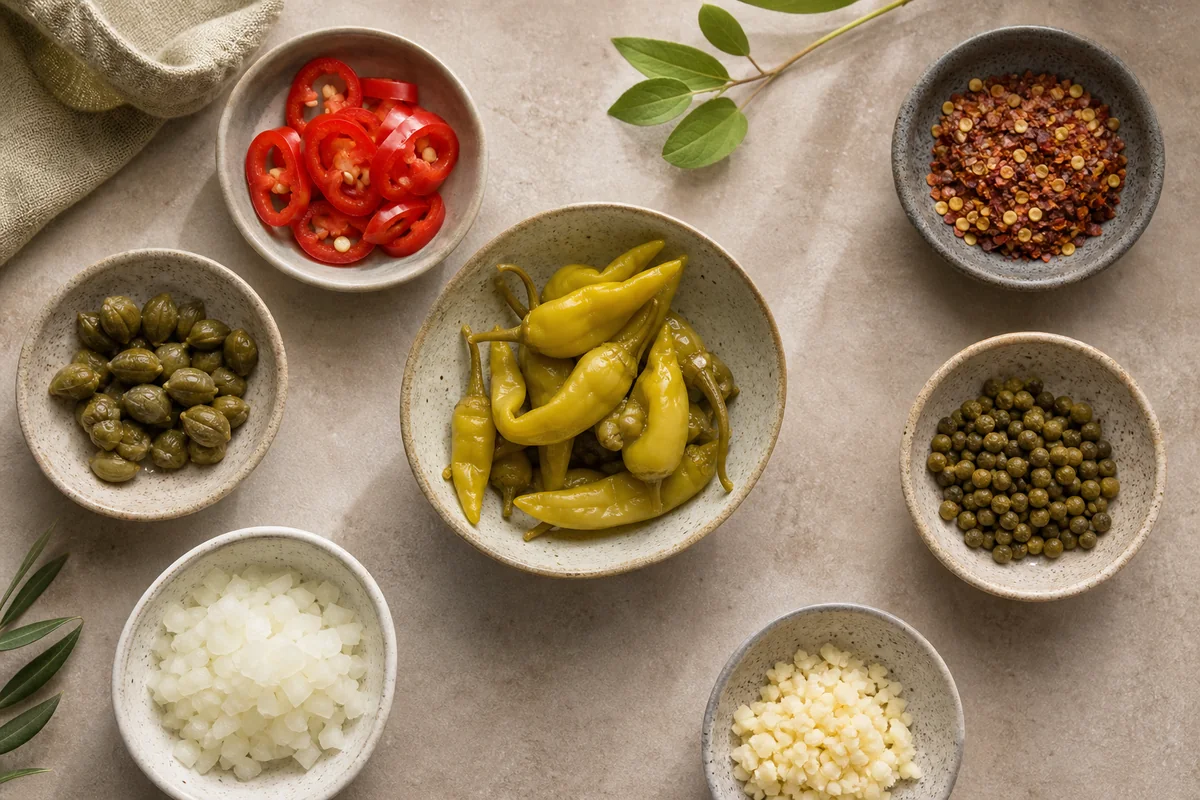
The best substitutes for guindilla peppers are shishito and padrón for fresh-blistered use, banana peppers or pepperoncini for the jarred tangy version, and serrano (sliced thin) when mild peppers aren't available. Match fresh with fresh, pickled with pickled.
5 Best Guindilla Pepper Substitutes (Heat + Tang Friendly)
Before the full breakdowns below, use this table to scan your options fast. The substitutes split cleanly into fresh-char candidates and jarred-brine candidates, so the right column is the one that matches how your guindilla were prepared.
| # | Substitute | Best For | Ratio | Key Note |
|---|---|---|---|---|
| 1 | Shishito Peppers | Fresh | 1:1 | Blister, salt, serve |
| 2 | Padrón Peppers | Fresh | 1:1 | Heat varies per batch |
| 3 | Banana Peppers (jarred) | Pickled | 1:1 | Drain well before using |
| 4 | Serrano (thin-sliced) | Fresh | ¾:1 | Remove seeds for mildness |
| 5 | Mild Pepperoncini (jarred) | Pickled | 1:1 | Add brine splash if needed |
1. Shishito Peppers
Shishito peppers are the first choice when your guindilla are fresh and you want that blistered, thin-skinned bite. They char beautifully in a dry pan and have the same mild, grassy heat that makes guindilla so approachable at the table.
If you want a deeper read on this thin-walled pepper's flavor before you commit, that's worth a quick check. The texture comparison with guindilla is closer than most people expect.
Use them at a 1:1 ratio with no other adjustment needed for heat. Keep the prep simple:
- Pan method: Heat a dry skillet on high, add shishitos whole, and blister 3-4 minutes per side until blackened in spots.
- Seasoning: Salt is enough. Add flaky salt immediately after pulling from the pan.
- Portioning: Use the same count your recipe calls for - they're similar in size to most guindilla.
Skip this if your guindilla are jarred and the dish needs briny tang. Blistered shishitos have no acidity, so they won't carry that pickled flavor.
2. Padrón Peppers
For tapas-style dishes where char and salt are the whole point, padrón peppers are the natural pick. They behave almost identically to guindilla in a hot pan, and the flavor is clean, slightly grassy, and very pepper-forward.
One thing to know about their char-friendly flavor profile: most padrón are mild, but roughly one in ten runs noticeably hot. That's fine for most dishes but worth flagging at the table.
- Prep: Pan-fry in a little olive oil on high heat until blistered on all sides, about 5 minutes total.
- Seasoning: Coarse salt right after cooking - same approach as guindilla.
- Heat variability: If a few peppers seem very spicy after tasting, reduce the quantity by 2-3 peppers and skip the hotter-looking larger ones.
Skip padrón if you're cooking for anyone who can't tolerate surprise heat. That occasional hot specimen is unpredictable enough to be a problem in some settings.
3. Banana Peppers (Pickled or Jarred)
When your guindilla come from a jar and the tang is part of the recipe, banana peppers are the substitute that holds up best. They're mild, slightly acidic, and carry a pepper brightness that maps well onto jarred guindilla.
Draining is the most important step. If you swap without draining, the excess brine waters down the dish and the texture turns limp.
For anyone also exploring tangy pepper-swap options, banana peppers overlap with several other brined alternatives.
- Drain: Tip the jar into a colander and let them sit 2-3 minutes before using.
- Slicing: Cut to the same ring thickness as your guindilla - usually about ¼ inch - so they behave consistently in the dish.
- Brine level: If the dish tastes flat after swapping, add 1 teaspoon of the reserved brine at a time until the tang comes back.
Skip this if the recipe calls for blistered fresh peppers. Banana peppers don't blister, and their flavor reads as pickled even after patting dry.
4. Serrano Pepper (Thin-Sliced)
Serrano is the substitute you reach for when nothing mild is available and you need heat that's in the same neighborhood as guindilla. The problem is that serrano runs hotter - sometimes significantly - so it needs more control than a straight 1:1 swap.
Use a ¾:1 ratio to start. For anyone who regularly manages choosing a hotter chili carefully, the seed-removal step makes a real difference here.
Thin-slicing also distributes the heat more evenly so no single bite is overwhelming.
Slice thin, seeds removed
Works for: dishes where guindilla heat is present but not the dominant note; stews, eggs, grain bowls
Skip if: the dish is delicate and any extra heat would read as a mistake
Reduce amount (¾ of guindilla quantity)
Works for: tapas plates, sandwiches, anything where the pepper is visible and eaten whole-ish
Skip if: you need pickled tang - serrano has none
Skip serrano entirely if your recipe needs briny, pickled flavor. It's a fresh chili with no acidity, so it won't cover the tang side of jarred guindilla at all.
5. Mild Pepperoncini (Jarred)
Pepperoncini from a jar are a reliable option when you need the briny, pepper-forward character of jarred guindilla without hunting down a specialty store. They're tangy, slightly sweet, and mild enough to stay in the same heat range.
The brine in the jar is actually useful here. For savory dishes where jarred pepper swap ideas matter, the liquid adds brightness without overpowering if you use just a splash.
Drain first, then taste before deciding whether to add brine back in.
- Drain: Remove from jar and pat dry or let drain in a colander for a few minutes.
- Slice: Cut into rings that match guindilla thickness - ¼ to ⅓ inch works well.
- Brine adjustment: Add 1 teaspoon brine per serving if the dish needs more tang after tasting.
- Seasoning: They're already salted from the jar, so hold back on added salt until the end.
Skip pepperoncini if you need a char-blistered fresh pepper effect. They're a jarred product and won't blister in a pan the way shishito or padrón will.
Making Guindilla Pepper Substitutes Work
The two-question test makes this simple. First: is your guindilla fresh or pickled?
Second: does the dish need heat, tang, or both? Fresh recipes want a blister-capable pepper with mild heat.
Pickled recipes want acid and brine, not char. For more guidance on the base flavor you're working from, this mild pepper's character is worth checking before you decide.
If you're also exploring the padrón side of things, swapping blistered peppers covers some crossover territory.
- Match tang/acid: If your guindilla are jarred, always use a brined substitute (banana pepper, pepperoncini) and taste the brine level before serving.
- Control heat by slicing and seeding: For hotter substitutes like serrano, slice thin, remove seeds, and use ¾ of the called-for amount until you've tasted the result.
- Match texture by charring or draining: Blister fresh substitutes (shishito, padrón) in a hot dry pan; drain jarred substitutes thoroughly so they don't add unwanted liquid to the dish.
Frequently Asked Questions
Shishito peppers are the closest match. Use them 1:1, blister in a dry hot pan, and finish with flaky salt.
Yes. Drain them well and slice to the same thickness. Add a teaspoon of brine back if the dish needs more tang.
Use ¾ of the guindilla quantity, slice very thin, and remove all seeds. Taste before adding more.
Bell pepper covers the bulk but has zero heat. Add chili flakes in small pinches, tasting after each addition, until the warmth matches.
Always drain first, then taste the dish. Add brine back in 1 teaspoon increments only if the acidity is missing.
5 Best Guindilla Pepper Substitutes That Taste Right
Ingredients
Method
- Identify your guindilla type: fresh (peppery bite) vs pickled/jarred (tang and brine).
- Choose the closest match from the table: fresh char-friendly peppers for fresh guindilla, or jarred/sliced peppers for pickled guindilla.
- Use the listed ratio; for hotter substitutes (like serrano), slice thin and remove seeds to keep heat closer to guindilla.
- Prep for texture: blister or pan-char fresh peppers; drain and slice jarred peppers so they don’t water down the dish.
- Taste and adjust in small steps: add a pinch more chili or a little brine/vinegar only if the flavor or tang is missing.
Notes
- If your guindilla are pickled, prioritize tang/brightness (banana pepper or pepperoncini) over pure heat.
- If your guindilla are fresh and blistered, prioritize char-friendly mild peppers (shishito or padrón).
Tried this recipe?
Let us know how it was!
Carrie is a food writer and editor with more than 15 years of experience. She has worked for some of the biggest names in the food industry, including Bon Appétit, Food & Wine, and Martha Stewart Living.
As the Editor in Chief of EpicureDelight, Carrie oversees all of the content on the site. She also manages the team of contributing writers and editors, who help to create delicious recipes, helpful tips, and informative articles that you’ll find on the site.
A native of the Chicago area, Carrie is passionate about all things food. She loves trying new restaurants and experimenting with new recipes in her kitchen. She’s also a graduate of the Culinary Institute of America, so she knows a thing or two about food!



