
Hazelnut butter sits somewhere between almond butter and peanut butter in texture, but its aroma is its own thing entirely. That toasty, slightly sweet smell is why so many baking recipes call for it specifically.
When you're out, the right hazelnut butter substitute keeps the fat content, spreadability, and bake behavior intact, even if the fragrance shifts a little.
This guide covers five swaps ranked by how closely they match hazelnut butter in real baking situations. You'll find exact ratios, consistency tips, and notes on when a substitute will slide in unnoticed versus when you'll need to adjust.
Almond butter is the closest overall swap for hazelnut butter at a 1:1 ratio, with nearly identical fat content and paste texture. Peanut butter is the most reliable backup. For nut-free baking, sunflower seed butter at 1:1 holds structure well. Tahini needs a reduced ratio and sweetener. Nutella-style spread is sweeter; use half the amount.
5 Best Hazelnut Butter Substitutes Ranked
The five substitutes below are ordered by how well they perform across both baking and spreading. Almond butter leads because it matches fat content and behaves predictably in batters.
Nutella-style spread comes last because it needs the most adjustment. If you're also replacing the nut itself in a recipe, the whole nut swap topic is worth a look.
| # | Substitute | Best For | Ratio | Key Note |
|---|---|---|---|---|
| 1 | Almond butter (smooth) | Both | 1:1 | Mildest flavor shift |
| 2 | Peanut butter (creamy, unsalted) | Both | 1:1 | Bolder flavor, great structure |
| 3 | Sunflower seed butter (smooth) | Baking | 1:1 | Nut-free; thin if thick |
| 4 | Tahini (well-stirred) | Baking | ¾:1 | Add sweetener to balance |
| 5 | Nutella-style spread | Spreading | 1:2 | Reduce sugar in recipe |
Consistency is the variable most people overlook. A thicker substitute may dry out your batter before the sweetness question even comes up.
Thin it first, then mix.
1. Almond Butter
Almond butter is the go-to swap because its fat-to-solid ratio mirrors hazelnut butter almost exactly. It blends into batters and cookie doughs without changing structure, and its storing almond butter window is forgiving if you buy ahead.
The flavor is milder. You'll notice the hazelnut aroma is gone, but in cookies, brownies, and cakes, that gap is small enough that most people won't spot it.
Almond Butter
Works for: cookies, cakes, frosting, fudge, anywhere hazelnut butter blends into a batter
Skip if: your recipe is hazelnut-forward (like a hazelnut torte) and the aroma is the point
- Flavor outcome: Mild nuttiness, no distinct hazelnut note, works well in spiced or chocolate-heavy recipes
- Texture outcome: Smooth paste that folds in cleanly; use smooth (not crunchy) for even mixing
- Ratio: 1:1 in all baking applications; no thinning needed if it's a runny-style smooth almond butter
2. Peanut Butter
Peanut butter matches hazelnut butter's fat content closely. It holds up in cookies and brownies without making the crumb dry or dense.
Use creamy and unsalted so the fat blend stays neutral and you control the salt level yourself.
The flavor is bolder. Peanut butter has its own assertive taste, so it reads as "peanut" rather than neutral.
That's fine for most baked goods, but it changes the profile noticeably in fillings or frosting where hazelnut is expected to whisper.
- Where it shines: Brownies, bar cookies, sandwich cookies, energy balls, thick frostings
- Flavor management: Use that roasted, savory spread only in recipes where a strong nut note works, not in delicate pastry cream
- Ratio: 1:1; no adjustment needed for texture
- Salt control: Always start unsalted, then taste and add salt at the end of mixing
Skip if your recipe is allergen-restricted or nut-free. Also skip if your bake is meant to be subtle in flavor and you're worried about peanut dominating.
3. Sunflower Seed Butter
Sunflower seed butter is the best nut-free option for hazelnut butter in baking. It has a similar paste consistency and folds into batters without seizing.
- Flavor profile: Mild and slightly earthy; add a small pinch of salt to build some depth
- Consistency tip: If the jar is very thick, stir in 1-2 teaspoons of water before folding into batter
- Ratio: 1:1 by weight or volume; works in cookies, muffins, and quick breads
- Watch for: Sunflower seed butter can turn baked goods slightly green due to chlorogenic acid reacting with baking soda, which is harmless but surprising
You can also explore seed-based spread swaps if sunflower isn't available either. Skip if you want a flavor that reads clearly hazelnut-like. Seed butter is neutral, not nutty in the hazelnut sense.
4. Tahini
Tahini brings viscosity that's close to hazelnut butter, but the flavor is a different story. It's savory, slightly bitter, and sesame-forward, which can clash in sweet recipes if you use a full 1:1 amount.
Start at a ¾:1 ratio (three-quarters tahini for every full measure of hazelnut butter called for). Then add a small amount of honey or sugar to counteract the bitterness.
Tahini
Works for: dense baked goods like brownies or tahini-chocolate cookies where sesame fits the flavor profile
Skip if: the recipe is sweet-only and delicate, where sesame bitterness will stand out
- Ratio: Start at ¾:1; taste and increase only if the bitterness isn't an issue
- Sweetener adjustment: Add 1-2 teaspoons of honey or sugar per ¾ cup tahini to balance the savory edge
- Stir first: Tahini separates in the jar; always stir until fully combined before measuring
5. Chocolate-Hazelnut Spread
Nutella-style spread does have real hazelnut flavor, which is its main appeal as a hazelnut butter alternative. The problem is that it's heavily sweetened and contains cocoa, so it changes both the sugar level and the color of your bake.
- Ratio: 1:2, meaning use half the amount the recipe calls for in hazelnut butter
- Sugar adjustment: Reduce the recipe's added sugar by about 2 tablespoons per ¼ cup of spread used
- Flavor note: Expect a chocolate-forward result; this is actually great for brownies, truffles, and no-bake bars
- Texture: Slightly softer than hazelnut butter; it won't change bake time but may spread more in cookie dough
Skip if you need pure nut flavor without cocoa or added sugar. Also skip if you're avoiding instead of hazelnut butter because of sugar content.
DIY Hazelnut Paste from Whole Nuts
When whole toasted hazelnuts are the only thing in the pantry, making your own paste is worth the ten minutes. The result is a true hazelnut butter match, with flavor and fat that no other substitute quite hits.
Blend the toasted, skinned hazelnuts in a food processor until they form a paste, stopping to scrape the sides every 30 seconds. Then drizzle in neutral oil one tablespoon at a time until the paste reaches spreadable thickness.
You can also store the finished batch for up to two weeks in a sealed jar in the fridge.
| Consistency Issue | Adjustment | Notes |
|---|---|---|
| Too thick | Add 1 tablespoon neutral oil | Blend 30 seconds; repeat if still stiff |
| Too thin/oily | Blend longer without oil | Heat can cause separation; refrigerate 10 min then re-stir |
| Gritty texture | Blend 2-3 more minutes | Cell walls need time to break down fully |
- Grind size: Blend until nut solids fully disappear into a smooth paste; stop before it separates into an oily liquid
- Oil order: Add oil only after the paste stage forms; adding it early prevents the nuts from releasing their own fat
- Storage: Refrigerate in a sealed jar up to 2 weeks; stir before use if oil floats to the top
Skip if your blender or food processor isn't powerful enough to grind nuts smooth. Gritty powder won't behave like butter in baking.
Making Hazelnut Butter Substitutes Work in Baking
The core rule for any swap is this: match fat and texture first, then adjust sweetness and salt after. A substitute that's too thick will dry out your batter before any flavor issue appears.
If you're also replacing hazelnut oil in the same recipe, handle the fat adjustments together so you don't compound the texture problem.
If you're deciding between a nut butter and a nut-free option, choosing among butter alternatives side by side makes the tradeoff clearer before you commit to a batch.
- Thinning and thickening: If the substitute is stiffer than hazelnut butter, stir in 1-2 teaspoons of warm water or neutral oil before adding to the batter; if it's too loose, chill for 10 minutes before using
- Sugar and salt balance: Sweetened substitutes (Nutella-style spread) need reduced recipe sugar; bitter substitutes (tahini) need a small added sweetener; mild ones (almond, sunflower seed) need a pinch of extra salt to replace depth
- Mixing order: Fold nut or seed butter into batter last, and mix only until just combined; overworking can make the batter tight and greasy at the same time
Frequently Asked Questions
Smooth almond butter is the closest at 1:1. It matches the fat content and paste texture, so cookies hold their shape and crumb without adjustment.
Yes, at 1:1, but expect a bold peanut flavor. It works best in chocolate frosting where the peanut note complements rather than competes.
Use half the amount called for, then reduce the recipe's added sugar by about 2 tablespoons per ¼ cup of spread to avoid an overly sweet result.
Stir in warm water or neutral oil, one teaspoon at a time, until the substitute reaches a consistency close to hazelnut butter before mixing into the batter.
It works at a ¾:1 ratio with a small added sweetener. Brownies are dense enough to absorb the sesame flavor without it tasting out of place.
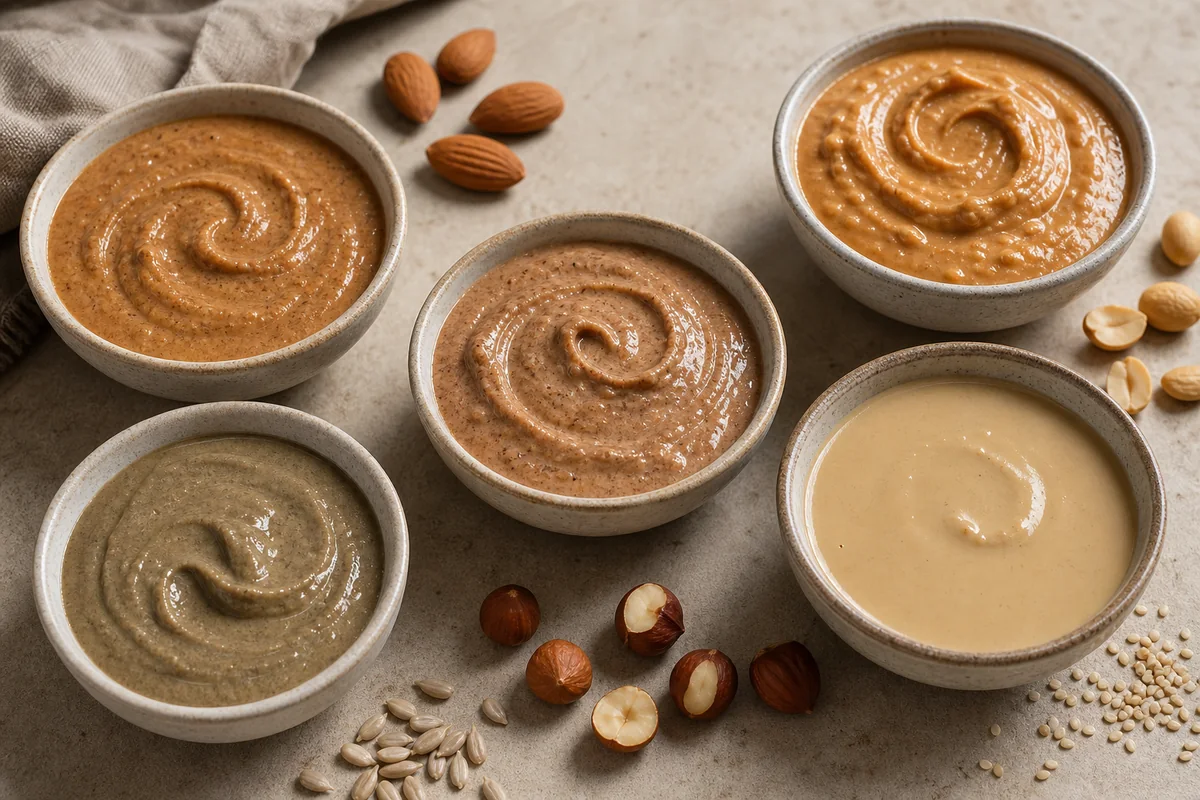
5 Best Hazelnut Butter Substitutes (Tested)
Ingredients
Equipment
Method
- Identify your use: baking (cookies, cakes, brownies) or spreading (toast, filling, frosting).
- Start with the listed substitution ratio from the table (1:1 unless noted).
- If the substitute is thicker (seed butter), warm 10–15 seconds or stir with 1–2 teaspoons water; if thinner, reduce by simmering or drain briefly.
- Adjust flavor: add a small pinch of salt to boost nutty depth, or add a little sugar/honey if using a more bitter substitute like tahini.
- Use immediately for spreading, or fold into batter last for best texture; bake as directed.
Notes
- Sweetened spreads (like Nutella) require sugar reduction and may change the final sweetness level in baking.
- Seed butters vary by brand—thickness can change, so adjust consistency before mixing into batter.
Tried this recipe?
Let us know how it was!
Carrie is a food writer and editor with more than 15 years of experience. She has worked for some of the biggest names in the food industry, including Bon Appétit, Food & Wine, and Martha Stewart Living.
As the Editor in Chief of EpicureDelight, Carrie oversees all of the content on the site. She also manages the team of contributing writers and editors, who help to create delicious recipes, helpful tips, and informative articles that you’ll find on the site.
A native of the Chicago area, Carrie is passionate about all things food. She loves trying new restaurants and experimenting with new recipes in her kitchen. She’s also a graduate of the Culinary Institute of America, so she knows a thing or two about food!



