
Hungarian wax peppers have a gentle, almost grassy sweetness and a low-to-medium burn that stays polite. That balance is what makes them so useful, and it's exactly what your hungarian wax pepper substitute needs to preserve.
Most swaps fall into two camps: the tangy, pickled kind and the roasted-sweet kind. Pick your camp based on how the pepper is used in the dish.
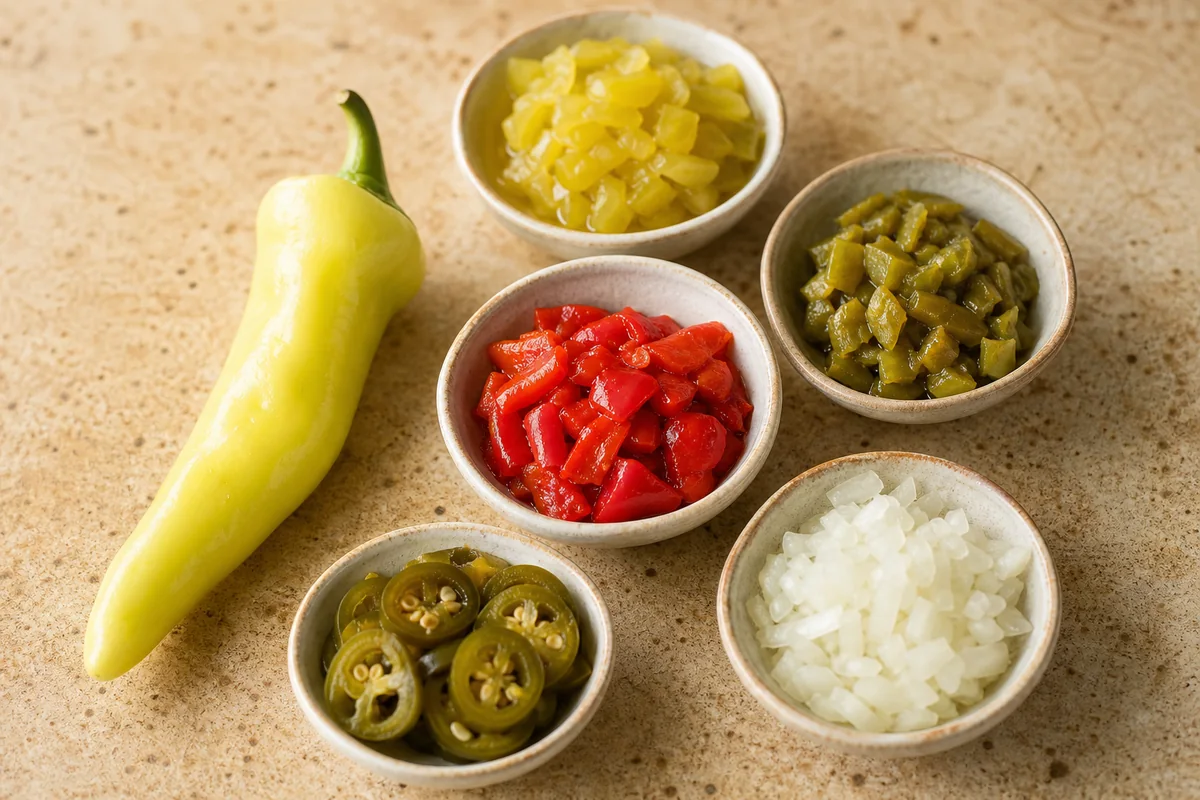
Hungarian wax peppers are mild, lightly sweet, and pepper-forward. The best swaps stay in that same lane. Pickled banana peppers lead for tang and crunch. Pepperoncini matches the heat closest. Cubanelle peppers work best when you're sautéing or roasting fresh.
5 Best Hungarian Wax Pepper Substitutes Worth Trying
Hungarian wax peppers show up pickled in sandwiches, fresh in stir-fries, and roasted in sauces. The table below matches each substitute to a preparation style so you can decide fast.
| # | Substitute | Best For | Ratio | Key Note |
|---|---|---|---|---|
| 1 | Pickled Banana Peppers | Pickled | 1:1 | Drain well first |
| 2 | Pepperoncini | Pickled / Fresh | 1:1 | Closest heat match |
| 3 | Roasted Sweet Red Bell Peppers | Roasted / Baking | 1:1 | Richer, sweeter result |
| 4 | Cubanelle Peppers | Fresh / Roasted | 1:1 | Remove ribs for mild |
| 5 | Sweet Cherry Peppers (pickled) | Pickled | 1:1 | Rinse to cut tang |
1. Pickled Banana Peppers
Pickled banana peppers are the fastest, most accessible swap for Hungarian wax pepper in sandwiches, salads, and grain bowls. Their flavor is mild and tangy, which keeps the dish bright without turning it sour, and their pale yellow color is nearly identical to wax peppers.
If you want to learn more about mild-sour pepper swaps, there's a full breakdown covering what to use when banana peppers themselves are unavailable.
- How to use: Slice or chop, then fold in at the end for crunch, or simmer briefly (2-3 minutes) for a softer texture.
- Adjustment: Drain well and pat dry before adding to cooked dishes so you don't dilute the sauce.
- Ratio: 1:1 in every preparation style.
- Skip if: Your recipe needs zero tang. Rinse the peppers thoroughly or switch to roasted sweet bell pepper instead.
2. Pepperoncini (pickled or fresh)
Pepperoncini lands closest to the heat level of Hungarian wax pepper, which is mild with a quiet sting rather than a full burn. The flavor stays pepper-forward and clean, without smokiness or overwhelming sweetness pulling it in another direction.
For readers curious about their distinct mild tang, the page on pepperoncini flavor notes is worth a look before you decide.
- Pickled vs. fresh: Choose pickled for tang and crunch; choose fresh for a cleaner, less acidic pepper flavor.
- How to use: Slice thin to mimic wax-pepper pieces in sandwiches or pizza toppings.
- Ratio: 1:1 by volume in cooked or raw applications.
- Skip if: Your recipe needs roasted sweetness. Roast the pepperoncini first, or switch to roasted red bell pepper.
3. Roasted Sweet Red Bell Peppers
Roasting turns a plain red bell pepper into something mellow and deeply sweet, which is the quality you most want when the recipe leans on Hungarian wax pepper for background sweetness rather than heat. This swap works particularly well in sauces, braises, and baked goods that call for pepper flavor without any bite.
When you're storing leftovers, knowing how long roasted bell peppers keep in the fridge helps you plan ahead.
- How to use in baking: Chop finely and fold into batter or dough during the last mixing stage, not the first, so moisture stays controlled.
- How to use in sauces: Add during the last 10 minutes of cooking to preserve color and avoid over-softening.
- Ratio: 1:1 by weight or volume.
- Skip if: You need firm, pickled-style bite. The roasted texture is soft and yielding, so pepperoncini or banana peppers are better here.
4. Cubanelle Peppers (fresh or roasted)
Cubanelle peppers have a waxy skin, a mild sweetness, and almost no heat, which makes them behave very much like Hungarian wax pepper in a hot pan. They're a strong choice for stir-fries, stuffed pepper dishes, and quick sautés where you want the pepper to stay present but not dominate.
If you're deciding between fresh and roasted, the page covering cubanelle flavor profiles breaks down how the taste shifts with heat.
Cubanelle vs. Hungarian Wax Pepper
Works for: sautéing, roasting, stuffing, any fresh preparation where mild heat and waxy texture matter
Skip if: your recipe depends on pickled acidity. Fresh or roasted cubanelle adds sweetness, not tang.
- Prep tip: Remove seeds and inner ribs if you want the mildest result. Leave them in for a slight warmth closer to wax pepper.
- Timing tip: Sauté over medium-high for 3-4 minutes for tender-crisp. Roast at 425°F for 20-25 minutes to deepen sweetness.
- Ratio: 1:1 in all fresh or roasted applications.
5. Sweet Cherry Peppers (pickled)
Pickled sweet cherry peppers bring mild pepper flavor with a noticeable tang, and they're widely stocked in most grocery stores. The shape is rounder than wax peppers, but sliced thin they work well as toppings on sandwiches, charcuterie boards, or grain salads.
The flavor profile covered on the mildly tangy pepper page is a useful comparison if you're deciding between cherry peppers and banana peppers for your dish.
- How to use: Rinse briefly under cold water, then drain well. Use as a finishing topping rather than cooking them long, which sharpens the acidity.
- Reducing tang: Soak slices in cold water for 5 minutes, then pat dry to dial back the vinegar edge.
- Ratio: 1:1 by volume.
- Skip if: Your dish already has lemon juice, vinegar, or other acidic elements. Stacked tang turns sharp fast.
Making Hungarian Wax Pepper Substitutes Work
The biggest mistake when swapping peppers is ignoring moisture. Pickled substitutes carry brine, and roasted ones release liquid as they cook.
Choose your substitute based on form first (pickled, fresh, or roasted), then manage what it adds to the pan. If your dish is a roasted-pepper style application, pat the substitute dry before it goes in.
- For pickled recipes: Add your substitute near the end so crunch stays intact. Drain and rinse if tang feels too strong.
- For heat adjustment: Leave seeds and ribs on if you want more warmth. Remove them completely if the original called for mild-only heat.
- For liquid balance: In baking or thick sauces, reduce other liquid in the recipe by about 1-2 tablespoons when using roasted or jarred substitutes to prevent a loose texture.
Frequently Asked Questions
Pickled banana peppers are the closest match. They share a similar mild-tangy flavor and pale yellow color, and they swap 1:1 after draining.
Yes. Chop them finely and fold in near the end of mixing. Reduce other liquid in the recipe by 1-2 tablespoons to account for added moisture.
Pepperoncini is the closest heat match, sitting at roughly 100-600 SHU, which overlaps directly with Hungarian wax pepper's typical range.
Rinse pickled peppers briefly under cold water, then soak in plain cold water for 5 minutes. Pat dry before adding to the dish.
Only if you want strictly mild heat. Leaving seeds and ribs in adds a bit more warmth, which can actually mimic wax pepper's mild sting.
5 Best Hungarian Wax Pepper Substitutes Worth Trying
Ingredients
Method
- Identify how your Hungarian wax pepper is used: pickled for tang/crunch, fresh for mild heat, or roasted for sweetness.
- Match the substitute by flavor direction (mild-sweet + low heat) and preparation form (slice/chop/pickled/roasted).
- Use the table ratio, then adjust: for extra heat, leave seeds/inner ribs on; for less heat, remove them or rinse pickled peppers.
- For baking or sauces, roast or drain thoroughly first so the substitute doesn’t add excess liquid.
- Taste at the end and correct balance: add salt for pepperiness, or a small pinch of sugar to round sharp tang.
Notes
- Heat varies by brand and ripeness—taste-test your substitute if you’re sensitive to pepper heat.
- If you’re swapping in a pickled context, draining and rinsing is often the difference between good and soggy.
Tried this recipe?
Let us know how it was!
Carrie is a food writer and editor with more than 15 years of experience. She has worked for some of the biggest names in the food industry, including Bon Appétit, Food & Wine, and Martha Stewart Living.
As the Editor in Chief of EpicureDelight, Carrie oversees all of the content on the site. She also manages the team of contributing writers and editors, who help to create delicious recipes, helpful tips, and informative articles that you’ll find on the site.
A native of the Chicago area, Carrie is passionate about all things food. She loves trying new restaurants and experimenting with new recipes in her kitchen. She’s also a graduate of the Culinary Institute of America, so she knows a thing or two about food!



