Whole bell peppers keep about 4 to 14 days in the refrigerator, depending on how fresh they were when bought. Cut peppers need a shorter plan: refrigerate them in a covered container and aim to use them within 3 to 4 days.
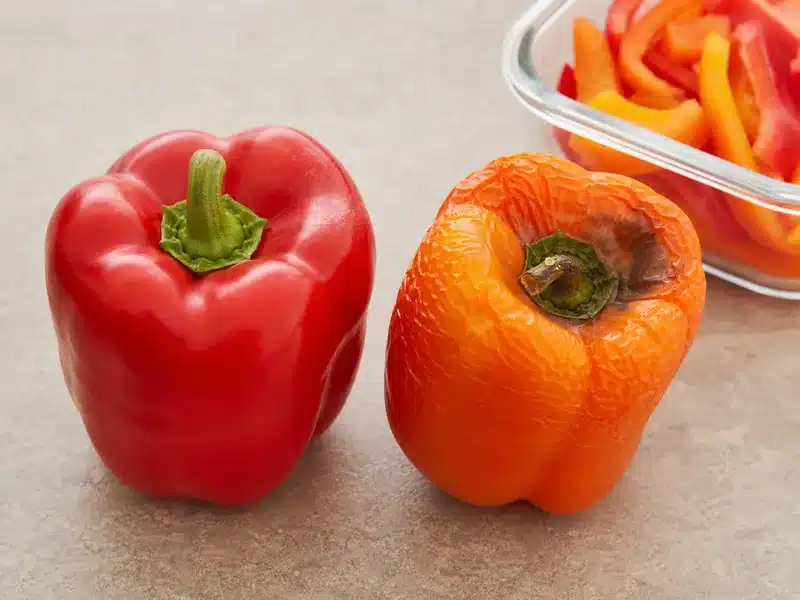
A wrinkled pepper has lost water and may still be useful for cooking. Slime, mold, sour odor, or a wet collapsed spot means the pepper has moved from soft to spoiled.

Refrigerate whole peppers dry and keep cut peppers covered. Use a lightly wrinkled pepper in a cooked dish, but discard peppers that turn slimy, moldy, sour-smelling, or wet and collapsed.
How Long Do Bell Peppers Last?
The skin of a whole pepper slows water loss and blocks handling from reaching the flesh. Cutting removes that barrier.
Cooking softens the tissue further, so cooked peppers follow a normal leftover clock rather than a raw produce clock.
| Pepper Form | Storage | Working Time | Best Next Use |
|---|---|---|---|
| Whole | Dry in refrigerator | About 4 to 14 days | Raw, stuffed, or roasted |
| Cut | Covered refrigerator container | 3 to 4 days | Snack, salad, fajita |
| Cooked | Shallow covered container | 3 to 4 days | Reheated leftover |
| Frozen pieces | Freezer bag or box | Up to 8 months for best quality | Soup, skillet, casserole |
| Counter | Cool room | Only when using soon | Same-day cooking |
The range for whole peppers is wide because a firm local pepper and a pepper that spent days in shipping do not start at the same point. Inspect firmness and the stem when you buy them, then use the softest pepper first.
Room temperature speeds water loss.
The counter can make sense for peppers going into dinner that day, but it is not a way to extend their life. Refrigeration gives you the longer quality window.
How Should You Store Whole Bell Peppers?
Put unwashed whole peppers in the refrigerator crisper or a loose produce bag. The goal is to slow drying without trapping droplets against the stem and skin.
Wash just before cutting
Rinse peppers under running water when you are ready to use them. If you wash earlier, dry every surface well.
Water that collects around the stem can turn a small bruise into a soft wet patch.
Give the bag some airflow
Open a tightly sealed store bag or use a perforated bag. A paper towel can absorb visible condensation, but replace it when wet rather than leaving it pressed against the pepper.
Protect the walls from bruising
Do not put a heavy melon, cabbage, or bottle on top. A bruise breaks down before the rest of the pepper and creates the first place where moisture collects.
Move any flexible pepper to the front of the drawer.
Green, red, yellow, and orange peppers use the same storage setup. Riper peppers may feel softer sooner, but color does not replace a condition check.
How Should You Store Cut Bell Peppers?
Cut peppers expose wet flesh, so they dry at the edges and pick up refrigerator odors faster. Put strips or pieces in a clean covered container soon after cutting.
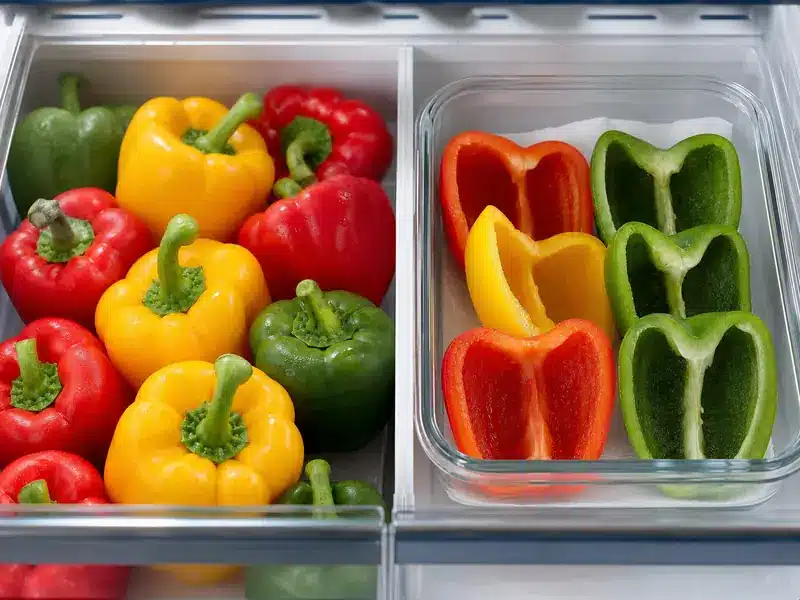
Remove the stem, seeds, and loose white membrane before storage.
These pieces can hold rinse water and create wet corners in the container. If the strips were washed, blot them and add a dry paper towel under them.
Wide strips usually stay useful longer than tiny dice because they expose less surface area. Dice close to cooking time when a salad or garnish needs a crisp edge.
Batch Rule
Do not add fresh strips to a container of older peppers. Finish or discard the old batch, wash the container, and start a new clock.
Use the firmest pieces raw first. Pieces that remain clean but lose snap can go into steak fajitas or taco-stuffed peppers, where heat will soften them anyway.
Do Wrinkled Bell Peppers Mean They Are Bad?
Wrinkles alone show that water left the pepper. They lower crunch but do not automatically mean rot.
Smell the pepper, inspect the stem and seed cavity, and press the soft area before choosing a use.
- Keep for raw use: Firm walls, fresh smell, bright cut surface, and no wet spots.
- Cook soon: Light wrinkles or flexible walls with a dry, clean surface.
- Trim and cook: One small dry bruise on a firm whole pepper, removed with a wide margin.
- Discard: Mold, slime, sour or fermented odor, wet black areas, or a collapsed stem end.
A whole pepper may have one local defect
Cut it open before deciding.
If a small bruise is dry and the surrounding flesh remains firm, trim well and cook the rest. If the bruise is wet, spreading, or sour-smelling, discard the pepper.
Cut peppers need a stricter decision
Pieces share one container and touch the same moisture.
If mold or slime appears in a batch, throw out the batch rather than sorting for clean-looking strips. Food can also carry harmful germs without visible spoilage, so clean handling and cold storage still matter.
Do not use heat as a rescue for a spoiled pepper. Heat changes texture, but it does not turn a sour, slimy piece back into sound produce.
Can You Freeze Bell Peppers?
Freezing breaks pepper cell walls, so thawed pieces become soft. That trade works well for soup, pasta sauce, fajita filling, casserole, and sausage dishes, but not for a raw snack plate.
- Wash, dry, core, and cut the peppers into the size you usually cook.
- Spread the pieces on a tray and freeze until firm, about one hour.
- Move them into a labeled freezer bag and press out extra air.
- Take out only what you need and return the bag before the pieces thaw.
Use frozen strips straight in a hot pan because thawing on the counter releases water before cooking begins and makes browning harder. A handful can go directly into sausage-and-pepper meals.
Freeze a finished cooked stuffed pepper, or use fresh flexible shells that still stand upright, because a raw frozen shell loses much of the strength needed to hold filling. Chicken Parmesan stuffed peppers and cheesy stuffed pepper ideas show where shell structure matters.
How Can You Use Bell Peppers That Are Starting to Soften?
A safe pepper does not need to stay crunchy to be useful. Match the dish to the texture that remains instead of forcing a flexible pepper onto a raw platter.
| Current Texture | Best Cooking Direction | Why It Fits |
|---|---|---|
| Firm and crisp | Salad, snack, salsa | The raw snap is still an asset |
| Flexible but dry | Fajita, omelet, stir-fry | Quick heat softens it on purpose |
| Soft but clean | Roast, soup, sauce | Longer cooking makes texture even |
| Firm enough to stand | Stuffed pepper | The wall can still hold filling |
If the pepper is gone, choose a replacement by flavor rather than shape. Bell pepper substitutes keep sweetness and bulk, while red chile substitutes focus on heat.
A poblano adds a darker flavor and mild heat, while a Peppadew adds sweetness, acid, and a preserved texture. Reach for poblano or Peppadew alternatives only when that shift suits the dish.
For a soft but sound pepper, a quick skillet and a balanced spice blend often make the most sense. Check taco seasoning swaps if you need to season the filling without buying another packet.
Sources
- Oregon State University Extension: whole pepper refrigerator range
- Oregon State University Extension Food Hero: bell pepper storage and freezing
- FoodSafety.gov: chilling and two-hour guidance
- FoodSafety.gov: cooked leftover storage
Frequently Asked Questions
Yes. Refrigeration slows water loss and gives whole peppers a longer useful window than the counter.
Yes if it smells fresh and has no mold, slime, or wet collapse. Cook it because the raw crunch will be weaker.
Aim to use refrigerated cut peppers within 3 to 4 days. Keep them dry in a clean covered container.
Discard moldy cut pieces and their batch. A small dry defect on a firm whole pepper is different from mold or a wet spreading spot.
No for most skillets, soups, and sauces. Add the frozen pieces directly so they lose less water before the pan heats them.

Carrie is a food writer and editor with more than 15 years of experience. She has worked for some of the biggest names in the food industry, including Bon Appétit, Food & Wine, and Martha Stewart Living.
As the Editor in Chief of EpicureDelight, Carrie oversees all of the content on the site. She also manages the team of contributing writers and editors, who help to create delicious recipes, helpful tips, and informative articles that you’ll find on the site.
A native of the Chicago area, Carrie is passionate about all things food. She loves trying new restaurants and experimenting with new recipes in her kitchen. She’s also a graduate of the Culinary Institute of America, so she knows a thing or two about food!