
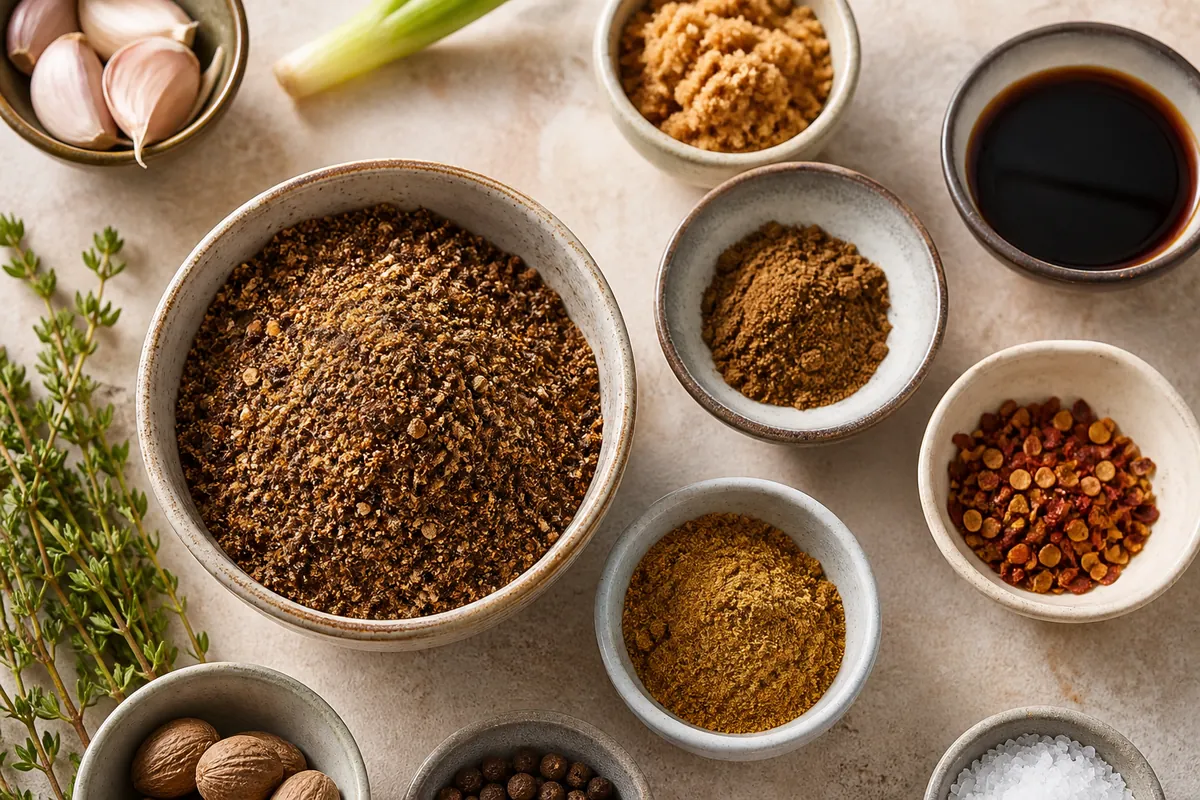
That signature jerk flavor is built on a very specific stack: allspice as the fragrant backbone, dried thyme for herbal bite, scotch bonnet-style heat that's hot but not flat, and a thread of smoky sweetness that pulls everything together. Most spice blends hit one or two of those notes.
A good jerk seasoning substitute hits three or four, and this guide tells you exactly how.
The spices below aren't guesses. Each one was chosen because it shares at least two of jerk's core characteristics, and the adjustments tell you what to add or drop to close the gap.
Jerk seasoning's key flavors are allspice, thyme, scotch bonnet heat, and smoky sweetness. DIY blends and allspice-forward mixes come closest. Berbere, Cajun, and garam masala all work with small adjustments. Use a 1:1 ratio to start, then taste and tweak.
5 Best Jerk Seasoning Substitutes for Any Recipe
These five swaps are ranked by how closely they match jerk's full flavor profile. Each one comes with a ratio and a note on where it works best.
| # | Substitute | Best For | Ratio | Key Note |
|---|---|---|---|---|
| 1 | DIY Jerk Blend | Both | 1:1 | Most accurate flavor match |
| 2 | Jamaican Allspice Seasoning | Both | 1:1 | Verify thyme on label |
| 3 | Berbere + Thyme + Sugar | Both | 1:1 | Earthy, needs allspice boost |
| 4 | Cajun + Allspice | Grill | 1:1 | Watch salt levels carefully |
| 5 | Garam Masala + Smoked Paprika + Brown Sugar | Both | 1:1 | Start at ¾ if blend is hot |
1. DIY Jerk Blend
Building your own blend is the most direct path to authentic jerk flavor. Start with 1 teaspoon allspice, ½ teaspoon dried thyme, ½ teaspoon garlic powder, 1 teaspoon brown sugar, and cayenne or chili flakes for heat, then adjust from there.
The allspice carries the signature aroma that no other single spice can replicate. If you want the smoky-sweet edge typical of grilled jerk, adding a small amount of swapping in smoked paprika as a base layer works well before the other spices go in.
- Allspice: Use 1 teaspoon per 2 tablespoon total blend; it's the non-negotiable base note
- Brown sugar: ½ teaspoon minimum; this is what keeps jerk from tasting flat
- Heat: Cayenne hits fast and hot; chili flakes are slower and milder
- Smoke: Add ¼ teaspoon smoked paprika for grilling; skip it for lighter baked dishes
Skip if: You want a single ready-made blend and don't want to measure multiple spices.
2. Jamaican Allspice Seasoning
A Jamaican allspice seasoning blend is the closest off-the-shelf swap, but only if the label shows both allspice and thyme. Some versions skip thyme entirely and read more like a general Caribbean spice, not jerk.
The charred, peppery warmth you get from good jerk chicken comes largely from that allspice-thyme combination working together. If your blend has both, use it 1:1 and you're done.
- Straight swap: Use 1:1 if the label lists allspice, thyme, and garlic
- Add sugar: Stir in ¼ teaspoon brown sugar per tablespoon if the blend tastes savory but flat
- Add smoke: A pinch of smoked paprika helps if you're baking instead of grilling
- Back off the heat: If the blend already has chili, reduce by 2 tablespoon before adding hot sauce
Skip if: The label doesn't list allspice or thyme; it won't read as jerk at any ratio.
3. Berbere + Thyme + Sugar
Berbere is an Ethiopian spice blend built on warm, layered heat: fenugreek, coriander, cardamom, and chili all show up. It doesn't have allspice's floral fragrance, but it brings a complexity that keeps the substitute from tasting one-dimensional.
Adding ½ teaspoon dried thyme and ¼ teaspoon brown sugar per tablespoon of berbere pulls the blend toward jerk's herbal-sweet profile. If you need to pick the right hot pepper option for the heat component, picking a scotch bonnet swap separately gives you more control over intensity.
Berbere + Thyme + Sugar
Works for: grilled chicken, roasted vegetables, slow-cooked pork
Skip if: you need allspice's top note or the dish is very delicately spiced
- Thyme: Don't skip it; berbere alone reads too earthy without the herbal bridge
- Sugar: ¼ teaspoon per tablespoon is enough; berbere can already lean sweet depending on the brand
- Allspice boost: If you have even a small amount, add ¼ teaspoon to sharpen the fragrance
Skip if: Your berbere already contains sugar or is very smoky; over-sweetening happens fast.
4. Cajun Seasoning + Allspice
Cajun seasoning is paprika-forward and peppery, which means it brings heat and color but not jerk's distinctive fragrant warmth. Adding ½ teaspoon of allspice per tablespoon of Cajun seasoning closes that gap significantly and makes it usable as a grill rub.
This combo works best on chicken thighs, pork shoulder, or shrimp where the paprika's smokiness has fat and char to play against. Understanding warm spice swaps helps if you're trying to stretch what you have without buying anything new.
Skip if: Your Cajun blend is already very salty; reduce other added salt by half before seasoning. Also skip if you can't add at least a little allspice, because the substitute will taste like Cajun, not jerk.
5. Garam Masala + Smoked Paprika + Brown Sugar
Garam masala has clove, cinnamon, and cumin in its backbone, which means it already touches some of jerk's warm, slightly sweet territory. The missing pieces are smoke and the allspice-thyme herbal note. Smoked paprika fills the first gap; brown sugar handles the sweetness.
The ratio that works for most rubs is 1 tablespoon garam masala, ½ teaspoon smoked paprika, and ½ teaspoon brown sugar. For spice flavor layering on thicker cuts, scale up the garam masala before adding more paprika, not the other way around.
| Use | Ratio | Notes |
|---|---|---|
| Thin cuts (fish, shrimp) | ¾ tablespoon per lb | Light hand; garam masala can overpower |
| Chicken thighs/breast | 1 tablespoon per lb | Standard ratio, add paprika for grill use |
| Pork shoulder/ribs | 1½ tablespoon per lb | Scale up garam masala first, not paprika |
| Roasted vegetables | ½ tablespoon per cup | Add sugar last; it browns fast in a hot oven |
Skip if: Your garam masala is already very spicy or sweet; start at ¾ of the suggested amount and taste before adding more.
Making Jerk Seasoning Substitutes Taste Right
The balance test for any jerk substitute is simple: you should smell allspice or something close to it, taste a herbal note from thyme, feel real heat (not just pepper dust), and get a slight sweetness at the finish. Smoke is a bonus for grilling but matters less in the oven.
Understanding the thyme format choice also makes a difference; dried thyme blooms more slowly than ground, so rub it slightly earlier when using it raw.
- Taste before you season: Mix a small pinch of your substitute with a drop of water or oil and taste it. Adjust sweetness, smoke, or heat before it touches the meat.
- For baking: Use about 10-15% less rub than you would for grilling. Oven heat concentrates spices and sugar burns faster without the char to balance it.
- For grilling: Pat the substitute rub on at least 20 minutes before cooking. This lets the brown sugar begin to dissolve into the surface so it caramelizes rather than burns.
Frequently Asked Questions
You can, but the result will taste more peppery and less fragrant than jerk. Add ½ teaspoon allspice per tablespoon of Cajun to recover jerk's signature warmth.
A mix of equal parts cinnamon and clove comes close; use ¼ teaspoon of each per teaspoon of allspice called for. The aroma won't be identical, but it covers the warm-spice base.
A small amount of chipotle powder or liquid smoke (2-3 drops per tablespoon of rub) adds smokiness without changing the dry-rub texture.
They work, but use about 15% less rub and watch the sugar content. Brown sugar scorches in a dry oven faster than it would over open flame.
Mix a test pinch with a drop of neutral oil and taste it before seasoning. Reduce the hot element by 25% and add a small pinch of brown sugar to balance excess salt.
5 Best Jerk Seasoning Substitutes for Any Recipe
Ingredients
Method
- Choose your path: buy an allspice-forward blend, or DIY by combining allspice, thyme, garlic, brown sugar, and a scotch bonnet–style heat source.
- Use a 1:1 substitution ratio for most rubs; if your substitute is hotter than jerk, start with ¾ and adjust after one taste.
- Add the “missing note” before seasoning the whole batch: a tiny pinch of smoked paprika for smoke or extra brown sugar for sweetness.
- Let the meat/potatoes sit with the rub for 15–30 minutes so spices bloom (longer is fine for grilling).
- For baking, reduce the liquid/seasoning moisture effect by using slightly less rub and adding the rest after the first browning step.
Notes
- Jerk flavor is allspice-forward + thyme + heat + a touch of sweetness (often brown sugar).
- If you’re missing smoke, smoked paprika is the closest pantry stand-in.
Tried this recipe?
Let us know how it was!
Carrie is a food writer and editor with more than 15 years of experience. She has worked for some of the biggest names in the food industry, including Bon Appétit, Food & Wine, and Martha Stewart Living.
As the Editor in Chief of EpicureDelight, Carrie oversees all of the content on the site. She also manages the team of contributing writers and editors, who help to create delicious recipes, helpful tips, and informative articles that you’ll find on the site.
A native of the Chicago area, Carrie is passionate about all things food. She loves trying new restaurants and experimenting with new recipes in her kitchen. She’s also a graduate of the Culinary Institute of America, so she knows a thing or two about food!



