
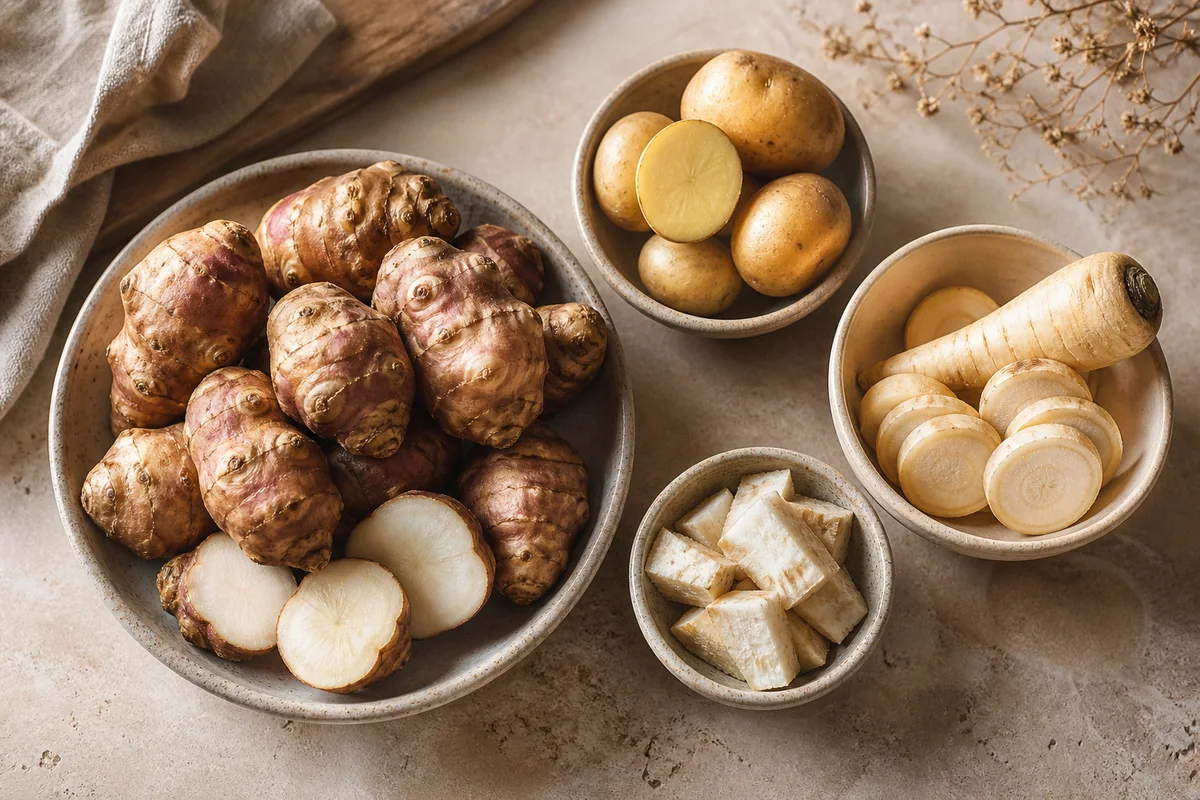
Jerusalem artichokes bring something unusual to a dish. That nutty-sweet, slightly earthy bite is hard to pin down, and finding a good jerusalem artichoke substitute means deciding what matters more in your recipe: the flavor, the starch, or the texture. Instead of jerusalem artichoke, different swaps win depending on whether you're roasting wedges, blending a smooth purée, or baking a savory gratin.
Most failures happen when cooks swap by looks alone. A vegetable might look similar but behave completely differently in the oven or pot.
For roasting, parsnip is the closest match for nutty-sweet flavor. For starchy body in mash or baking, rutabaga or potatoes hold their own. Water chestnuts keep crunch in salads and stir-fries. Chicken of the woods works when you need a hearty, chewy roasted texture.
5 Best Jerusalem Artichoke Substitutes, Ranked by Use
| # | Substitute | Best For | Ratio | Key Note |
|---|---|---|---|---|
| 1 | Parsnip | Roast / Mash | 1:1 | Nutty-sweet, tender |
| 2 | Rutabaga | Purée / Bake | 1:1 | Starchy, mild-sweet |
| 3 | Potatoes | Mash / Roast | ¾:1 | Neutral; add seasoning |
| 4 | Water Chestnuts | Salad / Stir-fry | ¾:1 | Crisp, not starchy |
| 5 | Chicken of the Woods | Roast / Sauté | 1:1 | Chewy, earthy bite |
1. Parsnip
Parsnip is the closest flavor match for roasting and mashing. It has the same nutty sweetness and caramelizes in a hot oven in a way that feels right next to the original.
On parsnip flavor notes, that signature honey-nutty character is exactly what makes it work here.
- Best use: Roast at 400°F until edges are golden, or mash with butter for a smooth side
- Key adjustment: Cut pieces slightly smaller than you would jerusalem artichoke, since parsnip softens faster
- Serving outcome: Tender, sweet, and slightly earthy, the result reads very close to the original
Skip this if you need a firm, crunchy bite. Parsnip collapses to tenderness once roasted, and it won't hold snap in a salad or stir-fry.
2. Rutabaga
Rutabaga is the go-to when starchy body is the job, not nuanced sweetness. It purées smooth, holds up in baked casseroles, and absorbs butter or cream without going watery.
If you're weighing your options, choosing the right rutabaga swap often comes down to whether the dish needs density or delicacy.
- Prep: Peel, cube, and roast at 400°F for 30-35 minutes until fork-tender before puréeing
- Flavor shift: Rutabaga tastes slightly more assertive and less delicately sweet than jerusalem artichoke
- Quick fix: Add a small drizzle of honey or a pinch of sugar to the purée to bring sweetness back in line
Skip this if you want a delicate, nutty background note. Rutabaga is confident in flavor, and it will show in a simply dressed dish.
For more on this starchy root's character, it's worth knowing before you commit.
3. Potatoes
Yukon gold potatoes are the most reliable starch stand-in. They mash creamy, roast to a golden exterior, and hold together in gratins without turning gluey. For baking, the match is about body and moisture retention, and potatoes nail both.
The flavor is noticeably more neutral, though. To pull potatoes toward that nutty-earthy direction, cook them in browned butter, or add a pinch of nutmeg and a clove of roasted garlic.
That combination from well-stored starchy potatoes bridges more of the gap than you'd expect.
- For mash: Use Yukon gold at a 1:1 ratio and fold in browned butter for a nuttier finish
- For roasting: Russets get crispier edges; Yukons stay creamier inside
Skip this if the recipe depends on that characteristic earthy-sweet flavor. Potatoes are excellent stand-ins for texture, but the flavor trade-off is real.
4. Water Chestnuts
Water chestnuts solve a specific problem: keeping firm, crisp texture in dishes where jerusalem artichokes would be lightly cooked or served near-raw. They hold their snap through heat better than almost any root vegetable.
If you're curious about how they differ from similar options, the two-chestnut comparison clarifies which one fits where.
Water Chestnuts
Works for: stir-fries, crisp salads, quick sautés where snap is the goal
Skip if: you're making a purée, a gratin, or anything that needs starchy thickening
- Prep: Drain canned water chestnuts and pat completely dry before using
- Ratio: Use about ¾ of the amount called for, since their flavor is milder and less sweet
- Finishing step: Toss into a hot pan for 2-3 minutes to drive off any canned flavor before serving
5. Chicken of the Woods
This mushroom is an unusual pick, but it earns its place. Chicken of the woods, roasted in wedges and finely chopped, produces a hearty, chewy bite that reads close to tender roasted root vegetables. The earthy, umami-forward quality isn't the same as jerusalem artichoke's sweetness, but it fills the same textural role in a composed dish.
Chicken of the Woods vs Jerusalem Artichoke
Works for: roasted sides, grain bowls, or hearty sautés where chewy texture matters
Skip if: you need starchy thickening, a creamy purée, or a sweet root flavor
- Prep: Remove any tough or woody edges, then dry-roast at 425°F to drive off moisture before finishing with oil and seasoning
- Seasoning bridge: A drizzle of hazelnut or walnut oil after roasting nudges the flavor toward the nutty notes jerusalem artichoke delivers
- Texture note: Finely chop after roasting if you want small pieces that blend into a dish without dominating
Skip this if you're making a purée or need starch for body. Mushrooms won't thicken a dish like a root vegetable will.
Making Jerusalem Artichoke Substitutes Work
The core strategy is matching by role, not by appearance. A substitute that looks similar may behave completely differently depending on whether the jerusalem artichoke was providing starch, sweetness, or texture in the original recipe.
For roasted dishes, focus on flavor and browning first. For mashed or baked applications, starch content is what carries the dish.
Method matters just as much as the ingredient itself. Roasting drives off moisture and concentrates flavor, so any swap that gets roasted will perform better than the same ingredient steamed or boiled.
You can also look at how choosing the right roasting setup affects the result when you're working with denser roots like rutabaga or parsnip.
- Match the method: Roast dense substitutes (parsnip, rutabaga) at 400-425°F until fork-tender; don't rush with lower heat
- Fix sweetness: If the swap tastes flat, add a small pinch of sugar or a drizzle of honey, then re-taste after a minute of cooking
- Fix starch: If the purée or gratin feels thin, mash more thoroughly, or add a tablespoon of potato starch to bring back body
Frequently Asked Questions
Parsnip is the best match for roasted flavor. It caramelizes similarly and shares that nutty-sweet edge that makes jerusalem artichoke stand out on a roasting pan.
Rutabaga and Yukon gold potatoes both deliver reliable starch and body in baked dishes. Rutabaga purées slightly denser; potatoes are more neutral in flavor.
Yes, but season actively. Browned butter, roasted garlic, or a pinch of nutmeg pulls potatoes toward the earthy-nutty direction that jerusalem artichoke naturally provides.
Canned water chestnuts hold their snap through heat better than any root vegetable. Drain, pat dry, and add them near the end of cooking for best results.
Parsnip cooks slightly faster than jerusalem artichoke, so check it 5 minutes early. Rutabaga runs denser and may need an extra 5-10 minutes to fully soften.
5 Best Jerusalem Artichoke Substitutes (Honest Picks)
Ingredients
Method
- Decide how you used jerusalem artichokes (roasted/sautéed vs mashed/puréed vs baking thickener) and pick the closest match from the table.
- Use the listed substitution ratio; for drier options (like parsnip/rutabaga), lean toward the higher end and roast until tender.
- If your substitute is less sweet than jerusalem artichoke, add a small boost (honey or a pinch of sugar) and re-taste after cooking.
- If your substitute is less starchy, increase cooking time slightly or mash/purée more thoroughly to get the same body.
- Finish with the same seasoning style you’d use for jerusalem artichokes (butter/olive oil, salt, pepper, and a nutty note like toasted garlic or nutmeg).
Notes
- Jerusalem artichokes taste earthy-nutty and read sweeter when roasted.
- Texture matters: crunch/chew needs firmer roots or chopped mushrooms; purees and bakes need starchy alternatives.
Tried this recipe?
Let us know how it was!
Carrie is a food writer and editor with more than 15 years of experience. She has worked for some of the biggest names in the food industry, including Bon Appétit, Food & Wine, and Martha Stewart Living.
As the Editor in Chief of EpicureDelight, Carrie oversees all of the content on the site. She also manages the team of contributing writers and editors, who help to create delicious recipes, helpful tips, and informative articles that you’ll find on the site.
A native of the Chicago area, Carrie is passionate about all things food. She loves trying new restaurants and experimenting with new recipes in her kitchen. She’s also a graduate of the Culinary Institute of America, so she knows a thing or two about food!



