
Kamut has a flavor you notice right away: buttery, faintly sweet, with a nutty depth that plain whole wheat just doesn't deliver. That quality comes from the grain itself, an ancient variety called Khorasan wheat, and it shapes both the taste and the crumb of anything you bake with it.
Finding a good kamut flour substitute means matching that flavor direction first, then sorting out the ratio.
Most swaps work at a 1:1 ratio by weight. Whole-grain alternatives may pull a bit more moisture from your batter, so mix first and adjust liquid only if the dough feels stiff.
One note before you start: every substitute here contains gluten. Skip this list if your recipe needs to be gluten-free.
Spelt flour is the closest match to kamut's buttery-nutty flavor and swaps in at 1:1 by weight. Whole wheat flour and farro flour also work well. For an emergency swap, use ¾ all-purpose flour plus wheat germ to restore toasted aroma.
5 Best Kamut Flour Substitutes, Ranked by Flavor
The table below gives you a fast comparison. Scan it, pick your substitute, then read the full section for ratio details and handling tips.
| # | Substitute | Best For | Ratio | Key Note |
|---|---|---|---|---|
| 1 | Spelt Flour | Both | 1:1 | Closest nutty-sweet flavor |
| 2 | Whole Wheat Flour | Both | 1:1 | Rest batter 10 min |
| 3 | Whole Durum Wheat Flour | Baking | 1:1 | Adds firm crumb structure |
| 4 | Farro Flour | Both | 1:1 | Slightly more rustic note |
| 5 | AP Flour + Wheat Germ | Baking | ¾:1 | Emergency pantry swap only |
1. Spelt Flour
Spelt is the substitute we reach for first. It shares kamut's nutty sweetness and bakes into a tender, open crumb without the slight bitterness that some whole wheat flours carry.
If you want a swap that doesn't ask you to change much else about a recipe, spelt is it.
Understanding this tender ancient grain helps you predict how it behaves across different bake types before committing to a full batch.
- Ratio: 1:1 by weight for batters, quick breads, and yeast doughs
- Best bake types: Muffins, sandwich loaves, flatbreads, and pancakes
- Hydration tip: Mix fully before assessing moisture; add liquid 1 tablespoon at a time only if dough feels tight
Skip if: your recipe relies on a very neutral wheat flavor. Spelt reads a touch sweeter than standard wheat, which is usually a bonus but can shift delicately balanced savory loaves.
2. Whole Wheat Flour
Whole wheat is the most reliable 1:1 kamut swap you can pull from a standard pantry. It has a more assertive, earthy grain note than kamut, but choosing a softer or medium grind closes that gap considerably.
If you find switching to milder wheat options useful, softer whole wheat is the first one to try.
- Ratio: 1:1 by weight
- Best uses: Yeast breads, dense muffins, waffles, and crackers
- Flavor balance: Add 1 teaspoon honey or a small pinch of vanilla to batter if you miss kamut's sweeter undertone
- Rest tip: Let your batter or dough sit 10 minutes before baking to hydrate the bran and soften the crumb
Skip if: you want kamut's buttery sweetness to stay front and center. Whole wheat can taste more robust, and no amount of resting fully removes that earthy quality.
3. Whole Durum Wheat Flour
Whole durum flour is a firmer-natured grain than kamut, and that is actually an advantage in certain bakes. It builds good structure in muffins and quick breads, giving you a tight, even crumb that holds up when sliced.
You can read more about this high-protein golden flour to understand how its protein level shapes rise and chew.
- Ratio: 1:1 by weight
- Best recipe types: Muffins, quick breads, yeast rolls, and pizza dough
- Moisture note: Add 1-2 tablespoon extra liquid if your batter looks stiffer than expected after mixing
Skip if: you're baking delicate drop cookies or shortbread. Durum's protein content works against the crumbly, soft texture those recipes depend on.
4. Farro Flour
Farro flour sits close to kamut on the flavor spectrum: nutty, lightly sweet, and just earthy enough to feel like a real grain. We'd call it the most interesting swap on this list.
It bakes well into quick breads and muffins, and it handles yeast doughs with reasonable stretch.
Kamut vs. Farro Flour
Works for: recipes where a slightly rustic, nutty crumb is welcome; muffins, loaves, flatbreads
Skip if: your batter already carries strong spices or molasses; farro's grain note can compete and muddy the flavor
Farro's nuttiness runs a shade more rustic than kamut's buttery smoothness. You can balance that by adding a small amount of honey or vanilla.
If you want to explore grain-forward flour picks beyond farro, spelt is the natural next stop.
- Ratio: 1:1 by weight
- Best recipe types: Muffins, quick breads, pancakes, and rustic yeast loaves
- Flavor tip: A teaspoon of honey or a half-teaspoon of warm spice (cinnamon, cardamom) pulls farro closer to kamut's sweeter register
5. All-Purpose Flour + Wheat Germ
This blend is an emergency move, not a first choice. When you have no whole-grain flour in the house, combining all-purpose flour with toasted grain add-ins gets you closer to kamut's toasty aroma than plain white flour alone ever could.
The wheat germ reintroduces a nutty note that all-purpose flour completely lacks.
| Kamut Amount | All-Purpose Flour | Wheat Germ | Notes |
|---|---|---|---|
| 1 cup (120 g) | 90 g (¾ cup) | 30 g (3 tbsp) | Combine before mixing into batter |
| 2 cups (240 g) | 180 g (1.5 cups) | 60 g (6 tbsp) | Sift once to distribute evenly |
- When to use: Quick breads, pancakes, and muffins where white-flour texture is acceptable
- Hydration: Keep liquid at the original recipe amount; do not add extra unless batter is visibly stiff
- Flavor fix: Toast the wheat germ in a dry pan for 2 minutes before mixing to deepen its nutty aroma
Skip if: you need whole-grain nutrition or a dense, chewy crumb. This blend bakes closer to white flour in texture and doesn't deliver the fiber profile of kamut.
Making Kamut Flour Substitutes Work
Start by matching your substitute to the recipe type. Tender bakes like muffins and quick breads are forgiving enough for any option on this list.
Yeast breads reward the closer matches, meaning spelt, farro, or whole durum, because their protein and gluten structure behave more like kamut under kneading. Understanding earthy wheat grain flavor helps you predict which swap keeps your loaf tasting close to the original.
For the emergency blend, check neutral white flour baking to calibrate how much the flavor will shift.
- By recipe type: Use spelt or farro for muffins and quick breads; use spelt or whole durum for yeast doughs where structure matters most
- Hydration and rest: Whole-grain flours absorb more liquid than kamut; rest dough 10-20 minutes before deciding to add any extra flour or water
- Flavor balance: If the baked result tastes too earthy, blend your whole-grain substitute with 20-30% all-purpose flour on the next bake to soften the grain note
Frequently Asked Questions
Yes, spelt swaps in at 1:1 by weight and is the closest flavor match. Mix fully before assessing moisture, then add liquid 1 tablespoon at a time only if dough feels stiff.
It can, especially with a coarse grind. Choose soft or medium grind and add 1 teaspoon honey to bring it closer to kamut's mild, sweet flavor.
Sometimes. Both flours can absorb slightly more moisture than kamut. Rest your batter 10 minutes, then add liquid 1 tablespoon at a time if needed.
Use ¾ all-purpose flour plus wheat germ to reach the total weight. Toast the wheat germ briefly to recover some of kamut's nutty aroma.
Keep both in airtight containers in the freezer. Whole-grain flours go rancid faster than white flour because of their natural oils.
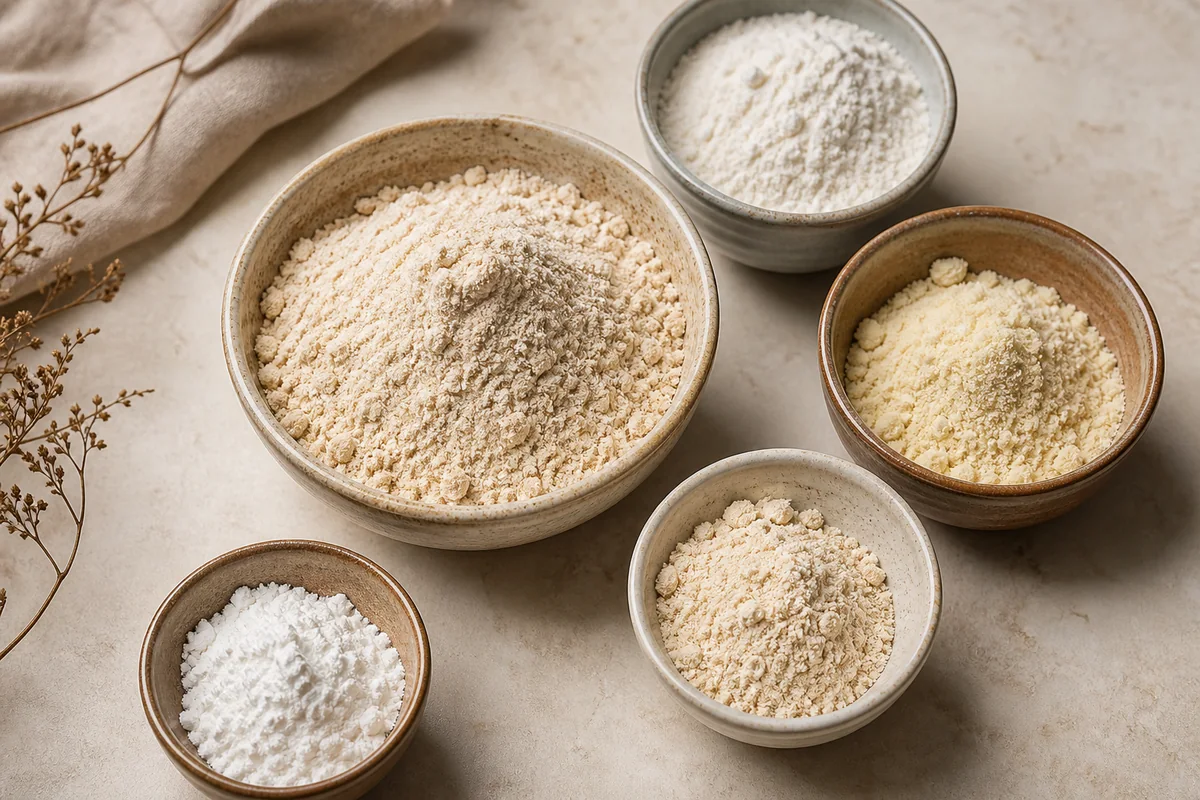
5 Best Kamut Flour Substitutes (Flavor-Matched)
Ingredients
Equipment
Method
- Decide what you’re baking (quick bread/muffins vs. yeast bread) and pick the closest flavor profile from the table below.
- Swap using the stated ratio (typically 1:1 for true wheat-grain flours). For the emergency blend, use the ¾:1 ratio (kamut to flour mix).
- Check dough/batter consistency: whole-grain substitutes can feel drier—add 1–2 tablespoon liquid at a time only if needed.
- For yeast doughs, rest 10–20 minutes before kneading to improve hydration and crumb development.
- Bake as directed, then taste the crust crumb: if it’s too earthy, reduce using-whole-grain next time by blending in a neutral flour.
Notes
- If your recipe uses kamut for flavor (not just structure), prioritize spelt or whole wheat for the most similar nutty sweetness.
- Whole-grain kamut-style flours can absorb more liquid—adjust hydration only after mixing and resting.
Tried this recipe?
Let us know how it was!
Carrie is a food writer and editor with more than 15 years of experience. She has worked for some of the biggest names in the food industry, including Bon Appétit, Food & Wine, and Martha Stewart Living.
As the Editor in Chief of EpicureDelight, Carrie oversees all of the content on the site. She also manages the team of contributing writers and editors, who help to create delicious recipes, helpful tips, and informative articles that you’ll find on the site.
A native of the Chicago area, Carrie is passionate about all things food. She loves trying new restaurants and experimenting with new recipes in her kitchen. She’s also a graduate of the Culinary Institute of America, so she knows a thing or two about food!



