
Kumquats are odd little fruits. They're eaten whole, peel and all, so one bite gives you sweet flesh and a slightly bitter rind at the same time.
That dual-nature flavor is what makes finding a good kumquat substitute tricky. Most citrus swaps cover the juice side just fine but miss the peel complexity.
The fix is to build your swap in two parts: a juice component for acidity and sweetness, plus a zest component for that faint bitterness. Knowing whether your recipe uses kumquats for their juice, their zest, or their whole-fruit texture tells you which route to take.
Kumquats bring sweet-tart citrus flavor plus mild peel bitterness. The best swaps blend two components: a juice or segment source for acidity and a zest source for aromatic bitterness. Orange + lime is the closest all-purpose match. For desserts, use tangerine + lemon. For savory tang, orange zest + vinegar works fast.
5 Best Kumquat Substitutes Ranked by Flavor Match
| # | Substitute | Best For | Ratio | Key Note |
|---|---|---|---|---|
| 1 | Orange + Lime | Both | 1:1 | Best all-purpose match |
| 2 | Tangerine + Lemon | Sweet | 1:1 | Sweeter, more floral |
| 3 | Yuzu Juice | Both | 1:1 | Bright, aromatic citrus |
| 4 | Lemon + Simple Syrup | Sweet | ¾:1 | Easy pantry swap |
| 5 | Grapefruit + Orange Zest | Savory | ¾:1 | Bitterness-forward |
The swap that works best depends entirely on how the kumquats function in the dish. Use the ranked sections below to match the right substitute to your specific recipe use.
1. Orange + Lime
Orange and lime together are the closest thing to a kumquat in a standard kitchen. Orange zest mimics the peel bitterness, and lime juice supplies the sharp, bright tang that kumquat flesh delivers.
Together they cover both sides of the flavor without needing anything exotic.
How to swap: Combine equal parts orange zest and lime juice to replace kumquat fruit flavor at a 1:1 ratio. Taste first, then adjust. If it reads too sharp, add a tiny pinch of sugar. If it feels flat, add a little more zest.
- Zest-heavy recipes: Use more orange zest and less lime juice to keep bitterness up front
- Juice-heavy recipes: Lean heavier on lime, but keep at least a small amount of zest for aroma
- Sweet-savory glazes: This blend works better than any single citrus on its own
When you're also working through other lime-forward citrus choices, a similar zest-plus-juice logic applies across the board.
Skip if: Your recipe needs whole, chewable kumquat segments. This blend is liquid and zest only, so the chewy peel texture won't be there.
2. Tangerine + Lemon
Tangerine is sweeter and more floral than a standard orange, which makes this pairing shine in desserts, preserves, and glazes. The lemon pulls the sweetness back toward sour and stops the blend from reading too candy-like.
It's a gentler combination than orange + lime.
For recipes where kumquats are candied or cooked into a sauce, the tangerine's natural sugar levels help keep sweetness in the right range. Understanding tangerine flavor notes tells you exactly how far that floral quality can travel before it tips sweet.
- Ratio: Replace kumquat fruit with a 1:1 blend of tangerine zest and lemon juice
- Want more bitterness? Add an extra half-teaspoon of tangerine zest per tablespoon of fruit replaced
- Dessert note: Reduce added sugar in your recipe by about 1 teaspoon per swap serving
Skip if: You're making a savory sauce that needs real tang. Tangerine is too sweet for sharp, acidic applications. Use option 1 instead.
3. Yuzu Juice
Yuzu is aromatic in a way that standard lemon and lime aren't. It has a floral, almost herbal citrus scent that sits closer to kumquat brightness than plain lemon does.
If you can find yuzu juice, it's the best single-ingredient match for kumquat's fragrance.
Yuzu Juice
Works for: desserts, dressings, glazes, cocktails, and any dish where aromatic citrus is the goal
Skip if: you need intact peel texture or strong bitterness - yuzu juice alone won't replicate either
Yuzu juice is fairly tart on its own. If your recipe already includes sugar, the balance usually lands well at a 1:1 swap for kumquat juice.
For whole-fruit flavor, add about 25-50% more zest than you'd normally use to push the aromatic note higher. If you're also comparing picking the right acidic juice for your dish, yuzu's sharpness places it closer to lemon than to orange.
- Juice ratio: Use yuzu 1:1 for kumquat juice
- Whole-fruit approximation: Add extra yuzu zest, roughly 25-50% more, to boost aromatic depth
- Sweetness check: If the swap tastes sharp, add sugar in small amounts (¼ teaspoon at a time)
4. Lemon + Simple Syrup
This is the most pantry-friendly option. Lemon handles the acidity, and simple syrup fills in the sweetness that kumquats carry naturally in their flesh.
It won't replicate peel bitterness, but for sauces, syrups, and glazes it covers the sweet-tart balance cleanly.
Start with ¾ parts simple syrup blended with enough fresh lemon juice to reach the acidity you want. That's your baseline.
From there, add more lemon for sharper bite or more syrup for sweetness. The syrup versus granulated sugar difference matters here: syrup dissolves instantly and integrates without grittiness, which is helpful in cold applications.
- Starting ratio: ¾ tablespoon simple syrup + ¼ tablespoon lemon juice per kumquat fruit equivalent
- Too sour? Add syrup in ¼ teaspoon increments until balanced
- Too sweet? Add fresh lemon juice in small drops and taste between each addition
- Want bitterness? Add a pinch of orange zest or extra lemon zest - syrup alone won't deliver it
Skip if: Your recipe specifically needs peel bitterness. This swap is all juice and no zest unless you add it separately.
5. Grapefruit + Orange Zest
Grapefruit is the most bitter of the common citrus fruits, so this pairing leans into the peel-like sharpness that kumquats are known for. Orange zest softens the edge slightly and adds familiar citrus aroma.
It's the best option when a recipe depends on that slightly astringent quality.
When you review citrus-forward swap options for bolder flavor, grapefruit tends to appear near the top for savory applications. Use grapefruit juice at about ¾ of the kumquat quantity called for, then add orange zest to fill in the aromatic side.
| Use | Ratio | Notes |
|---|---|---|
| Too bitter | ½ grapefruit + ½ orange juice | Dilute with orange and add 1 teaspoon sugar |
| Balanced | ¾ grapefruit + orange zest | Standard swap for savory dishes |
| More aroma | ¾ grapefruit + extra orange zest | Add zest in ¼ teaspoon increments |
- Best uses: Marinades, vinaigrettes, braised meats, bitter citrus desserts
- Bitterness control: Always taste before adding full amount - grapefruit can dominate quickly
- Orange zest amount: Start with ½ teaspoon per tablespoon of grapefruit juice
Skip if: You dislike grapefruit bitterness. This swap reads sharper than kumquats and won't soften much without dilution.
Making Kumquat Substitutes Taste Right
Getting a kumquat swap to land correctly is mostly about layering. Zest drives aroma and bitterness, while juice drives acidity and brightness.
Most recipes need both, and understanding dried versus fresh zest options helps when fresh citrus isn't available. For sweet applications, the sweetener comparison between syrup and liqueur-based alternatives is worth checking if your recipe leans boozy.
- Zest first, juice second: Add zest before juice in any recipe - zest blooms in heat or fat, and its intensity is easier to control before the liquid goes in
- Sweet-tart balance: If your swap tastes sour without sweetness, add sugar or syrup in ¼ teaspoon amounts and taste between additions
- Bitterness expectations: No juice alone replicates peel bitterness well - always add at least a small amount of zest if your recipe depended on whole kumquats
Frequently Asked Questions
Yes, but you'll lose the peel bitterness. Lemon juice plus sugar covers the sweet-tart side, but the aromatic, slightly bitter edge kumquats carry comes from the rind.
Start with a 1:1 ratio of orange zest to kumquat zest. Orange peel is slightly less bitter, so you may need to add an extra ¼ teaspoon to match intensity.
Grapefruit juice with orange zest is the closest match for savory uses. It delivers the bitter citrus edge without adding unwanted sweetness to the sauce.
Yes. Yuzu's floral citrus aroma translates well in desserts and glazes. Use it 1:1 for kumquat juice and add a small amount of sugar if the tartness is too sharp.
Dilute with a small amount of orange juice and add sugar in ¼ teaspoon increments. Swapping some grapefruit juice for orange juice also reduces bitterness quickly.
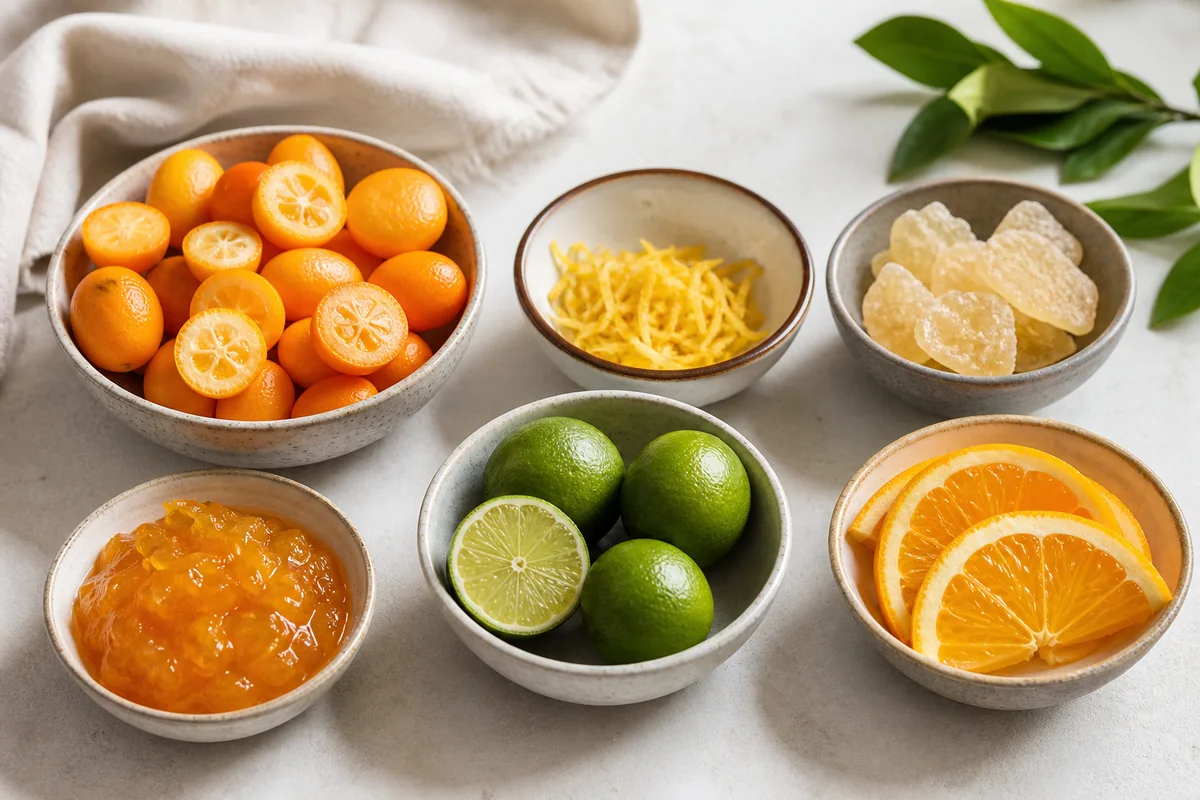
5 Best Kumquat Substitutes for Any Recipe
Ingredients
Equipment
Method
- Decide how your recipe uses kumquats: zest only, juice/segments, or whole-fruit flavor.
- Choose the closest flavor match from the list—use orange+yuzu/lemon blends when you need balanced sweet-tart.
- Start with the listed swap ratio, then taste and adjust: add sugar for more kumquat sweetness or add more lemon/lime for sharper bite.
- If your substitute is only juice (not fruit segments), reduce it slightly to concentrate flavor before adding to the dish.
- For zest-heavy recipes, match intensity first (use zest gradually), then add a small amount of juice to recreate kumquat “spark.”
Notes
- Kumquats bring both sweetness and a gentle bitter edge from peel—your swap should recreate that with zest and a touch of extra acidity.
- If substituting juice for whole fruit, concentrate (reduce) or sweeten slightly to mimic the fuller fruit effect.
Tried this recipe?
Let us know how it was!
Carrie is a food writer and editor with more than 15 years of experience. She has worked for some of the biggest names in the food industry, including Bon Appétit, Food & Wine, and Martha Stewart Living.
As the Editor in Chief of EpicureDelight, Carrie oversees all of the content on the site. She also manages the team of contributing writers and editors, who help to create delicious recipes, helpful tips, and informative articles that you’ll find on the site.
A native of the Chicago area, Carrie is passionate about all things food. She loves trying new restaurants and experimenting with new recipes in her kitchen. She’s also a graduate of the Culinary Institute of America, so she knows a thing or two about food!



