
That small wedge of Laughing Cow melts into crackers, swirls into warm pasta sauces, and spreads without tearing bread. It's mild, fatty, and smooth in a way that most cheeses aren't.
Finding a good laughing cow cheese substitute means matching that soft-melt behavior first, flavor second.
The right swap depends on your dish. Cold spreading needs a different texture than warm melting or baking structure.
Pick based on use-case, then adjust with the ratio.
Softened cream cheese is the closest all-around swap at a 1:1 ratio. For lighter options, try Neufchâtel or blended ricotta (use ¾ cup per 1 cup Laughing Cow). A Greek yogurt and mayo blend works for tangy dips. For dairy-free, use unsweetened cashew cream at 1:1.
5 Laughing Cow Cheese Alternatives (Ratios You Can Use)
| # | Substitute | Best For | Ratio | Key Note |
|---|---|---|---|---|
| 1 | Cream Cheese (softened) | Both | 1:1 | Thin with 1-2 teaspoon milk |
| 2 | Neufchâtel | Both | 1:1 | Chill dips to firm up |
| 3 | Ricotta (blended) | Cooking | ¾:1 | Blend fully before using |
| 4 | Greek Yogurt + Mayo | Dips | 1:1 | Avoid high heat |
| 5 | Cashew Cream | Both | 1:1 | Add lemon for tang |
Ratios here are based on volume, not weight. For spreading and cold dips, use the ratio straight.
For warm melting or baking, expect to thin each substitute slightly before it behaves like Laughing Cow's loose, creamy texture.
1. Cream Cheese (Softened)
Softened full-fat cream cheese is the safest, most direct swap. It has the same mild tang and a fat content close enough to Laughing Cow that it spreads and melts without much fuss.
For cheesecake-style applications and cold spreads, use it straight from the block after softening at room temperature for 20 minutes. In warm dishes, stir in 1-2 teaspoon milk per half cup before heating.
Cream Cheese
Works for: toast, dips, warm pasta sauces, baking
Skip if: you need dairy-free or lactose-free
- Cold spreading: Use 1:1 straight; softened block spreads clean and smooth
- Warm melting: Stir in 1 teaspoon milk per quarter cup before adding to pan
- Baking: Use 1:1; it holds structure better than Laughing Cow, so slightly underbake if you want softness
2. Neufchâtel
Neufchâtel is cream cheese with about one-third less fat. It spreads just as easily and melts in the same gentle, no-fuss way.
The flavor is nearly identical, with a slightly cleaner finish.
For quick dips and softer cheese swaps, it works right at 1:1. One thing to watch: it is a touch softer than cream cheese out of the package.
- Best uses: Toast spreads, cold veggie dips, warm toppings on baked potatoes or soup
- Dip tip: After mixing, chill the dip for 10 minutes so it firms to a scoopable consistency
- Melting: It melts cleanly into warm sauces; no thinning needed unless the sauce is very thick
- Pitfall: Skip this if you want the richest, most buttery mouthfeel-cream cheese wins there
3. Ricotta (Blended Smooth)
Ricotta straight from the tub is too grainy and too loose for a direct swap. Blending it smooth is non-negotiable here.
After 60 seconds in a blender or food processor, it turns silky enough to spread or fold into sauces.
If you're working with ricotta that's already watery, drain it through a fine mesh strainer for 15 minutes before blending. Starting with a firm, fresh tub gives you the most control.
- Ratio: Use ¾ cup blended ricotta for every 1 cup Laughing Cow
- Blending: Blend fully smooth; add a tiny splash of milk only if it still won't spread
- Baking: It works well in baked pasta and stuffed shells, where the heat firms it slightly
- Skip if: Your ricotta is already very thin-drain first, or switch to cream cheese
4. Greek Yogurt + Mayonnaise
This blend gets closer to Laughing Cow than either ingredient does alone. Greek yogurt brings the tang; mayo adds fat and body that keeps the mixture from tasting flat.
The 1:1 ratio here means 1 part total blend per 1 part Laughing Cow.
For the mix, use equal parts tangy dairy base and mayo, stirred until fully uniform. If the dip needs to go warm, thin it with 1 teaspoon milk at a time and keep heat low.
- Mix method: Combine equal parts plain Greek yogurt and full-fat mayo; stir until smooth and uniform
- For warm use: Add 1 teaspoon milk per quarter cup and heat gently, stirring constantly
- Spreading: Works well cold on crackers or toast; chill 5 minutes after mixing for best texture
- Skip if: Your recipe needs long or high-heat melting-the yogurt will separate; use cream cheese instead
5. Cashew Cream (Unsweetened, Blended)
Cashew cream won't taste exactly like dairy cheese. That's worth saying upfront.
But for cold spreading and dip-style uses, a well-blended, unsweetened version matches Laughing Cow's silkiness better than any other dairy-free option.
For a sharper flavor, egg-free binding swaps sometimes combine well with cashew cream in dip recipes. Add lemon juice starting at 1 teaspoon per cup, taste, and adjust.
Cashew Cream
Works for: cold dips, toast spreading, mild cream sauces
Skip if: you need the same bubble-and-melt behavior as dairy cheese at high heat
- Ratio: Use 1:1, blended very smooth from soaked raw cashews
- Tang fix: Stir in 1-2 teaspoon lemon juice per cup; start small and taste before adding more
- Thinning: For warm sauces, thin with 1 teaspoon water at a time until it pours smoothly
- Flavor boost: A pinch of nutritional yeast adds a mild savory note that echoes dairy cheese
Making a Laughing Cow Cheese Substitute Work (Dips, Toast, and Baking)
The most common failures with these swaps are thickness problems and flat flavor. A substitute that is too thick tears bread and clumps in sauces.
One that is too loose pools on toast and makes dips watery. Knowing when to thin with milk and when to chill is the whole game.
For warm sauces, choosing the right thinning liquid matters as much as the ratio itself. If the flavor falls flat after swapping, a small pinch of salt or a few drops of lemon juice usually fixes it faster than adding more substitute.
- Too thick to spread: Stir in milk (or water for dairy-free) one teaspoon at a time until it moves smoothly; stop before it goes glossy
- Too loose for dipping: Chill the mixed substitute for 10 minutes uncovered-it firms quickly without changing flavor
- Flavor too bland: Add a small pinch of salt and ½ teaspoon lemon juice, stir, and taste; repeat once if needed
Frequently Asked Questions
Yes, softened full-fat cream cheese works at 1:1 in baking. It holds structure slightly firmer than Laughing Cow, so reduce bake time by 1-2 minutes if you need a softer set.
Always blend ricotta smooth before using it as a swap. Drain it first if the tub is watery, then blend for 60 seconds until fully smooth.
Stir in milk one teaspoon at a time until it loosens. For dairy-free substitutes, use water instead of milk.
It can separate at high heat or if left too long in a hot pan. Keep heat low and stir constantly; add 1 teaspoon milk to stabilize before warming.
Unsweetened cashew cream blended smooth is the best dairy-free option for cold spreading. Add 1 teaspoon lemon juice per cup for a mild tang that echoes Laughing Cow's flavor.
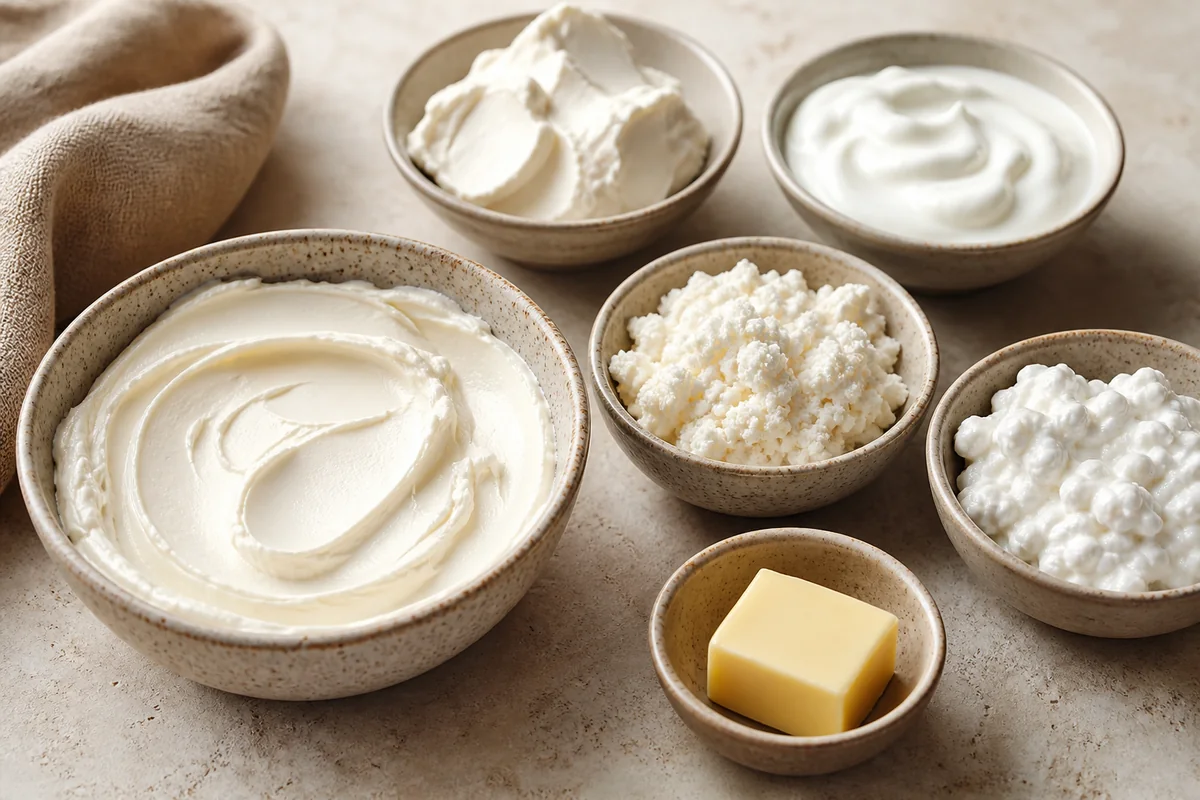
5 Best Laughing Cow Cheese Substitutes (with Ratios)
Ingredients
Equipment
Method
- Decide how you need it to behave: spread (toast/dips) or melt (warm topping/baking).
- Pick the closest option from the table: 1:1 swaps for the easiest texture match.
- Use the listed ratio, then adjust consistency: if it’s too thick, stir in a small splash of milk; if too thin, chill 10 minutes.
- Taste and fine-tune: add salt for stronger “cheesy” flavor or a tiny lemon splash for sharper tang.
- For baking, let the substitute warm into the dish for 1–2 minutes before spreading/adding texture-heavy elements.
Notes
- Best results come from matching thickness first; mild flavor can be corrected with salt and lemon.
- If your substitute looks grainy, blend it smooth before using as a spread or dip.
Tried this recipe?
Let us know how it was!
Carrie is a food writer and editor with more than 15 years of experience. She has worked for some of the biggest names in the food industry, including Bon Appétit, Food & Wine, and Martha Stewart Living.
As the Editor in Chief of EpicureDelight, Carrie oversees all of the content on the site. She also manages the team of contributing writers and editors, who help to create delicious recipes, helpful tips, and informative articles that you’ll find on the site.
A native of the Chicago area, Carrie is passionate about all things food. She loves trying new restaurants and experimenting with new recipes in her kitchen. She’s also a graduate of the Culinary Institute of America, so she knows a thing or two about food!



