
Leeks have a way of anchoring a dish quietly. They soften into something sweet and almost buttery, and their mildness means they never compete with the other flavors around them.
That's exactly what makes finding a good leek substitute harder than it sounds.
The key is to figure out what the leek is actually doing in your recipe. Is it adding mild onion flavor to a broth?
Giving body to a sauté? Providing structure in a savory bake?
The right swap depends on the job, not just the flavor.
This guide matches each substitute to a specific role so you can make the switch without guessing.
Leeks bring mild sweetness, tender texture, and gentle allium flavor to dishes. For cooking, green onions or shallots are your closest matches. For baking, finely minced yellow onion or shallot keeps the structure without overpowering. Celery plus onion powder works when you need the mouthfeel more than the flavor.
5 Best Leek Substitutes for Cooking and Baking
| # | Substitute | Best For | Ratio | Key Note |
|---|---|---|---|---|
| 1 | Green onions (scallions) | Both | 1:1 | Use white + light-green only |
| 2 | Yellow onion | Both | ¾:1 | Sweat well to soften bite |
| 3 | Shallot | Both | 1:1 | Sauté first for baking |
| 4 | Celery + onion powder | Cooking | 1:1 | Dice fine, cook until soft |
| 5 | Chives + onion powder | Finishing | ½:1 | Flavor only, no bulk |
1. Green Onions (Scallions)
Scallions are the most direct swap for leeks. They share the same sweet-mild allium character, and when you use the white base plus the light-green middle section, the flavor lands very close to what a leek brings.
They cook down at roughly the same speed, so you won't need to adjust your timing.
Before you buy a bunch, check how to keep storing scallions fresh so they don't go limp before you use them. That matters because wilted scallions lose their sweetness fast.
Green Onions (Scallions)
Works for: soups, stews, sautés, quiches, savory scones, and any dish where leeks are cooked soft
Skip if: you only have the thick dark-green tops - those turn sharp and stringy, not tender like leek
- Ratio: Use 1:1 by volume, choosing the white and pale-green sections.
- Prep: Slice into thin rounds just like you would a leek's white stalk.
- Cook time: Scallions soften in 2 to 3 minutes - slightly faster than leeks, so watch the heat.
- For baking: Sauté lightly first, cool completely, then fold into batter or dough.
- Flavor check: If the batch tastes sharp raw, a short sweat in butter will mellow it quickly.
2. Yellow Onion
Yellow onion is the most pantry-reliable swap. It brings real allium backbone to soups and braises, but it has more bite than a leek, so you need to use a little less and cook it longer. Start with ¾ of what the recipe calls for in leeks, then adjust at the end.
If you ever need to go in the other direction, picking a different base onion covers situations where yellow onion itself is the problem. That's worth a look for more edge-case swaps.
- Ratio: Use about ¾ cup diced yellow onion for every 1 cup of sliced leek.
- Best dishes: Soups, braises, pot pies, and sautéed vegetable bases - anywhere the onion will have time to soften.
- Sweating tip: Cook over medium-low heat in butter or oil for 8 to 10 minutes until fully translucent and sweet-smelling.
- Prevent sharpness: A pinch of sugar added during the sweat smooths out the raw bite.
- For baking: Mince very finely (almost paste-like), sauté until golden, and cool before mixing in.
Skip if: your recipe depends on leek's delicate flavor in something like a custard or cream sauce - onion can dominate even when cooked soft.
3. Shallot
Shallots sit between garlic and onion in intensity, but they lean toward sweetness rather than sharpness. That makes them a natural fit when you need leek-like subtlety in a sauce or soup.
They also have a finer texture, so they integrate cleanly into anything from a vinaigrette to a savory tart filling.
For a side-by-side look at how shallots compare to other alliums, the shallot-garlic contrast is useful if you're deciding between options. The difference in aroma matters more than people expect.
- Ratio: Use 1:1 by volume; shallots are sweeter, so the flavor stays balanced.
- For quick sauces: Slice thinly and soften in butter for 4 to 5 minutes before adding liquid.
- For soups: Dice and sweat with a little oil - they dissolve beautifully into broths.
- For baking: Sauté until golden and jammy, cool fully, then fold into the batter or filling.
- Volume note: If the leek is mostly providing bulk (think a big pot of potato-leek soup), you may need to supplement shallot with another vegetable to fill out the volume.
Skip if: your dish calls for a large amount of leek purely for body - you'd need a lot of shallots, and the flavor can become too concentrated.
4. Celery + Onion Powder
Celery is an overlooked leek swap, especially when you care more about texture than exact flavor. It gives a similar vegetal softness when cooked down, and a small amount of onion powder bridges the allium gap without adding the sharpness of actual onion.
This is a good emergency combination.
If you want to know more about how celery's flavor profile shifts when cooked versus raw, that context helps you calibrate. Raw celery reads "salad."
Cooked celery reads "broth."
- Ratio: Use 1:1 celery by volume, plus ¼ teaspoon onion powder per cup of celery.
- Prep: Dice finely - larger pieces won't integrate the way leek slices do.
- Cooking: Sweat over medium-low heat for 8 to 10 minutes until the celery is very soft and the raw edge is gone.
- Seasoning balance: Taste before adding more onion powder - it adds up quickly if you overshoot.
- For baking: Press out any moisture after cooking; wet celery can make a batter loose or soggy.
- Flavor boost: A small knob of butter at the end of cooking helps bring out a mild sweetness.
Skip if: your recipe absolutely needs true leek sweetness - celery leans earthy and slightly bitter unless cooked long enough.
5. Chives
Chives are a flavor substitute, not a volume one. They bring a bright, grassy allium note that reads very close to the top-end of leek flavor - what you taste at the finish.
Mixing them with onion powder gives you a bit more body and rounds out the allium depth. Together, they work best in finishing roles: stirred into mashed potatoes, scattered over a bowl of soup, or folded lightly into a savory dough.
For more on what this herb actually tastes like when cooked, the flavor breakdown for chives is worth a read. They're milder than most people assume until the heat hits them.
Chives (+ Onion Powder)
Works for: garnishing, finishing, light savory baking, egg dishes, and cream-based sauces where mild allium flavor is the goal
Skip if: the leek provides bulk or structure - you'll need a bulkier swap like scallion or onion instead
- Ratio: Use ½ the volume of what the recipe calls for in leeks, combining chives with ¼ teaspoon onion powder per tablespoon.
- Texture tip: Snip chives into short pieces rather than chopping - it keeps them from bruising into a paste.
- Heat caution: Add chives near the end of cooking; long heat turns them army-green and slightly bitter.
- For baking: Mix into the dough last and bake at standard temperature - they hold reasonably well in scones and biscuits.
- Onion powder balance: Start with less than you think you need. Onion powder picks up intensity as it bakes or simmers.
Making a Leek Substitute Taste Right
The most common mistake when swapping for leeks is treating all alliums as equally strong. They aren't.
Scallions are the gentlest stand-in, shallots and celery sit in the middle, and yellow onion is the strongest. Once you know where your substitute falls on that scale, you can adjust before the dish goes sideways.
When you're using these tender mild greens as a base, cook them low and slow so the sweetness develops. For onion powder, which you might use alongside celery or chives, choosing the right powder option makes a real difference in how clean the final flavor reads.
- Cook to tenderness: Whatever you swap in, cook it until fully soft before adding liquid - raw allium flavor in a finished soup or sauce is hard to fix later.
- Reduce ratio first, adjust up: Start with slightly less substitute than the recipe asks for leeks, taste midway, and add more if the flavor needs it.
- Balance at the end: A pinch of salt, a small squeeze of lemon, or a knob of butter at the finish can close the flavor gap between your substitute and what leek would have done.
Frequently Asked Questions
Green onions (scallions) are the closest match for soups and stews. Use the white and light-green parts at a 1:1 ratio and cook them until fully soft before adding your liquid.
Yes - sauté the white and pale-green parts first, cool completely, then fold into your batter. Raw scallion in baked goods can taste sharp and uneven.
Use about ¾ of the volume the recipe calls for in leeks. One medium leek equals roughly 1 cup sliced, so start with about ¾ cup diced yellow onion.
Celery works best when finely diced and cooked slowly over medium-low heat for at least 8 minutes. Adding ¼ teaspoon onion powder per cup of celery brings in the mild allium sweetness that leek normally provides.
Add a small knob of butter and a pinch of sugar, then let it cook another 2 minutes on low heat. Both help mellow sharpness and pull out the natural sweetness the leek would have provided.
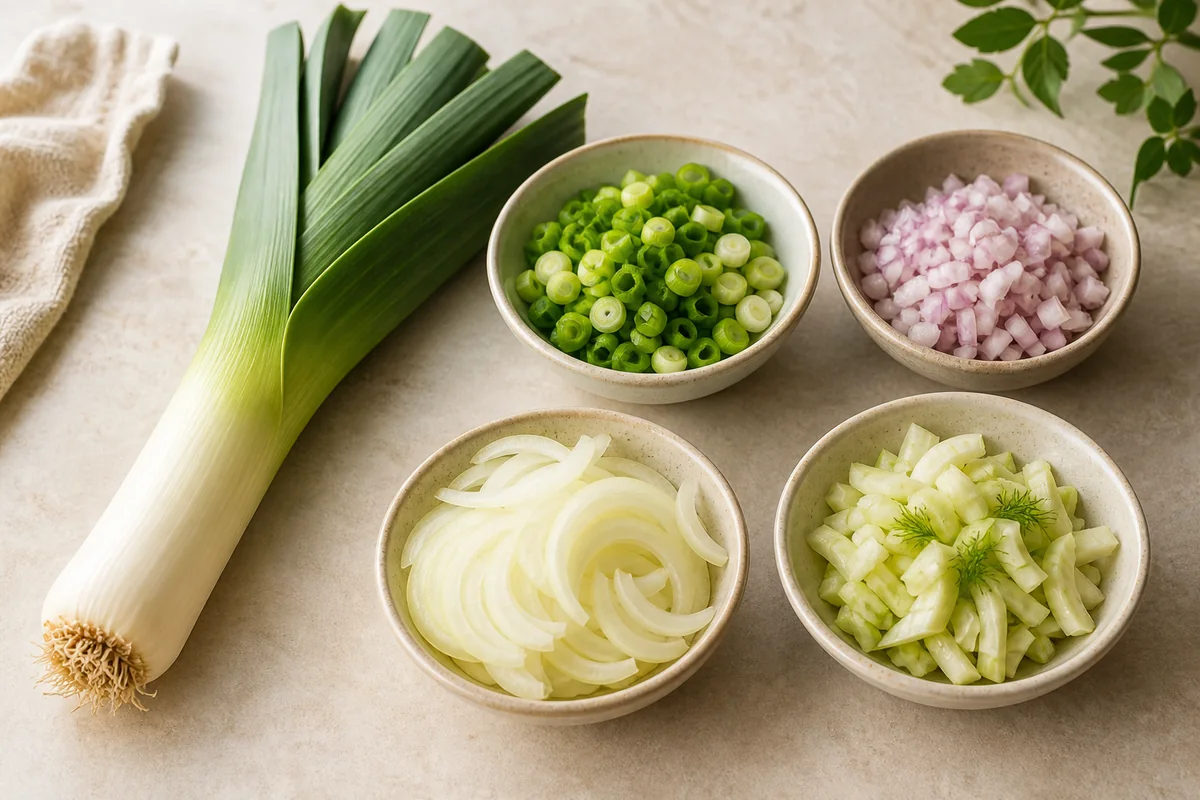
5 Best Leek Substitutes (That Actually Work)
Ingredients
Equipment
Method
- Decide what role the leek plays in your recipe: bulk (sauté/soup), tenderness (braised), or mild allium flavor (finishing/baking).
- Pick the closest match from the table by texture: scallion (tender), onion/shallot (mild onion base), celery (vegetal), or garlic greens (green aroma).
- Use the listed ratio for your chosen substitute; when using onion-based swaps, start slightly lower and adjust after cooking.
- For wetter substitutes (celery, chopped greens), cook a minute longer or drain/press if your batter/sauce feels loose.
- Taste at the end: add a pinch of salt/seasoning to bring out sweetness, especially if you swapped with onion.
Notes
- Ratios are starting points—final taste depends on how strong your substitute is and whether your recipe cooks the leek fully.
Tried this recipe?
Let us know how it was!
Carrie is a food writer and editor with more than 15 years of experience. She has worked for some of the biggest names in the food industry, including Bon Appétit, Food & Wine, and Martha Stewart Living.
As the Editor in Chief of EpicureDelight, Carrie oversees all of the content on the site. She also manages the team of contributing writers and editors, who help to create delicious recipes, helpful tips, and informative articles that you’ll find on the site.
A native of the Chicago area, Carrie is passionate about all things food. She loves trying new restaurants and experimenting with new recipes in her kitchen. She’s also a graduate of the Culinary Institute of America, so she knows a thing or two about food!



