
Madeira wine has that odd, caramelized warmth you notice before you even taste it. It is nutty, slightly oxidized, and sits somewhere between dry and sweet depending on the style.
That combination is what makes a good madeira wine substitute tricky: you cannot just grab any bottle and call it done.
The right swap depends on what job Madeira is doing in your recipe. Is it adding sweetness to a glaze?
Bringing nutty depth to a cake batter? Or just providing liquid lift and a little acidity?
Match the dominant role first, then fine-tune sweetness and acidity with small adjustments rather than big ratio changes.
The best Madeira substitutes are dry or medium sherry and dry Marsala for nutty, oxidized depth. For sweetness-forward recipes, port works well at 1:1. Emergency swaps use apple cider vinegar with sweetened water. Always match Madeira's primary role before adjusting ratios.
5 Best Madeira Wine Substitutes for Better Results
Before picking a bottle off the shelf, scan this table. It maps each substitute to its strongest baking use and flags the flavor it brings to replace Madeira's profile.
| # | Substitute | Best For | Ratio | Key Note |
|---|---|---|---|---|
| 1 | Sherry (dry or medium) | Both | 1:1 | Closest nutty, oxidized match |
| 2 | Marsala (dry) | Both | 1:1 | Caramelized warmth, no sharp tang |
| 3 | Port | Sweet | 1:1 | Reduce added sugar to balance |
| 4 | Dry sherry + sugar | Both | 1:1 | Fixes sweetness mismatch easily |
| 5 | ACV + sweetened water | Baking | ¾:1 | Emergency lift, not oxidation |
Sherry and Marsala are the strongest all-around picks because they already carry the oxidized, nutty character Madeira is known for. Port steps in when sweetness is the priority, and the vinegar option saves you when the wine rack is empty.
1. Sherry (Dry or Medium)
Sherry is the substitute that most reliably lands in the same flavor neighborhood as Madeira. Both wines go through an oxidative aging process, so the nutty, slightly caramelized edge transfers well.
Use it at a straight 1:1 ratio in cakes, glazes, and braising liquids where Madeira would appear.
When you're deciding between styles, knowing how to keep storing sherry properly affects how much punch it still has matters. An older, less-fresh bottle may taste flatter than expected.
Dry Sherry
Works for: Recipes using a drier Madeira style; savory-leaning glazes; cake batters where sweetness is already high
Skip if: The Madeira in your recipe was sweet-style and sweetness is a defining note in the finished product
Medium Sherry
Works for: Recipes using sweeter Madeira; dessert sauces; fruit-based batters that need a little more body
Skip if: Your recipe is already very sweet and you need Madeira only for nutty depth, not added sugar
- Ratio: Use 1:1 for all sherry styles in baking.
- Dry vs medium: Choose dry for drier recipes; choose medium when the Madeira you are replacing was noticeably sweet.
- Sweetness adjustment: If switching from sweet Madeira to dry sherry, add 1 teaspoon of sugar per ¼ cup of sherry and taste before adding to batter.
Skip if your recipe's Madeira is purely a sweetness source. Sherry adds oxidation, not fruit-forward sugar. Port or sweetened grape juice will do that job better.
2. Marsala (Dry)
Dry Marsala brings a warm, caramelized depth that sits very close to what Madeira delivers in baked goods. It lacks the sharp tang of sherry but adds a roasted-sugar quality that works especially well in cake batters, pan sauces, and dessert glazes.
If you're already considering switching away from Marsala in another recipe, note that here it is the preferred swap rather than the one being replaced.
- Best baking uses: Dense cakes, caramel glazes, cream-based dessert sauces where nutty warmth is the goal.
- Ratio and adjustment: Use 1:1; if the batter already tastes strongly caramelized, reduce by 1 teaspoon per ¼ cup next time rather than adding more sugar.
- If too bold: Dilute with 1 tablespoon of water per ¼ cup Marsala to soften the intensity without losing the core flavor.
Skip if your recipe relies on bright acidity. Dry Marsala is low in tartness. A balanced grape juice or a light vinegar-based swap will serve that role better.
3. Port (for Sweetness)
Port is richer and heavier than most Madeira styles, so it fills the sweetness gap well. Recipes like sweet glazes, fruit-forward cakes, or iced puddings benefit most from this swap.
You can explore sweet wine alternatives to port if you need a non-wine direction, but for direct substitution, port is the most straightforward pick.
- Ratio: Use 1:1; port matches Madeira's volume perfectly in most baked applications.
- Sugar balance: Reduce other added sugar in the recipe by 1-2 teaspoons per ¼ cup of port, or add a small pinch of salt to keep the flavor from tasting cloying.
- When it feels too heavy: Thin with 1 tablespoon of water per ¼ cup port if the finished glaze looks syrupy before it even hits the oven.
Skip if the Madeira's role is nutty oxidation rather than sweetness. Port reads as fruity and sweet, not aged and nutty. Sherry or Marsala will serve that function better.
4. Dry Sherry + Sugar
Sometimes no single bottle is a perfect match for the Madeira you had on hand. If dry sherry tastes too austere in your batter, a small sugar addition fixes the gap without altering the whole recipe.
Start with dry sherry at 1:1, then stir ½ to 1 teaspoon of granulated sugar directly into the sherry before measuring it into the recipe. This keeps the sugar evenly distributed rather than clumping in one spot.
If you want to go further and understand how swapping out dry sherry plays out in other recipes, the same logic applies: adjust sugar in the liquid, not in the dry ingredients.
The goal is to get within one or two tasting notes of the Madeira style you are replacing. It is a micro-correction, not a reformulation.
Skip if your recipe needs Madeira's fruit-forward quality more than its oxidation. In that case, dry Marsala or sweetened grape juice will get you closer to the right flavor without over-engineering the swap.
5. Apple Cider Vinegar + Sweetened Water
This option is an emergency measure when you have no wine at all. It cannot replicate Madeira's nutty, oxidized character.
What it can do is preserve the moisture balance and provide a gentle acidic lift in the batter.
Mix 1 tablespoon of apple cider vinegar with enough sweetened water to reach ¾ of your total Madeira measure. You can browse alcohol-free swap ideas for more non-wine approaches that follow similar principles.
Add the vinegar to the water first, never directly to the batter at full strength.
| Use | Ratio | Notes |
|---|---|---|
| Cake batter (moisture + lift) | ¾:1 | ACV + sweetened water; sweeten to taste before adding |
| Dessert glaze | ½:1 | Use less; glaze reduces and tang concentrates quickly |
| Fruit-based sauce | ¾:1 | Add a pinch of sugar plus ACV; taste before finishing |
- Vinegar logic: ACV provides acidity that helps batter rise; the sweetened water rounds out the sharp edge.
- Flavor expectation: The finished product will be brighter and more neutral than Madeira-flavored baking. Expect less depth overall.
- Safety note: Taste the mixture before it goes in. If it tastes sharply tangy, add more water and a touch more sweetener.
Skip if the recipe's whole point is Madeira's nutty, aged flavor. This swap handles lift and moisture. It does not replace oxidation.
Making Madeira Wine Substitutes Work in Baking
The selection rule is simple: identify whether your Madeira is doing sweetness, nutty oxidation, or moisture-plus-lift work, then choose accordingly. Sherry and Marsala cover oxidation.
Port covers sweetness. The vinegar mix covers lift.
Once you pick the right direction, keep your ratio at 1:1 (or ¾:1 for the vinegar option) and make all flavor corrections with small sugar or salt adjustments rather than changing how much liquid goes into the batter.
- Choose your ratio first: Use 1:1 for sherry, Marsala, and port; use ¾:1 for vinegar-based swaps to avoid over-tang.
- Balance sweetness or acidity: If the substitute is sweeter than Madeira (port, medium sherry), reduce other added sugar by 1-2 teaspoons; if it is sharper (dry sherry, ACV), add a small pinch of sugar or salt.
- Bake-test guidance: Taste the batter or glaze before it goes into the oven; adjust acidity and sweetness in increments of ¼ teaspoon rather than large corrections.
Frequently Asked Questions
Dry or medium sherry is the closest match because it shares Madeira's oxidized, nutty character. Use it at a 1:1 ratio and adjust sweetness with a small sugar correction if needed.
Yes, but you will need to add sweetness back. Stir ½ to 1 teaspoon of sugar into the sherry before measuring it into the batter.
Yes. Port is sweeter and heavier than most Madeira styles. Reduce other added sugar by 1-2 teaspoons per ¼ cup of port, or add a small pinch of salt to balance.
Use ¾ of the Madeira amount: mix 1 tablespoon apple cider vinegar with sweetened water to reach that volume. Taste before adding and adjust sweetener if it tastes too sharp.
Only the vinegar-based swap may affect texture slightly by activating baking soda faster. Wine-based substitutes at 1:1 rarely change batter texture in a noticeable way.
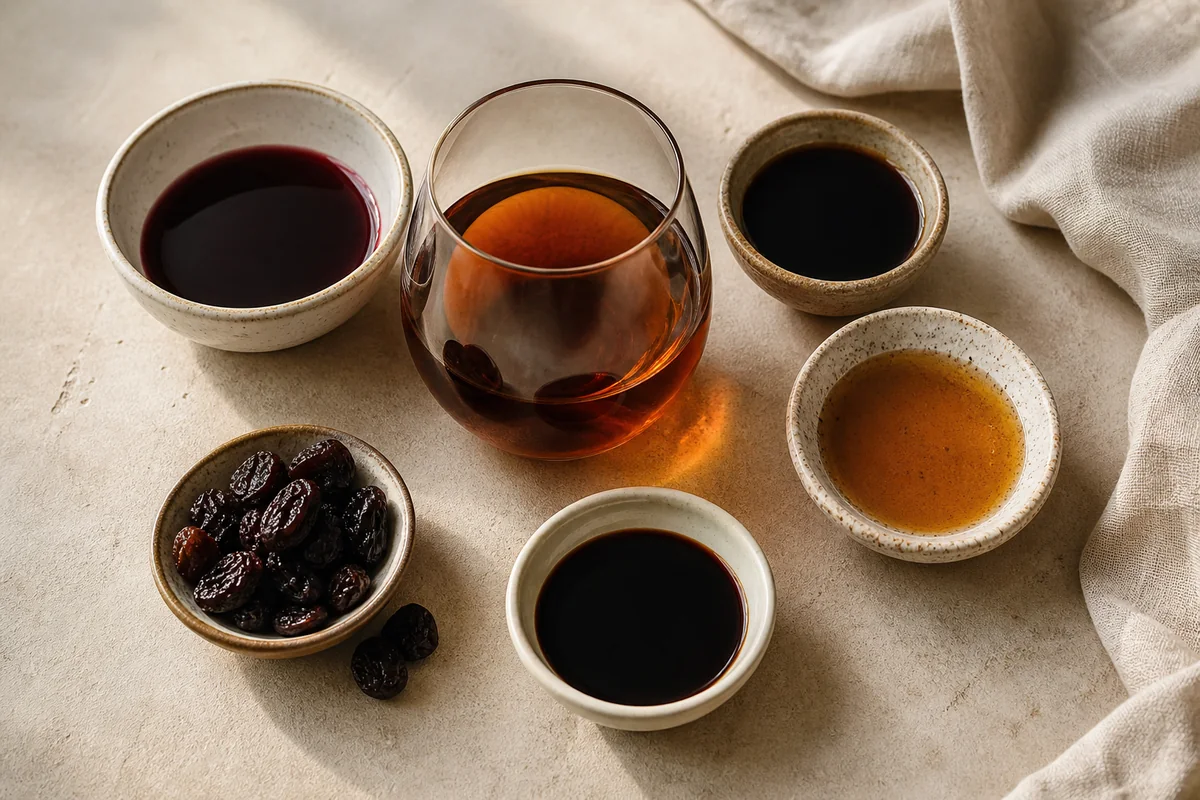
5 Best Madeira Wine Substitutes for Better Results
Ingredients
Method
- Identify your Madeira role in the recipe: sweetness (port-like) vs nutty oxidation (sherry/marsala) vs moisture + lift.
- Choose the closest substitute from the table and apply the listed ratio to your Madeira amount.
- If your substitute is sweeter (port or sweetened grape juice), reduce other added sugar slightly or add a small pinch of salt.
- If your substitute is sharper (vinegar-based), use a smaller correction step: reduce vinegar next time rather than changing the whole batch.
- Bake as written, then taste the finished crumb/icing and adjust in future batches (sweetness or acidity) with small increments.
Notes
- Madeira varies widely by style (dry vs sweet), so match the sweetness level your recipe needs.
Tried this recipe?
Let us know how it was!
Carrie is a food writer and editor with more than 15 years of experience. She has worked for some of the biggest names in the food industry, including Bon Appétit, Food & Wine, and Martha Stewart Living.
As the Editor in Chief of EpicureDelight, Carrie oversees all of the content on the site. She also manages the team of contributing writers and editors, who help to create delicious recipes, helpful tips, and informative articles that you’ll find on the site.
A native of the Chicago area, Carrie is passionate about all things food. She loves trying new restaurants and experimenting with new recipes in her kitchen. She’s also a graduate of the Culinary Institute of America, so she knows a thing or two about food!



