
Mahi mahi has a specific thing going for it: a firm, flaky bite that holds up on a grill or under a broiler without turning to mush. When it's not available, most home cooks panic and grab whatever's on the shelf.
That's fine, but the wrong swap can ruin a taco or turn a baked dish watery.
The good news is that mahi mahi substitute options are easy to find at any fish counter. This guide covers five that work across grilling, baking, and pan-searing.
Mahi mahi is mild and flaky, so the best swaps are white fish that hold their shape under heat. Cod and haddock are the closest matches for most recipes. Halibut works best for grilling. Tilapia is widely available but needs gentler heat. Salmon is a last-resort swap that needs balancing acids.
5 Best Mahi Mahi Substitutes for Quick Swaps
The table below gives you a fast reference. Each substitute is covered in full below it, with exact ratios and real cooking notes.
| # | Substitute | Best For | Ratio | Key Note |
|---|---|---|---|---|
| 1 | Cod | Both | 1:1 | Use thick-cut fillets only |
| 2 | Haddock | Baking | 1:1 | Short cook time, mild result |
| 3 | Tilapia | Pan-sear | ¾:1 | Low heat, watch closely |
| 4 | Halibut | Grilling | 1:1 | Firm; pull on time |
| 5 | Salmon | Both | ¾:1 | Add acid to cut richness |
1. Cod
Cod is the swap we reach for first. It has a clean, mild flavor and a dense, flaky texture that behaves almost exactly like mahi mahi in the oven or a hot skillet.
The key is buying thick-cut fillets, at least half an inch, so the fish stays together from start to finish.
When you're storing fish fillets ahead of time, keep cod wrapped airtight and use it within two days. Pull it from the heat the moment it just begins to flake at the thickest part.
Overcooking by even two minutes makes it crumbly and dry.
Cod vs. Mahi Mahi
Works for: baking, pan-searing, broiling, fish tacos, bowls
Skip if: fillets are thin (under ½ inch) - they'll overcook before browning
- Best use: Baked dishes and pan-seared fillets where mahi mahi's flake is the main texture
- Texture outcome: Dense and flaky when done right, crumbly if overcooked
- Swap rule: Replace 1:1 and pull from heat as soon as the center just turns opaque
2. Haddock
Haddock is slightly softer than cod but still mild enough to disappear into most mahi mahi recipes without anyone noticing. It handles this white-flesh profile well with citrus-based marinades and simple herb coatings.
Pollock is worth mentioning here too. It's even milder, slightly more affordable, and holds together well for quick-cook methods like pan-searing.
- Best use: Fish tacos, quick weeknight bakes, and bowls with citrus dressings
- Swap rule: Use 1:1 and keep total cook time short - the fish should still look just barely opaque at the center when you pull it
- Texture outcome: Tender and moist if timed right; stringy if overcooked
- Skip if: Your recipe needs strong grill marks - haddock can break apart if flipped too early on high heat
3. Tilapia
Tilapia is everywhere, which makes it a practical choice, but it's more delicate than mahi mahi. You need to treat it gently to keep it from going soft and watery during cooking.
Mild white-flesh options like tilapia work best when the pan isn't screaming hot. Medium heat and a light touch are what keep it tasting clean rather than steamed.
- Best use: Pan-searing with a crust (breadcrumb or flour) that adds structure, and light baked dishes
- Texture outcome: Soft and delicate; good when the other dish elements are bold
- Swap rule: Use ¾:1 and cook over medium heat, not high
- Skip if: You need a thick, roast-worthy bite - tilapia softens before it can brown properly
4. Halibut
Halibut is the firmest substitute on this list. It holds together beautifully on a grill grate, doesn't flake apart when you flip it, and can handle higher heat than most white fish.
The flavor is slightly more distinct than mahi mahi's, a little sweeter, and the texture reads meatier. That's actually an advantage for roasting or a charcoal grill, where you want the fish to stay in one piece.
The clean ocean flavor of mahi mahi won't be perfectly replicated here, but the eating experience is close.
- Best use: Grilling, roasting, and any method where the fish needs to hold a solid shape
- Swap rule: Use 1:1 and pull it just before it looks fully done - residual heat finishes the job
- Texture outcome: Firm, meaty, and satisfying with a clean flake
- Skip if: Your recipe depends on a very mild, neutral flavor - halibut's sweetness reads more pronounced than mahi mahi
5. Salmon
Salmon is an emergency swap. It doesn't taste like mahi mahi - it's richer, fattier, and more assertive.
But when nothing else is available, it can carry a recipe if you balance it with acid.
Bright flavors like lime juice, rice vinegar, or a sharp herb sauce pull salmon back toward neutral. For fresh taco fillings, a quick lime-salt cure on the salmon before cooking makes a real difference.
| Use | Ratio | Notes |
|---|---|---|
| Baked dish | ¾:1 | Salmon + lemon butter; keep temp at 375°F |
| Pan-seared | ¾:1 | Skinless; sear 3-4 min per side, deglaze with lime |
| Fish tacos | ¾:1 | Add pickled onion or slaw to cut richness |
- Best pairing flavors: Lime, rice vinegar, fresh cilantro, capers, or ginger
- Texture outcome: Flaky and moist, but richer than mahi mahi - works best in bold-seasoned dishes
- Swap rule: Use ¾:1 and stop cooking at the first sign of flaking to avoid drying it out
- Skip if: The recipe is a light, citrus-forward ceviche - salmon's fat content throws off the balance entirely
Making a Mahi Mahi Substitute Taste Right
The single biggest mistake is treating a substitute like a direct copy and forgetting to adjust. Thickness matters more than weight when timing fish.
A thinner tilapia fillet cooks in half the time of a thick cod loin, even at the same temperature. When you're swapping a delicate fish, reduce heat by 25°F and start checking two minutes early.
Mild white fish also responds well to a simple seasoning pattern: salt, a squeeze of citrus, and one fresh herb. That combination keeps any substitute tasting clean and intentional.
For marinades, you can look at marinade liquid options that work well with white fish if you want something beyond plain citrus.
- Match thickness, not just weight: Measure the thickest part of your fillet - cook roughly 8-10 minutes per inch of thickness at 400°F for most white fish substitutes
- Season for mildness: Salt, lemon or lime, and a fresh herb (dill, parsley, or cilantro) keep substitutes tasting like they belong in the recipe
- Adjust for delicacy: Softer fish (tilapia, haddock) need lower heat and less time; firmer fish (halibut, thick cod) can take direct high heat without falling apart
Frequently Asked Questions
Thick-cut cod is the best pick for baking. It has a similar flaky texture and holds moisture well at oven temperatures between 375°F and 400°F.
Yes, tilapia works in tacos. Use slightly less than the recipe calls for and cook over medium heat so it doesn't turn watery inside the tortilla.
Go by thickness rather than the original recipe's time. Most white fish substitutes need about 8-10 minutes per inch of thickness at 400°F.
Halibut is the strongest choice for the grill. It's firm enough to hold grill marks, resist flaking when flipped, and survive high direct heat.
Not naturally. Salmon is much richer and more distinct than mahi mahi. Add a sharp acid like lime juice or vinegar to bring the flavor closer to neutral.
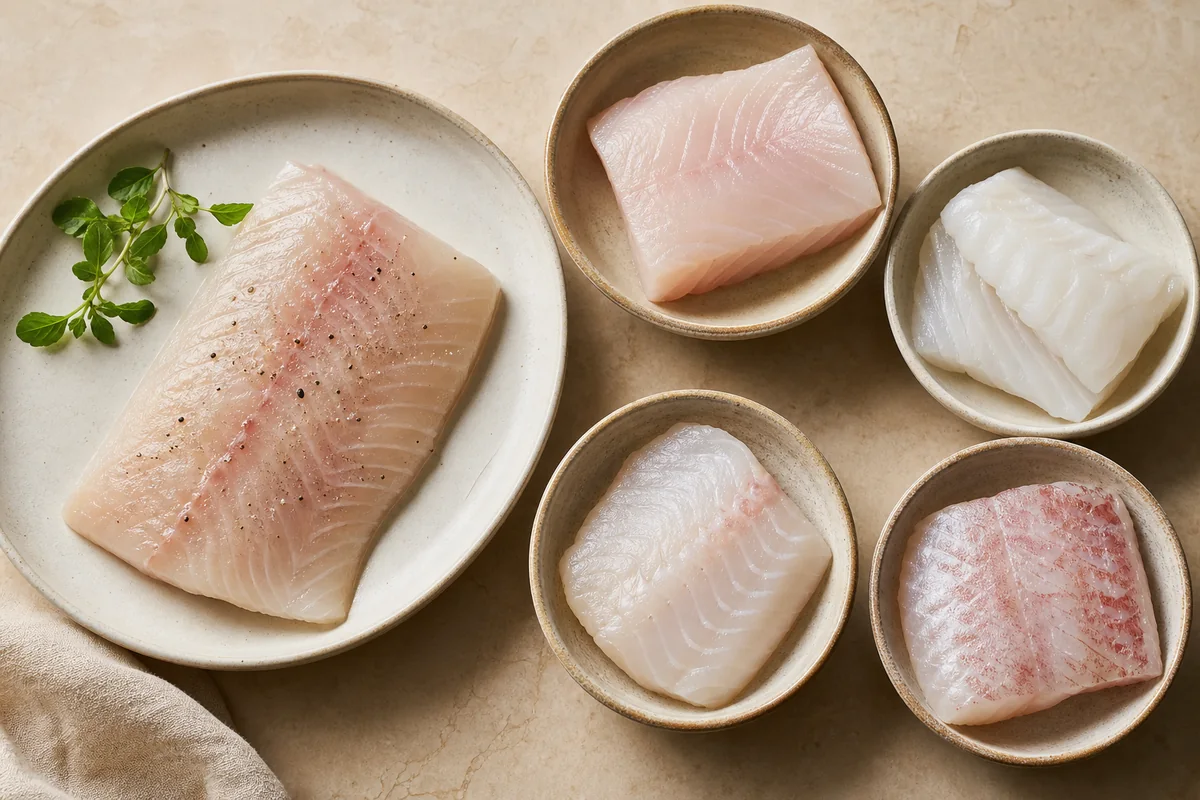
5 Best Mahi Mahi Substitutes (Quick Swaps)
Ingredients
Equipment
Method
- Choose your substitute based on your cooking method: flaky/quick (cod or haddock) vs. firmer roast/grill (halibut) vs. gentle cooking (tilapia).
- Match portions using the listed ratio, then measure by thickness rather than grams for more even doneness.
- Season using mahi mahi’s mild profile: salt plus a light acid (lemon/lime) and herbs works best for most swaps.
- Adjust timing: start checking early—mild white fish overcooks fast and turns dry or mealy.
- If the swap is softer (tilapia/salmon), lower heat and cook until it flakes with a light fork.
Notes
- For consistent results, keep the fish thickness similar to your original mahi mahi cut.
- Use a lighter hand on seasoning when the substitute is already flavorful (salmon).
Tried this recipe?
Let us know how it was!
Carrie is a food writer and editor with more than 15 years of experience. She has worked for some of the biggest names in the food industry, including Bon Appétit, Food & Wine, and Martha Stewart Living.
As the Editor in Chief of EpicureDelight, Carrie oversees all of the content on the site. She also manages the team of contributing writers and editors, who help to create delicious recipes, helpful tips, and informative articles that you’ll find on the site.
A native of the Chicago area, Carrie is passionate about all things food. She loves trying new restaurants and experimenting with new recipes in her kitchen. She’s also a graduate of the Culinary Institute of America, so she knows a thing or two about food!



