
That distinct shortness in a well-made cookie or biscuit-where the crumb pulls apart cleanly instead of chewing-comes entirely from fat. Shortening is the classic choice because it's 100% fat, has no water, and stays solid at room temperature. That combo coats flour proteins and limits gluten, giving you a tender, neutral bite.
The right shortening substitute depends on what you're baking. Tender cookies need fat that blends smoothly.
Flaky pie crusts need fat that stays cold and distinct in the flour.
For tender bakes like cookies, butter or solid margarine replace shortening 1:1 with minimal flavor shift. For flaky layers in pie crust or biscuits, cold lard or cold-grated butter are your best tools. Keep fats cold, mix minimally, and rest the dough if it feels soft.
5 Best Shortening Substitutes Ranked by Texture Goal
| # | Substitute | Best For | Ratio | Key Note |
|---|---|---|---|---|
| 1 | Butter (melted, cooled) | Tender crumb | 1:1 | Cool before mixing |
| 2 | Lard (cold, solid) | Flaky layers | 1:1 | Keep firm, work fast |
| 3 | Stick margarine (chilled) | Lift + neutral flavor | 1:1 | Firm stick only |
| 4 | Oil + solid fat mix | Emergency/no solid fat | ¾:1 + chill | Reduce spread with cold fat |
| 5 | Crisco-style solid shortening | Any bake, like-for-like | 1:1 | Confirm it's truly solid |
Each substitute below is paired with a clear texture goal. Pick the one that matches your recipe first, then read the handling notes so it performs correctly.
1. Butter (Melted Then Cooled)
Butter is the most familiar swap and it works well for cookies, quick breads, and soft pastry. Melt it completely, then let it cool until it's opaque and slightly thickened before mixing. That step brings it closer to shortening's fat density, and it reduces the spread you'd get from hot butter hitting flour.
If you're storing soft baked goods and wondering how long they hold up, storing baked cookies correctly matters as much as the fat you use.
- Ratio: 1:1 by weight or volume
- Prep step: Melt fully, cool until slightly cloudy and thickened, not hot or liquid
- Texture result: Slightly more spread in cookies; more golden color from milk solids
- Flavor shift: Noticeably buttery-welcome in most sweet bakes
Skip if: your recipe needs a very neutral fat flavor, or you can't keep dough cool between mixing and baking.
2. Lard (Cold, Solid)
Lard is the original pie crust fat, and for good reason. Its fat crystal structure is naturally suited to layering-it coats flour and then holds distinct pockets that puff apart in the oven. Replace shortening 1:1 by weight and keep the lard cold throughout.
If you ever need to swap away from lard for dietary reasons, replacing solid animal fat in pastry has its own set of tradeoffs worth checking.
- Best uses: Pie crusts, empanada dough, biscuits-any bake that needs distinct layers
- Handling: Cube it, freeze for 10 minutes before use, and cut into flour with minimal contact from warm hands
- Flavor: Mild and slightly savory; most tasters can't detect it in a finished sweet pie
- Pitfall: Warm lard turns greasy fast-chill the whole bowl and dough if your kitchen runs hot
Skip if: you need a vegetarian or halal option, or you simply can't find rendered lard at your grocery store.
3. Stick Margarine (Chilled)
Firm stick-style margarine can stand in for shortening because it has a similar solid-at-room-temperature fat structure. It has to be stick-style-tub margarine is too soft and will spread the dough flat. Use it cold, straight from the fridge.
Firm + Chilled Margarine
Works for: biscuits, cookies, and simple pastry where a neutral flavor and decent lift matter
Skip if: your recipe is sensitive to water content or you need a distinct flaky layer
Soft or Warm Margarine
Works for: spreading on toast (not baking)
Skip if: you're baking anything-warm margarine melts on contact and flattens structure
For baked goods you're making ahead, knowing how freshly baked biscuits hold moisture helps you time your margarine-based bake correctly.
- Ratio: 1:1 by weight
- Flavor: More neutral than butter; some brands have a faint processed taste
- Texture tip: Cream it cold, not softened, for best structure in cookies and biscuits
Skip if: your margarine is tub-style or your label lists water in the first three ingredients.
4. Oil and Solid Fat Mix
When you have no solid fat at all, pure oil alone causes too much spread and no layering. A mixed approach works better: use ¾ of the shortening amount in oil, then add a small amount of a chilled solid fat to restore some structure. Think 3 tablespoon oil plus 1 tablespoon cold butter for every 4 tablespoon of shortening called for.
For a broader look at what to do when you're out of a neutral fat, oil-based swap options cover the alternatives in full.
| Use | Ratio | Notes |
|---|---|---|
| Soft cookies | ¾ oil + ¼ cold butter | Rest dough 20 min in fridge before scooping |
| Quick bread | ¾ oil only | Texture stays moist; no layering needed |
| Drop biscuits | ½ oil + ½ cold grated butter | Grate butter frozen; mix in seconds only |
- Spread risk: Oil lowers the fat melting point-always chill dough before baking
- Mixing: Fold gently; overworking oil-based doughs makes them tough and oily
- Best result: Soft, moist crumb rather than flake or lift
Skip if: your recipe calls for a laminated or very flaky layer-oil cannot hold the solid-fat pockets that create true flake.
5. Crisco-Style Solid Shortening
If you're out of one shortening brand but have a different one in the cabinet, this is the easiest call. Any product labeled as solid vegetable shortening replaces the original 1:1 by weight. The key is confirming the product is truly solid.
Before reaching for a jar labeled "vegetable blend," it's worth checking what actually qualifies-choosing the right solid fat saves a wasted batch.
- Texture test: It should be scoopable with a spoon at cool room temperature, not pourable
- Label check: Look for "partially hydrogenated" or "fully hydrogenated vegetable oil" in the ingredients
- Flavor: Fully neutral-no butter, no animal fat taste
- Ratio: 1:1 in every application, no adjustments needed
Skip if: the product stays liquid at 70°F or the label says "vegetable oil" rather than "shortening."
Making Shortening Substitutes Work (Texture Rules)
The two things that make or break a shortening swap are fat phase and temperature. Fat phase means whether your substitute is solid or liquid when it hits the flour-solid fats create structure and layer separation, while liquid fats blend in and give you a tender but flat result.
Temperature controls which phase you're in: even butter turns problematic if it's too warm when it meets the dough.
When you're working with butter and need to keep it behaving more like a solid fat, the same principles that apply to swapping solid fats in baking hold here too.
- Chilling rule: Any solid-fat substitute (butter, lard, margarine) should go into the fridge for 10-15 minutes after measuring, especially in warm kitchens
- Mixing method: For flaky results, cut fat into flour by hand or with a pastry cutter in 20 seconds or less; for tender results, cream gently until just combined
- Quick fix: If the dough feels greasy or slumps when scooped, rest it uncovered in the fridge for 15-20 minutes before baking-cold firms the fat back up and reduces spread
Frequently Asked Questions
Yes, butter replaces shortening 1:1 by volume or weight. Expect slightly more spread and a richer flavor; cooling the melted butter before mixing reduces excess spreading.
Cold lard is the closest match for flaky pie crust. Cold-grated butter is a strong second option if lard isn't available or you need a vegetarian swap.
Firm stick-style margarine works well for biscuits at a 1:1 ratio. Keep it cold and avoid tub-style margarine, which is too soft to hold structure during baking.
Mix in a small amount of cold solid fat alongside the oil, then chill the dough for at least 15 minutes before baking. Oil alone has no solid fat phase to limit spread.
True shortening is solid and scoopable at cool room temperature-it won't pour. If the product is liquid or semi-liquid at 70°F, it's oil and won't replace shortening reliably.
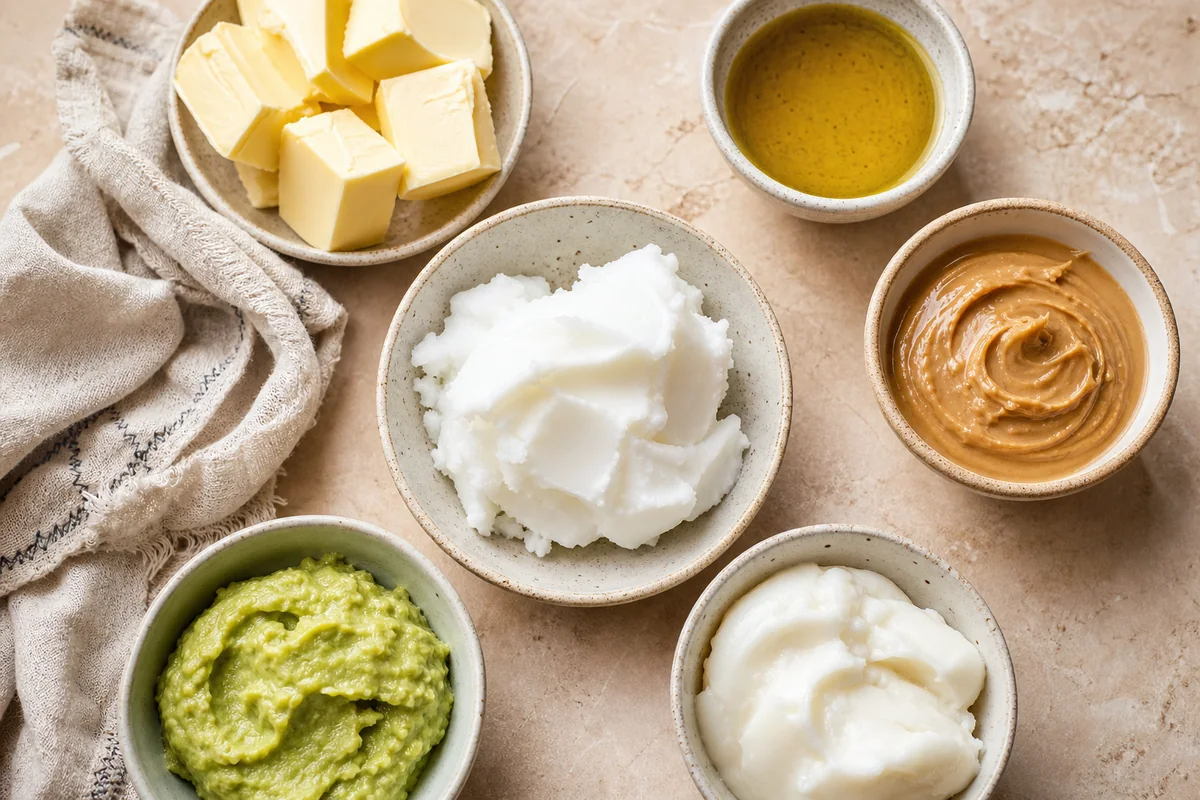
5 Best Shortening Substitutes That Taste Right
Ingredients
Method
- Decide your texture goal (tender crumb vs flaky layers) and pick the closest substitute from the table.
- Replace shortening by the ratio given (usually 1:1); for oil-heavy options, use the listed mixed ratio to reduce spreading.
- Chill any solid-fat substitute (butter/margarine/lard) so it stays firm while you mix and cut in.
- Adjust mixing: cream/whip only until combined for tender bakes, and cut in gently for flaky layers.
- Bake as directed; if dough feels greasy or too soft, rest/chill 10–20 minutes before baking.
Notes
- Most shortening swaps are interchangeable by weight (1:1) but perform differently due to melting point and water content.
- Keep substitutes cold when your recipe relies on layering (pie crusts, biscuits, flaky pastries).
Tried this recipe?
Let us know how it was!
Carrie is a food writer and editor with more than 15 years of experience. She has worked for some of the biggest names in the food industry, including Bon Appétit, Food & Wine, and Martha Stewart Living.
As the Editor in Chief of EpicureDelight, Carrie oversees all of the content on the site. She also manages the team of contributing writers and editors, who help to create delicious recipes, helpful tips, and informative articles that you’ll find on the site.
A native of the Chicago area, Carrie is passionate about all things food. She loves trying new restaurants and experimenting with new recipes in her kitchen. She’s also a graduate of the Culinary Institute of America, so she knows a thing or two about food!



