
That faint black-licorice vapor rising from a Mediterranean pan sauce is hard to mistake. It comes from ouzo, and finding the right ouzo substitute means matching two things at once: how anise-forward the dish needs to be, and how much sweetness the recipe can handle.
Ouzo itself sits at medium anise strength with a noticeable sweet edge. Most substitutes nail one quality but drift on the other.
Pick by your dish first, then adjust sweetness after the first taste.
The best ouzo substitute is sambuca or Pernod for liqueur-based cooking, and star anise steeped in warm broth for alcohol-free recipes. Anise extract is the most concentrated option. Match anise intensity first, then adjust sweetness with lemon juice or a splash of broth.
5 Best Ouzo Substitutes Ranked by Anise Strength
The table below ranks each substitute by anise intensity, sweetness level, and whether it contains alcohol. Anise strength runs low to high.
Sweetness notes tell you whether to add acidity after cooking. Use the ratio column as your starting point, then taste.
| # | Substitute | Best For | Ratio | Key Note |
|---|---|---|---|---|
| 1 | Sambuca | Both | 1:1 | Sweeter, add lemon |
| 2 | Pernod / Pastis | Both | 1:1 | Drier, cleaner finish |
| 3 | Anise Extract | Cooking | ⅛:1 | Very concentrated, go slow |
| 4 | Star Anise Infusion | Cooking | 1:1 | No alcohol, less sweet |
| 5 | Anise Syrup | Cooking | ¾:1 | Very sweet, thin with broth |
1. Sambuca
Sambuca is the substitute we reach for first. It matches ouzo's anise punch almost exactly, though it usually reads a bit sweeter on the palate once it hits a warm sauce.
If you're working through switching to a bolder anise liqueur, sambuca sits in the same flavor family as ouzo and needs almost no adjustment in most savory dishes.
Sambuca vs. Ouzo
Works for: pan sauces, marinades, seafood braises, any recipe that wants classic licorice depth
Skip if: your dish must stay low-sugar, or you're cooking for someone avoiding added sugars
- Ratio: Use 1:1; no scaling needed at the start
- Too sweet? Add a small squeeze of lemon or a splash of broth, then simmer 2 minutes and taste again
- Timing: Add mid-cook for sauces so the alcohol cooks off and the anise integrates
- Watch the color: Sambuca is clear like ouzo, so it won't shift sauce color
2. Pernod / Pastis
Pernod and other pastis-style anise liqueurs run drier than sambuca. They're the better pick when you want anise without the candy-sweet edge that some licorice liqueurs carry.
The herbal, slightly bitter note in pastis can actually sharpen a fish sauce or broth-based dish in a way ouzo sometimes can't. It's a useful swap when the recipe already has sweetness from tomatoes or caramelized onion.
- Ratio: 1:1 for a clean anise result; no reduction needed
- Add timing: Deglaze with it early so the alcohol evaporates and leaves the anise behind
- Avoid: Don't add pastis at the very end of cooking if you want the flavor to mellow; it stays sharp unless simmered
- Skip if: You want a distinctly sweet licorice-candy note; pastis reads drier and won't deliver that
For a broader view of pastis-style options, the dry anise swaps page covers additional picks in that flavor range.
3. Anise Extract
Anise extract is the most concentrated item on this list. One small misstep and it dominates every other flavor in the pot.
The comparison between seed-based and extract forms shows just how differently these two behave in heat. Extract disperses faster and lasts longer in a simmer, which is both its advantage and its risk.
- Starting ratio: About ⅛ of the ouzo volume; taste after 2 minutes, then add in drops
- Timing: Add to a sauce or marinade early so the aroma spreads evenly rather than pooling
- Bloom option: Stir extract into warm oil or butter for 30 seconds before adding other liquid for even distribution
- Skip if: You're cooking for people sensitive to concentrated extracts; overdosed extract can taste medicinal and sharp
4. Star Anise Infusion
Steep 1 to 2 whole star anise pods in hot water or warm broth for 8 to 10 minutes, then strain. What you get is an aromatic, alcohol-free liquid that carries genuine licorice scent without the sweetness of any liqueur.
The flavor sits closer to pure anise aroma than to the rounded sweetness of ouzo. If your dish needs that rounded note, add a small amount of honey or sugar after straining.
The guide on the anise flavor difference explains why star anise tastes slightly more medicinal than standard anise seed.
- Steeping strength: 1 pod for a subtle background note, 2 pods for a closer ouzo-level presence
- Ratio: Use the strained liquid 1:1 in place of ouzo
- Add sweetness: Only if the dish needs the liqueur-like roundness; a small pinch of sugar is enough
- Skip if: You need the exact licorice-syrup sweetness of ouzo; star anise is aromatic but not sweet on its own
5. Anise Syrup
Anise syrup is sweeter and thicker than ouzo, so it needs two adjustments before it goes into most recipes: use slightly less, and thin it down.
Anise Syrup vs. Ouzo
Works for: glazes, quick pan sauces, dipping sauces where sweetness is welcome
Skip if: your recipe needs alcohol evaporation to reduce liquid volume; syrup won't evaporate the same way
Balancing adding fresh lemon as acidity is the fastest rescue when the syrup tips the dish too sweet. A small squeeze cuts through quickly without masking the anise.
- Ratio: Use ¾ of the ouzo amount, then thin the syrup with 1 to 2 tablespoons of water or broth
- Too sweet? Add a squeeze of lemon or a pinch of salt; taste after 1 minute of simmering
- Best uses: Glazes, quick sauces, and dressings where the extra viscosity helps coating
- Avoid: Long braises where syrup can scorch or over-reduce
Making Ouzo Substitutes Work
The single biggest mistake with any ouzo swap is adding too much at once. Anise flavor stacks: a little simmers into the background, too much turns the whole dish medicinal.
When in doubt, the practical anise seed swaps guide shows how other cooks scale anise-forward ingredients without overpowering a dish.
Adjust sweetness last. Once your anise level tastes right, a small squeeze of lemon or a pinch of salt corrects most over-sweet results faster than adding more liquid.
- When to add: Mid-cook for sauces and braises; the anise needs heat to mellow and distribute
- Sweetness rescue: Lemon juice works faster than broth; start with 1 teaspoon and taste before adding more
- Taste test method: Take a small spoonful after 2 minutes of simmering; the aroma changes significantly once heat works through it
Frequently Asked Questions
Sambuca is the closest match for anise intensity and works at a 1:1 ratio. It runs slightly sweeter than ouzo, so add a small squeeze of lemon if the dish tips too sweet.
Yes. Steep 1 to 2 star anise pods in hot broth, strain, and use the liquid 1:1. It won't carry ouzo's sweetness, so add a small amount of sugar if the dish needs it.
Start at ⅛ of the ouzo amount. Anise extract is very concentrated and can turn harsh if you overshoot; add in small drops after each taste.
Add 1 teaspoon of lemon juice and simmer for 1 minute before tasting again. Salt also helps cut perceived sweetness without changing the anise flavor.
Add it mid-cook for sauces and braises so the anise mellows and distributes evenly. A last-minute addition keeps aroma sharp, which works in some dressings but can feel raw in cooked dishes.
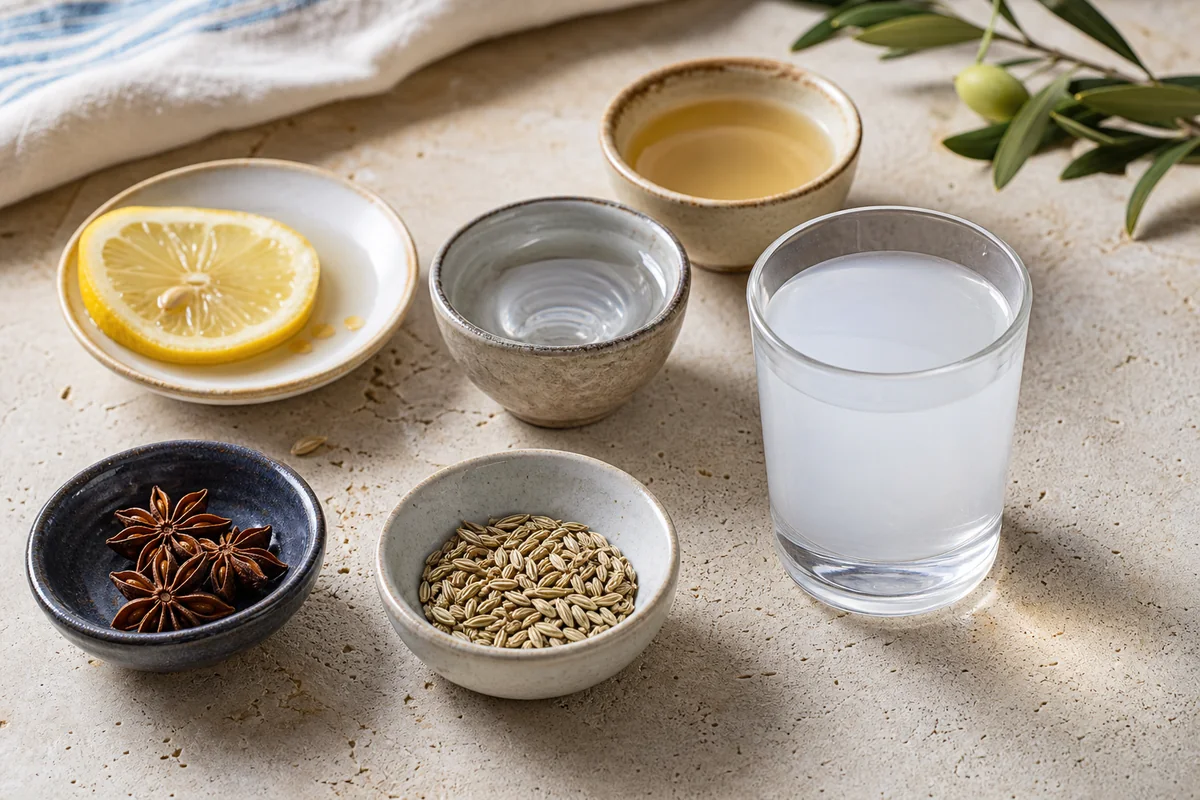
5 Best Ouzo Substitutes (Tested)
Ingredients
Equipment
Method
- Find your cooking goal: you need either (a) liquor-like anise depth, or (b) a non-alcoholic anise flavor boost.
- Choose the closest match from the table: use 1:1 for other anise liqueurs/pastis, or use the lower ratios for extract/spices.
- Add early if you’re simmering (so the anise disperses), or add near the end for a brighter top note.
- Taste after the first simmer/bloom; if it’s too sweet, cut with a splash of lemon juice or a little water/broth.
- If the aroma is too weak, add a small increment (not a full re-measure) and let it cook 2–3 minutes more before deciding.
Notes
- For anise-forward flavor, sweetness matters: ouzo is typically more fragrant than harsh; sambuca can be noticeably sweeter.
- Use lower ratios for extracts/spices—concentrations are dramatically higher than liquor.
Tried this recipe?
Let us know how it was!
Carrie is a food writer and editor with more than 15 years of experience. She has worked for some of the biggest names in the food industry, including Bon Appétit, Food & Wine, and Martha Stewart Living.
As the Editor in Chief of EpicureDelight, Carrie oversees all of the content on the site. She also manages the team of contributing writers and editors, who help to create delicious recipes, helpful tips, and informative articles that you’ll find on the site.
A native of the Chicago area, Carrie is passionate about all things food. She loves trying new restaurants and experimenting with new recipes in her kitchen. She’s also a graduate of the Culinary Institute of America, so she knows a thing or two about food!



