
You do not need a dedicated pastry cutter to get clean, consistent dough portions for savory bakes. The real issue is edge uniformity: a ragged cut on a hand pie or empanada lets steam escape unevenly, which softens the crust and throws off the seal.

Five common tools you already own can handle the job when your pastry cutter is missing, broken, or simply not in your collection.
Savory doughs benefit from stable, even edges more than sweet ones do. A well-sealed edge on a sausage roll or cheese pasty holds filling during baking, prevents shrinkage gaps, and produces a cleaner crimp.
Edge uniformity also matters for packing and layering: consistent circles or rectangles stack neatly and bake at the same rate.
The five substitutes covered here are a sharp chef's knife, a circular glass or metal lid, a round cookie cutter, a bench scraper, and a pizza wheel. Each has a different strength depending on dough type, batch size, and the shape you need.
If you are already thinking about pancetta substitutes for a savory filling, it is worth lining up your dough tool swap at the same time.
Every substitute below includes a ratio or sizing guide, the best dough type for that tool, and the real tradeoff you should expect.
A sharp chef's knife, circular glass, cookie cutter, bench scraper, or pizza wheel can all replace a pastry cutter for savory dough work. The right pick depends on the edge shape you need, your dough type, and your batch size.
Pastry Cutter Substitutes in Detail
Use this table as a quick picker before reading through each substitute in detail. It tells you at a glance which tool fits your dough and what you are trading away.
Scan the Tradeoffs column first. If your priority is curved edges, skip straight to the glass or cookie cutter rows.
| # | Substitute | Ratio | Best For | Taste Match |
|---|---|---|---|---|
| 1 | Sharp Chef's Knife | 1:1 use | Rough cuts, strips, quick portioning | Different |
| 2 | Circular Glass or Metal Lid | Match to disc size | Uniform circles for hand pies | Close |
| 3 | Round Cookie Cutter | Match to disc size | Consistent circular discs | Close |
| 4 | Bench Scraper or Dough Cutter | 1:1 use | Straight-edge strips, rectangles | Close |
| 5 | Pizza Wheel (Pastry Wheel) | 1:1 use | Straight lines, lattice, strips | Close |
Save This for Later
Pin this savory tweaks: 5 best pastry cutter alternatives guide so you always have it when you need it.
Pin This Guide1. Sharp Chef's Knife
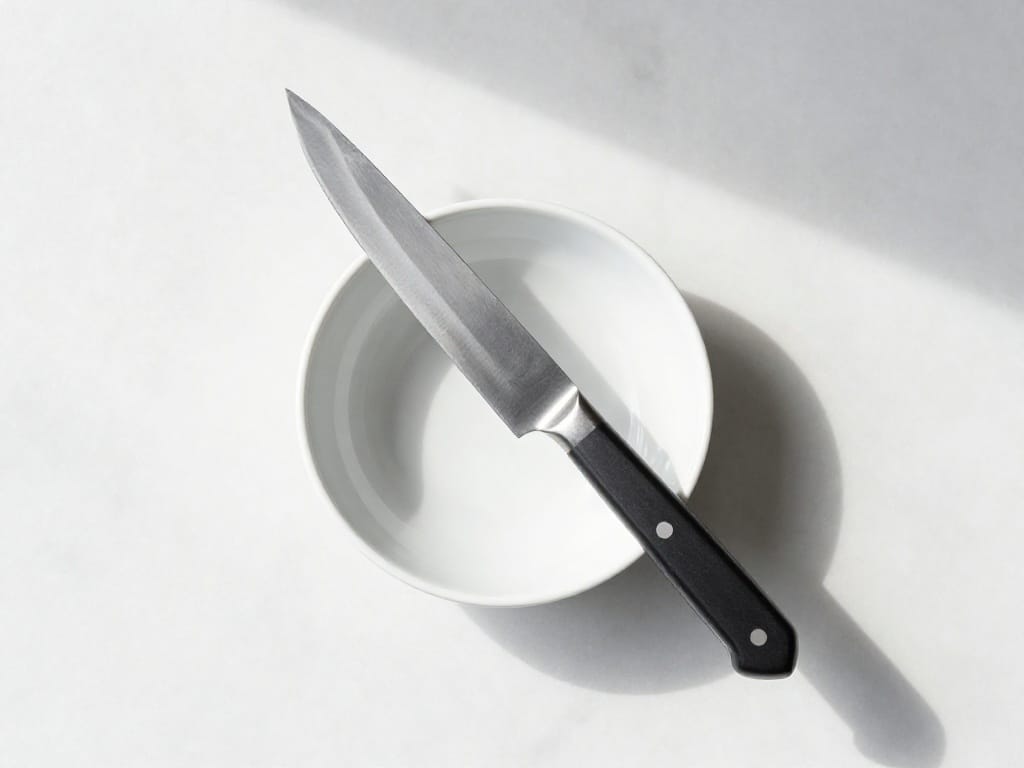
A well-honed chef's knife is the most accessible pastry cutter substitute in any home setup. It does not produce a perfect circle, however it cuts through shortcrust, biscuit, and rough-puff dough cleanly when the blade is sharp and dry.
For circular shapes, use the tip of the knife and rotate the dough or the blade in a short arc, pressing straight down without dragging. Aim for 2 to 3 inches in diameter for standard pastry discs: this range covers most hand pies, small quiche bases, and empanada rounds.
Anything larger becomes difficult to keep even without a guide.
Keep the blade completely dry between cuts. Moisture causes dough to drag and tear rather than separate cleanly, leaving a ragged edge that will gap during baking.
Wipe the blade with a dry cloth every three to four cuts, especially with high-butter doughs that leave residue quickly.
- Best dough type: Shortcrust and biscuit doughs hold their shape under a knife press without smearing.
- Edge quality: Slightly irregular circles are normal; use a round mold as a light guide if precision matters.
- Batch use: Works well for small batches of 6 to 12 portions; larger batches get tiring without a guide.
- Technique tip: Press straight down in one motion rather than rocking the blade to reduce edge compression.
For savory fillings that include bold spices, such as hot paprika alternatives, a knife-cut disc still seals adequately if you press the edge firmly with a fork after filling.
Best for quick, rough-cut portions where edge uniformity is secondary. The tradeoff is less consistent circles compared to a mold or cutter.
2. Circular Glass or Metal Lid
A drinking glass or a metal jar lid pressed rim-down into rolled dough produces a reliable circle without any specialized equipment. The rim must be thin and firm: thick or rubber-edged lids compress rather than cut, leaving a torn border instead of a clean one.
Common rim diameters run from 1.75 to 3.5 inches, which covers most savory pastry discs. A standard rocks glass sits at about 2.75 inches; a small juice glass lands near 2 inches.
Measure the rim before you start so you know what size disc you are working with.
Chill the dough slightly before cutting, around 15 to 20 minutes in the refrigerator. Cold dough firms up the butter, which means the rim cuts through instead of pushing the dough sideways.
This is especially important with puff and rough-puff doughs where layers need to stay intact at the edge.
- Sticking prevention: Dip the rim in a little flour between each cut to keep dough from lifting with the glass.
- Metal lids: Thinner than glass rims and often sharper; mason jar lids in standard or wide-mouth sizes give you two reliable diameters.
- Pressure technique: Press straight down and twist a quarter turn before lifting to release the disc cleanly.
- Dough type: Works with shortcrust, puff, and biscuit doughs; avoid very sticky or wet doughs without adequate chilling.
If your savory recipe calls for a cream-based filling, the way you handle whipped topping alternatives in the mix will also affect how much moisture the dough disc needs to hold during baking.
Best for precise circular sections when you need a specific size. The main tradeoff is that you are limited to whatever glass or lid diameter you have on hand.
3. Round Cookie Cutter (or Bottle Cap Ring)
A round cookie cutter is the closest functional match to a pastry cutter for disc-shaped portions. Stainless steel cutters are preferred over plastic because the edge stays sharper under repeated use and does not flex when you press through firm, cold dough.
Diameter options of 1.5 to 3 inches cover the full range of common savory pastry applications: 1.5-inch rounds for small cheese puffs or canapé bases, 2.5 to 3-inch rounds for hand pies and dumplings.
A standard 2.25-inch cutter is a practical middle point if you only have one size.
Lay a sheet of parchment between the dough and your work surface before cutting. This makes it easier to lift the discs without stretching them, which matters most when you are working with laminated or butter-heavy doughs that soften quickly at room temperature.
- Stainless steel edge: Gives a cleaner cut than plastic and holds shape through dozens of pressings without warping.
- Bottle cap rings: Useful for very small portions, around 1 to 1.25 inches, for mini tart shells or single-bite applications.
- Flour the cutter: Dip in flour every 4 to 5 cuts to prevent dough from sticking inside the cutter and tearing on release.
- Press, do not twist: A straight-down press produces a cleaner edge than twisting; twisting can seal the layers in puff dough.
Round cutters also pair well with doughs flavored with herbs. If you are working with a basil-forward savory pastry, the cutting technique does not change, however knowing your basil alternatives can help you adapt the filling if fresh basil is unavailable.
Best for consistent circular cuts across a full batch. The tradeoff is that you are limited to the specific diameters in your cutter set.
4. Bench Scraper or Dough Cutter
A bench scraper is a flat, straight-edged metal or plastic tool that cuts dough portions cleanly along a straight line.
It is not designed for curved cuts, however it is the most efficient option for rectangular pastry shapes, lattice strips, and any savory application that uses straight edges.
For laminated doughs like puff pastry, a bench scraper is often the better choice over a knife because the wide blade distributes pressure evenly across the full cut length. A rocking knife compresses layers unevenly, which reduces lift at the edge during baking.
Press the scraper straight down using both hands for clean separation.
Keep firm, even pressure from one end of the cut to the other without sliding. Sliding a bench scraper through dough tears the layers rather than separating them, which is the main mistake that leads to uneven baking on lattice strips or rectangular turnovers.
- Straight cuts: Ideal for cutting dough into equal strips for lattice tops, rectangular vol-au-vent bases, or portioning slab pies.
- Metal vs. plastic: A stainless steel scraper with a thin edge holds up better through firm, chilled dough without flexing.
- Portion control: Use a ruler or score a light guide line before cutting if batch uniformity is important.
- Dough type: Excellent for shortcrust, puff, and rough-puff; less suited to very soft or sticky doughs without a flour-dusted surface.
If you are working with a savory filling that uses fermented or umami-rich ingredients, adjusting the base flavors is straightforward. For instance, knowing your white miso paste alternatives lets you build the same depth without changing the dough preparation at all.
Best for even, straight-line cuts in laminated and shortcrust doughs. The tradeoff is that curved or circular edges are not achievable with this tool.
5. Pizza Wheel (Pastry Wheel)
A pizza wheel rolls through dough with minimal downward pressure, making it well suited to thin or delicate savory pastry sheets that would compress under a knife or scraper.
Both standard pizza wheels and the smaller pastry wheel variant work, though the pastry wheel's narrower blade gives slightly more control on tight cuts.
Wheel diameters of 1 to 2 inches (the blade wheel itself) are common; the size of the wheel affects how easily it navigates curves. A smaller wheel turns corners more readily, however neither size handles tight circular cuts well.
This tool is at its best on straight or gently angled lines.
Keep the wheel clean and dry during use. Dough that builds up on the wheel edge drags rather than cuts, leaving a compressed, uneven edge.
Roll the wheel on a clean towel between cuts, and use a light dusting of flour on the dough surface to reduce sticking without drying the dough out.
- Straight strips: Roll along a ruler or straightedge guide for consistent-width lattice strips or rectangular portions.
- Decorative edges: A fluted pastry wheel creates a crimped edge on strips, which is useful for savory galettes or decorative tart borders.
- Pressure: Use light, consistent forward pressure; pressing too hard compresses the dough edge and reduces lift during baking.
- Dough type: Works well with shortcrust and puff pastry sheets rolled to 3mm or thinner; thicker doughs require more passes and lose edge quality.
A pizza wheel is also useful when working with deeply spiced doughs or savory flatbreads. If your recipe uses earthy spices, having reliable juniper berry alternatives on hand keeps the flavor profile intact while you focus on technique.
Best for straight lines, lattice strips, and decorative edges. The tradeoff is that curved edges and circular cuts are harder to achieve cleanly with a wheel.
Decision Guide: Which Substitute to Reach For?
The right substitute depends on four factors: the dough type, the edge shape you need, your batch size, and what you actually have available. Running through these in order takes about 30 seconds and saves you from choosing a tool that fights the dough.
Dough type is the first filter. Shortcrust tolerates most tools. Puff and rough-puff dough needs a clean, single-press cut to preserve its layers, so a cookie cutter, glass rim, or straight-pressing bench scraper is better than a dragged knife.
Biscuit dough is forgiving and works with any of the five options.
- Need circles: Reach for the cookie cutter or glass rim first; the chef's knife works for rough approximations only.
- Need straight edges: The bench scraper or pizza wheel gives the cleanest result on strips and rectangles.
- Small batch (under 12 portions): Any tool works; pick based on edge shape.
- Large batch (24+ portions): The bench scraper and pizza wheel are faster; a glass rim works but slows you down on repetitive cuts.
- Laminated dough: Avoid dragging any tool; press straight down with a cutter or scraper for clean layer separation.
For savory applications with legume-based fillings, the dough tool choice does not change, however the filling texture matters for sealing: knowing your navy bean alternatives and Chinkiang vinegar swaps helps you control filling moisture, which directly affects how well the edges hold during baking.
Start with edge shape, then dough type, then batch size. Those three questions will point you to one tool every time without guessing.
Frequently Asked Questions
Can I use a utensil not listed here for pastry cuts?
Yes. A thin-rimmed biscuit cutter, a tartlet mold, or even a sharp-edged cup measure can cut dough discs. Any firm, thin-edged tool pressed straight down will work on chilled dough.
Which substitute yields the cleanest edge for puff pastry?
A stainless steel cookie cutter pressed straight down without twisting gives the cleanest edge on puff pastry. It preserves the laminated layers better than a dragged knife or wheel.
How do I prevent dough from sticking to substitutes?
Dip any cutting edge in flour before each press, and chill the dough to at least 35°F before cutting. Cold butter in the dough reduces surface stickiness significantly.
Are there any substitutes that work with dairy-free doughs?
All five tools work with dairy-free doughs. Oil-based or vegan shortening doughs are often softer, so chilling them 20 to 30 minutes before cutting improves edge retention regardless of the tool.
What is the best substitute for large-batch pastry prep?
A bench scraper or pizza wheel handles large batches fastest because both cover more surface area per pass. A cookie cutter works for circles in volume but requires more individual pressings per batch.
Savory Tweaks: 5 BEST Pastry Cutter Alternatives
Ingredients
Equipment
Method
- Choose your substitute based on the edge shape needed (circle vs. straight), your dough type, and batch size.
- Prepare the substitute as directed: flour the cutting edge, chill the dough to at least 35°F, and select the correct diameter or blade size for your recipe.
- Apply the substitution by pressing straight down without dragging or twisting; adjust pressure based on dough thickness and firmness.
- Taste and adjust the filled pastry after a test cut. Check that edges seal cleanly and adjust chilling time or flour dusting if dough tears or sticks.
Notes
- Chill dough to at least 35°F before cutting to improve edge retention with any substitute tool.
- For laminated doughs like puff pastry, always press straight down rather than dragging or twisting to preserve layers at the cut edge.
Tried this recipe?
Let us know how it was!
Carrie is a food writer and editor with more than 15 years of experience. She has worked for some of the biggest names in the food industry, including Bon Appétit, Food & Wine, and Martha Stewart Living.
As the Editor in Chief of EpicureDelight, Carrie oversees all of the content on the site. She also manages the team of contributing writers and editors, who help to create delicious recipes, helpful tips, and informative articles that you’ll find on the site.
A native of the Chicago area, Carrie is passionate about all things food. She loves trying new restaurants and experimenting with new recipes in her kitchen. She’s also a graduate of the Culinary Institute of America, so she knows a thing or two about food!



