
Baby spinach is the easiest pea-shoot substitute at a one-to-one volume ratio. It matches the tender leaf better than the sweet pea flavor, so add thin snow pea strips when the dish needs that fresh pod taste.
Watercress brings peppery stems, sunflower shoots bring juicy crunch, and mâche keeps a raw plate soft and mild. The best choice depends on whether the pea shoots were meant to stay raw, wilt briefly, or hold texture in a hot pan.

Use baby spinach for the simplest one-to-one swap. Choose snow peas for the closest pea flavor, watercress for peppery lift, sunflower shoots for stem crunch, or mâche for a mild raw garnish.
What Are the 5 Best Pea Shoot Substitutes?
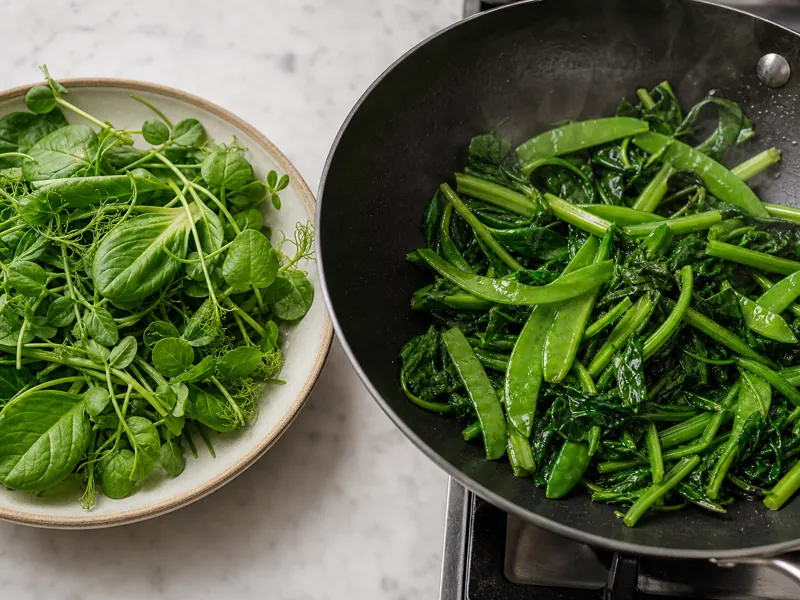
Pea shoots are the tender tips of pea vines, including young leaves, slim stems, and curling tendrils. University of Delaware Extension describes them as crisp with a mild pea-pod flavor.
That combination gives one ingredient three jobs. The leaves add tender green volume, the stems add a light snap, and the pea aroma connects a salad or stir-fry to the sweet pods.
No single common green copies all three traits. Rank the missing trait first, then choose the substitute that protects the dish rather than the one that merely looks similar.
| # | Substitute | Starting ratio | Best use | Main failure |
|---|---|---|---|---|
| 1 | Baby spinach | 1 cup per 1 cup | Salad, sandwich, eggs, quick wilt | Little pea flavor or stem crunch |
| 2 | Watercress | ¾ cup per 1 cup | Garnish, salad, soup finish | Peppery bite can take over |
| 3 | Sunflower shoots | 1 cup per 1 cup | Salad, sandwich, grain bowl | Nutty rather than pea-like |
| 4 | Thin snow pea strips | ¾ cup per 1 cup | Stir-fry, noodle bowl, slaw | Firmer and less leafy |
| 5 | Mâche | 1 cup per 1 cup | Delicate salad or plated garnish | Wilts poorly under high heat |
Ratios use loose cup volume because a packed cup of small leaves weighs more than a loose cup of long shoots. Start loose, toss the dish, and add more only when the greens still look sparse.
Use baby spinach one for one by volume. Add a small handful of snow pea strips when the dish needs both tender leaves and a clear pea flavor.
For heat, ask how long the original shoots would have cooked. Cornell Cooperative Extension cooks pea shoots only until they begin to wilt, which can happen in about a minute over high heat.
A substitute that needs five minutes to soften changes the whole cooking sequence. A green that collapses in seconds should enter after sturdy vegetables and sauce are ready.
1. Baby Spinach
Replace one loose cup of pea shoots with one loose cup of baby spinach. The leaves have a similar tender bite and mild green flavor, so they fit salads, sandwiches, omelets, noodles, and a last-minute pan wilt.
Choose small dry leaves without thick mature stems. Large spinach leaves carry more fiber and can make a delicate garnish feel heavier than the original shoots.
Baby spinach can move directly into a salad or sandwich at the same volume. Dry the leaves well because water on their broad surfaces thins dressing faster than moisture on wiry pea tendrils.
Spinach tastes slightly earthy and mineral beside the sweet grassy note of pea shoots. A few raw snow peas, fresh peas, or mild pea puree can restore that missing connection when it matters.
Spinach collapses quickly and releases water. Finish the sauce and sturdy vegetables first, then fold in the leaves for the last 30 to 60 seconds.
A full cup of raw spinach may shrink below the cooked volume expected from pea shoots. Keep another handful ready, but add it only after the first batch wilts.
The failure point is texture. Spinach has no curling tendrils or crisp hollow stem, so it cannot copy the light snap that makes pea shoots distinctive.
Spinach substitutes may help when baby spinach is also unavailable, though mature kale and cabbage need longer cooking and no longer behave like a direct pea-shoot swap.
2. Watercress
Watercress has tender leaves and crisp juicy stems, which makes its shape useful in raw dishes. Its mustard-family bite is much stronger than the mild flavor of pea shoots.
Start with ¾ cup watercress for each cup of pea shoots. Taste before adding the final quarter cup, especially when the dish already contains radish, mustard, chili, or raw onion.
Reduce watercress when the dish is delicate. Its peppery finish can hide mild fish, soft cheese, fruit, or a light broth.
Use the small leaves and tender upper stems in salads, sandwiches, spring rolls, and plated garnishes. Thick lower stems can feel stringy beside ingredients that were cut for soft pea shoots.
Watercress also works as a soup finish. Stir it in after the pot leaves the boil so the leaves wilt while the stems retain some snap.
Watercress taste is the main reason this substitute succeeds or fails. It improves a sharp salad and fights a sweet gentle garnish.
3. Sunflower Shoots
Sunflower shoots match the scale of a microgreen and offer thick juicy stems. They feel more substantial than pea shoots, with broad seed leaves and a mild nutty flavor.
Use one loose cup of sunflower shoots for one cup of pea shoots in salads, sandwiches, wraps, and grain bowls. Remove any tough hulls that remain attached to the leaves.
The stems make a sparse salad feel full without mature-leaf toughness. They also hold dressing better than thin pea tendrils, so start with a little less dressing and toss again.
- Best in salads when the dish needs crisp juicy volume.
- Best in sandwiches when a sturdy shoot must resist bread and spread.
- Good in grain bowls when warm grains meet the shoots only at serving.
- Weak in stir-fries because the thick leaves and stems soften unevenly under long heat.
Sunflower shoots do not taste like peas. Their seed-like nuttiness works with lemon, tahini, grains, and roasted vegetables, but it can pull a clean pea dish in another direction.
Use them alone when crunch matters more than flavor identity. Add a few sliced snow peas when the dish needs a recognizable pea note.
Check the stems before serving. A fresh shoot snaps or bends cleanly, while a wilted slimy stem will not improve because dressing was added.
4. Snow Peas
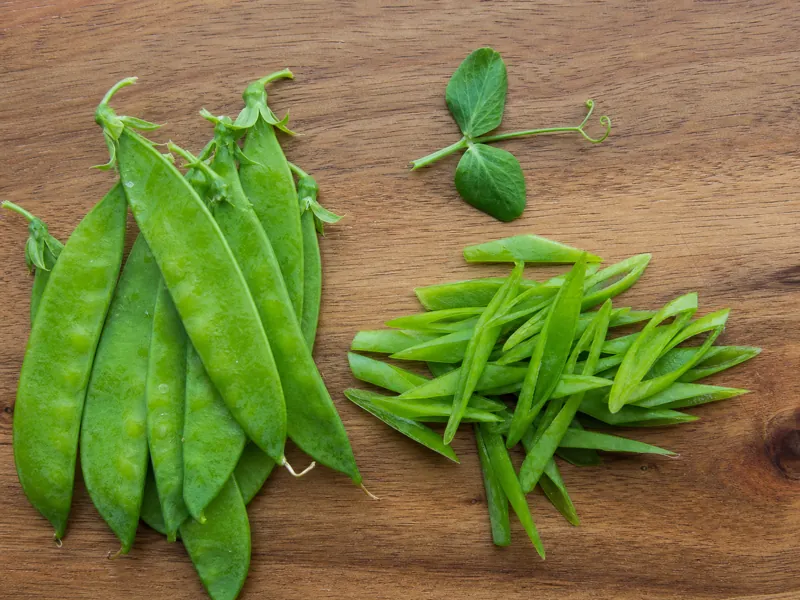
Snow pea pods share the sweet green flavor that leafy substitutes miss. The pod is much firmer than a shoot, so cutting technique decides whether the swap feels integrated or clumsy.
Start with ¾ cup of thin diagonal strips for each cup of pea shoots. The smaller volume accounts for the pod's weight and stronger crunch.
Trim both ends and pull away any tough string. Slice each flat pod on a steep diagonal to create long thin pieces that mix through noodles, slaw, fried rice, and stir-fried vegetables.
In a hot pan, add snow pea strips before a delicate leafy green. Give them one to two minutes to turn bright and crisp-tender, then add spinach or watercress only for the final wilt.
Raw strips work in slaw and chopped salad. They do not create the soft leafy look of pea shoots on a plated appetizer, even when the flavor is closer.
The failure point is volume. Whole pods are heavy and visually dominant, so do not replace a loose cup of shoots with a tightly packed cup of unsliced pods.
Shelled green peas solve a different problem because they bring round sweet kernels rather than stems and leaves. Use that route when the recipe calls for the peas themselves.
5. Mâche
Mâche grows in small rosettes of spoon-shaped leaves. Its texture is soft and its flavor is mild with a faint nutty note, which suits a quiet salad or careful garnish.
Replace pea shoots one for one by loose volume. Separate large rosettes so the leaves spread through the dish instead of sitting in dense clumps.
Heat is the limit. Mâche collapses quickly and lacks a sturdy stem, so it becomes lost in a wok or simmering soup.
Mâche lettuce substitutes can offer other tender salad leaves, but peppery arugula and firm romaine change the dish more strongly than baby spinach does.
How Can You Fix a Pea Shoot Substitute?
One substitute may match the leaf while another matches the pea flavor or stem. A small blend often gets closer than forcing one green to do every job.
Mix three parts baby spinach with one part thin snow pea strips. The spinach supplies tender volume, while the pod pieces bring sweetness and a light snap.
Add the strips first in a hot dish and the spinach last. In a salad, toss both at the same time so the dressing reaches the broad leaves and narrow pieces.
Blend equal parts watercress and mâche or baby spinach. The mild leaves spread the bite across more volume without removing every crisp stem.
Do not bury the mix under sweet dressing to hide excess watercress. Reducing the peppery green keeps the dish's acid, salt, and sugar in their intended balance.
Add a small handful of raw snow pea strips or fresh peas to the bowl. Keep the sunflower shoots as the main volume so the salad retains its juicy stem texture.
For a cooked dish, pair snow pea strips with spinach instead. Sunflower shoots lose their best raw crunch when held over high heat.
Stop once the missing trait returns. Chasing the exact appearance of curling tendrils can add more ingredients than the dish needs.
Pea shoots are distinctive, so a substitute should protect the function rather than imitate every detail. A balanced dish with the right tenderness and flavor is the useful result.
Sources
- University of Delaware Extension, pea shoot flavor, structure, and common uses
- Cornell Cooperative Extension, brief high-heat cooking for pea shoots
- University of Minnesota Extension, pea shoot and snow pea harvest qualities
- University of California Agriculture and Natural Resources, tender pea-tip uses
Yes, when the sprouts are sold as ready-to-eat greens and handled safely. They are younger, softer, and may carry seed hulls, so the texture is not identical.
Kale works only in a cooked dish that allows extra time. Remove tough stems, slice the leaves thinly, and expect a stronger cabbage-like flavor.
Romaine adds clean crunch but little pea flavor and no tendrils. Slice the tender inner leaves thinly and use less than the original shoot volume.
Thin snow pea strips are the strongest single choice because they keep the pea flavor and survive high heat. Add spinach at the end when the dish also needs leafy volume.
Use mâche for a soft mild garnish, watercress for a taller peppery garnish, or sunflower shoots for crisp body. Choose by the flavor already on the plate.

Carrie is a food writer and editor with more than 15 years of experience. She has worked for some of the biggest names in the food industry, including Bon Appétit, Food & Wine, and Martha Stewart Living.
As the Editor in Chief of EpicureDelight, Carrie oversees all of the content on the site. She also manages the team of contributing writers and editors, who help to create delicious recipes, helpful tips, and informative articles that you’ll find on the site.
A native of the Chicago area, Carrie is passionate about all things food. She loves trying new restaurants and experimenting with new recipes in her kitchen. She’s also a graduate of the Culinary Institute of America, so she knows a thing or two about food!



