
That deep, tangy pull you get from a red wine braise? It's mostly acidity and body, not magic.
A solid substitute for red wine can deliver both, as long as you match it to what the wine is actually doing in the dish.
Most recipes use wine for one of three jobs: deglazing fond off the pan, adding body to a braise, or building acidity into a sauce. Pick a substitute that handles that specific job and you'll barely notice the wine is missing.
For pan sauces and deglazing, dry sherry is the fastest 1:1 swap. For braises where you need body, use diluted balsamic vinegar. For a fully alcohol-free dish, pomegranate juice or cranberry juice give the right acidity and color without any heat required.
5 Red Wine Substitutes to Match What You're Cooking
Every option below maps directly to the cooking job you need done. The table gives you the fast answer; the sections below explain the adjustments.
| # | Substitute | Best For | Ratio | Key Note |
|---|---|---|---|---|
| 1 | Dry Sherry | Sauce / Deglaze | 1:1 | Reduce 30-60 sec |
| 2 | Balsamic + Water | Braise / Gravy | ¾:1 | Dilute before adding |
| 3 | Cranberry Juice + Water | Deglaze / Sauce | ¾:1 | Reduce until savory |
| 4 | Pomegranate Juice | Glaze / Sauce | ¾:1 | Reduce to concentrate |
| 5 | Apple Cider Vinegar + Sugar | Marinade / Pan Sauce | ½:1 | Add pinch of sugar |
1. Dry Sherry
Dry sherry is the closest thing to cooking wine in a bottle, and it behaves almost identically to red wine once it hits a hot pan. It brings savory depth, a hint of nuttiness, and real body - all of which survive the heat and develop further as you reduce.
Use it at a straight 1:1 ratio, then let it cook for 30 to 60 seconds longer than you would wine to sharpen its brightness. For pan sauces and braises, it's the one substitute that actually tastes cooked rather than added.
Dry Sherry vs. Balsamic
Works for: pan sauces, braises, beef stews, anything savory
Skip if: nutty fortified-wine flavor clashes with a delicate dish
Dry Sherry vs. Vinegar
Works for: anywhere you need body alongside acidity
Skip if: the sherry's dry, slightly oxidized edge would overpower a subtle sauce
- Ratio: 1:1 - no adjustment needed to start
- Reduce: 30-60 seconds after adding for better brightness
- Best dishes: pan sauces, short-rib braises, mushroom ragù
- Skip if: the recipe is delicate (like a light chicken velouté) where sherry's distinctive note would dominate
2. Diluted Balsamic Vinegar
Balsamic is the substitute that surprises people - it goes in looking like it might wreck a dish, and it comes out tasting genuinely round and wine-like. The key word is *diluted*: straight balsamic is too thick and sweet for most cooking applications, so you mix it with water before it ever touches the pan.
Start at ¾ of the wine amount, combining roughly equal parts balsamic and water. For a braised dish, you can find a full breakdown of how balsamic vinegar in cooking changes with heat, which helps set expectations before you commit.
- Ratio: ¾:1 total (roughly half balsamic, half water)
- Reduce: Simmer 2-4 minutes; sweetness rounds out and body builds
- Best dishes: beef braises, lamb stews, dark gravies
- Skip if: your dish is light or cream-based - balsamic will dominate the flavor
3. Cranberry Juice + Water
Unsweetened cranberry juice handles acidity and color better than most people expect, which makes it a reliable choice for deglazing and quick sauces. The tart, fruity bite it brings early in cooking mellows considerably once you reduce it down.
Mix the juice with a splash of water and use ¾ of the wine amount. If you're unsure which product to grab at the store, the guide on comparing cranberry juice vs cranberry cocktail options clarifies why unsweetened is the only version worth using here.
- Ratio: ¾:1 - start there, top up only if the sauce tastes flat
- Reduce: Keep heat steady until the sauce smells savory, not like juice
- Best dishes: quick pan sauces, deglazing for pork or duck
- Skip if: your sauce already has fruit, honey, or jam - cranberry will amplify sweetness
4. Pomegranate Juice
Pomegranate juice has two things going for it: deep red color and bright acidity that concentrates beautifully into a glaze. It reads more like wine than cranberry when reduced, partly because its tartness is a bit drier and less obviously fruity.
Use ¾ of the wine amount and reduce longer than you think you need to.
| Use | Ratio | Notes |
|---|---|---|
| Pan sauce | ¾:1 | Reduce 2-3 min; add a pinch of sugar if too sharp |
| Braise liquid | ¾:1 | Combine with broth; reduce 4-5 min to soften fruit notes |
| Glaze | ½:1 | Reduce until syrupy; pomegranate shines most here |
- Ratio: ¾:1 for sauces and braises; ½:1 for glazes
- Adjust: Too sweet? Reduce longer. Too sharp? Add a small pinch of sugar.
- Best dishes: lamb chops, duck breast, roasted root vegetable braises
- Skip if: the recipe needs a strictly savory profile - pomegranate can taste noticeably sweet in long braises
5. Apple Cider Vinegar + Sugar
This is the option you grab when the pantry is bare and you need a wine substitute in the next five minutes. It's sharp, it's fast, and it works - within limits.
The ½:1 ratio is deliberate; full-strength apple cider vinegar in a sauce is too aggressive, but half the amount plus a pinch of sugar lands close to wine's mild acidic bite.
Add the sugar before cooking, not after, so it dissolves into the liquid and loses its raw sweetness during reduction. If apple cider vinegar itself is also missing from the pantry, check out apple cider vinegar stand-ins to fill that gap too.
- Ratio: ½:1 vinegar-to-wine, plus one small pinch of sugar per ¼ cup
- Reduce: Simmer 60-90 seconds; sharpness mellows noticeably
- Best dishes: quick marinades, last-minute pan sauces, deglazing chicken
- Skip if: you're making a long braise - lingering sharp vinegar notes don't fully cook off in high-volume liquid
Making Any Red Wine Substitute Taste Right
The substitute is only half the equation. How you apply it determines whether it blends into the dish or sits on top of it like an afterthought.
Every option above needs a brief reduction window - even 60 seconds of high heat removes raw notes that would otherwise make your sauce taste unfinished. For complex braises where you're also swapping out red wine vinegar, knowing your way around swapping out red wine vinegar as a separate component helps you balance the whole dish.
- Match the role first: Deglazing needs acidity (sherry, vinegar); braising needs body (balsamic, pomegranate). Don't use the same substitute for both without adjusting the amount.
- Reduce before you add: For sauces, reduce the substitute alone for 30-90 seconds in the pan before adding broth or other liquids. For braises, let it simmer 2-5 minutes into the base.
- Taste and correct: Too sharp? A small pinch of sugar. Too sweet? Reduce by 2 more tablespoons or add a tiny splash of water to dilute.
Frequently Asked Questions
Yes, but broth alone skips the acidity wine provides. Add 1 teaspoon of red wine vinegar per ¼ cup of broth to get closer to the right balance.
Pomegranate juice, unsweetened cranberry juice, and diluted balsamic vinegar are all alcohol-free. Reduce any of them after adding to remove the raw fruit or vinegar edge.
Sherry swaps 1:1. Most others (balsamic, pomegranate, cranberry) start at ¾ of the wine amount. Apple cider vinegar uses only half, because it's sharper than wine.
For pan sauces, 30-90 seconds at medium-high heat is usually enough. Braises need 2-5 minutes of simmering before you add the remaining liquid.
Dry sherry or unsweetened cranberry juice both work well. Sherry adds savory depth; cranberry gives brighter acidity that pairs naturally with lighter proteins.
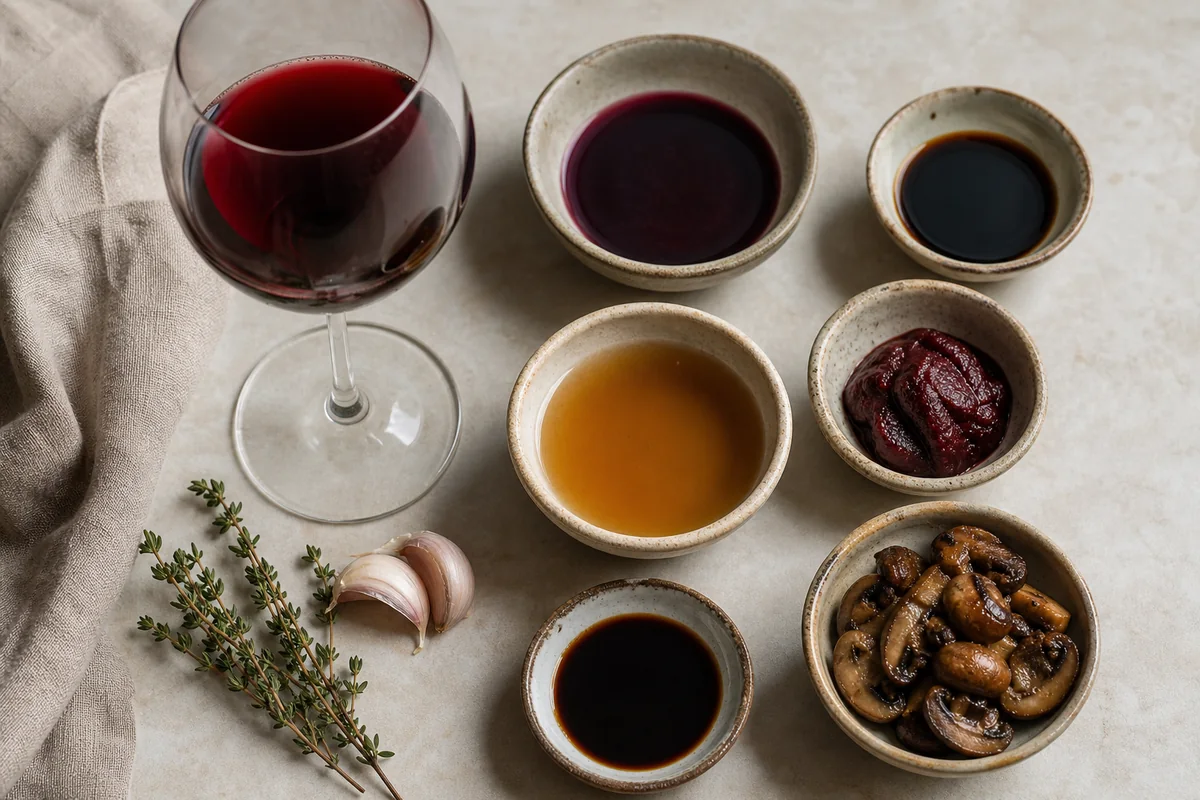
5 Best Red Wine Substitutes (Tested)
Ingredients
Equipment
Method
- Choose the closest match to your cooking goal: deglazing/pan sauce (sherry), braise/body (diluted balsamic), or quick acidity (vinegar + sugar).
- Measure using the listed ratio; for ¾ swaps, start with less and top up only if the sauce tastes flat.
- Reduce briefly before adding back to the dish (30–90 seconds for sauces, 2–5 minutes for braises) so the substitute loses its raw edge.
- Taste at the end: if it’s too sharp, add a small pinch of sugar; if too sweet, add 1–2 teaspoons of water or more reduction time.
- Use the substitute at the same step you’d add wine—deglaze first, then simmer to carry the flavor through.
Notes
- For alcohol-free options, rely on acidity + reduction time to mimic wine’s cooked flavor.
- If your recipe requires a full-flavor red, lean toward sherry or diluted balsamic and reduce longer.
Tried this recipe?
Let us know how it was!
Carrie is a food writer and editor with more than 15 years of experience. She has worked for some of the biggest names in the food industry, including Bon Appétit, Food & Wine, and Martha Stewart Living.
As the Editor in Chief of EpicureDelight, Carrie oversees all of the content on the site. She also manages the team of contributing writers and editors, who help to create delicious recipes, helpful tips, and informative articles that you’ll find on the site.
A native of the Chicago area, Carrie is passionate about all things food. She loves trying new restaurants and experimenting with new recipes in her kitchen. She’s also a graduate of the Culinary Institute of America, so she knows a thing or two about food!



