
That pull when you cut into baked scamorza-molten, stretchy, just barely browned-is what makes it hard to swap casually. The best scamorza cheese substitute depends on two things: how much stretch you need, and how you're applying heat.
Baking, pan-frying, and raw uses all call for something slightly different.
Scamorza is a semi-firm pasta filata cheese, related to mozzarella but drier and slightly more concentrated in flavor. Its low moisture is what gives it that clean, even melt without pooling.
Keep that in mind when picking your swap.
The closest scamorza cheese substitute for baking and melting is low-moisture mozzarella. For a slightly sharper flavor with the same melt, use provolone. Fontina works when you want a silkier, creamier pull. Match your substitute to melt behavior first, flavor second.
5 Best Scamorza Cheese Substitutes (and When to Use Them)
Each substitute below is ranked by how closely it copies scamorza's melt and stretch. The table gives you a fast scan.
The sections after it explain the real cooking details-how to cut the cheese, when it fails, and where it shines.
| # | Substitute | Best For | Ratio | Key Note |
|---|---|---|---|---|
| 1 | Low-moisture mozzarella | Both | 1:1 | Stretchiest all-purpose swap |
| 2 | Provolone (mild) | Both | 1:1 | Sharper flavor, browns well |
| 3 | Fontina | Baked | 1:1 | Creamy melt, mild tang |
| 4 | Caciocavallo | Both | 1:1 | Closest texture match |
| 5 | String cheese | Baked | 1:1 | Tear thin for even melt |
1. Low-Moisture Mozzarella
Low-moisture mozzarella is the most practical stand-in for scamorza. Both are pasta filata cheeses, so the stretch behavior is nearly identical when baked at high heat.
The main difference is flavor: scamorza has a slightly more developed, buttery note, while mozzarella stays mild and neutral.
Shredding is the key move here. Pre-shredded bags work, but block mozzarella shredded fresh melts more cleanly.
Fresh mozzarella balls are too wet and will pool.
Low-Moisture Mozzarella vs. Scamorza
Works for: pizza, baked pasta, stuffed bread, any dish needing long, even stretch
Skip if: you need the faint smoky note of scamorza affumicata-mozzarella won't replicate that depth
- Use 1:1 by weight: No adjustment needed; shred from a block for best melt.
- Bake temp: Works best at 375°F-450°F, the same range scamorza performs in.
- Avoid pre-shredded if possible: Anti-caking powder can slow the melt slightly.
The fresh, stretchy Italian cheese has a short fridge life once opened, so time your purchase to your bake day.
2. Provolone
Provolone melts cleanly and browns with a slight golden crust, which makes it a solid scamorza stand-in for pizza and toasted sandwiches. The flavor is a step sharper, especially after heat, but not aggressively so with mild (dolce) provolone.
If you're swapping aged provolone into a recipe that calls for scamorza, the flavor gap widens-stick to mild provolone labeled dolce for the closest match.
- Slice thin: Even 3mm slices melt at the same rate, preventing hot spots.
- Best uses: Panini, baked chicken, pizza, eggplant parmigiana.
- Chunk for casseroles: 1cm cubes melt into pools without turning rubbery.
- Skip if: Your dish depends on a delicate, buttery flavor-provolone reads sharper once melted and can dominate milder ingredients.
3. Fontina
Fontina doesn't stretch the way mozzarella does, but it melts into something almost silkier. It pools smoothly without separating or going grainy, which makes it ideal for lasagna layers and baked gratins.
The tang is mild, closer to scamorza than provolone.
- Best for: Lasagna, pasta bakes, fondue-style dips, baked eggs.
- Shred it: Fontina is slightly waxy; shredding helps it melt faster and more evenly.
- Flavor note: Val d'Aosta fontina has more mushroom earthiness; Danish fontina is blander but melts just as well.
- Skip if: You need maximum browning and a crispy cheese layer-fontina softens but rarely crisps the way firmer cheeses do.
For more on what to expect flavor-wise, the mild, nutty melt profile of fontina is worth reading before you commit to a large batch. And if you're storing it ahead of time, this creamy Alpine variety keeps about 3-4 weeks wrapped tightly in the fridge.
4. Caciocavallo
Caciocavallo is the substitute most cooks don't think of first, but it is the closest structural match to scamorza. Both are pasta filata cheeses from southern Italy, and younger caciocavallo pulls and stretches almost identically.
You can read about similar stretched-curd options if sourcing is tricky in your area.
The catch is availability. This one is worth seeking out at Italian delis or specialty grocers, but it's not a cheese you'll find at every supermarket.
- Slice or chunk: Use thin slices for sandwiches, cubes for casseroles, and shred only when you need fast melt in thin layers.
- Age matters: Young caciocavallo (under 6 months) gives the best stretch. Aged versions firm up and melt more like pecorino.
- Skip if: You can't find it locally-ordering online works, but plan ahead since it needs cold shipping.
5. String Cheese
String cheese is mozzarella in a convenient shape, and it performs better than most people expect when used thoughtfully. The key is portioning it before it goes into the dish.
| Use | Ratio | Notes |
|---|---|---|
| Pizza topping | 1:1 by weight | Tear into thin strands; lay flat to avoid clumping |
| Stuffed bread | 1:1 by weight | Break into 2cm pieces and distribute evenly inside dough |
| Casserole layer | 1:1 by weight | Slice into rounds; layer between ingredients for pull |
- Tear, don't slice: Pulling into strands increases surface area and speeds up even melting.
- Whole-milk variety: Melts more smoothly and stays stretchier than part-skim under heat.
- Skip if: Your bake runs longer than 25 minutes at high heat-string cheese loses stretch quickly and can turn greasy with extended exposure.
Making Scamorza Substitutes Melt and Stretch
The goal with any substitute is even melt, minimal water release, and enough stretch to still pull when you cut in. Most failures happen because of moisture or cut size, not the cheese itself.
Low-moisture choices and correct prep-like the firm, milky body of real scamorza-are what you're trying to replicate.
- Shred from a block: Pre-shredded cheese has anti-caking coating that slows the melt; shredding fresh gives you a cleaner, faster result.
- Pat wet cheeses dry: If your substitute feels damp, press it between paper towels for 5 minutes before adding it to the dish.
- Add it late in the bake: Lay the cheese on top during the last 8-10 minutes to avoid over-melting and greasiness.
Frequently Asked Questions
Yes. Low-moisture mozzarella is the closest match for melt and stretch. Avoid fresh mozzarella balls-they release too much water and won't behave the same way in baked dishes.
Low-moisture mozzarella or young caciocavallo give the longest pull on pizza. Both are pasta filata cheeses, so they stretch rather than snap when hot.
High moisture content is the usual cause. Pat the cheese dry before baking, shred instead of slice, and add it in the last 8-10 minutes of cook time.
Yes. Mild provolone holds up well under direct heat and develops a golden crust similar to scamorza. Use slices about 5mm thick so they don't melt through the pan.
Sometimes. Scamorza is fairly mild in salt. Taste after cooking and add a small pinch if the dish feels flat, especially with provolone or kashkaval, which can vary.
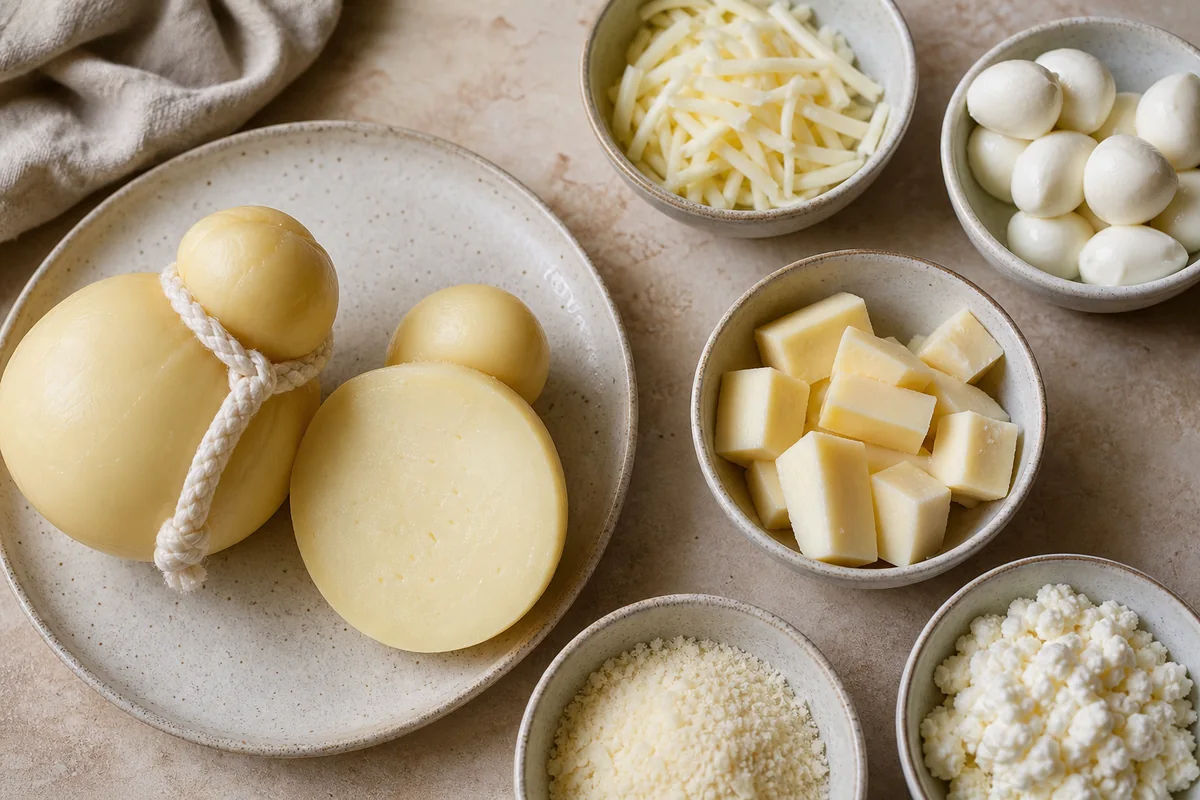
5 Best Scamorza Cheese Substitutes (That Actually Work)
Ingredients
Equipment
Method
- Decide your use-case: baked pizza/lasagna (stretch + melt) vs. pan-grilled/fried (firm melt + browning).
- Choose the substitute from the table and measure by weight using the listed ratio (start with 1:1).
- For softer/wetter swaps, pat dry or shred to help them melt evenly and reduce pooling.
- Match the cut: shred for even melt, slice for sandwiches, and cube for casseroles.
- Taste after cooking and adjust: add a pinch of salt if flavor is muted, or a tiny squeeze of lemon if it tastes flat.
Notes
- Use low-moisture mozzarella for the cleanest stretch in high-heat baking.
- If your substitute releases extra liquid, reduce heat slightly or finish on a dry-hot pan for 30-60 seconds.
Tried this recipe?
Let us know how it was!
Carrie is a food writer and editor with more than 15 years of experience. She has worked for some of the biggest names in the food industry, including Bon Appétit, Food & Wine, and Martha Stewart Living.
As the Editor in Chief of EpicureDelight, Carrie oversees all of the content on the site. She also manages the team of contributing writers and editors, who help to create delicious recipes, helpful tips, and informative articles that you’ll find on the site.
A native of the Chicago area, Carrie is passionate about all things food. She loves trying new restaurants and experimenting with new recipes in her kitchen. She’s also a graduate of the Culinary Institute of America, so she knows a thing or two about food!



