
That long, glassy pull when you lift a forkful of baked pasta - caciocavallo does that better than almost any other cheese. When you can't find it, the right caciocavallo cheese substitute gives you that same behavior in the pan, not just a similar label on the package.
Caciocavallo is a stretched-curd cheese, firm enough to slice but soft enough to melt into long strands. That combination is what you're trying to match.
If you care about flavor alone, you'll pick the wrong swap every time.
Match your substitute to what the dish actually needs. Provolone and scamorza are the closest stretch-and-melt matches. Low-moisture mozzarella melts cleanly without pooling. Fontina gives creamy melt, and asiago delivers browning power. Havarti is the easy emergency swap.
Best Caciocavallo Cheese Substitute by What You're Making
Every substitute on this list behaves differently under heat. Use this table to match the swap to your actual dish before you cook, not after the cheese has already separated.
| # | Substitute | Best For | Ratio | Key Note |
|---|---|---|---|---|
| 1 | Provolone | Both | 1:1 | Reduce added salt |
| 2 | Mozzarella (low-moisture) | Baking | 1:1 | Shred for even melt |
| 3 | Scamorza | Both | 1:1 | Pick unsmoked for neutral |
| 4 | Fontina | Baking | 1:1 | Creamy, not stretchy |
| 5 | Asiago (aged) | Baking | ¾:1 | Grate fine, watch heat |
| 6 | Havarti | Melt | 1:1 | Browns fast at high heat |
5 Substitutes That Cover Every Caciocavallo Use Case
1. Provolone
Provolone is the swap we reach for first. It is a stretched-curd cheese, just like caciocavallo, so it pulls and melts in a way that most other options can't match. Understanding provolone's flavor is useful here: aged provolone runs slightly sharper and tangier than caciocavallo, so reduce or skip extra salt in the recipe.
Provolone
Works for: pasta bakes, topped dishes, grilled sandwiches needing visible stretch
Skip if: your recipe needs a mild, creamy profile - provolone tastes noticeably tangier
- Flavor shift: Expect a sharper, slightly tangy finish versus caciocavallo's more buttery note
- Texture behavior: Slices pull into long strands when hot; shredded provolone browns a bit faster
- Best form: Slice for topped dishes; shred when you want faster, more even browning on baked pasta
- Ratio: 1:1 by weight; reduce added salt by at least half a teaspoon per 100g used
For more information on when provolone cheese itself needs a replacement, we have a full guide.
Skip if: the recipe depends on a delicate, creamy flavor base - provolone will overpower it.
2. Mozzarella (Low-Moisture)
Low-moisture mozzarella is the safest bet for baked and saucy dishes. It melts into a smooth, cohesive layer and is far less likely to pool liquid onto your pan than fresh mozzarella. This is the one to buy when the recipe is forgiving but failure isn't an option.
For longer storage, tips on keeping mozzarella fresh can save you from a last-minute supermarket run.
- Form matters: Shred it yourself rather than buying pre-shredded - the anti-caking coating on packaged shreds slows melting
- Ratio: 1:1 by weight; no salt adjustment needed since mozzarella is mild
- Texture: Melts into a consistent layer with moderate stretch, not the long pull caciocavallo gives
- Flavor: Much milder; you won't get the slight tang or depth of caciocavallo
Skip if: you need strong flavor complexity or a golden-brown crust - mozzarella stays pale and neutral.
3. Scamorza
Scamorza is caciocavallo's closest cousin in behavior. Both are stretched-curd, both pull when heated, and they share a similar milky base flavor. Scamorza cheese in cooking gives you nearly the same melt window, which makes swapping almost seamless.
- Smoked vs. unsmoked: Smoked scamorza adds a campfire note that works in some dishes but overwhelms delicate sauces
- Slice thin: Thinner slices (about 3-4mm) melt faster and give a better pull on top of hot food
- Ratio: 1:1 by weight; no other adjustments needed for unsmoked
- Skip if: Your recipe needs a clean, non-smoky flavor and you can only find smoked scamorza
If you ever need to go further, our guide to scamorza cheese substitutes covers the next tier of options.
4. Fontina
The flavor of fontina cheese is mild, buttery, and slightly earthy - closer to caciocavallo than anything with a sharp edge. It melts into a creamy, cohesive blanket rather than producing long strands.
That smooth texture works well when you want a sauce-like melt in a baked dish. It is not the right call if the recipe depends on visual stretch or pull.
For situations where fontina itself isn't available, there's a separate guide for that swap.
- Best for: Creamy baked pasta, casseroles, or dishes where stretch is secondary to smoothness
- Form: Grate on a box grater for faster, more even browning; slices melt slower
- Ratio: 1:1 by weight; no salt adjustment needed
- Skip if: You specifically need that long, stringy pull - fontina stays smooth and loses its shape quickly
5. Asiago (Aged)
Aged asiago melts differently than the stretched-curd cheeses above. It is more prone to graininess if you push the heat too far, so it works best as a browning and flavor cheese rather than a stretch cheese.
Think of it as a controlled finishing option, not a direct structural replacement.
- Grate fine: Fine grating distributes fat more evenly and dramatically reduces the chance of a gritty result
- Ratio: Use ¾ the weight you'd use of caciocavallo - asiago is more intense, and less goes further
- Heat control: Remove from heat as soon as it turns golden; an extra minute causes it to seize and separate
- Best for: Baked dishes where a browned, savory crust is the goal, not stretch
- Skip if: You need a silky, stretchy melt - asiago behaves more like a browning cheese than a pull cheese
When asiago is the ingredient you're substituting rather than the substitute, check our guide to replacements for asiago cheese for more options.
Havarti sits outside the main 5 because it is an emergency swap, not a performance match. It melts easily and slices thin, but it browns faster than caciocavallo and is less forgiving at high heat.
- Ratio: 1:1; slice thin or grate for even coverage
- Heat timing: Add it later in the cooking process than you would caciocavallo - 2-3 minutes earlier and it can over-brown
- Best for: Sandwiches, low-heat bakes, quick pan dishes where you just need reliable melt
- Skip if: You can't watch the heat closely - havarti is unforgiving under a broiler
Making the Substitute Work: Heat, Form, and Salt
How you prepare the cheese matters as much as which one you choose. A correctly shredded provolone will melt better than a poorly sliced scamorza, regardless of which is the "closer" match.
The three adjustments below apply to every substitute on this list and take less than a minute each.
- Choose the right form: Thin slices (3-4mm) or fine shredding give faster, more even melt and reduce pooling or separation - thick blocks melt unevenly and can leave hot pockets
- Manage heat carefully: Most substitutes hit their melt window before caciocavallo would - pull back heat by about 10-15% and watch the surface; grainy or oily patches mean you've gone too far
- Adjust salt after melting: Taste only after the cheese has melted into the dish; provolone and asiago add more salt than caciocavallo does, and correcting before melt leads to over-seasoning
Frequently Asked Questions
Provolone and unsmoked scamorza are both stretched-curd cheeses that replicate caciocavallo's pull most closely. Use either at a 1:1 ratio, sliced thin or shredded.
Yes - low-moisture mozzarella works well for baked pasta and casseroles. It won't stretch as dramatically, but it melts cleanly and won't pool.
Grate it as finely as possible and remove the dish from heat the moment the surface turns golden. Overheating is the main cause of asiago's grainy texture.
Unsmoked scamorza is the closer flavor match for caciocavallo. Smoked scamorza works in heartier dishes but changes the flavor noticeably.
Yes - both are saltier and sharper than caciocavallo. Reduce any added salt in the recipe and taste after the cheese has fully melted before adjusting further.
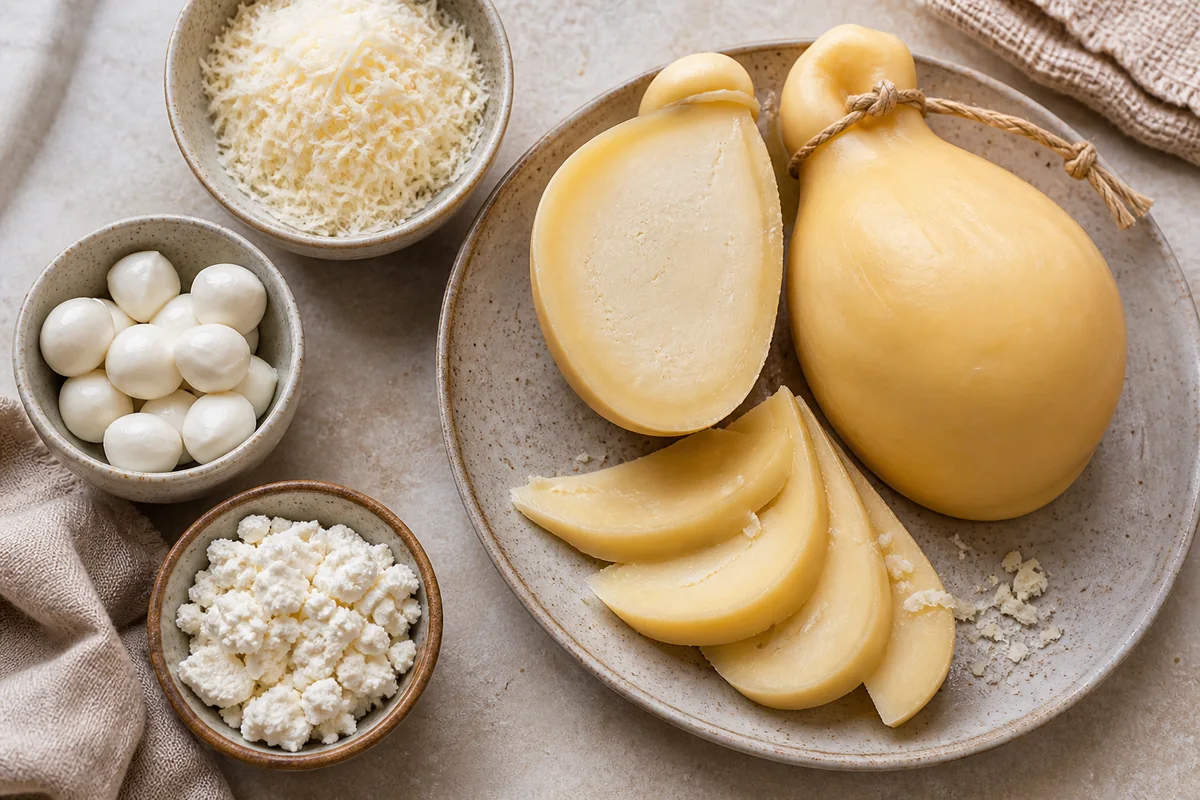
5 Best Caciocavallo Cheese Substitutes in Every Recipe
Ingredients
Equipment
Method
- Identify your dish type (melting on pasta, grilling, or baked browning) and choose the closest match from the table by melt behavior.
- Use the listed ratio: measure by weight for the most consistent melt and browning results.
- If your substitute is softer or wetter than caciocavallo (e.g., mozzarella), pat dry or reduce time to prevent pooling.
- If your substitute is sharper or saltier (e.g., provolone/asiago), reduce added salt and taste after melting.
- For best stretch, shred/slice and let the cheese sit on hot food 30–60 seconds before covering or serving.
Notes
- Caciocavallo is valued for its stretch and firm, melt-friendly texture—match those traits first.
- If the substitute tastes sharper than expected, counterbalance with a creamy sauce or reduce added salt.
Tried this recipe?
Let us know how it was!
Carrie is a food writer and editor with more than 15 years of experience. She has worked for some of the biggest names in the food industry, including Bon Appétit, Food & Wine, and Martha Stewart Living.
As the Editor in Chief of EpicureDelight, Carrie oversees all of the content on the site. She also manages the team of contributing writers and editors, who help to create delicious recipes, helpful tips, and informative articles that you’ll find on the site.
A native of the Chicago area, Carrie is passionate about all things food. She loves trying new restaurants and experimenting with new recipes in her kitchen. She’s also a graduate of the Culinary Institute of America, so she knows a thing or two about food!



