
Semolina flour has a personality all its own: slightly gritty, golden when baked, and just thirsty enough to build chewy, structured dough. Finding a good semolina flour alternative is less about chasing an exact copy and more about knowing which quality matters most for your recipe.
Some swaps match the browning. Others match the bite.
A few do both reasonably well if you adjust hydration.
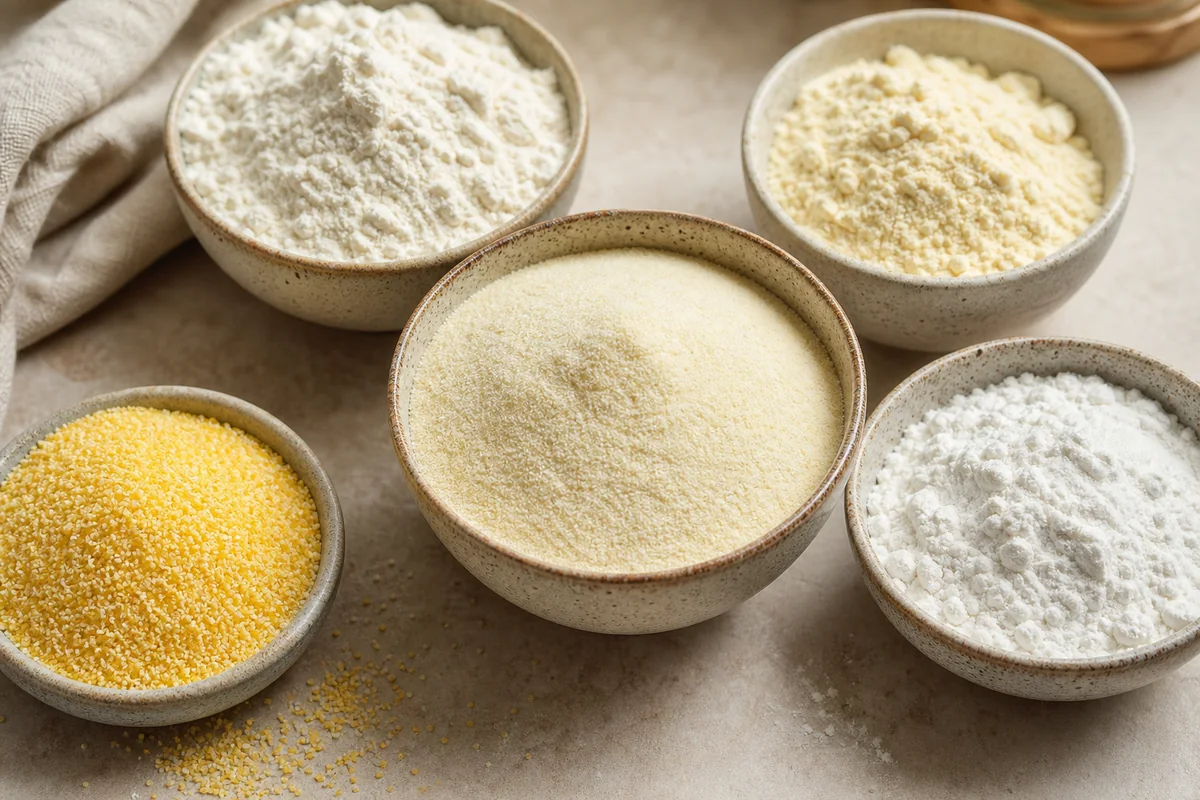
All-purpose flour is the fastest 1:1 swap for most baking and dough recipes. For pasta-like grit, use fine cornmeal or ground couscous. For gluten-free, use white rice flour. Bread flour adds extra chew. Whole wheat adds nuttiness but needs a 30% reduction.
Reference Table: Best Semolina Flour Substitutes at a Glance
Choosing the right swap takes about ten seconds once you know what role semolina is playing. The table below covers all five options ranked from most forgiving to most specialized.
Note that all-purpose flour and bread flour information overlaps with broader wheat-based baking - if you've ever explored all purpose flour in cooking, the flavor logic carries over here.
| # | Substitute | Best For | Ratio | Key Note |
|---|---|---|---|---|
| 1 | All-purpose flour | Both | 1:1 | Less grit, same structure |
| 2 | Bread flour | Baking | 1:1 | Chewier, tighter crumb |
| 3 | Fine cornmeal | Both | 1:1 | Closest gritty bite |
| 4 | Rice flour (white) | GF Baking | 1:1 | Tender crumb, no gluten |
| 5 | Whole wheat flour | Baking | 7:10 | Denser, nuttier result |
5 Semolina Flour Swaps That Nail Texture and Browning
1. All-Purpose Flour
All-purpose flour is the swap you reach for when you want nothing to break. It works at a 1:1 ratio for breads, flatbreads, pizza dough, and most baked goods - as long as you're not chasing semolina's signature grittiness. If you're curious about all purpose flour stand-ins for other contexts, that's a different problem to solve, but here it simply acts as the clean, neutral foundation semolina provides in most recipes.
- Hydration: Keep liquid the same initially; AP flour absorbs slightly less than semolina, so your dough may feel a touch softer
- Browning: Expect similar golden color, but without the deep, speckled crust semolina produces
- Best uses: Pizza dough, soft breads, dusting baking surfaces, and most quick-bread batters
- Skip if: You need the gritty, pasta-style bite semolina provides - the smooth milled texture won't replicate it
2. Bread Flour
Bread flour runs about 12-14% protein compared to semolina's 13-14%, which makes it a logical structural substitute. It produces tighter, chewier dough with good elasticity - useful when semolina's job in your recipe is building a strong, pull-apart crumb.
We've covered replacements for bread flour in other contexts, but here bread flour itself is doing the replacing, which is its ideal role.
- Chew and elasticity: Dough will feel firmer and snap back more than with AP flour - great for naan, focaccia, and hearty loaves
- Hydration tip: Add 1-2 teaspoon extra water if dough feels stiff; high-protein flour can tighten fast
- Browning: Similar golden crust to semolina, slightly deeper than AP flour
- Best uses: Yeasted breads, flatbreads, hand-stretched pizza bases
- Skip if: Your recipe depends on semolina's golden, gritty mouthfeel more than structure - bread flour contributes chew, not granularity
3. Fine Cornmeal or Polenta
Of all the options here, finely ground cornmeal is the closest match to semolina's physical character. It has the same golden color, similar grittiness, and it browns in much the same way.
Use it in semolina flour in grain dishes where that coarser bite defines the finished product.
- Grind size matters: Medium or coarse cornmeal needs a quick pass in a spice grinder before it will behave like semolina
- Ratio: 1:1, but sift after grinding to remove any chunks
- Flavor note: Adds a mild corn flavor, which works beautifully in bread but may read differently in neutral pasta dough
Coarse-Ground Cornmeal
Works for: dusting baking pans, adding texture to rustic bread crusts
Skip if: your recipe needs smooth dough - coarse grind will leave hard pockets
Finely Ground Cornmeal / Polenta
Works for: pasta-style dough, semolina cake, pizza dough with gritty bite
Skip if: you only have coarse cornmeal and no way to grind it finer
The finer the grind, the more seamlessly it disappears into dough while still keeping that characteristic body. Polenta flour (sold pre-milled to fine) is often the easiest ready-to-use version.
4. Rice Flour (White, Finely Milled)
White rice flour is the go-to when gluten is off the table. It has a neutral flavor, mills fine enough to blend cleanly, and doesn't turn gummy the way some starches do. If you want to understand the full flavor profile before committing, check out rice flour in grain dishes - the mild, clean taste is one of its biggest practical advantages here. For other contexts where rice flour itself isn't available, there are rice flour stand-ins worth knowing.
- Crumb structure: Expect a more tender, crumbly result - less chewy than semolina but good for cakes and coatings
- Hydration adjustment: Rice flour can absorb liquid differently by brand; start with your stated recipe amount and add water 1 teaspoon at a time if the dough cracks
- Browning: Lighter crust color than semolina - bake an extra 3-5 minutes or raise oven temp by 10°F to compensate
- Skip if: You need the same chew and elasticity you get from wheat-based semolina recipes - rice flour simply can't replicate gluten structure
5. Whole Wheat Flour
Whole wheat flour has bran in the mix, which makes it absorb more water and weigh down dough faster than semolina. We prefer it sifted first to remove the coarsest bran flakes before measuring.
If you ever need to go the other direction, there are solid replacements for whole wheat flour worth knowing too.
| Use | Ratio | Notes |
|---|---|---|
| Bread dough | 7 parts WW to 10 parts semolina | Sift first; add liquid gradually |
| Flatbreads | 7:10 | Works well; expect denser, nuttier crumb |
| Baked goods (muffins, quick bread) | 7:10 | Reduce by 30% and increase moisture slightly |
- Flavor: Noticeably nuttier and earthier - a genuine flavor shift, not just a texture one
- Texture: Denser crumb with a slightly rougher bite from bran particles
- Best applications: Hearty loaves, rustic flatbreads, and recipes that already lean toward a whole-grain flavor profile
- Skip if: You're aiming for light, neutral flavor and maximum golden lift - whole wheat pulls in the opposite direction
Making Your Semolina Flour Substitute Work
The key principle is simple: match the texture goal first, then adjust hydration second. Semolina is moderately thirsty flour, and most substitutes behave a little differently with liquid - some tighter, some slacker. Start your liquid at the recipe's stated amount and adjust from there rather than guessing upfront.
- Add liquid in stages: Start with the recipe's liquid amount. If dough feels dry after 2 minutes of mixing, add water 1 teaspoon at a time until it comes together.
- Fix sticky dough with measured flour: If dough is too slack, add 1 tablespoon of your substitute flour, mix fully, and check before adding more.
- Compensate for lost browning: If your substitute is lighter-colored than semolina, raise oven temp by 10°F or extend bake time by 3-5 minutes - keep a close eye on it.
FAQ: Semolina Flour Alternatives
All-purpose flour is the most reliable 1:1 swap for most doughs and baked goods. It lacks semolina's grit but matches its structure and behavior in the majority of recipes.
Yes, but only if you grind it fine first. Coarse cornmeal leaves hard pockets in pasta dough; a finely milled grind replicates semolina's speckled bite much more closely.
Use it at 1:1 and add xanthan gum (about ¼ teaspoon per cup) for structure. Rice flour has no gluten, so without a binder the dough will be crumbly.
Yes. Use about 70% of the semolina amount called for - whole wheat is denser and will make dough heavy if swapped at full quantity.
Different flours absorb liquid at different rates. Add water 1 teaspoon at a time for dry dough, or 1 tablespoon of flour at a time for sticky dough, until texture is right.
5 Best Semolina Flour Substitutes (That Actually Work)
Ingredients
Equipment
Method
- Decide your priority: closest texture (AP/bread flour), pasta-like grit (fine cornmeal or couscous), or gluten-free (rice flour).
- Use the listed ratio and keep liquid the same at first; semolina can be slightly thirstier depending on brand.
- Adjust dough consistency: if too dry, add 1 teaspoon water at a time; if too slack, add 1 tablespoon substitute flour.
- For a semolina-like bite, grind coarse substitutes (cornmeal/couscous) finer before mixing.
- Taste-test for browning: if your recipe depends on golden color, brown longer or bake slightly hotter (watch closely).
Notes
- Texture matters most: semolina’s grit changes mouthfeel and hydration behavior.
- If using whole wheat or GF rice flour, expect a softer or denser crumb and adjust hydration.
Tried this recipe?
Let us know how it was!
Carrie is a food writer and editor with more than 15 years of experience. She has worked for some of the biggest names in the food industry, including Bon Appétit, Food & Wine, and Martha Stewart Living.
As the Editor in Chief of EpicureDelight, Carrie oversees all of the content on the site. She also manages the team of contributing writers and editors, who help to create delicious recipes, helpful tips, and informative articles that you’ll find on the site.
A native of the Chicago area, Carrie is passionate about all things food. She loves trying new restaurants and experimenting with new recipes in her kitchen. She’s also a graduate of the Culinary Institute of America, so she knows a thing or two about food!



