
That tiny pop of crunch on a burger bun or a bowl of ramen does more work than it looks like. Sesame seeds bring a specific toasty, nutty note that's hard to fake exactly. But the right sesame seed substitute depends entirely on what role sesame is playing: crispy garnish, ground binder, or flavor base in a sauce.
Sesame seed replacement isn't one-size-fits-all. A toasted poppy seed handles the sprinkle job well. Tahini handles the flavor-and-body job. Knowing which you need saves a failed dish.
The best sesame seed alternative depends on use. For crunch and garnish, try toasted poppy seeds or ground peanuts. For flavor depth in sauces or dough, use tahini or flaxseed meal. For thickening, ground chia works well. Toast most substitutes first for better aroma.
5 Best Sesame Seed Substitutes That Taste Right
Each substitute below targets a specific use. Check the table first, then read the item notes before you commit.
| # | Substitute | Best For | Ratio | Key Note |
|---|---|---|---|---|
| 1 | Toasted Sesame Seeds | Both | 1:1 | Toast 3-5 min, then cool |
| 2 | Tahini | Sauces | 1:1 | Thin with water first |
| 3 | Poppy Seeds | Topping | 1:1 | Toast briefly, use intact |
| 4 | Chia Seeds (ground) | Baking | 1:1 | Grind before mixing |
| 5 | Flaxseed Meal | Baking | 1:1 | Toast 2-3 min for warmth |
1. Toasted Sesame Seeds
Raw sesame seeds are mild and almost grassy. Toasting them for 3 to 5 minutes in a dry pan over medium heat unlocks the nutty, slightly smoky aroma that most recipes actually expect.
Cool them 2 to 3 minutes before using so they stay crisp on top of warm food.
This is the closest match to itself, just activated. For recipes where the toasty, warm note is the whole point, this is your answer.
- Toppings and garnish: Use 1:1 straight off the pan, cooled. Sprinkle just before serving.
- Coatings (like crusted fish or chicken): Press toasted seeds into the surface before cooking, not after.
- Baked goods: Add to the dough or batter at the ratio your recipe calls for; no adjustment needed.
Skip if: your recipe specifically calls for raw sesame seeds for a delicate, untoasted flavor.
2. Tahini
Tahini is ground sesame paste, so it carries the same flavor, just in a different form. It works when sesame seeds are adding nutty depth to sauces, dressings, marinades, or doughs, not when they're there for crunch.
Thin tahini with 1 teaspoon of water per tablespoon before mixing so it spreads evenly. Thinking about a sesame-forward dish where tahini does most of the work, like a garlic tahini chicken recipe, shows how well it stands in for whole seeds in savory cooking.
- Sauces and dressings: Replace sesame seeds with thinned tahini at 1:1 by volume.
- Dough and batters: Add tahini as you would sesame seeds; it blends without clumping.
- Caution: Over-toasted tahini turns bitter. Use a fresh jar and taste before adding.
Skip if: you need a dry, crispy sesame topping. Tahini is a paste and won't provide crunch.
3. Poppy Seeds (Lightly Toasted)
Poppy seeds are the closest visual match for sesame seeds on a bun, cracker, or crust. The tiny dark specks look nearly identical sprinkled over baked goods, and the mild crunch is a good stand-in for the texture.
The flavor is nuttier and slightly earthier, but most tasters won't notice on a salted pretzel or a seeded roll.
Toast them for just 1 to 2 minutes in a dry pan. They go from raw to fragrant fast, and they burn easily if you walk away.
Knowing how poppy seed flavor develops with heat helps you stop at the right moment.
- Burger buns and bread: Use 1:1, intact seeds pressed onto the surface before baking.
- Crackers and flatbreads: Works perfectly as a 1:1 swap, both in dough and as a topping.
- Salad toppings: Sprinkle lightly toasted poppy seeds directly where you'd use sesame.
- Ground uses: Crush only if your recipe specifically needs ground sesame; leave intact otherwise.
Skip if: your dish relies on sesame's distinctive nutty note. Poppy seeds taste different enough to change the character of sesame-forward sauces.
4. Chia Seeds (Ground)
Chia seeds work best as a sesame seed alternative when the seeds are being used for body and binding, not crunch. Ground chia disperses into batters and sauces without forming gel pockets the way whole chia does.
Grind it to a fine meal first, then stir it into a small portion of your liquid before blending into the rest.
If you're researching other uses, chia seed swaps cover a wider range of applications worth checking.
| Use | Ratio | Notes |
|---|---|---|
| Batter / dough thickening | 1:1 | Ground chia; hydrate in small liquid portion first |
| Blended sauces | ¾:1 | Ground chia; reduce slightly, it thickens more than sesame |
| Dry garnish | Not recommended | Chia softens on contact with moisture |
- Grind first: Whole chia forms gel; ground chia blends cleanly into batter.
- Hydrate separately: Mix ground chia into 1 tablespoon of your sauce or liquid before adding to the full batch.
- Flavor note: Chia is neutral. Add a pinch of salt to bring forward the nutty quality sesame would have added.
Skip if: you want a crisp topping. Chia hydrates quickly and will go soft on anything warm.
5. Flaxseed Meal
Flaxseed meal adds a nuttier, earthier note than sesame, but it holds up well when you need ground sesame in baked goods or blended savory sauces. Toast it for 2 to 3 minutes in a dry pan, then cool it completely before mixing.
The toasting sharpens the flavor and pushes it a little closer to sesame's warmth.
Sesame Seeds (ground)
Works for: toppings, coatings, batter, sauces, light sesame flavor in sweet or savory
Skip if: you need the paste format for richness
Flaxseed Meal
Works for: savory baked goods, blended sauces, dough enrichment, and crusts
Skip if: recipe is sweet and needs sesame's bright, lighter nuttiness
- Savory breads and crusts: Use 1:1 flaxseed meal in place of ground sesame seeds.
- Blended sauces: Stir in after blending so it doesn't over-thicken. Start with ¾ of the called amount.
- Sweet bakes: Use sparingly. Flax reads earthy and can overpower delicate flavors.
Skip if: your recipe is a sweet pastry where sesame brightness is part of the appeal. Flax's earthiness clashes with light, sweet profiles.
Make Your Sesame Seed Substitute Taste "Right"
Choosing the right sub is only half the job. The other half is knowing how to apply it so the result actually tastes intentional.
For garnish and crunch, always use intact seeds or finely crushed nuts, never a paste. For sauces and batters, ground or paste forms integrate better and won't leave chunks.
When aroma is the goal, oil-based sesame swaps are sometimes worth considering alongside seed substitutes, especially in stir-fry and dressing applications. If your substitute tastes flat, the problem is usually skipped toasting.
Most seeds and meals need at least 2 minutes of dry heat before their nutty aroma opens up.
- Toast before using: Heat any substitute in a dry skillet 2 to 5 minutes, stirring constantly. Pull it off heat when it smells fragrant, not when it looks dark.
- Match the form: Keep seeds intact for toppings and coatings. Grind chia, flax, or peanuts if you're adding to batter or sauce.
- Adjust amount: Tahini and flaxseed meal are denser than sesame seeds. Start at ¾ of the called amount, then add to taste.
Understanding what sesame oil contributes in terms of flavor can also help you decide whether your dish needs a seed swap, an oil swap, or both together.
Frequently Asked Questions
Lightly toasted poppy seeds are the closest match for a dry, crispy garnish. They mimic the look and crunch well, especially on buns, crackers, and noodle bowls.
Not by weight. Tahini is a paste, so use it 1:1 by volume in sauces and doughs only. Thin it with a teaspoon of water first so it mixes evenly.
Use a dry skillet on medium heat and stir constantly. Pull off heat the moment you smell fragrance, usually 2 to 4 minutes depending on the seed.
Yes, both work well ground into dough or batter at a 1:1 ratio. Grind chia first to prevent gel pockets, and toast flax briefly for better flavor.
Toasted sesame seeds themselves are the closest, but if you're out, lightly toasted flaxseed meal comes next for warm nuttiness. Tahini is best when flavor matters more than texture.
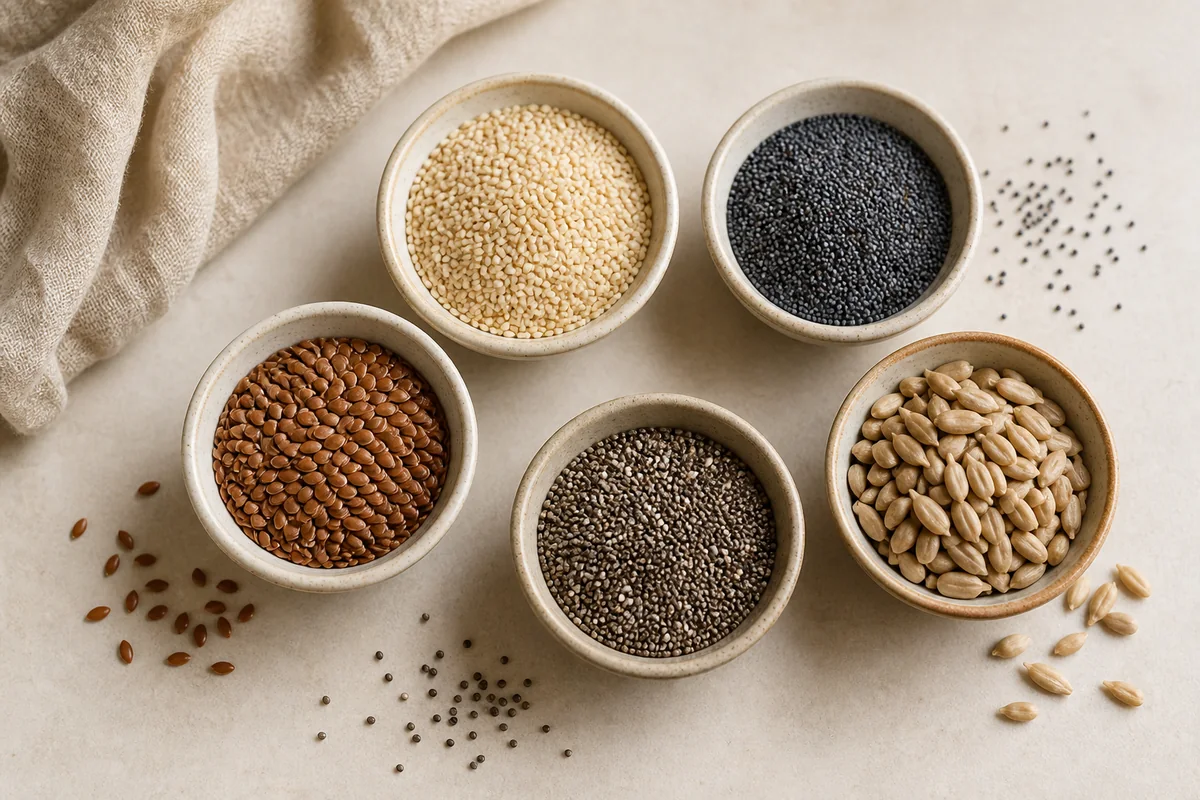
5 Best Sesame Seed Substitutes That Taste Right
Ingredients
Equipment
Method
- Match your use: garnish/crunch, ground flavor, or sauce/thickening (different substitutes work better in each case).
- Start with the 1:1 ratio listed in your table; if your dish needs less thickness (like a dry garnish), reduce to ¾:1.
- If aroma matters, toast your substitute for 2-5 minutes until fragrant, then cool so it doesn’t soften other ingredients.
- For seed-based textures (coatings or toppings), keep substitutes intact; for smooth textures (sauces/dough), grind first.
- Taste after mixing and adjust: add a pinch of salt for savory dishes, or add a small sweetener pinch for baked goods if the substitute reads bitter.
Notes
- Toast timing: 2-5 minutes for most seeds; stop once fragrant to avoid burning.
- Texture rule: intact seeds for garnish; ground seeds/paste for sauces and dough.
Tried this recipe?
Let us know how it was!
Carrie is a food writer and editor with more than 15 years of experience. She has worked for some of the biggest names in the food industry, including Bon Appétit, Food & Wine, and Martha Stewart Living.
As the Editor in Chief of EpicureDelight, Carrie oversees all of the content on the site. She also manages the team of contributing writers and editors, who help to create delicious recipes, helpful tips, and informative articles that you’ll find on the site.
A native of the Chicago area, Carrie is passionate about all things food. She loves trying new restaurants and experimenting with new recipes in her kitchen. She’s also a graduate of the Culinary Institute of America, so she knows a thing or two about food!



