
That quick blister in a hot pan, the slight char on thin green skin, a mild vegetal warmth with the rare spicy outlier. That's the full shishito experience, and it's hard to replicate exactly.
Still, a good shishito pepper substitute gets you most of the way there if you match two things: skin thickness and heat level.
Shishitos are thin-skinned and mostly mild, which is why they blister so fast and so evenly. The substitutes below respect both of those qualities.
Some need a quick prep tweak, others go straight into the pan.
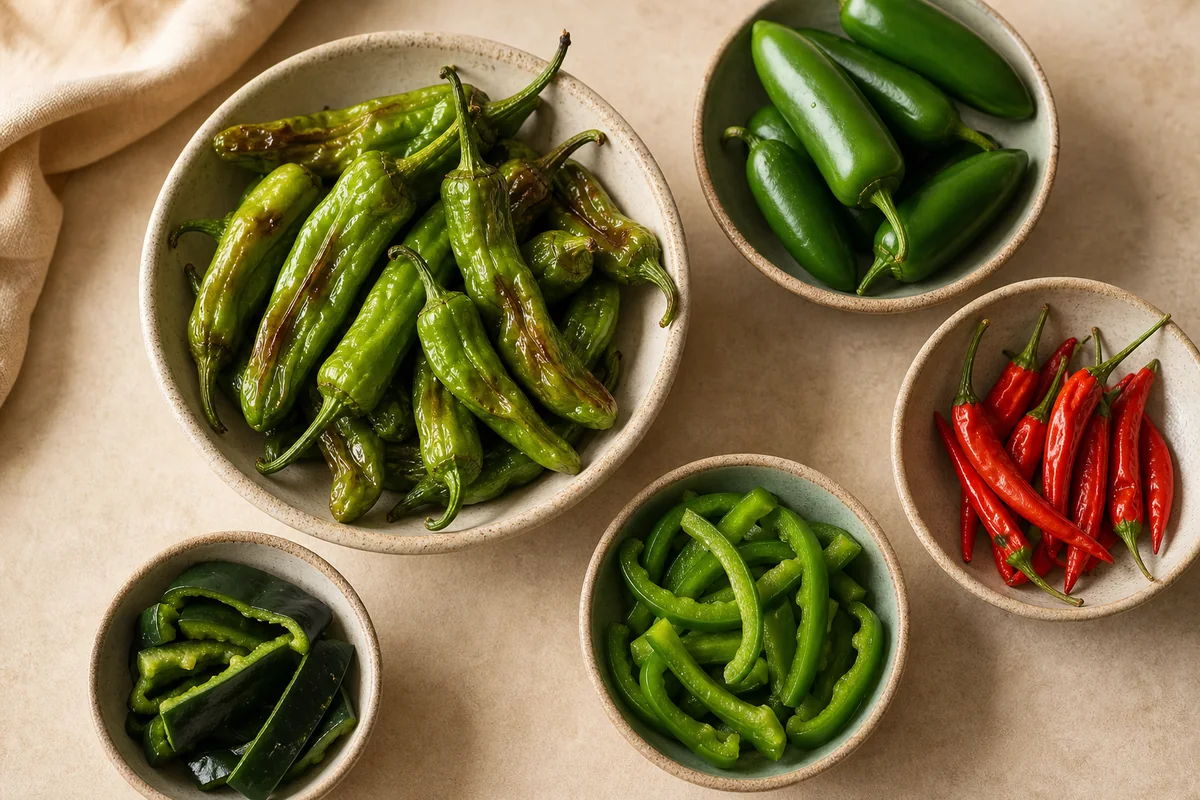
Anaheim pepper is the easiest 1:1 swap for most recipes. Padron peppers are the closest in size and behavior. Poblano works after roasting and peeling. Jalapeño and serrano both need de-seeding and reduced quantity. Green bell pepper handles color and crunch when chili heat isn't needed.
5 Shishito Pepper Substitutes That Behave Like the Real Thing
Each pepper below is matched to a specific cooking style. The table gives you the fast view before you commit.
| # | Substitute | Best For | Ratio | Key Note |
|---|---|---|---|---|
| 1 | Anaheim Pepper | Both | 1:1 | Slice thin; blister fast |
| 2 | Padron Peppers | Both | 1:1 | Cook whole; finish with salt |
| 3 | Poblano Pepper | Roast | 1:1 | Roast and peel first |
| 4 | Green Bell Pepper | Sauté | 1:1 | Thin slices; high heat only |
| 5 | Jalapeño | Sauté | ½:1 | De-seed; use less |
1. Anaheim Pepper
Anaheim is the easiest call. It has that same mild green-chili flavor, thin enough skin to catch char quickly, and it handles a hot skillet without turning mushy.
For this blistered, tender profile, Anaheim is the closest match you'll find at a standard grocery store. Slice it lengthwise if it's thicker than your typical shishito, and you're set.
- Ratio: Use 1:1 by volume; slice lengthwise into strips about the size of a shishito half
- Prep: Leave the skin on; no need to peel before cooking at high heat
- In the pan: Cook dry or with just a touch of oil over high heat until you see dark blistered spots, about 4 to 5 minutes
- Watch for: Very large Anaheims can stay firm in the center; cut strips thinner to speed cooking evenly
Skip if: your Anaheim peppers are very thick-walled. Opt for poblano (roasted and peeled) instead.
2. Padron Peppers
Padron peppers are the only substitute on this list that you can drop whole into the pan, just like shishitos. They're small, thin-skinned, and blister beautifully in under five minutes.
They also share shishito's quirky personality: most are mild, but one in a batch will surprise you with real heat. If you want that same small blistered green pepper experience, these are it.
- Ratio: Use 1:1; cook the full batch whole without slicing
- Heat: A very hot dry pan or cast iron works best; 3 to 4 minutes per side until skin darkens
- When to flip: Turn once you see clear charred patches, not before, so the skin tightens and lifts properly
- Finish: Flaky salt and a squeeze of lemon right out of the pan; they need very little else
Skip if: you can't handle occasional heat spikes. Anaheim stays consistently mild across the whole batch.
3. Poblano Pepper
Poblano has thick, earthy skin and a milder chili flavor that leans more vegetal than shishito. Raw, it's too stiff for a quick blister.
Roasted and peeled, it's a solid swap.
The roasting step reduces bitterness and softens the flesh to something closer to a shishito's tender chew. Don't skip the peeling part, because the charred outer skin adds a papery texture that doesn't belong in a stir-fry or sauté.
| Use | Ratio | Notes |
|---|---|---|
| Stir-fry strips | 1:1 | Roast, peel, slice into 2-inch strips |
| Quick sauté | 1:1 | Roast, peel, chop small to speed pan time |
| Whole presentation | Avoid | Use Anaheim or Padron instead; poblano won't hold shape |
- Roasting: Char over an open flame or under a broiler for 8 to 10 minutes, turning once
- Peeling: Steam in a covered bowl for 5 minutes after charring, then peel under cool water
- Size: Chop or slice to roughly match the size used in your recipe so it cooks at the same rate as other ingredients
Skip if: you need whole peppers for presentation. Anaheim or Padron hold their shape much better.
4. Green Bell Pepper
Green bell pepper is the honest non-chili option. It has zero heat, but it brings the green color, slight bitterness, and a snap that reads as "cooked pepper" in stir-fries and roasted veggie mixes.
If heat is not the point of the dish and you just need a best stir-fry leaf substitute that holds up at high temperature, bell pepper earns its place. Keep slices thin so the edges actually blister rather than steam.
- Ratio: Use 1:1; thin strips (about ¼ inch) are better than chunks for blistering
- Cook time: 3 to 4 minutes over high heat; pull them before they fully soften or they'll go limp
- Finishing move: A pinch of smoked salt and a splash of white wine vinegar helps approximate the mild chili edge
- Avoid: Don't crowd the pan; bell pepper releases water quickly and will steam instead of char if packed too tight
Skip if: your dish depends on any chili warmth at all. Use Anaheim or Padron for that.
5. Jalapeño
Jalapeño has the green chili flavor you're after, but it brings real heat. The key adjustment is quantity and prep, not technique.
Start at half the amount your recipe calls for, then taste and add more.
Remove the ribs and seeds completely. That's where most of the capsaicin lives, and leaving them in makes jalapeño behave more like serrano than shishito.
Pairing jalapeño with something like pairing jalapeño in savory dishes can show you how far the flavor stretches when heat is controlled.
Jalapeño vs Shishito
Works for: any recipe where a little extra heat is welcome, cooked fast in a dry pan
Skip if: cooking for heat-sensitive guests, or you need consistent mildness across every bite
- Ratio: Start at ½:1; scale up by small increments after tasting
- Prep: Halve the pepper, remove all ribs and seeds with a spoon, then slice into rings or strips
- Cook: High heat, dry pan, 3 to 4 minutes; jalapeño blisters fast due to thinner flesh once seeded
- Tip: If the dish still runs hot, stir in a small amount of plain Greek yogurt or sour cream at the end to soften the heat
Making Shishito Pepper Substitutes Work
Getting the swap right is mostly about heat control and cut size. Once those two factors line up, blistering and flavor follow naturally.
For a quick high-heat stir-fry, thin cuts matter more than anything else on this list.
- Choose your heat first: If the dish is mild, use Anaheim or Padron at 1:1. For any chili-forward recipe, use jalapeño at ½:1 and de-seed fully before cooking.
- Match cut size to cook time: Strips and rings under ½ inch blister in 3 to 5 minutes at high heat. Thicker pieces need longer time and risk turning soft before they char.
- Finish with salt and acid: A pinch of flaky salt and a small squeeze of lemon or a splash of vinegar after cooking brightens any substitute and balances residual bitterness from thicker-skinned peppers like poblano.
Frequently Asked Questions
Padron peppers are the closest in size and blistering behavior. Anaheim pepper is the easiest to find and works 1:1 for all high-heat cooking methods.
Remove all ribs and seeds, then start with half the amount your recipe calls for. Taste after cooking and add more only if the flavor needs it.
Raw poblano is thicker-skinned and can taste bitter and grassy. Roasting and peeling reduce both problems and soften the flesh to a shishito-like tenderness.
Yes, if you slice it thin and cook it fast over high heat. It won't have chili heat, but it gives a blistered edge and slight bitterness similar to cooked shishito.
Aim for strips or pieces no thicker than ½ inch. That size blisters in roughly the same 3 to 5 minutes a whole shishito takes at high heat.
5 Best Shishito Pepper Substitutes (That Actually Work)
Ingredients
Equipment
Method
- Decide your heat target: for near-mild, choose Anaheim or Padron; for a little more heat, choose poblano.
- Match the cut to the method: keep peppers whole/sliced small for fast blistering, and roast/peel first for deeper flavor.
- Use the listed ratio. If your substitute is hotter, start at half the amount and scale up only if needed.
- Cook in a hot dry pan or roasting tray until you see blistering and softening (avoid long simmering).
- Taste after blistering: add salt/acid (a squeeze of lemon or vinegar) to balance any extra bitterness.
Notes
- For the blistered texture, cook quickly at high heat and don’t overcrowd.
- If your substitute is spicier than shishito, de-seed and use less.
Tried this recipe?
Let us know how it was!
Carrie is a food writer and editor with more than 15 years of experience. She has worked for some of the biggest names in the food industry, including Bon Appétit, Food & Wine, and Martha Stewart Living.
As the Editor in Chief of EpicureDelight, Carrie oversees all of the content on the site. She also manages the team of contributing writers and editors, who help to create delicious recipes, helpful tips, and informative articles that you’ll find on the site.
A native of the Chicago area, Carrie is passionate about all things food. She loves trying new restaurants and experimenting with new recipes in her kitchen. She’s also a graduate of the Culinary Institute of America, so she knows a thing or two about food!



