
That small block of shrimp paste does a lot of heavy lifting. It adds salt, yes, but also a concentrated fermented depth that makes a curry or stir-fry taste like it cooked for hours.
Understanding what it actually contributes is the first step to finding a good shrimp paste substitute.
Most substitutes fall short on one of two fronts: brine or funk. The best approach is to choose based on which one your dish needs more.
A straight swap usually works at 1:1, then you taste and tune from there.
Shrimp paste adds salty, briny, fermented umami to dishes. Fish sauce and anchovy paste are the closest matches. White miso, oyster sauce, and soy sauce with MSG work well when seafood funk isn't essential. Start at a 1:1 ratio and adjust salt from there.
5 Shrimp Paste Substitutes Ranked by Briny-Funk Match
Here is a fast reference before the detail sections. Each substitute is ranked by how closely it mimics shrimp paste's brine and fermented funk.
| # | Substitute | Best For | Ratio | Key Note |
|---|---|---|---|---|
| 1 | Fish Sauce | Both | 1:1 | Closest briny depth |
| 2 | Anchovy Paste | Both | 1:1 | Thick, concentrated umami |
| 3 | White Miso Paste | Cooking | 1:1 | Fermented, not seafood |
| 4 | Oyster Sauce | Cooking | 1:1 | Savory-sweet, less funk |
| 5 | Soy Sauce + MSG | Both | 1:1 | Pantry umami bomb |
Skip if: Your dish needs a thick paste texture. Go with anchovy paste or mushroom paste, both of which hold their body without thinning the base.
1. Fish Sauce
Fish sauce is the quickest and most accurate swap for shrimp paste's briny seafood character. Both come from fermented seafood, so the core flavor DNA is similar, even if fish sauce is liquid and shrimp paste is thick.
The liquid form is its only real limitation. In a stir-fry or curry paste, it works fine once cooked in.
The flavor is slightly milder per teaspoon, so you may want to add just a touch more than the recipe calls for.
- Salt first: Taste your dish before adding any extra seasoning since fish sauce is already high in sodium.
- Ratio: Use 1:1 by volume, then adjust up by ½ teaspoon if the dish still tastes flat.
- Bloom it: Add fish sauce early and let it cook for 30-60 seconds in hot oil or a simmering base to mellow the raw edge.
Skip if: Your recipe requires a thick paste texture. Fish sauce stays liquid, so use a quick reduction or pair it with a thickener.
2. Anchovy Paste
Anchovy paste has a concentrated brine punch that gets very close to shrimp paste's depth. It is thick, pungent, and dissolves cleanly into hot oil, making it easy to work with in sauces and stir-fries.
If you're weighing options, here's how it compares on the two key axes:
Anchovy Paste vs. Shrimp Paste
Works for: thick-paste dishes, curries, marinades, noodle sauces needing briny body
Skip if: you're avoiding strong fish flavor or need a milder, less pungent base
For a deeper look at how anchovy paste behaves in heat and sauces, the guide on anchovy paste flavor notes covers texture and intensity in detail.
- Ratio: Use 1:1 by weight or volume.
- Dissolve properly: Drop it into hot oil or a warm sauce base and stir for 30 seconds until it melts in.
- Reduce bitterness: If it tastes sharp after cooking, give it another 30 seconds on medium heat and taste again before adding more.
Skip if: You're avoiding anchovies or any strong seafood flavor. White miso is a gentler path.
3. White Miso Paste
White miso is fermented, paste-like, and savory. It replaces shrimp paste's fermented depth well, even though it contributes no seafood character at all.
It fits best in stir-fries and sauces where the other ingredients already carry umami, soy sauce, ginger, garlic. Miso adds the fermented backbone without pushing the dish in a fishy direction.
- Ratio: Use 1:1 by volume.
- Keep heat moderate: Stir miso into a warm base rather than boiling hard. High heat dulls the fermented notes.
- Balance to finish: If the swap amplifies sweetness, add a tiny squeeze of lime or a few drops of rice vinegar to pull it back.
Skip if: Your recipe relies on briny seafood notes specifically. Miso is fermented but neutral in origin, so fish sauce or anchovy paste will serve that role better.
4. Oyster Sauce
Oyster sauce is a common fridge staple that adds thick, glossy, savory depth. It lacks the fermented funk of shrimp paste, but it covers umami and body well in dishes like fried rice, noodles, and quick stir-fries.
For dishes where paste-based swaps feel too intense, oyster sauce is a gentler middle ground.
- Ratio: Use 1:1 by volume as your starting point.
- Intensify if needed: Simmer for an extra 1-2 minutes to reduce by a few tablespoons and concentrate the flavor.
- Pairing tip: Oyster sauce plays especially well with fresh garlic and ginger. Add both to build back some of the aromatic depth shrimp paste carries naturally.
Skip if: You need a strong fermented funk. Oyster sauce is savory and sweet, not briny. It won't replicate that fermented edge.
5. Soy Sauce + MSG
Shrimp paste does two things: it adds salt and it rounds out savory depth with umami. Soy sauce handles the first part well.
MSG handles the second. Together, they cover most of what shrimp paste does, particularly in fried rice or noodle dishes where the earthy savory notes of mushroom or soy are already present.
- Ratio: Use 1:1 total by volume (soy sauce as the base, MSG as a finishing boost).
- Bloom first: Simmer the soy sauce in the hot pan for 30 seconds before adding other ingredients.
- Add MSG in pinches: Start with a small pinch, stir, and taste before adding more. A little goes a long way.
- If still missing funk: Add a small splash of rice vinegar or a few drops of toasted sesame oil, tasting as you go.
Skip if: You're avoiding MSG. White miso or mushroom paste delivers similar umami without it.
Making Shrimp Paste Substitutes Taste Right
Every substitute above needs a small amount of adjustment to blend in properly. The basic framework is: bloom it, check the salt, then balance with a tiny sweet or acid finish.
Most dishes that taste "off" after a swap simply needed one more minute of heat or a few drops of lime juice. If you're curious how shrimp paste itself behaves in terms of intensity and fermented funk, the page on fermented paste flavor is useful context before you start tuning.
- Bloom the substitute: Cook it in hot oil or a warm sauce base for 30-60 seconds before adding other ingredients. This removes any raw edge and integrates the flavor.
- Correct the salt level: If the dish tastes too salty after swapping, thin with a small splash of water or unsalted broth. If it tastes flat, reduce by 1-2 tablespoon or add a second small spoon of the substitute.
- Balance at the end: A pinch of sugar, a squeeze of lime, or a few drops of vinegar can fix a swap that tastes harsh or one-dimensional.
Frequently Asked Questions
Fish sauce is the closest match for briny seafood depth. Use it at a 1:1 ratio and cook it in for 30-60 seconds to let the flavor settle into the dish.
Yes. White miso works well in stir-fries at a 1:1 swap. It adds fermented depth but no seafood flavor, so it suits dishes where other ingredients carry the umami.
Start at a 1:1 ratio by volume. Because fish sauce is very salty, taste your dish before adding extra seasoning and reduce by ½ teaspoon if it starts tasting too sharp.
Mushroom paste made from blended shiitake mushrooms and soy sauce is the best vegetarian option. It delivers savory umami without any seafood flavor.
It likely needs more heat or a balance adjustment. Cook the substitute for another 30 seconds and finish with a small squeeze of lime juice or a pinch of sugar.
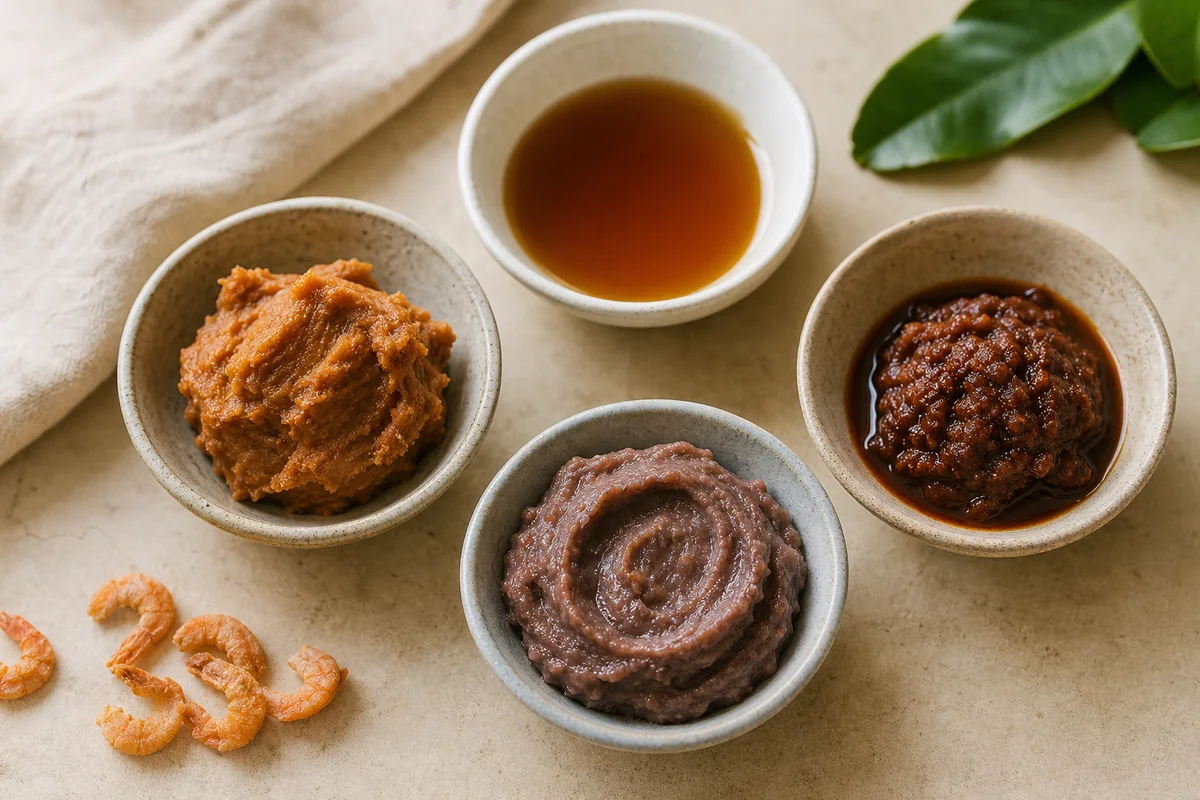
5 Best Shrimp Paste Substitutes (That Actually Work)
Ingredients
Equipment
Method
- Match the role: if your recipe uses shrimp paste for briny seafood punch, choose fish sauce or anchovy paste; if it’s for fermented depth, choose miso.
- Start with the listed 1:1 swap, then adjust: if the substitute tastes too salty, thin with a splash of water/broth; if it’s too mild, reduce or add a second small spoon.
- Cook it in for 30–60 seconds: dissolve paste-based substitutes into hot oil or sauce base so the flavor blooms instead of tasting raw.
- Finish by tasting and balancing: add sweetness (small pinch of sugar) or acidity (a few drops of vinegar or lime) if the swap amplifies harshness.
Notes
- Shrimp paste is salty and fermented; your main adjustment is salt level and whether your dish needs “funk” vs “seafood umami.”
Tried this recipe?
Let us know how it was!
Carrie is a food writer and editor with more than 15 years of experience. She has worked for some of the biggest names in the food industry, including Bon Appétit, Food & Wine, and Martha Stewart Living.
As the Editor in Chief of EpicureDelight, Carrie oversees all of the content on the site. She also manages the team of contributing writers and editors, who help to create delicious recipes, helpful tips, and informative articles that you’ll find on the site.
A native of the Chicago area, Carrie is passionate about all things food. She loves trying new restaurants and experimenting with new recipes in her kitchen. She’s also a graduate of the Culinary Institute of America, so she knows a thing or two about food!



