
Soy flour has a sneaky effect on baked goods. It adds protein and body, but it also brings a faint beany edge that can throw off a vanilla cookie or a pale, delicate muffin.
Finding a good soy flour substitute means deciding upfront what you actually need from it-structure, moisture, or just flour bulk-and then picking accordingly.
The swaps below cover all three goals. Some replace the protein function almost exactly.
Others trade protein for tenderness or a cleaner flavor. A few work best when strong spices or cocoa are already doing flavor work in the recipe.
Soy flour adds protein, body, and mild browning power to baked goods. The best swap depends on whether you need structure (protein powder), tenderness (starch blend), or a neutral drop-in (wheat flour). Batter thickness and browning time may shift with every substitute listed here.
5 Best Soy Flour Substitutes for Any Recipe
Pick your substitute by goal-the table below maps each swap to its strongest use case before the detailed sections walk through how to use them.
| # | Substitute | Best For | Ratio | Key Note |
|---|---|---|---|---|
| 1 | Soy Protein Powder | Structure | ½:1 | Browns faster than soy flour |
| 2 | Pea Protein Powder | Structure | 1:1 | Mild earthy note in plain bakes |
| 3 | Chickpea Flour | Both | 1:1 | Savory edge; pair with spices |
| 4 | Tapioca + AP Flour | Tenderness | ¾:1 | Rest batter 10 min before baking |
| 5 | Oat Flour | Moisture | 1:1 | Reduces crisp browning |
1. Soy Protein Powder (Unflavored)
Unflavored soy protein powder is the closest thing to soy flour's structural behavior without the full flour bulk. It keeps the same protein source, so batter thickness and browning patterns stay familiar.
The key difference: protein powder is more concentrated, so you only need about half the volume of the soy flour you're replacing.
Start at a ½:1 ratio by volume, then top up with a neutral flour if the batter still looks too loose. Protein powder browns faster than soy flour because it has less starch to buffer the heat-pull your bake when the edges are set, not when the top looks golden.
- Best for: Cookies, protein muffins, quick breads with spice or cocoa
- Start ratio: ½ cup protein powder per 1 cup soy flour; fill remaining with AP or oat flour
- Texture tip: Add 1 teaspoon extra liquid per ¼ cup swap to prevent dryness
Skip if you need true flour behavior for yeast bread. Protein powder can make the crumb noticeably dense and slow to rise.
2. Pea Protein Powder (Unflavored)
Pea protein powder offers strong structural support and keeps baked goods from spreading flat. It swaps at a true 1:1 ratio, which makes the math simple, though the flavor brings a light earthy note that is more noticeable in plain vanilla recipes than in anything cocoa- or spice-forward.
For lighter cakes, pull back 10-15% and blend in a little neutral flour to keep the crumb from feeling stiff.
- Best for: Protein cookies, cocoa muffins, banana bread where earthy flavor blends in
- Start ratio: 1:1; reduce to 85-90% and add AP flour for delicate cakes
- Flavor tip: A pinch of salt plus vanilla extract keeps the earthy edge in check
- Works well with: Cinnamon, ginger, espresso powder, or any strong spice
If your recipe calls for gluten-free flour options, pea protein is a reliable protein source to combine with a starch base for structure.
Skip if the recipe is a very plain vanilla cake. The earthy note is subtle but detectable in simple batters without masking flavors.
3. Chickpea Flour (Gram Flour)
Chickpea flour (also sold as gram flour or besan) is the most familiar flour-style swap on this list. It behaves like a real flour in batters, holds moisture, and adds body.
The tradeoff is a savory, slightly bitter edge that works well with spices, cocoa, and aromatics but clashes in delicate lemon or vanilla recipes.
Savory-Leaning Bakes
Works for: spiced muffins, herb flatbreads, savory pancakes, cocoa-forward brownies
Skip if: your recipe has no masking flavors and is very lightly sweetened
Structure-First Bakes
Works for: cookies that need hold, quick breads that slice cleanly, protein pancakes
Skip if: recipe needs a neutral, tender crumb like lemon bars or shortbread
- Start ratio: 1:1 by volume; whisk thoroughly to reduce graininess
- Hydration: Add 1 teaspoon liquid per ¼ cup if batter feels thick after mixing
- Blend option: Replace only 50-70% of the soy flour with chickpea; fill the rest with AP flour for a milder flavor
Skip if the recipe is delicate and flavor-forward without strong sweetness or aromatics. The bitterness will show through in plain bakes.
4. Tapioca Starch + All-Purpose Flour Blend
Sometimes the goal is softness, not protein. If soy flour was making your cookies or muffins feel slightly dense, a blend of tapioca starch and all-purpose flour gives you a much more tender crumb.
The starch interrupts gluten development, which loosens the texture in a way that pure flour swaps cannot.
Use the blend at ¾ of the original soy flour amount, not 1:1, because the lower protein content means you need slightly less overall bulk to avoid a gummy result. Rest the batter for 10 minutes before baking to let the tapioca hydrate fully.
Understanding the difference between starch thickeners helps here-starch thickener tradeoffs affect both texture and structure when baking without protein-heavy flours.
| Texture Goal | Ratio | Notes |
|---|---|---|
| Soft cookies | 1 tablespoon tapioca + 3 tablespoon AP per ¼ cup soy flour | Chill dough before baking for less spread |
| Tender muffins | 2 tablespoon tapioca + 6 tablespoon AP per ½ cup soy flour | Don't overmix; fold just until combined |
| Quick bread | 1 tablespoon tapioca + 3 tablespoon AP per ¼ cup soy flour | Rest batter 10 min for better crumb |
Skip if you need protein-driven lift. This blend produces a soft crumb but won't replicate the structural support of soy flour in yeasted or protein-forward recipes.
5. Ground Oats (Oat Flour)
Oat flour is the easiest substitute to make at home-just blitz rolled oats in a blender until fine. It swaps at 1:1 by volume and adds a gentle nuttiness that reads as warm rather than beany.
The texture it produces is moist and slightly chewy, which works well for muffins and cookies but does reduce the crispy edges you might get from soy flour.
Spread can be an issue with drop cookies. If the dough looks soft at room temperature, chill it for 20 minutes before scooping and baking.
- Best for: Muffins, banana bread, soft-style cookies, oat-forward pancakes
- Start ratio: 1:1; no additional liquid adjustment needed in most cases
- Spread fix: Chill cookie dough 20 minutes if it seems too soft before baking
Skip if you need a flavor-neutral base. Oat flour has a distinct oat flavor that is pleasant but not invisible in plain or lightly flavored bakes.
Making Soy Flour Substitutes Work in Baking
The simplest selection rule is this: match the substitute to what the soy flour was actually doing. Protein powders cover structure.
Starch blends cover tenderness. Chickpea and oat flour cover everyday flour function with minor flavor shifts.
Once you know the goal, the adjustments below apply almost universally across all five swaps.
- Batter thickness: Protein powders thicken batter noticeably; add liquid in 1-teaspoon steps until you reach the right consistency. Starch blends can thin batter slightly; reduce liquid by 1-2 teaspoons if the mix looks too wet.
- Bitterness and bean flavor: Salt sharpens other flavors and suppresses earthiness. Vanilla, cocoa powder, cinnamon, or citrus zest all work as masking agents. Use at least one in any recipe where the substitute has a noticeable flavor.
- Doneness and browning: Protein-based swaps brown faster than starchy ones. Start checking 3-4 minutes before the recipe's stated time. A toothpick test or a gentle press on the center is more reliable than color when you're using a new substitute.
Frequently Asked Questions
Unflavored soy protein powder is the closest match for structure. Start at half the volume of soy flour and top up with a neutral flour if the batter is too loose.
Yes, chickpea flour works at 1:1 by volume. Expect a slightly savory, earthy flavor that is easier to mask in spiced or cocoa-based recipes.
It has a mild earthy note, not strongly beany. Adding vanilla extract and a pinch of salt keeps the flavor neutral in most cookie or muffin recipes.
Add water or milk in 1-teaspoon increments, stirring between each addition. Stop when the batter reaches the consistency described in your original recipe.
It is reliable and flavorless, making it a solid drop-in at 1:1. You may need slightly more leavening because soy flour contributes protein that AP flour does not.
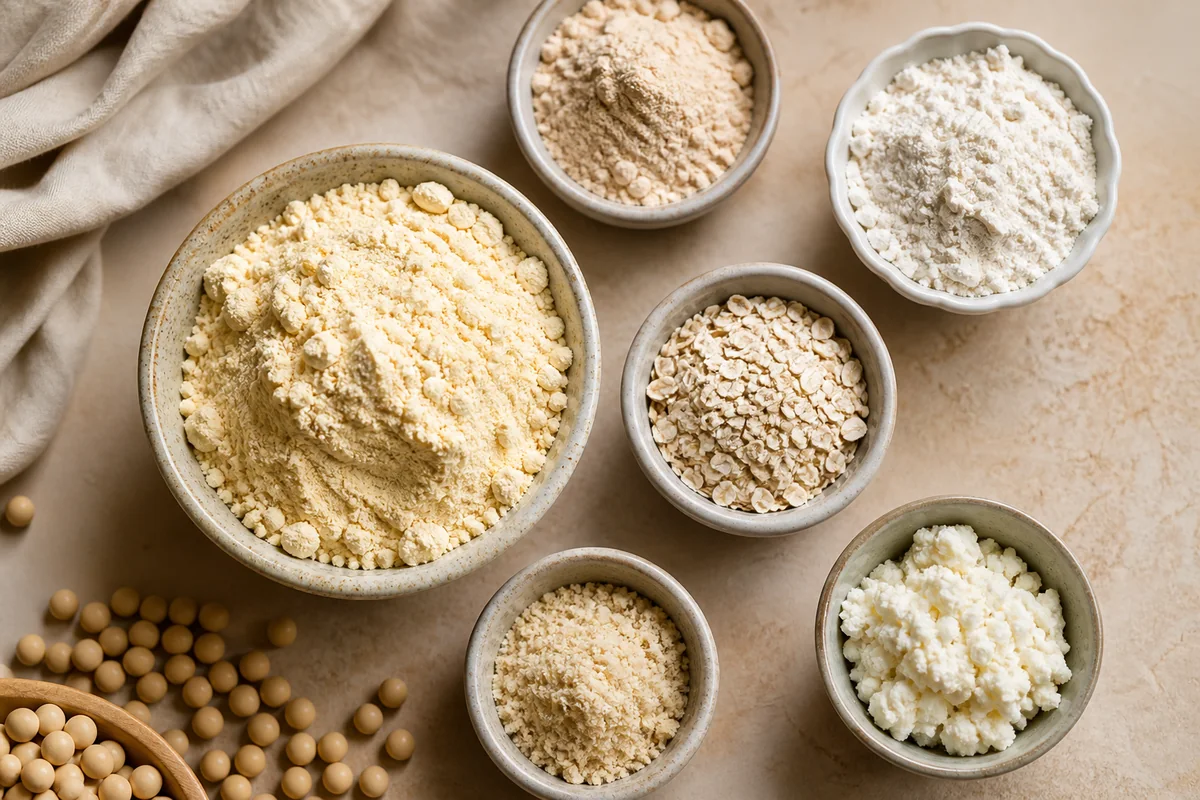
5 Best Soy Flour Substitutes for Any Recipe
Ingredients
Equipment
Method
- Identify your bake type (cookie, muffin, quick bread) and whether you need soy’s structure or just its flour function.
- Choose the closest substitute from the list and use the listed ratio as your starting point.
- If the batter seems dry or crumbly, add 1–2 teaspoons water or milk per ¼ cup soy-flour equivalent; if it seems gummy, reduce liquid slightly next time.
- If flavor is strong (especially in chickpea/pea swaps), add a balancing ingredient (vanilla, cocoa, citrus zest, or a pinch of salt) to mask bitterness.
- Let the batter rest 10 minutes before baking to improve hydration and reduce graininess.
Notes
- Protein-rich swaps can brown faster—watch edges closely and bake until the center is set.
- Bean-flour substitutes can taste more pronounced in simple vanilla recipes; stronger flavors hide them better.
Tried this recipe?
Let us know how it was!
Carrie is a food writer and editor with more than 15 years of experience. She has worked for some of the biggest names in the food industry, including Bon Appétit, Food & Wine, and Martha Stewart Living.
As the Editor in Chief of EpicureDelight, Carrie oversees all of the content on the site. She also manages the team of contributing writers and editors, who help to create delicious recipes, helpful tips, and informative articles that you’ll find on the site.
A native of the Chicago area, Carrie is passionate about all things food. She loves trying new restaurants and experimenting with new recipes in her kitchen. She’s also a graduate of the Culinary Institute of America, so she knows a thing or two about food!



