
Teff flour has a flavor that's hard to forget: earthy, faintly sweet, with a weight that grounds batters in a way lighter flours can't. When you run out, the challenge isn't just texture.
It's finding a replacement that doesn't flatten the character of the dish entirely.
The good news is that most recipes using teff fall into one of three goals: nutty flavor, gluten-free structure, or batter weight and body. If you know which goal matters most, picking the right teff flour substitute gets much easier.
Buckwheat flour is the closest match for flavor. Sorghum flour replicates body and weight. Gluten-free oat flour gives tenderness. Brown rice flour is mild and neutral. All-purpose flour works when gluten isn't a concern. Use a 1:1 swap for most, and rest gluten-free batters 5-10 minutes.
5 Best Teff Flour Substitutes for Baking and Thickening
| # | Substitute | Best For | Ratio | Key Note |
|---|---|---|---|---|
| 1 | Buckwheat Flour | Both | 1:1 | Darkens crumb slightly |
| 2 | Sorghum Flour | Both | 1:1 | Add liquid if stiff |
| 3 | GF Oat Flour | Baking | 1:1 | Rest batter 5-10 min |
| 4 | Brown Rice Flour | Both | ¾:1 | Needs binder support |
| 5 | All-Purpose Flour | Baking | 1:1 | Not gluten-free |
Each ratio above is a starting point, not a fixed rule. When storing teff long-term, knowing these swaps in advance helps you plan.
We also cover wheat flour flavor notes if you want to understand how far all-purpose drifts from teff in taste.
1. Buckwheat Flour
Buckwheat is the go-to when flavor is the priority. It shares teff's earthy, slightly bitter-sweet depth, and it behaves well in pancakes, quick breads, and cookies without needing extra binders.
The grind matters here. A light-to-medium grind keeps the batter fluid.
Coarser grinds can turn dense fast, so check your package. You can read more about this grain's mineral depth to see exactly where the two flours overlap in flavor.
Buckwheat Flour
Works for: pancakes, quick breads, gluten-free cookies, savory crepes
Skip if: your recipe needs a pale or golden crumb-buckwheat bakes darker than teff
- Swap ratio: 1:1, then assess batter thickness before adding more liquid
- Flavor note: Slightly more bitter than teff; a small pinch of sugar balances it
- Texture note: Can feel drier depending on grind-add liquid 1 teaspoon at a time
2. Whole Sorghum Flour
When body and weight are the goal, sorghum flour is the better pick. It doesn't have buckwheat's bitter edge.
The flavor is gentler, with a mild sweetness that works especially well in thicker batters and denser baked goods.
If you're making something like a hearty gluten-free loaf or thick pancakes, sorghum's gentle sweetness profile is worth understanding before you swap. It reads more neutral than teff but keeps the batter from going flat or gummy.
- Swap ratio: 1:1; if the batter stiffens, add liquid 1 tablespoon at a time
- Flavor profile: Mildly sweet, less earthy than teff-fine for most baked goods
- Body and structure: Very close to teff's density; no extra binder needed in most recipes
- Hydration note: Sorghum absorbs liquid steadily-let batter sit 3 minutes before judging thickness
Skip if: you need the distinctive earthy-mineral quality that teff brings to injera-style batters. Sorghum is mild enough that the flavor difference will be noticeable.
3. Certified Gluten-Free Oat Flour
Oat flour makes baked goods genuinely soft. It doesn't match teff's earthiness, but it solves the texture problem in muffins and pancakes where a tender crumb matters more than a nutty finish.
Use only certified gluten-free oat flour if gluten is a concern, since standard oat products are often cross-contaminated. Resting the batter is key here.
A 5-10 minute rest, as noted in general gluten-free baking swaps, makes the difference between a grainy and a smooth result.
- Swap ratio: 1:1; let batter hydrate fully before adding more liquid
- Best for: Pancakes, muffins, soft cookies-anywhere tenderness is the goal
- Browning note: Oat flour browns faster than teff; check doneness 3-4 minutes early
- Flavor note: Mild and slightly sweet-less earthy, which is fine for most sweet bakes
Skip if: you can't have oats at all. Even certified gluten-free versions may not be safe for everyone with oat sensitivity.
4. Brown Rice Flour
Brown rice flour is the most neutral option on this list. The flavor is clean and mild, which is great for recipes where you want the other ingredients to lead.
But it lacks teff's natural binding quality. That means a little structural help goes a long way.
A small amount of psyllium husk or xanthan gum keeps the crumb from falling apart. If you're already exploring rice-based flour swaps for other recipes, the same binder logic applies here.
| Use | Ratio | Notes |
|---|---|---|
| Pancakes / crepes | ¾:1 | Add ¼ teaspoon psyllium husk per cup for cohesion |
| Muffins / quick bread | ¾:1 | Use ¼ teaspoon xanthan gum per cup to prevent crumble |
| Thickening sauces | ¾:1 | No binder needed; whisk in slowly to avoid lumps |
- Swap ratio: ¾:1 (use ¾ cup rice flour for every 1 cup teff)
- Best for: Mild-flavored bakes, sauces, and thickening where teff's earthy note isn't essential
- Hydration: Rice flour can feel dry at first-add liquid gradually until batter flows
Skip if: the recipe depends on teff's earthy flavor. Brown rice flour will taste noticeably blander, and no binder fixes that.
5. All-Purpose Flour
This is the fallback for recipes where gluten is fine and you just need the bake to work. The swap is clean and simple.
You get good structure, reliable rise, and a familiar crumb.
What you lose is teff's character entirely. The result will taste like a standard wheat bake, which is perfectly good.
Understanding neutral starch flavor notes helps set expectations when you move away from whole-grain flours like teff.
- Swap ratio: 1:1; no adjustments needed for most cake or muffin recipes
- Flavor change: Noticeably less nutty and earthy-add ½ teaspoon of molasses to recover some depth
- Texture change: Lighter crumb and more spring than teff-good for cakes, less ideal for flatbreads
- Hydration: No change needed; all-purpose absorbs liquid at a similar rate to teff
Skip if: you need a gluten-free result. Choose oat flour, sorghum, or rice flour instead.
Making a Teff Flour Substitute Work in Real Recipes
Swapping the flour is step one. Getting the result to actually work is step two.
Most gluten-free substitutes need a short batter rest so the flour has time to absorb moisture fully. Without it, pancakes spread too thin and muffins bake up gummy in the center.
You can learn about this hearty whole grain and its storage habits if sorghum is becoming a pantry staple, and check general guidance on adapting gluten-free batters to match your original recipe's structure.
- Hydration: Add liquid in small amounts (1 tablespoon at a time) after the flour rest, not before-flour keeps absorbing as it sits
- Bake time: Check doneness 4-5 minutes early; most substitute flours brown faster than teff, especially oat and buckwheat
- Flavor balance: If the swap tastes flat, add a pinch more salt or ½ teaspoon of molasses to recover teff's mineral depth
Frequently Asked Questions
Buckwheat flour is the closest match for flavor and baking behavior. Use it 1:1, and expect a slightly darker crumb than teff produces.
Yes, for most substitutes. Brown rice flour is the exception-use ¾ cup per 1 cup of teff and add a small amount of binder.
Start with ¾ of the teff amount, then add liquid 1 tablespoon at a time until batter consistency matches your original recipe.
Buckwheat flour or certified gluten-free oat flour both work well. Rest the batter 5 minutes before cooking for the best texture.
Mostly yes, at a 1:1 ratio. Buckwheat is slightly more bitter and bakes darker, so small flavor adjustments may be needed.
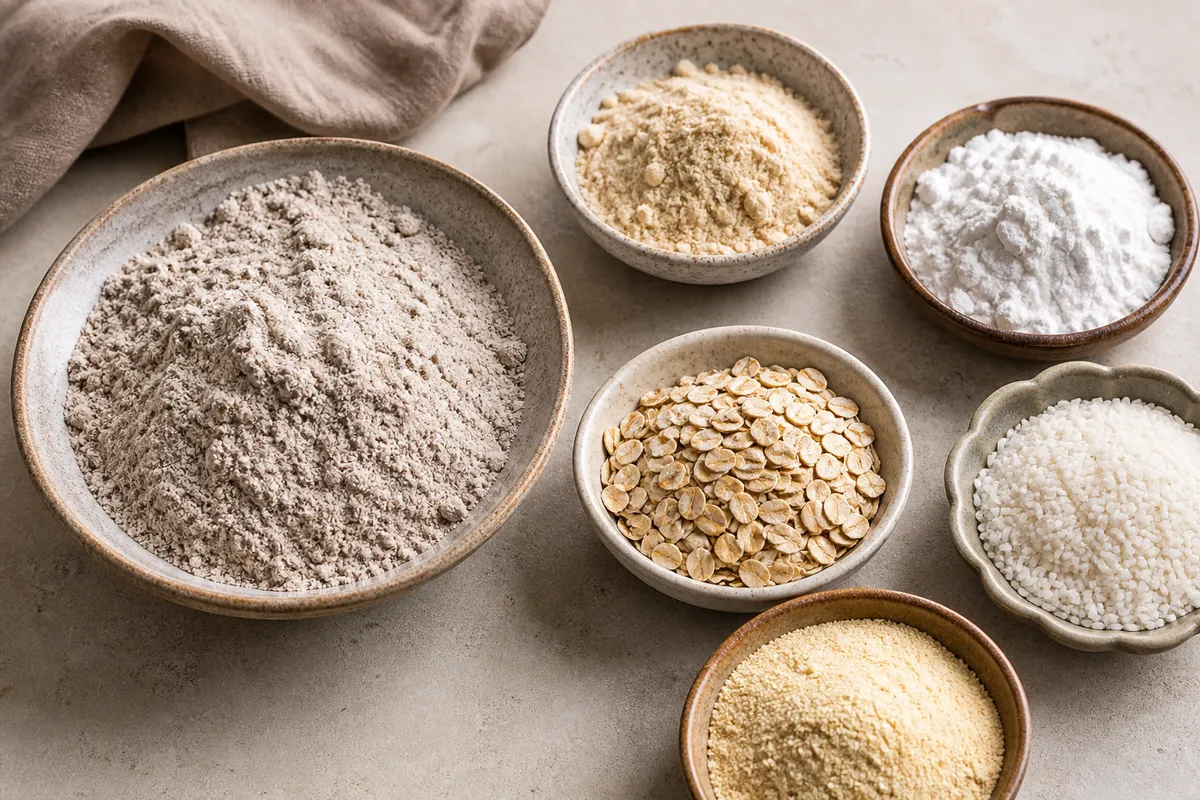
5 Best Teff Flour Substitutes in Every Recipe
Ingredients
Equipment
Method
- Match your goal: for the most teff-like flavor, choose buckwheat flour; for similar body, choose sorghum flour.
- Swap using the ratio in the table/quick list; for ¾:1 swaps, add a tablespoon of liquid at a time if batter is too thick.
- For gluten-free results, let batters rest 5–10 minutes so the flour hydrates and thickens.
- If your bake browns too fast, reduce oven temp by 10–15°F (or tent with foil) for the final 5–8 minutes.
Notes
- Teff is naturally gluten-free; substitutes should be chosen to preserve binding and moisture.
- Taste and texture vary by grind fineness and whether your substitute is whole-grain.
Tried this recipe?
Let us know how it was!
Carrie is a food writer and editor with more than 15 years of experience. She has worked for some of the biggest names in the food industry, including Bon Appétit, Food & Wine, and Martha Stewart Living.
As the Editor in Chief of EpicureDelight, Carrie oversees all of the content on the site. She also manages the team of contributing writers and editors, who help to create delicious recipes, helpful tips, and informative articles that you’ll find on the site.
A native of the Chicago area, Carrie is passionate about all things food. She loves trying new restaurants and experimenting with new recipes in her kitchen. She’s also a graduate of the Culinary Institute of America, so she knows a thing or two about food!



