
Teleme cheese has a personality that's hard to replace exactly: mild, barely tangy, and soft enough to melt into a silky pool or spread onto bread without any fuss. The problem is it's not always easy to find outside California specialty shops.
Knowing what to use instead, and how, keeps your dish on track.
The right teleme cheese substitute depends heavily on what your recipe needs. A baked pasta wants something that melts smooth.
A spread or topping wants creaminess above all. Those two goals point to different cheeses, and that's what this guide covers.
Teleme is mild, semi-soft, and creamy, with a subtle tang that suits melting and spreading equally. Your best swap is Fontina or Kaseri for warm dishes. For cold uses, young Gouda or Monterey Jack hold their own. Feta works only blended and reduced.
5 Best Teleme Cheese Substitutes Ranked by Use
Before diving into each option, this table gives you a fast read on ratio, best use, and what to watch for. Scan it first, then read the section for whichever substitute fits your dish.
| # | Substitute | Best For | Ratio | Key Note |
|---|---|---|---|---|
| 1 | Fontina (mild) | Melt | 1:1 | Creamy, mild, easy melt |
| 2 | Kaseri | Melt | 1:1 | Savory tang, grate first |
| 3 | Gouda (young) | Both | 1:1 | Mild, buttery, choose young |
| 4 | Provolone (mild) | Melt | ¾:1 | Slightly sharper, start less |
| 5 | Monterey Jack | Both | 1:1 | Gentle melt, widely available |
1. Fontina (Mild)
Fontina is the most reliable swap when your dish needs teleme's creamy melt behavior. It softens quickly under heat and stays smooth without turning oily or stringy.
The flavor is mild with a slight nuttiness, which sits close enough to teleme's clean profile. If you find choosing a Fontina variety confusing, go with Italian or domestic mild Fontina, not the sharpest imported kind.
- Ratio: Use 1:1 in all applications
- Grate it for faster, more even melting in casseroles or pasta bakes
- Slice thin for sandwiches or flatbreads where you want a smooth, unbroken melt
- Add early in the heat cycle if the cheese isn't flowing fast enough
Skip if: Your recipe specifically needs a brined or tangy finish. Fontina stays mild and won't deliver that edge.
2. Kaseri
Kaseri is a Greek semi-hard cheese with a mild, slightly savory tang that sits in the same flavor neighborhood as teleme. It is firmer than teleme at room temperature, but it softens well under heat.
Kaseri
Works for: baked melts, warm toppings, pan-melted applications where mild tang adds depth
Skip if: your recipe needs a very creamy, spoonable cold texture that Kaseri can't deliver when chilled
Understanding the mild tangy profile of teleme helps explain why Kaseri fits so well in warm dishes. Both share that gentle savory note without demanding attention.
- Grate Kaseri before adding to any hot dish, it melts faster that way
- Give it time: Kaseri takes slightly longer to melt than teleme, so add it 1-2 minutes earlier
- Mixing behavior: Once melted, it blends smoothly into sauces or onto pizza-style bases
Skip if: You're building a cold dip or spread. Kaseri stays slightly grainy when cold.
3. Gouda (Young, Mild)
Young Gouda is easy to find and behaves well in almost any situation where teleme would appear. It melts evenly, stays creamy rather than oily, and has a mild buttery flavor that doesn't compete with other ingredients.
The key word is *young*. Aged Gouda turns harder, sharper, and crumblier.
That version won't behave like teleme at all. When swapping in Gouda, look for wax-rind wheels labeled "mild" or "young."
- Ratio: 1:1 in warm or cold dishes
- Melt behavior: Slice thin for sandwiches or grate for casseroles
- If it tastes sweet, reduce the amount by 1-2 tablespoon and add a pinch of salt to compensate
- Cold use: Softens nicely at room temperature for board spreads or open-face applications
Skip if: Your dish relies on a brined or tangy note. Young Gouda is neutral enough to miss that entirely.
4. Provolone (Mild)
Mild provolone melts well and holds a slight sharpness that teleme doesn't have, so the approach here is to use a little less and taste as you go. Start at 75% of the teleme amount the recipe calls for, then adjust.
| Use | Ratio | Notes |
|---|---|---|
| Baked pasta or gratin | ¾:1 | Slice thin; add near end to avoid over-browning |
| Sandwich or panini | ¾:1 | One thin layer keeps sharpness in check |
| Pizza or flatbread | ¾:1 | Grate for faster melt; pairs well with mild toppings |
For provolone bakers, checking sharper provolone swaps is worth a moment if you realize your block is older or more pungent than expected.
- Slice thin or grate for the most even, controlled melt
- Add near the end of cooking to prevent overbrowning
- Balance sharpness by pairing with a mild ingredient like cooked potato or plain ricotta in the same dish
Skip if: Your recipe depends on teleme's very clean, creamy character without any noticeable tang.
5. Monterey Jack
Monterey Jack is a genuinely dependable emergency swap. It has almost no sharpness, melts into a smooth, gooey layer, and won't overpower anything else in the dish.
It is the one most likely to be sitting in your refrigerator already.
It works in casseroles, sandwiches, egg dishes, and warm dips. If you want options beyond this one, picking a similar mild cheese covers several alternatives with a comparable creamy profile.
- Ratio: 1:1 in all applications
- Grate it for casseroles or scrambled eggs to speed up melting
- Slice for sandwiches where you want a clean, even melt layer
- Expect mild flavor: If your dish needs tang, add a small squeeze of lemon or a pinch of citric acid separately
Skip if: You specifically need the brined quality that teleme occasionally carries. Monterey Jack is too neutral to replicate that.
Feta (Crumbled + Blended Smooth)
Feta is a last-resort swap. It has more salt and more tang than teleme, and its crumbly texture is nothing like teleme's creaminess straight out of the package.
But with one extra step, it becomes workable.
Feta (Blended)
Works for: dishes where some tang is acceptable; cold dips or spreads when blended smooth
Skip if: your dish needs teleme's clean, neutral flavor, because feta will always read tangy
When comparing tangy brined cheese options, feta sits at the saltier end. That's why reducing the amount and blending first are both mandatory, not optional, steps here.
- Ratio: Use ½ the amount of teleme called for, no more
- Blend method: Crumble feta into a bowl, add 1 teaspoon of whole milk or plain yogurt per 2 oz, and mash smooth with a fork before adding to your dish
- Cold use: Works well blended into dips or spread on bread once it's smooth
- Hot use: Stir in at the end of cooking only, not at the start
Skip if: You need teleme's mild, clean creaminess without any tang. No amount of blending removes feta's characteristic bite entirely.
Making Teleme Cheese Substitutes Work
The practical logic for any of these swaps is straightforward: match the substitute's texture to what teleme is doing in your dish, then control any tang difference before it becomes a problem. For cold spreads, storing your cheese correctly also affects how creamy the texture stays when you're ready to use it.
- Identify the role first: If teleme is melting (baked dish, hot sandwich), choose Fontina, Kaseri, or Monterey Jack. If it's spreading or topping cold, use young Gouda or blended feta.
- Control tang with volume: For saltier or sharper substitutes, start at 75% of the called-for amount and add more only after tasting.
- Fix texture before heat: Grate firmer cheeses for faster melting, and blend brined cheeses with a small splash of milk or yogurt to improve creaminess before they go into the dish.
Frequently Asked Questions
Fontina is the closest for melting, with a smooth, creamy result at a 1:1 ratio. Kaseri is a strong second choice when mild tang matters in the finished dish.
Yes, but only at half the quantity and blended smooth with a little milk first. Feta is saltier and more tangy, so it needs both dilution and texture correction before baking.
Young Gouda works well in sandwiches at a 1:1 ratio. Choose the mildest, youngest block you can find and slice it thin for an even melt.
Start with 75% of the recipe amount for any sharper or saltier substitute, then taste before adding more. Blending brined cheeses with milk also softens the salt intensity.
Grate firmer cheeses like Kaseri or Provolone for faster, more even melting. Slice softer ones like Fontina or Monterey Jack when you want a smooth, layered melt in sandwiches.
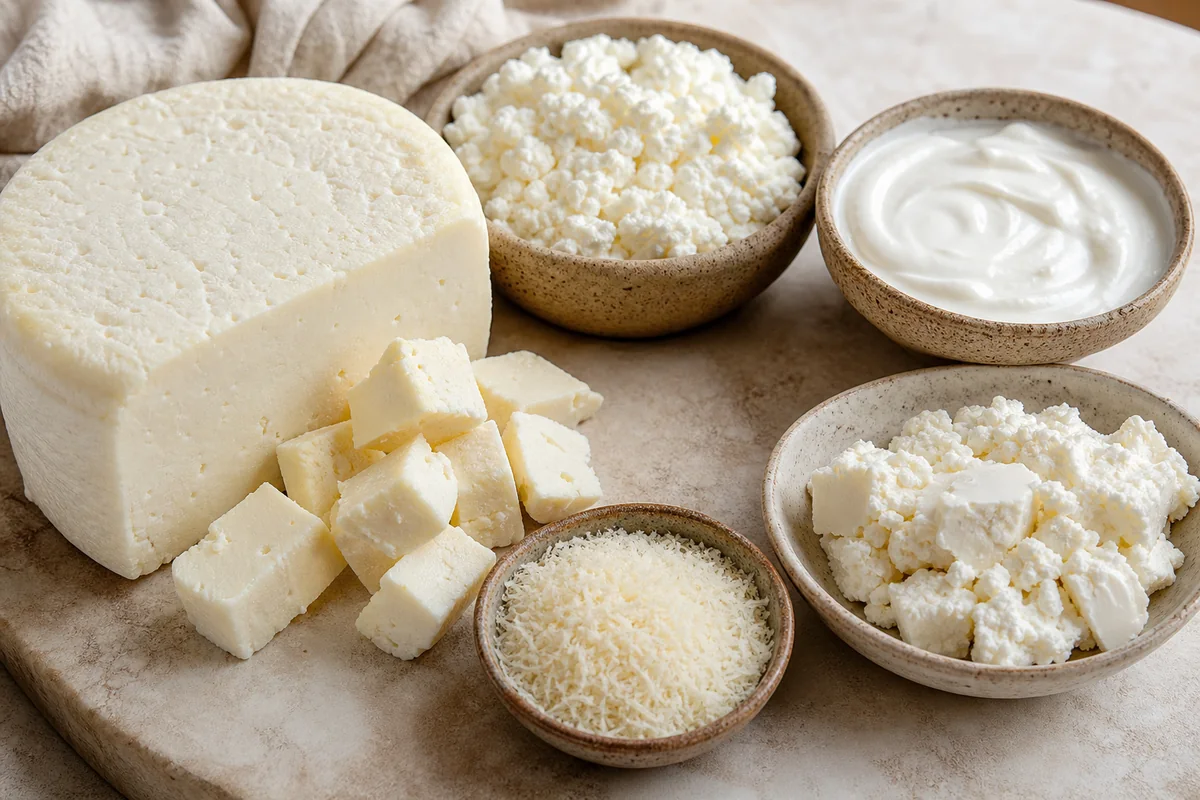
5 Best Teleme Cheese Substitutes (Easy Swaps)
Ingredients
Equipment
Method
- Identify how you’re using teleme: sandwich/bake (melt) vs. topping/spread (creaminess).
- Pick the closest match from the list: Fontina or Kaseri for best melt and mild tang.
- Use the table ratio. If your substitute is saltier (feta), reduce the amount and adjust seasonings.
- For faster melting, grate firmer cheeses; for creamier texture, blend brined cheeses before adding.
- Taste after the first heat step (or after mixing for cold uses) and correct tang with a tiny pinch of salt or a small splash of acid only if needed.
Notes
- Teleme is valued for mild flavor and creamy melt/spread behavior—choose by your end texture goal.
- If your substitute doesn’t taste similar, you can often correct tang by using less salty cheese (feta) or adding a small amount of salt.
Tried this recipe?
Let us know how it was!
Carrie is a food writer and editor with more than 15 years of experience. She has worked for some of the biggest names in the food industry, including Bon Appétit, Food & Wine, and Martha Stewart Living.
As the Editor in Chief of EpicureDelight, Carrie oversees all of the content on the site. She also manages the team of contributing writers and editors, who help to create delicious recipes, helpful tips, and informative articles that you’ll find on the site.
A native of the Chicago area, Carrie is passionate about all things food. She loves trying new restaurants and experimenting with new recipes in her kitchen. She’s also a graduate of the Culinary Institute of America, so she knows a thing or two about food!



