
That bright red liquid has more jobs than most people realize. It carries tomato flavor, acidity, and a pourable body that thicker tomato products can't automatically replace.
The right tomato juice substitute depends mostly on what the juice is doing. For simmering soups and sauces, a little thickness won't hurt.
For cocktails or broth-style drinks, you want something that pours clean.
Most swaps are already in your pantry. The trick is knowing when to strain, thin, or taste-adjust.
Tomato juice brings thin texture, tomato flavor, and mild acidity. The closest pantry swaps are strained crushed tomatoes and reconstituted tomato paste. For ready-to-pour options, passata works well. Thinned marinara and blended diced tomatoes cover most cooking needs. Ketchup with water is a last-resort fix.
5 Best Tomato Juice Substitutes Ranked by Use
Strained options win on color and mouthfeel. Thicker options work when your recipe can absorb a little extra body.
| # | Substitute | Best For | Ratio | Key Note |
|---|---|---|---|---|
| 1 | Strained crushed tomatoes | Cooking + Drinks | 1:1 | Strain 3-5 min for clean pour |
| 2 | Tomato paste + water | Cooking | 1:1 | Whisk until spoon-coating |
| 3 | Passata | Cooking + Drinks | 1:1 | Thin with 1-2 tablespoon water if needed |
| 4 | Marinara sauce, thinned | Cooking | 1:1 | Watch herbs and salt |
| 5 | Diced tomatoes, blended | Cooking | 1:1 | Blend then strain for smooth pour |
1. Strained Crushed Tomatoes
Crushed tomatoes are already close to tomato juice in flavor. Straining pulls out most of the pulp and leaves you with a smooth, red liquid that pours and simmers like the real thing.
When you're swapping canned tomatoes into liquid-heavy dishes, this method keeps the tomato flavor forward and the texture light.
- Ratio: Use 1:1 after straining through a fine-mesh sieve.
- Strain time: 3-5 minutes; stir occasionally to push the liquid through faster.
- Color fix: The result is a deep red, very close to bottled tomato juice.
- Acidity: No adjustment needed for most soups and sauces; taste first.
Skip if: you can't spare 5 minutes for straining. Use passata instead, it's ready to pour.
2. Tomato Paste + Water
Tomato paste is concentrated, but water brings it back to a juice-like consistency. You get strong tomato flavor and full control over thickness.
When you're working with paste, knowing how long it stays usable helps you decide whether to reach for a fresh can or a different swap.
- Ratio: Start with 2 tablespoons paste per 1 cup water; whisk until it coats a spoon lightly.
- Too sharp? Add a small pinch of sugar and stir well before tasting again.
- Too flat? Add a pinch of salt or a tiny splash of lemon juice.
- Thickness: Add water in 1-tablespoon increments until the texture is where you need it.
Skip if: you need a drink-ready, pre-made texture with no mixing. Reach for passata instead.
3. Passata
Passata is already strained and smooth. It pours immediately and needs no prep beyond opening the jar.
For a closer look at how it compares to other tomato products, the passata-versus-paste breakdown is worth a quick scan before you decide.
| Use | Ratio | Notes |
|---|---|---|
| Soup base | 1:1 | Passata, no thinning needed |
| Simmer sauce | 1:1 | Use straight from the jar |
| Light broth drink | 1 cup + 2 tablespoon water | Thin slightly; add lemon for brightness |
- Acidity: If it tastes flat, add a small splash of lemon juice or wine vinegar.
- Thickness: Already thinner than paste; thin further only for drink-style applications.
- Salt: Passata is usually unseasoned, so season your dish as normal.
Skip if: your recipe needs very bright, sharp acidity. Add a small splash of lemon to correct it.
4. Marinara Sauce, Thinned
Marinara works when the dish already has herbs and garlic in its flavor profile. The sauce brings those same notes, just more of them.
The key is thinning it correctly. Use equal parts marinara and water, then stir well before tasting.
Understanding that herb-forward base flavor helps you anticipate what the sauce will add to your dish.
- Ratio: 1:1 after thinning with equal parts water for a juice-like consistency.
- Salt: Reduce added salt elsewhere in the recipe. Marinara is already seasoned.
- Herb level: If oregano or basil is too strong, a tiny pinch of sugar can soften it.
- Color: Slightly darker and more orange-red than plain tomato juice.
Skip if: your recipe is a clean tomato broth or the seasoning profile is delicate and fixed.
5. Diced Tomatoes, Blended and Strained
Diced tomatoes need two steps to work as tomato juice: blending breaks down the chunks, straining removes the pulp. The result is a thin, bright liquid that handles most cooking tasks well.
If you've got a blender and a sieve, this is a solid option. For anyone interested in exploring other canned tomato swaps, the same straining technique applies across the board.
Well-Strained Result
Works for: soups, simmering liquids, light tomato-forward sauces
Skip if: you don't have a fine-mesh sieve; texture stays chunky without one
Under-Strained Result
Works for: heartier stews and thick pasta sauces where body is welcome
Skip if: you need a clean, pourable liquid for drinks or clear broths
- Blend time: 10-20 seconds on medium; longer blending makes straining faster.
- Strain time: 3-5 minutes through a fine-mesh sieve; press gently with a spoon.
- Ratio: 1:1 blended and strained against the tomato juice called for.
- Flavor: Slightly brighter than crushed tomatoes; acidity is natural and clean.
Skip if: you don't have a blender or sieve. Ketchup with water is faster in that case.
Making Tomato Juice Substitutes Work
Getting the swap right is mostly about matching two things: how thin the liquid needs to be and how forward the tomato flavor should taste. Both are adjustable after you pick your substitute.
You can thin any of these options with water in small increments, and you can lift the acidity with a small splash of lemon or white wine vinegar.
- Thin first: Add water in 1-tablespoon increments until the texture looks right before you cook.
- Adjust acid last: Taste after the dish warms for 2 minutes; acidity reads differently once it's hot.
- Salt carefully: Marinara and ketchup already carry salt; hold back on seasoning until you taste.
Thin and Smooth Swaps
Works for: soups, cocktails, light simmering liquids
Skip if: your recipe needs body and concentration to reduce properly
Thicker but Flavorful Swaps
Works for: pasta sauces, braises, stews where the liquid reduces
Skip if: the recipe needs a clean, pourable liquid right from the start
When you're deciding between concentrate-based options, reviewing paste-based swaps alongside this list helps narrow down the right call. If you're working with sauced options and wondering whether to reach for something pre-seasoned, deciding on a seasoned sauce is worth a moment before you open the jar.
Frequently Asked Questions
No, paste is too thick and concentrated at 1:1. Whisk 2 tablespoons of tomato paste with 1 cup of water first, then use that mixture at a 1:1 ratio.
Strained crushed tomatoes are the closest match for drinks. Strain for at least 5 minutes and chill before using; the color and acidity hold up well.
Add a small splash of lemon juice or white wine vinegar to lift brightness. For sweetness, a tiny pinch of salt often balances it without adding more acid.
It will change the flavor slightly because marinara carries herbs and salt. Thin it with water, then hold back on any extra seasoning until you taste the finished soup.
Not always. For soups and braises, the extra pulp dissolves in and adds body. Strain only when you need a clean, pourable liquid with no visible solids.
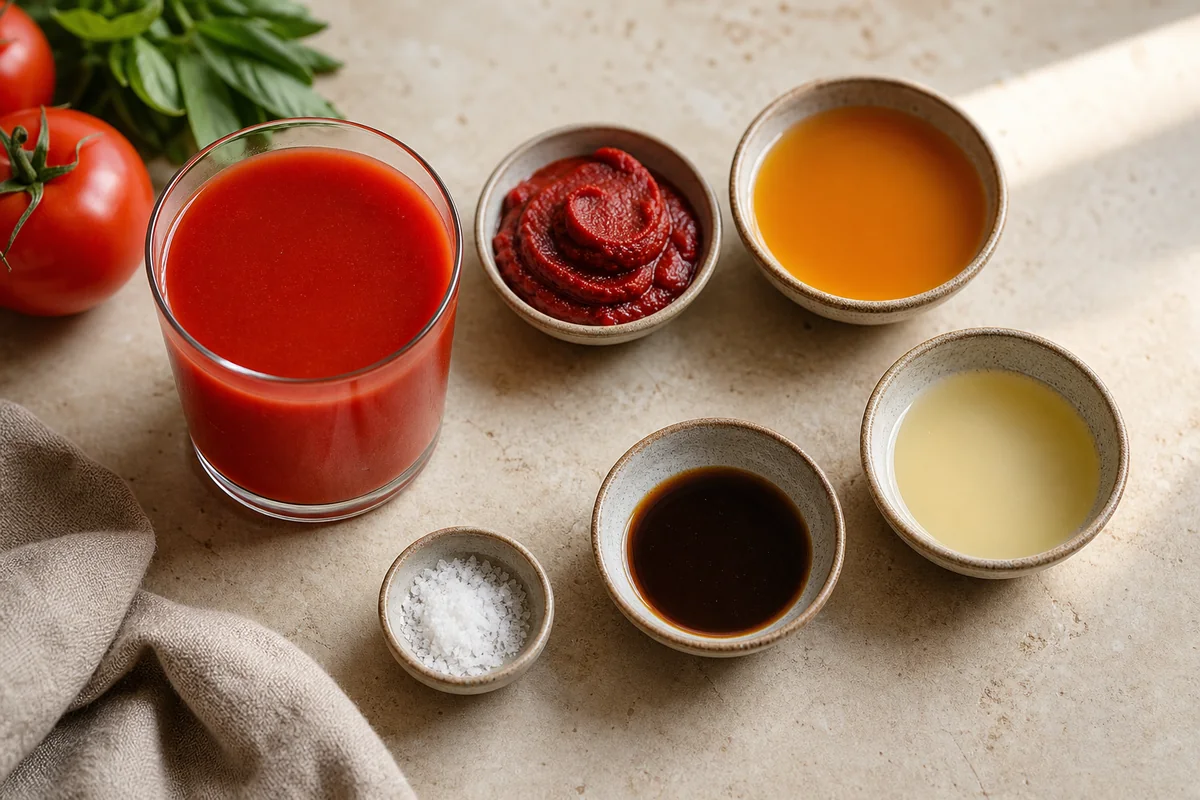
5 Best Tomato Juice Substitutes (Pantry Swaps)
Ingredients
Equipment
Method
- Decide whether you need true tomato-juice thinness (drinks/simmering liquids) or just tomato flavor (soups/sauces).
- Pick the closest option from the grouping: strained crushed tomatoes or reconstituted tomato paste for best match.
- Use the listed ratio, then adjust: add a splash of water for thickness or a pinch of salt/acid (lemon or vinegar) for balance.
- If using anything with solids (crushed/diced), strain through a fine sieve for 3-5 minutes for a smoother pour.
- Taste after 2 minutes of heating in the dish so the flavor settles and the acidity reads correctly.
Notes
- For drink-like use, prioritize strained/mooth options (passata, strained crushed tomatoes).
- For cooking, slightly thicker substitutes work—just thin to match how the recipe pours.
Tried this recipe?
Let us know how it was!
Carrie is a food writer and editor with more than 15 years of experience. She has worked for some of the biggest names in the food industry, including Bon Appétit, Food & Wine, and Martha Stewart Living.
As the Editor in Chief of EpicureDelight, Carrie oversees all of the content on the site. She also manages the team of contributing writers and editors, who help to create delicious recipes, helpful tips, and informative articles that you’ll find on the site.
A native of the Chicago area, Carrie is passionate about all things food. She loves trying new restaurants and experimenting with new recipes in her kitchen. She’s also a graduate of the Culinary Institute of America, so she knows a thing or two about food!



