
That crisp, clean snap daikon radish gives a slaw or a quick pickle is harder to fake than most people expect. The right daikon radish substitute needs to hold crunch, carry mild bite, and ideally stay firm whether it's raw or gently cooked.
Most pantry swaps can do at least two of those three things well.
What changes with any swap is the intensity of peppery sharpness. Daikon is mild by radish standards, so the best replacements lean toward neutral or gently spiced.
Moisture is the other factor. Some swaps (cucumber, pickled radish) need draining first, or they'll loosen the whole dish.
For raw uses, kohlrabi and jicama are the closest in crunch and mild flavor. Turnip works well cooked but needs a quick soak. Pickled radish and cucumber are solid emergency swaps when texture is more important than flavor match.
5 Best Daikon Radish Substitutes Ranked by Use
These five options cover the most common daikon uses. The sub-table below gives a fast overview before you dig into each one.
| # | Substitute | Best For | Ratio | Key Note |
|---|---|---|---|---|
| 1 | Kohlrabi | Both | 1:1 | Peel; slice thin |
| 2 | Jicama | Raw | 1:1 | Mild-sweet; add acid |
| 3 | Turnip | Cooked | 1:1 | Soak 10 min first |
| 4 | Pickled Radish | Raw | 1:1 | Drain before adding |
| 5 | Cucumber | Raw | ¾:1 | Seed and salt first |
1. Kohlrabi
Kohlrabi is the swap we reach for first when raw crunch is the whole point. It snaps like daikon when thin-sliced, has almost no bitterness, and takes on dressing or vinegar without going limp.
If you're ever choosing a different crisp root instead, jicama is the next logical step.
Kohlrabi vs. Daikon
Works for: slaws, garnishes, quick pickles, and light stir-fries where crunch is the priority
Skip if: you need daikon's peppery sharpness; kohlrabi reads milder, so add vinegar or a pinch of salt to compensate
- Best use cases: raw slaws, bahn mi-style garnishes, pickled side dishes
- Cut size: matchstick or ⅛-inch rounds hold crunch longest; thicker cuts get slightly spongy
- Flavor tweak: add 1 teaspoon rice vinegar per cup of sliced kohlrabi to mimic daikon's mild sharpness
2. Jicama
Jicama brings clean, mild sweetness and a very satisfying crunch. It works especially well when swapping in a crisper root for daikon in cold salads, slaws, and quick pickles where the texture does most of the work.
- Ratio: use 1:1 by volume, matching your daikon cut size as closely as possible
- Best dishes: raw slaws, spring roll fillings, quick-pickled sides, and cold noodle salads
- Prep: peel the thick skin completely (fibrous layer underneath browns fast), then slice into thin matchsticks
- Acid fix: add a small squeeze of lime or 2 teaspoon rice vinegar to balance jicama's sweetness in savory recipes
Skip if: your recipe relies on daikon's peppery edge. Jicama reads noticeably sweeter, and even extra salt won't fully replicate that sharpness.
3. Turnip (Peeled, Julienned)
Turnip is the go-to for cooked daikon applications, and it holds its shape well in soups and braises. It does have a peppery edge closer to a small red radish than daikon's gentler bite, but a quick cold-water soak handles most of that.
If you want to explore root vegetable swaps beyond turnip, kohlrabi is covered above.
- Soak step: peel fully and soak in cold water 10 minutes; drain and pat dry before adding to your recipe
- Best cooking methods: soups, miso broth, light stir-fries, and steamed side dishes
- Seasoning tweak: add a small pinch of sugar (about ¼ teaspoon per cup) to nudge turnip's flavor toward daikon's cleaner sweetness
Skip if: you need near-identical mild flavor. Turnip can still taste sharper than daikon even after soaking, so taste before serving and adjust acid or sweetness.
4. Pickled Radish
When your dish already carries tang from a sauce or dressing, drained pickled radish is a fast and practical option. The vinegar brine replaces daikon's natural bite with a sharper, more assertive punch.
For a closer look at other peppery root options, red radish or French breakfast radish also work in some situations.
Drain first. Skipping this step introduces liquid that dilutes soups, sauces, and salad dressings in ways that are hard to fix.
- Drain and press: lay pickled radish on paper towels for 2 minutes to remove brine before adding
- Adjust sweetness: if the brine was sweet, taste the dish before adding any additional acid or sugar
- Where it works: tacos, grain bowls, cold noodle salads, and bánh mì where vinegar tang is welcome
Skip if: your recipe is vinegar-free or depends on daikon's neutral, dry crunch. Pickled radish will shift the flavor profile noticeably.
5. Cucumber (Seeded, Matchstick)
Cucumber is the most accessible emergency swap, but it carries more water than daikon and softens faster. The fix is simple: seed it and salt briefly.
Knowing how long cucumber stays firm before prep also helps you time this correctly so the pieces don't go soft before the dish is finished.
| Use | Ratio | Notes |
|---|---|---|
| Raw salads | ¾:1 | Seed + salt 5 min; pat dry before tossing |
| Cold noodle dishes | ¾:1 | Add just before serving to prevent sogginess |
| Quick pickles | ¾:1 | Use English cucumber; shorter brine time than daikon |
- When it's best: cold dishes, summer rolls, and raw salads where mild, watery crunch is acceptable
- How much: use about ¾ the volume you'd use for daikon, then taste and add more if needed
- Cut guide: halve lengthwise, scoop seeds with a spoon, then slice into 2-inch matchsticks for the closest texture
Skip if: you're cooking the substitute. Cucumber won't hold its shape in heat the way daikon does, and it turns mushy fast.
Making Daikon Radish Substitutes Work
The decision rule is simpler than it looks. Match your swap to the texture the dish needs first, then adjust bite and moisture.
If the recipe needs crisp snap, go kohlrabi or jicama. If it's a cooked dish, turnip is the most reliable pick.
Understanding daikon's flavor profile helps you know how far your swap is drifting. For anything where you're already dealing with storing fresh daikon, check freshness before deciding to swap at all.
- Cut thickness: thinner slices (⅛ inch) reduce pungency and mimic daikon's mild bite; thicker julienne holds up better in soups
- Flavor balance: add 1-2 teaspoon rice vinegar or a small pinch of salt when swapping to brighter, sweeter alternatives like jicama or cucumber
- Moisture control: for cucumber and pickled radish, always seed, salt, and drain before adding; even 5 minutes makes a real difference
Frequently Asked Questions
Kohlrabi is the closest match for raw crunch. It stays firm when thin-sliced and has a mild, clean flavor that behaves almost identically to daikon in slaws and garnishes.
Turnip holds up best in stir-fries. Soak it in cold water for 10 minutes first to reduce bitterness, then julienne it so it cooks evenly without going mushy.
Soak peeled turnip in cold water for 10 minutes. For radish, slice thin and add it late in cooking. A small pinch of sugar also softens perceived sharpness in both.
Yes, jicama works well in both. Add a splash of rice vinegar or lime juice to offset its natural sweetness and bring it closer to daikon's sharper profile.
Seed cucumber and salt it for 5 minutes before patting dry. For pickled radish, press it between paper towels for 2 minutes to pull out brine before adding to the dish.
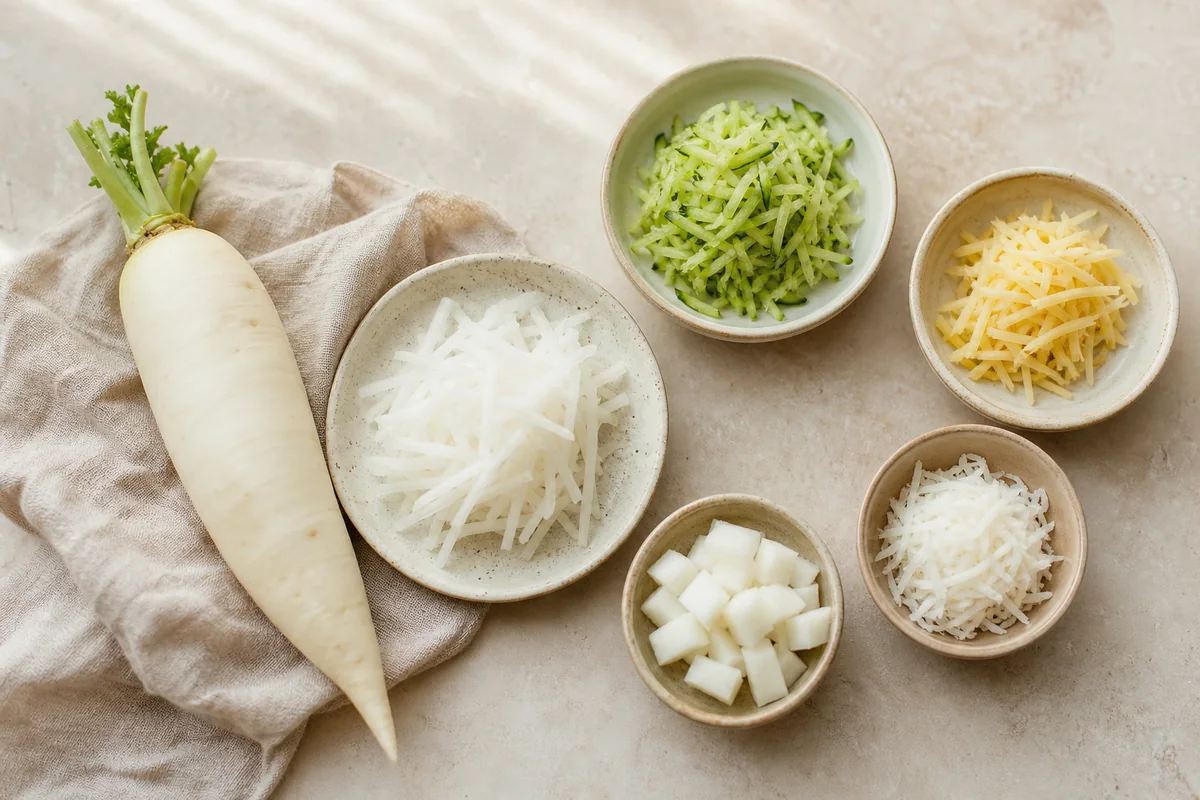
5 Best Daikon Radish Substitutes (Pantry Swaps)
Ingredients
Equipment
Method
- Decide whether you need raw crunch (salads, slaws) or cooked tenderness (soups, stir-fries), then pick the substitute that matches that texture.
- Use the table’s ratio: for softer or wetter swaps (cucumber, radish), start slightly under the amount and adjust after tasting.
- Match cut size to your recipe: thinner slices for quick pickles/salads; thicker julienne for stir-fries so pieces don’t collapse.
- If the substitute is peppery (turnip) or strongly pungent (radish), reduce bite with peeling, soaking, or brief resting in salted water.
- Taste and rebalance: add a small pinch of salt or a splash of vinegar to mimic daikon’s clean, sharp lift.
Notes
- For raw dishes, prioritize crispness and thin cuts.
- For cooked dishes, prioritize piece thickness so the substitute holds shape.
Tried this recipe?
Let us know how it was!
Carrie is a food writer and editor with more than 15 years of experience. She has worked for some of the biggest names in the food industry, including Bon Appétit, Food & Wine, and Martha Stewart Living.
As the Editor in Chief of EpicureDelight, Carrie oversees all of the content on the site. She also manages the team of contributing writers and editors, who help to create delicious recipes, helpful tips, and informative articles that you’ll find on the site.
A native of the Chicago area, Carrie is passionate about all things food. She loves trying new restaurants and experimenting with new recipes in her kitchen. She’s also a graduate of the Culinary Institute of America, so she knows a thing or two about food!



