
That sharp, slightly mustardy tingle watercress leaves behind is hard to fake. It's the kind of green that does two jobs at once: adds texture and heat.
Choosing a good watercress substitute means deciding which job matters most in your dish.
Raw dishes need crunch and a peppery bite. Cooked dishes just need a leafy green that wilts fast without turning bitter.
Nail that distinction first, and the swap becomes easy.
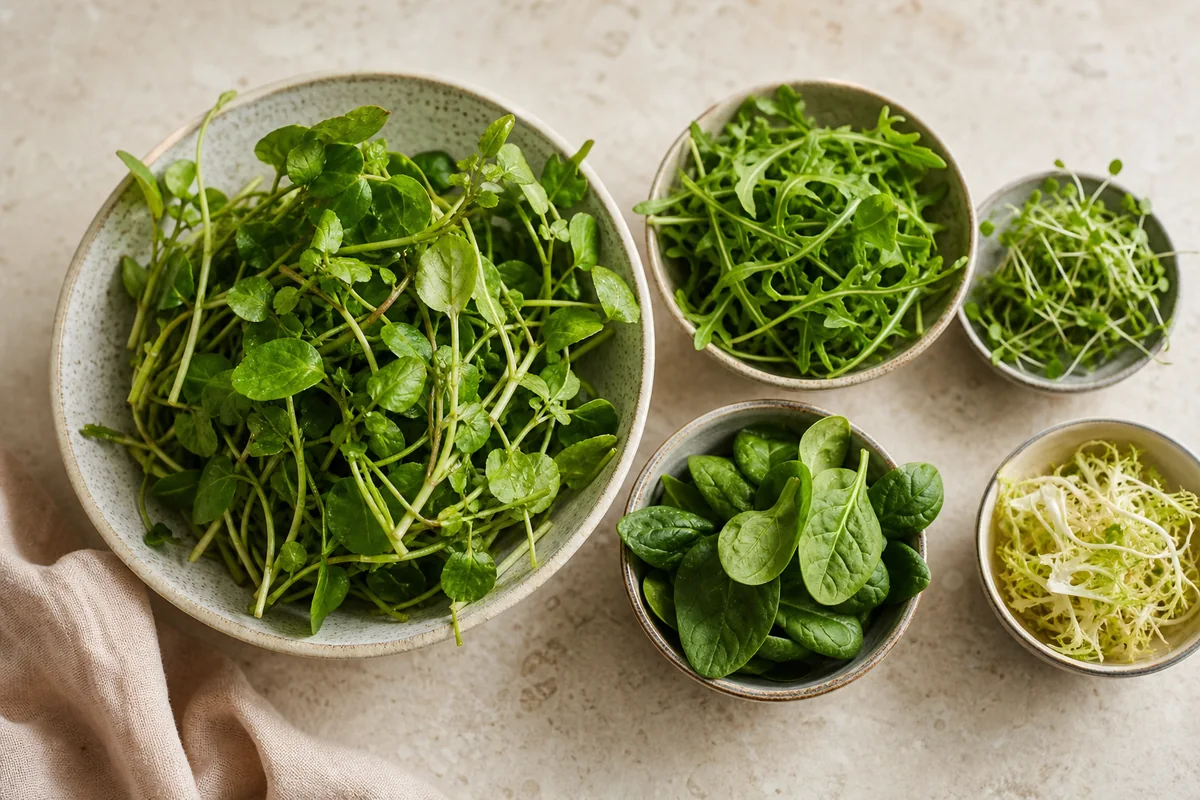
The best swaps for watercress preserve its peppery bite and tender texture. Arugula and garden cress are the closest flavor matches. For milder options, boost baby spinach or romaine with black pepper, horseradish, or lemon zest to restore brightness. Use a 1:1 ratio for all swaps.
5 Best Watercress Substitutes Ranked by Flavor and Texture
A quick scan of the table below will point you toward the right swap before you read the full details. All ratios are 1:1 unless your recipe calls for a very large volume of watercress, in which case taste and adjust the peppery seasoning after substituting.
| # | Substitute | Best For | Ratio | Key Note |
|---|---|---|---|---|
| 1 | Arugula | Both | 1:1 | Closest peppery match |
| 2 | Garden Cress / Sprouts | Both | 1:1 | Trim tough stems first |
| 3 | Radish Greens | Both | 1:1 | Discard fibrous stems |
| 4 | Baby Spinach + Pepper | Both | 1:1 | Add heat boost to mimic bite |
| 5 | Romaine + Lemon Zest | Raw | 1:1 | Raw salads only |
1. Arugula
Arugula is the single best stand-in for watercress, full stop. It carries the same peppery, slightly bitter edge and wilts at a similar rate when heat is applied.
For salads, use whole young arugula leaves at a 1:1 ratio and dress lightly. In soups or stir-fries, drop it in during the final 60 seconds.
That prevents the bitterness from amplifying.
- Salads: Toss whole leaves with a sharp vinaigrette; the acidity balances the pepper heat
- Sandwiches: Layer in place of watercress; it holds up better than spinach under warm fillings
- Soups: Add at the very end, stir once, and serve; over-cooking turns it sharply bitter
- Pesto or blended sauces: Blanch 10 seconds first to mellow the raw bitterness before blending
If you want to explore heat-forward seasoning options alongside arugula for a stronger punch, those work well stirred into dressings.
Skip if: you're cooking for someone sensitive to bitterness-arugula runs stronger than watercress, especially in its mature form.
2. Garden Cress or Cress Sprouts
Garden cress and watercress are close botanical cousins. The flavor is nearly identical: sharp, mustardy, and bright.
Most people can't tell the difference once it's dressed.
Cress sprouts are even easier to work with because the stems are thin and tender. For mature garden cress, tear off the leafy tops and discard the lower stems.
They get woody fast. Use the tender portion just as you would watercress-in sandwiches, salads, or scattered over soups.
One thing to know: garden cress is slightly more intense than watercress. If your dish is already seasoned aggressively, reduce the cress volume by about 20% on your first try.
A quick rinse in cold water also softens the raw heat without losing the bite entirely.
Skip if: you can't find it locally and need something from a standard grocery produce section-arugula is the easier grab.
3. Radish Greens
Most cooks discard radish tops without a second thought. That's a mistake.
The greens have a peppery, leafy bite that sits close to watercress, with a slightly earthy undertone.
The catch is texture. Thick, mature radish stems are fibrous and unpleasant raw.
Tear or cut the leafy portions away from the stems and use only those. Young greens from small radishes need almost no prep.
- Remove stems: Pinch off any stem thicker than a matchstick before using
- Chop finely for salads: Rough-chop leaves so the texture feels even throughout the dish
- Add to soups last: Stir in during the final 2 minutes; radish greens wilt quickly
- Rinse well: They can carry grit from the garden; two rinses in cold water works
If you have a mix of young and mature greens, use the young ones raw and briefly sauté the mature leaves before adding them to cooked dishes.
Skip if: your radishes have very mature greens with thick, fibrous stems you can't separate cleanly.
4. Baby Spinach + Horseradish
Baby spinach handles the leafy base perfectly. It's tender, it wilts in seconds, and it's everywhere.
What it lacks is any peppery heat at all.
Baby Spinach
Works for: salads, soups, sandwiches, pasta-anywhere a soft leafy green is needed
Skip if: you want the pepper heat without adding anything extra to your recipe
Spinach + Heat Boost
Works for: most watercress applications once you dial in the seasoning
Skip if: the dish is delicately seasoned and can't absorb extra horseradish or pepper
The fix is straightforward. Add a small pinch of prepared horseradish (about ¼ teaspoon per 2 cups of spinach) and a few grinds of black pepper.
Taste before serving. For a side-by-side look at how milder green options compare in texture and bite, that's worth a read before you decide on size.
- For salads: Season the spinach directly in the bowl, not just through the dressing
- For soups: Stir horseradish into the broth before adding spinach; it distributes evenly
- For sandwiches: A thin spread of prepared horseradish on the bread does the job without wilting the leaves
Skip if: you want the closest flavor match without any added seasoning-spinach starts genuinely mild.
5. Seasoning Blend as Flavor Boost
There are bottled peppercress and watercress seasoning blends that can pull the flavor back into a dish when you have no fresh greens at hand. They won't replace crunch.
That's the honest limitation.
Pair any such blend with a mild leafy base-butter lettuce, iceberg, or spinach-and you get the aroma and heat of watercress without the texture gap being too obvious. Use about ½ teaspoon of seasoning per 2 cups of greens and taste before adding more.
The blends vary a lot in salt content.
For sandwiches and salads where fresh leaves matter, this is a flavor patch, not a true substitute. In soups or warm grain bowls, it works better because the dish is already layered with heat and liquid.
Think of it as a seasoning adjustment, not a green replacement. If you need the peppery aroma but your produce drawer is empty, this is your backup.
For a stronger bite, horseradish sauce options can amplify the seasoning blend's heat noticeably.
Skip if: your dish relies on a fresh, crunchy leaf for structure-no seasoning blend fixes that gap.
Making Watercress Substitutes Work
The two things that make or break any watercress swap are pepper heat and timing. Most leafy substitutes hit the texture requirement fine, but without the bite, the dish falls flat.
Acid (lemon juice or a sharp vinegar) also matters-it mimics the brightness watercress brings to a plate.
- Raw salads: Dress immediately before serving; peppery greens like arugula soften and lose crunch if left to sit in acid for more than 10 minutes
- Soups and stews: Stir in your substitute during the last 2 minutes, then serve; longer cooking makes most leafy greens bitter and limp
- Sandwiches: Pat leaves dry before layering so moisture doesn't make bread soggy; a dry leaf holds its texture for longer
When using lemon zest to brighten a mild green, storing zest correctly keeps it potent so it actually does the work you need.
Frequently Asked Questions
Arugula is the closest match for raw salads. It shares watercress's peppery bite and tender leaf structure, and it holds up well under a sharp vinaigrette without wilting immediately.
Not directly-spinach is mild and won't replicate the pepper heat. Add a pinch of prepared horseradish and freshly ground black pepper to get much closer to watercress's character.
All three work, but arugula is the most consistent. Add any of them in the final 2 minutes of cooking so they wilt without going bitter or losing their leafy texture.
A quick cold rinse softens raw bitterness without removing the pepper heat. For cooked dishes, add the greens at the very end and avoid letting them sit in hot liquid.
Garden cress sprouts come closest for raw crunch. Romaine also holds its texture well, though you'll need lemon zest and black pepper to compensate for the missing pepper heat.
5 Best Watercress Substitutes (Pantry Swaps)
Ingredients
Method
- Match the use: for raw dishes, choose the most crunchy leafy option; for soups, pick a leafy green that will wilt quickly.
- Substitute using the table’s 1:1 ratio, then adjust pepperiness with black pepper or a small pinch of horseradish.
- If your substitute is tougher (like thick radish stems), remove thicker parts and chop finely before adding.
- Taste after 1–2 minutes of wilting for cooked uses, then stop cooking once it turns glossy and tender.
- For sandwiches and salads, serve immediately so the substitute keeps its fresh bite and crisp texture.
Notes
- Use whole leaves for salads; for soups, add near the end so the flavor stays bright.
Tried this recipe?
Let us know how it was!
Carrie is a food writer and editor with more than 15 years of experience. She has worked for some of the biggest names in the food industry, including Bon Appétit, Food & Wine, and Martha Stewart Living.
As the Editor in Chief of EpicureDelight, Carrie oversees all of the content on the site. She also manages the team of contributing writers and editors, who help to create delicious recipes, helpful tips, and informative articles that you’ll find on the site.
A native of the Chicago area, Carrie is passionate about all things food. She loves trying new restaurants and experimenting with new recipes in her kitchen. She’s also a graduate of the Culinary Institute of America, so she knows a thing or two about food!



