
That chewy, slippery bite in a bowl of hot and sour soup or a cold sesame noodle dish? That's wood ear doing its job.
Finding a good wood ear mushroom substitute means matching two things: the chew and the gelatinous slip. Get both right and your dish holds up.
Miss one, and something feels off.
Wood ear pulls water into its structure when rehydrated, giving it a soft-but-springy texture with a slick surface. Most substitutes nail one of those qualities but not both.
Knowing which one your dish actually needs is how you pick the right swap.
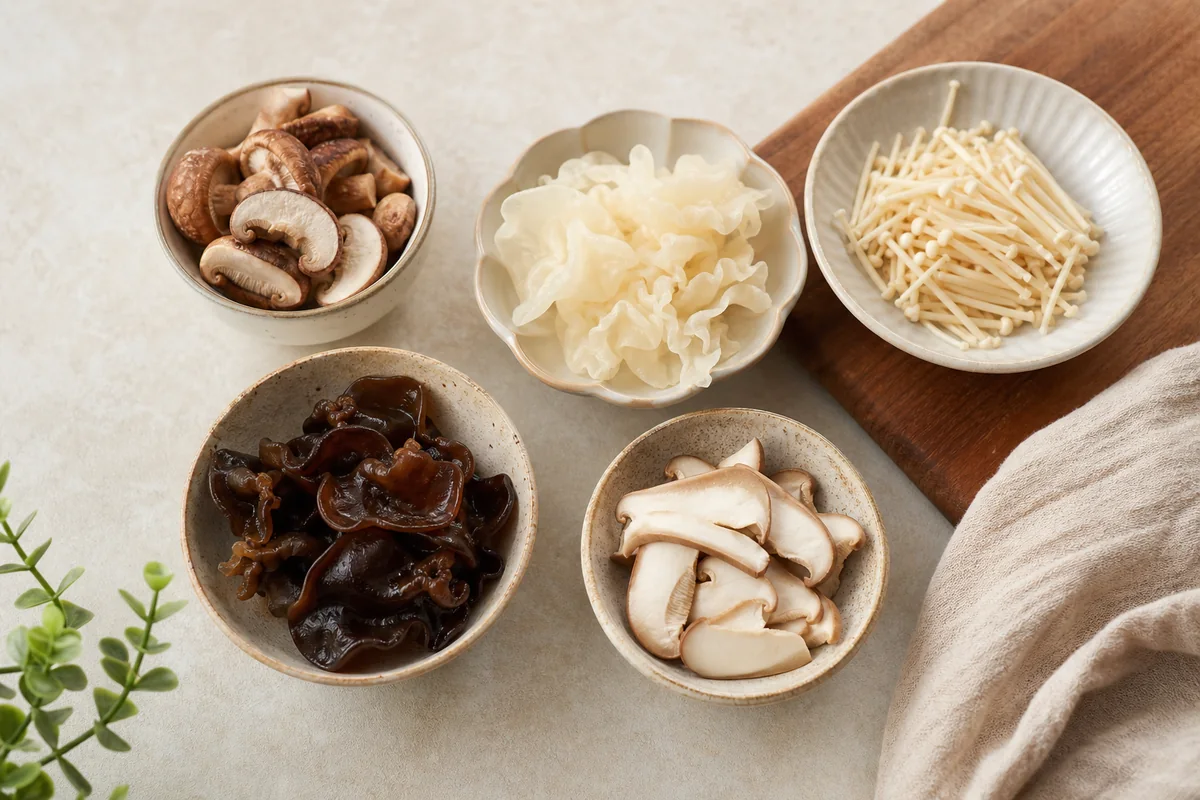
The closest swaps for wood ear are dried black fungus and cloud ear mushroom, both matching the chewy, gelatinous texture well. For pantry emergencies, okra mimics slipperiness, shiitake covers mushroom flavor, and bamboo shoots add satisfying bite without any slip.
5 Best Wood Ear Mushroom Swaps (Ranked by Texture)
Each substitute below is ranked by how closely it matches wood ear's chew and slip. The table gives you a quick ratio and use-case before you scroll to the detail.
| # | Substitute | Best For | Ratio | Key Note |
|---|---|---|---|---|
| 1 | Dried Black Fungus | Both | 1:1 | Rehydrate fully first |
| 2 | Cloud Ear Mushroom | Both | 1:1 | Slice thinner than wood ear |
| 3 | Okra | Cooking | 1:1 | Quick-blanch, add late |
| 4 | Shiitake Mushrooms | Cooking | ¾:1 | No gelatinous slip |
| 5 | Bamboo Shoots | Cooking | 1:1 | Blanch canned, julienne thin |
1. Dried Black Fungus
Dried black fungus, often labeled mu err or mook yee, is the closest swap you'll find. It's frequently the same ingredient under a different name, and the fungus difference usually comes down to size and thickness rather than texture.
In stir-fries and hot pots, it performs nearly identically to wood ear after a proper soak.
- Rehydrate: Soak in cold water for 20-30 minutes, or warm water for 15 minutes, until fully pliable with no hard center.
- Slice: Cut into strips that match the width of your original recipe, usually 1-2 cm thick for most stir-fry applications.
- Add timing: Drop in during the last 3-4 minutes of cooking so it stays firm without turning rubbery.
Dried Black Fungus
Works for: Hot pot, stir-fry, cold sesame salads, soup with slippery texture required
Skip if: You need mushroom texture immediately with no soak time available
2. Cloud Ear Mushroom
Cloud ear is the next best thing, sitting just a half-step below dried black fungus on the texture scale. It soaks up liquid well and gives a wobble-and-spring bite in stir-fries, though it leans slightly more tender than deeply gelatinous.
If your recipe needs a lacy, ear-shaped fungus, cloud ear fits without any adjustment to seasoning or liquid ratios.
- Prep: Rehydrate in cold water for 20-25 minutes, then drain and squeeze out excess moisture before cooking.
- Slicing: Cut thinner than you would wood ear strips so the bite stays light rather than dense.
- Cooking window: Add in the last 2-3 minutes; it collapses faster than wood ear under sustained heat.
Skip if: You need the thick gelatinous slip that coats a broth or sauce. Cloud ear stays tender but won't give you that same gel-heavy mouthfeel.
3. Okra
Okra is not a mushroom, but it earns a spot here because it mimics the slippery-slip quality that makes wood ear so distinctive. The natural mucilage in okra coats other ingredients in the same way wood ear's gelatinous surface does.
For storing a stir-fry ahead of time, okra holds up better than softer fungi once refrigerated.
- Quick blanch: Drop whole pods into boiling water for 60-90 seconds, then immediately transfer to ice water to stop cooking.
- Slicing: Cut into thin rounds or diagonal slices about 0.5 cm thick to maximize surface-area sliminess.
- Keep it firm: Toss into the wok at high heat right before serving so the texture stays intact rather than collapsing.
Skip if: Your dish is a delicate seafood stir-fry without bold seasoning. Okra's earthiness will overpower lighter flavors.
4. Shiitake Mushrooms
Shiitake is the best swap when mushroom flavor matters more than gelatinous texture. It brings a meaty, savory bite that wood ear actually lacks, so this substitution shifts the dish's character slightly.
If you want to know more about that earthy, umami depth before committing, it's worth a read.
For texture, remove the stems entirely and slice the caps thin, around 3-4 mm. Thinner slices cook through faster and produce a softer chew that gets closer to wood ear's tender spring.
Use about ¾ of the volume your recipe calls for, since shiitake's stronger flavor can dominate a dish at full ratio.
Skip if: Your recipe relies on wood ear's slip to coat a sauce or thicken a broth. Shiitake gives body and flavor but zero gelatinous surface coat.
5. Bamboo Shoots
Bamboo shoots add solid, satisfying bulk without going soft in the pan. They're a smart choice for swapping firm vegetables when you need structure rather than slip.
Think of them as the "body without gelatin" option, useful in dishes where wood ear is mainly there to add chew and visual contrast.
| Use | Ratio | Notes |
|---|---|---|
| Hot pot | 1:1 | Thin julienne; add mid-cook |
| Stir-fry | 1:1 | Blanch canned first, pat dry |
| Cold salad | 1:1 | Blanch and chill; dress last minute |
- Blanch canned shoots: Boil for 2-3 minutes, drain, and rinse cold to remove the tinny preserved flavor.
- Julienne thin: Cut into matchsticks about 2-3 mm wide so they mimic the slender strips wood ear produces.
- Cooking: Add mid-cook rather than at the end; bamboo holds heat well and benefits from a few extra minutes.
Skip if: Your recipe specifically needs the slippery, gel-coated mouthfeel. Bamboo is firm and crunchy, which is the opposite of that quality.
Making a Wood Ear Substitute Work (Prep + Timing)
Most substitution failures happen before the wok even heats up. Rehydration time and when you add the ingredient to your dish matter more than which swap you pick.
Whether you're using a simmering hot pot format or a quick high-heat stir-fry, the right prep step changes how close the final texture lands.
- Rehydrate properly: Soak dried fungus options for at least 20 minutes in cold water; drain and squeeze before slicing to avoid waterlogging your sauce.
- Match slice thickness: Cut your substitute to the same width wood ear would produce, usually 1-2 cm strips, so cook time stays consistent with the recipe.
- Add late: Drop your substitute in during the final 2-4 minutes of cooking so it absorbs surrounding flavor without breaking down into soft, watery pieces.
Frequently Asked Questions
Not directly by volume. Dried black fungus expands significantly once rehydrated, so use about ¼ the dried amount by volume compared to what your recipe calls for in fresh wood ear.
Soak in cold water for 20-30 minutes. Cold water is slower but preserves the springy chew. Hot water cuts time to 10 minutes but produces a softer, less elastic result.
No. Shiitake is firm and meaty with no surface gelatin. It works well for flavor and body, but it won't coat a broth or produce any slippery mouthfeel.
Okra is the best non-mushroom option for replicating slip. Bamboo shoots cover the chew and bulk side if slipperiness is not a priority in your dish.
Slice both very thin and add them in the final 2 minutes of cooking over high heat. Never cover the pan after adding either one, as trapped steam accelerates softening fast.
5 Best Wood Ear Mushroom Substitutes (Ranked)
Ingredients
Equipment
Method
- Identify your dish goal: hot pot/stir-fry texture (chewy + slippery) or just mushroom bulk/flavor.
- Choose the swap from closest texture: dried black fungus or cloud ear for best bite, or shiitake/bamboo/okra/cabbage for flavor and volume.
- Prep correctly: rehydrate dried options until fully flexible; for slimy swaps (okra), blanch briefly and slice thin.
- Adjust amount: if your substitute is drier (shiitake), use a bit less; if it’s bulkier/softer (cabbage), use a bit more to match the mouthfeel.
- Cook at the wood-ear stage: add during the last few minutes of stir-fry or hot pot so it stays tender without turning wet.
Notes
- Texture priority: wood ear’s value is chew + slip; flavor-only substitutes won’t thicken or behave the same.
- When using canned items (bamboo shoots), blanch 30–60 seconds to reduce can flavor before cooking.
Tried this recipe?
Let us know how it was!
Carrie is a food writer and editor with more than 15 years of experience. She has worked for some of the biggest names in the food industry, including Bon Appétit, Food & Wine, and Martha Stewart Living.
As the Editor in Chief of EpicureDelight, Carrie oversees all of the content on the site. She also manages the team of contributing writers and editors, who help to create delicious recipes, helpful tips, and informative articles that you’ll find on the site.
A native of the Chicago area, Carrie is passionate about all things food. She loves trying new restaurants and experimenting with new recipes in her kitchen. She’s also a graduate of the Culinary Institute of America, so she knows a thing or two about food!



