
That satisfying crunch when bamboo shoots hit a hot wok - mild, faintly grassy, with just enough chew to hold their own in thick sauces - is harder to replicate than it sounds.
The right bamboo shoot substitute depends mostly on whether your dish needs that crisp-tender bite (stir-fry) or can work with something slightly softer (soup, noodles).
Most swaps land at 1:1 by volume, but salt is where things go sideways fast.
Brined canned options often taste two or three times saltier than fresh bamboo shoots. Always rinse, taste a piece, and hold off on adding soy sauce or stock until you've cooked a quick test bite.
Canned bamboo shoots (rinsed) are the closest match for texture and flavor. Water chestnuts win on crunch. Jicama and daikon work as fresh alternatives when canned options aren't available. Use a 1:1 ratio for all five swaps, and always taste before salting.
5 Best Bamboo Shoot Substitutes (Ranked): Quick Reference
Every swap below matches either the bite or the mild savory flavor of bamboo shoots - some do both. Use this table to pick your option in under a minute, then read the section for prep details.
| # | Substitute | Best For | Ratio | Key Note |
|---|---|---|---|---|
| 1 | Canned Bamboo Shoots (rinsed) | Both | 1:1 | Rinse to cut brine |
| 2 | Water Chestnuts (canned, chopped) | Stir-fry | 1:1 | Stays crispest of all |
| 3 | Canned Bamboo Shoot Strips/Diced | Both | 1:1 | Saltier; rinse longer |
| 4 | Jicama (julienned) | Stir-fry | 1:1 | Mild; needs seasoning boost |
| 5 | Daikon or Turnip (julienned) | Soups/Noodles | 1:1 | Softer with longer cook |
5 Substitutes That Match Bamboo Shoots' Crunch and Chew
1. Canned Bamboo Shoots (Rinsed)
If you've got a can in the pantry, you're already most of the way there. The flavor profile of a bamboo shoot - mild, faintly earthy, slightly sweet - is preserved in canned form, but the brine adds a metallic tang that disappears with a proper rinse.
Understanding the full bamboo shoot flavor profile helps you judge whether your rinsed pieces taste close enough before they hit the pan.
Canned Bamboo Shoots (Rinsed)
Works for: stir-fries, soups, noodle bowls, braises - any dish that used whole sliced or halved bamboo shoots
Skip if: you want a very fresh, delicate crunch, or your can is heavily brined and you won't rinse it
- Drain: Open the can and pour into a colander; discard all liquid.
- Rinse: Run cold water over the pieces for 30-45 seconds, tossing gently.
- Taste test: Bite one piece. If still noticeably salty, rinse 30 seconds more.
- Trim: Cut away any tough or fibrous edges before slicing to match your recipe's cut.
- Cook timing: Add to a stir-fry in the last 3-4 minutes; for soups, add in the final 5-6 minutes to avoid softening.
2. Water Chestnuts (Canned, Drained, Chopped)
Water chestnuts are the best single-ingredient fix when crunch is the priority. They hold their snap through high heat and long sauce contact in a way that bamboo shoots sometimes don't, making them a reliable call for quick stir-fries or any dish where a limp texture would ruin the result.
Add a small splash of soy sauce or vegetable stock when you add them to the pan - water chestnuts are clean-flavored and need that savory push to blend in.
- Drain and rinse: Same approach as canned bamboo shoots - colander, cold water, 30 seconds.
- Chop to size: Slice into thin rounds or quarter each round for strips that mimic bamboo shoot pieces.
- Season up: Add 1-2 teaspoon soy sauce or a small pour of stock alongside them; their neutral flavor needs a savory anchor.
- Stir-fry timing: Add 2-3 minutes before the dish is done - long cooking won't soften them, but there's no need to overdo it.
- Skip if: You want a tender bamboo-like chew or you're making a long-simmer soup where water chestnuts can lose structure.
3. Canned Bamboo Shoot Strips or Diced
Strips and diced cuts come from the same plant but often sit in a saltier brine than whole or halved canned shoots. Brine strength varies sharply by brand, so don't assume the rinse time you used last time will be enough this time.
Taste a piece after 30 seconds of rinsing. If it still bites sharp and salty, give it another full minute under running water.
If your recipe already carries a heavy soy-sauce load, consider pulling back on added salt by half before you taste the finished dish. Good bamboo shoot storage matters here too - older canned shoots sometimes have stronger, more metallic brine than freshly purchased ones.
Skip this swap if your dish is already salted near its limit and you can't taste-test your way through the adjustment.
4. Jicama (Peeled, Julienned)
Jicama is the freshest-tasting option on this list and the one most people overlook. Peeled and julienned thin, it gives a clean, watery crunch that reads very close to raw bamboo shoot strips - mild, not bitter, not starchy. If you want ideas for what else jicama can replace in recipes, jicama swaps covers other texture-matching uses worth knowing.
- Peel fully: Use a sharp knife rather than a peeler - jicama skin is thick and fibrous.
- Julienne thin: Aim for strips about 2-3 inches long and ¼ inch wide; thicker sticks stay too separate in sauce.
- Optional quick blanch: Drop strips into boiling water for 30-60 seconds, then shock in cold water if you want a slightly softer bite than raw.
- Pat dry: Jicama holds a lot of water; patting dry before it goes in the wok prevents steaming instead of searing.
- Boost seasoning: Add ½ teaspoon soy sauce per cup of jicama - its neutral flavor won't carry savoriness on its own.
- Skip if: You need a bamboo-like umami note and your dish has no other seasoning support, or you can't slice thinly.
5. Daikon or Turnip (Julienned)
Daikon is naturally mild and takes on surrounding flavors quickly, which is exactly what you want in a brothy soup or noodle dish. A turnip works the same way, though it carries a faintly peppery edge that softens within 5-6 minutes of simmering.
If you need to branch further, daikon substitutes and alternatives to turnip are both worth checking depending on which root you're working with.
- Peel and julienne: Cut into strips roughly ¼ inch thick for soups; go slightly thinner (⅛ inch) for noodle dishes that cook fast.
- Sauté first (optional): A 2-minute sauté in neutral oil before adding to the broth reduces raw sharpness.
- Simmer time: 6-8 minutes in broth gives a soft-but-intact bite; pull them at 5 minutes if you want more resistance.
- Skip if: Your dish is a fast-cook stir-fry - daikon and turnip won't warm through evenly at high heat in just a few minutes.
| Slice Thickness | Cook Time (simmered) | Resulting Texture |
|---|---|---|
| ⅛ inch julienne | 4-5 min | Tender with slight snap |
| ¼ inch julienne | 6-8 min | Soft, bamboo-like chew |
| ½ inch batons | 10-12 min | Very soft, almost melting |
Making Bamboo Shoot Substitutes Taste Right
The biggest wins come from three adjustments: matching the bite to your cook method, managing brine salt before it enters the dish, and seasoning to close the flavor gap. Most failures happen because the substitute goes in unseasoned and over-salted at the same time - a fixable problem once you know where to look.
If your dish's main seasoning liquid is already salty, knowing your soy sauce alternatives gives you more levers to pull when balancing the final taste.
- Rinse brined items first: Drain canned options and rinse under cold running water for at least 30-45 seconds before cooking; taste a piece raw, and rinse again if needed.
- Cook briefly for crispness: Add crisp substitutes (water chestnuts, jicama, rinsed canned bamboo shoots) in the last 3-4 minutes of stir-fry time so they hold their texture rather than softening in the oil.
- Season after the first toss: Do a quick taste after 1-2 minutes of cooking, then decide whether to add soy sauce, stock, or nothing at all - brined swaps often need no added salt.
Frequently Asked Questions
Canned bamboo shoots (drained and rinsed) are the closest match overall. They replicate the crisp-tender bite and mild flavor better than any other single swap.
Yes, always rinse both under cold water for at least 30 seconds. Canning brine adds salt and a faint metallic taste that rinsing removes almost entirely.
Yes. Julienned jicama gives a clean crunch that holds up well in a hot wok. Pat it dry first and add a small amount of soy sauce to fill the flavor gap.
Daikon or turnip, julienned thin and simmered 6-8 minutes, gives the closest soft-but-intact bite for brothy dishes. Canned bamboo shoots (rinsed) also work well.
Rinse longer and hold all added salt until after the first taste. If the dish is already over-salted, a small amount of unsalted stock or water stirred in can bring it back.
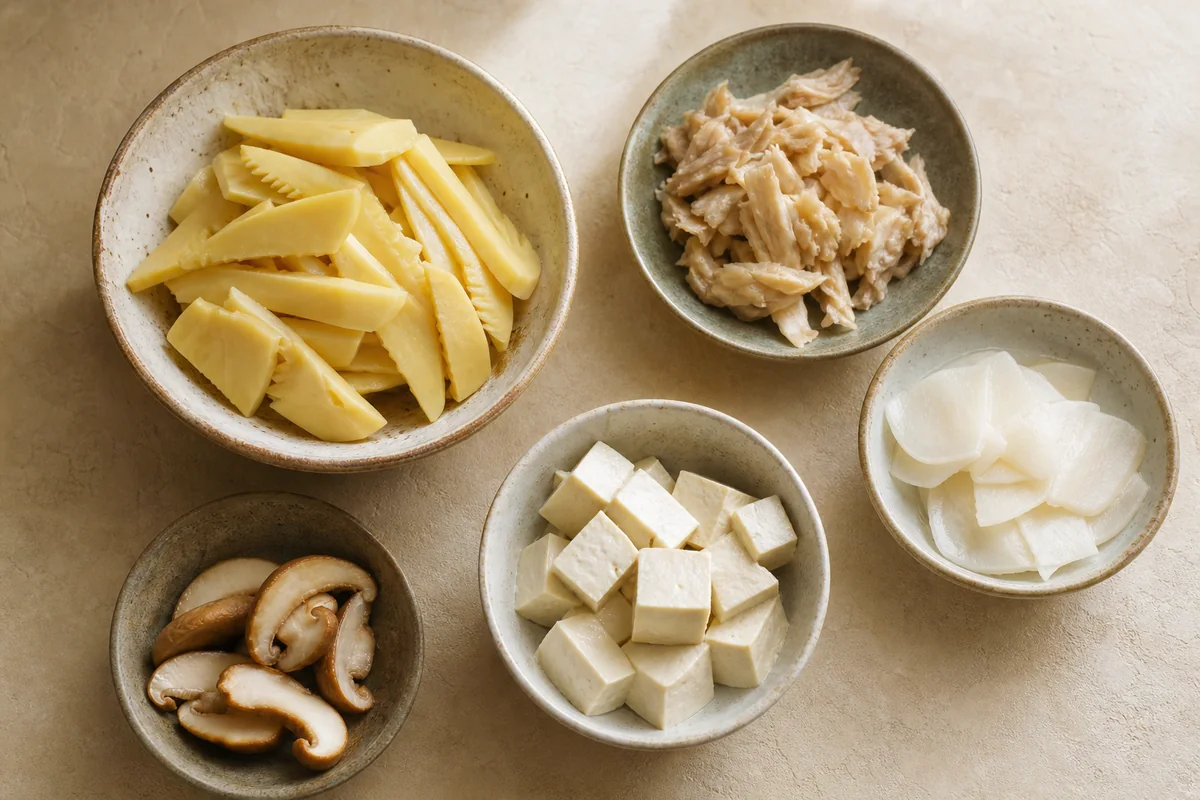
5 Best Bamboo Shoot Substitutes (Ranked)
Ingredients
Equipment
Method
- Start by identifying your dish: stir-fry (needs crisp-tender) versus soup/noodles (can tolerate softer swaps).
- Choose the best texture match from the list (canned bamboo shoots for closest overall; water chestnuts for maximum crunch).
- Use the listed ratio (1:1) and rinse drained canned options well to prevent brine-driven oversalting.
- Add seasoning adjustments: if your substitute tastes bland, boost with a small amount of soy sauce or chicken/vegetable stock; if it's salty, hold off on added salt.
- Finish by cooking briefly (stir-fry) or simmering just until tender (soup) so the swap keeps the intended bite.
Notes
- For canned substitutes, drain + rinse thoroughly before using.
- Seasoning differs: brined items may reduce the need for added salt.
Tried this recipe?
Let us know how it was!
Carrie is a food writer and editor with more than 15 years of experience. She has worked for some of the biggest names in the food industry, including Bon Appétit, Food & Wine, and Martha Stewart Living.
As the Editor in Chief of EpicureDelight, Carrie oversees all of the content on the site. She also manages the team of contributing writers and editors, who help to create delicious recipes, helpful tips, and informative articles that you’ll find on the site.
A native of the Chicago area, Carrie is passionate about all things food. She loves trying new restaurants and experimenting with new recipes in her kitchen. She’s also a graduate of the Culinary Institute of America, so she knows a thing or two about food!



