No farmers cheese on hand? It happens more often than you'd think, and the good news is that several everyday cheeses can step in without wrecking your recipe.
The right farmers cheese substitute depends on one thing: are you chasing creaminess, tang, or a slight crumble?
Farmers cheese sits in a specific texture zone. It is firmer than ricotta, milder than feta, and softer than a pressed curd - so matching it takes a little thought.
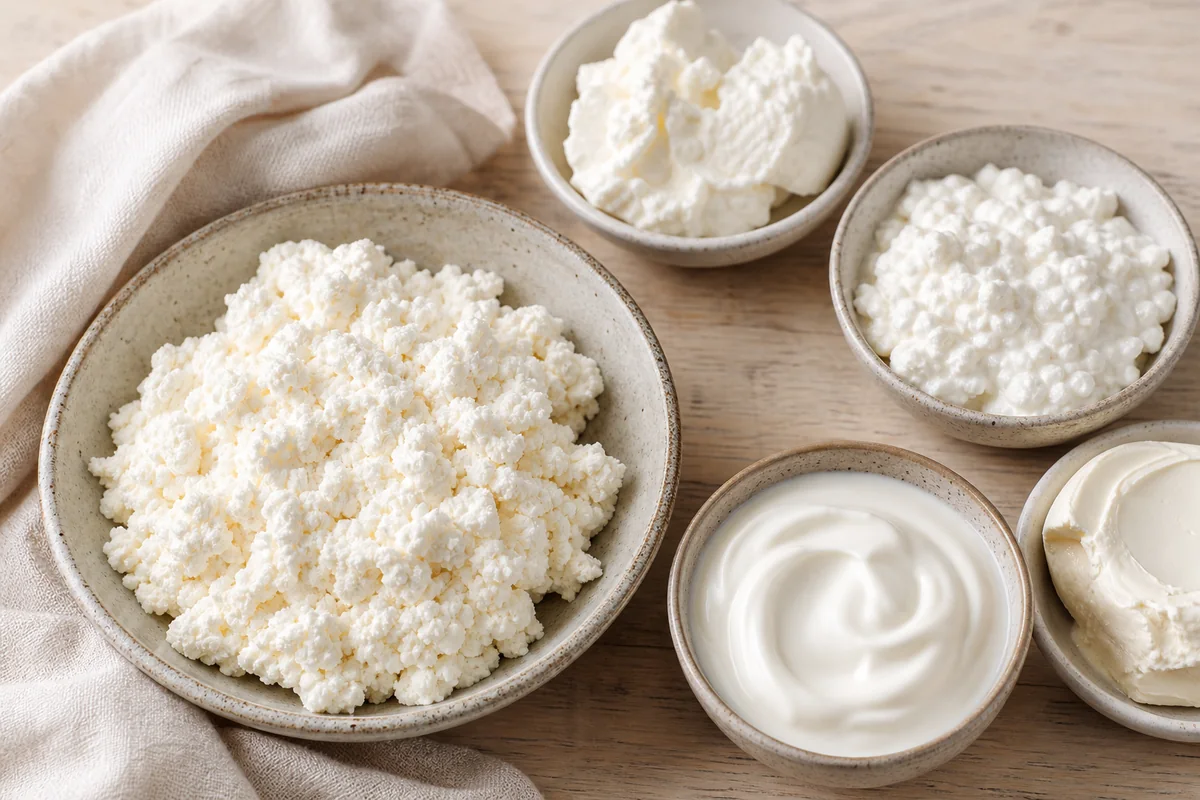
The best farmers cheese substitutes are cream cheese, neufchatel, ricotta (drained), cottage cheese (blended), Greek yogurt (strained), and quark. Match your swap to your texture goal: cream cheese for smooth spreads, ricotta or cottage cheese for crumbly bakes, and Greek yogurt or quark for tangy fillings.
Skip if: you need a lactose-free option - all six substitutes listed here are dairy-based.
6 Farmers Cheese Substitutes (And How to Match the Texture)
Each swap below is matched to a specific texture goal. If your substitute is wetter than farmers cheese, drain it for 10-20 minutes before adding it to a batter or dip.
| # | Substitute | Best For | Ratio | Key Note |
|---|---|---|---|---|
| 1 | Cream Cheese | Both | 1:1 | Add lemon for tang |
| 2 | Neufchatel | Both | 1:1 | Softer, mild flavor |
| 3 | Ricotta (drained) | Baking | 1:1 | Drain 10-20 min first |
| 4 | Cottage Cheese | Baking | 1:1 | Blend and drain well |
| 5 | Greek Yogurt | Dips/Fillings | ¾:1 | Strain for thickness |
| 6 | Quark | Both | 1:1 | Stir smooth; strain if loose |
Cream Cheese
Softened cream cheese is the easiest 1:1 swap for smooth, spreadable applications like dips, stuffed pastries, or no-bake cheesecake layers. It has a thicker body than farmers cheese, so if your recipe needs a little loosening, blend it with 1-2 tablespoons of sour cream before mixing in.
The one gap is tang. Farmers cheese has a quiet lactic sharpness that cream cheese lacks - stir in 1 teaspoon of lemon juice per cup to get closer.
For further options if cream cheese is also unavailable, check out these cream cheese stand-ins that cover a range of textures.
- Ratio: 1:1, softened to room temperature before using
- Add tang: 1 teaspoon lemon juice per cup of cream cheese
- Best uses: Dips, cheesecake-style bakes, stuffed bread, pierogies
- Texture note: Blend with 1-2 tablespoon sour cream if you need a looser mix
Cream Cheese
Works for: smooth spreads, baked fillings, dips, any recipe where creaminess matters more than crumble
Skip if: you need a crumbly topping - cream cheese stays creamy and will not break into curds
Neufchatel
Neufchatel is essentially a lower-fat cousin of cream cheese, and it has a noticeably milder, slightly tangier profile that sits very close to farmers cheese in flavor. It melts into baked fillings smoothly and holds its shape well in stuffed bread or savory rolls.
If you want to understand how neufchatel cheese swaps that work differ by recipe type, that breakdown is worth a read before your next bake.
- Ratio: 1:1, no adjustments needed in most recipes
- Best for dips: Works cold or warm, stays creamy without breaking
- Best for baking: Cheesecake-style fillings, stuffed bread, savory pastries
- Watch moisture: It is slightly wetter than cream cheese - pat dry if your dough is sensitive
Skip if: your recipe depends on farmers cheese's curdy bite - neufchatel stays uniformly smooth.
Ricotta (Drained)
Ricotta has a grainy, slightly wet texture that is familiar in baked dishes like lasagna or blintzes, but it needs help before it can stand in for farmers cheese. The fix is simple: line a strainer with cheesecloth and let it drain for at least 15-20 minutes before measuring.
Understanding using ricotta for creaminess also helps you gauge how fresh your ricotta needs to be before swapping.
- Drain time: 15-20 minutes minimum; 30 minutes for very wet store-bought ricotta
- Ratio: 1:1 after draining
- Best for baking: Lasagna fillings, blintzes, stuffed shells, sweet pastry fillings
- Tang boost: Add 1 teaspoon lemon juice per cup if you want a sharper flavor
- Texture note: It stays slightly grainier than farmers cheese - that is fine in baked dishes
Skip if: you are making a no-bake spread - even well-drained ricotta rarely reaches farmers cheese's smooth density.
Cottage Cheese (Blended + Drained)
Cottage cheese is the most texture-flexible swap on this list, because you control how much you blend it. Left slightly lumpy, it mimics the small curd character of farmers cheese in baked fillings.
Blended fully smooth, it works in dips and spreads - though you will want to drain it first either way. For a closer look at using cottage cheese for creaminess across different recipes, that guide covers the full range.
| Use | Ratio | Notes |
|---|---|---|
| Baked filling (curdy) | 1:1 | Drain 20 min, leave slightly lumpy for texture |
| Dips or spreads | 1:1 | Drain 20 min, blend fully smooth before measuring |
| Cheesecake filling | 1:1 | Blend smooth, strain overnight for best set |
- Drain first: Use a fine mesh strainer or cheesecloth for 20-30 minutes
- Blend level: Pulse 5-6 times for curdy; full blend for smooth
- Boost tang: Stir in 1-2 teaspoon lemon juice and a pinch of salt after blending
- Best uses: Pierogi filling, baked pasta, savory galettes
Skip if: you want a fully uniform smooth filling with zero effort - this swap takes prep.
Greek Yogurt (Thick/Strained)
Thick, strained Greek yogurt brings a sharper tang than farmers cheese and a spoonable, almost spreadable body that works well in fillings and cold dips. Because it is thinner in structure, we recommend using a ¾ cup ratio for every 1 cup of farmers cheese the recipe calls for. Learning more about the role greek yogurt plays in recipes can help you decide when its extra tang is an asset or a problem.
- Ratio: ¾ cup Greek yogurt per 1 cup farmers cheese
- Strain time: If using regular Greek yogurt, strain through cheesecloth for 1-2 hours first
- Best recipes: Cold dips, spoonable herb fillings, some baked pastries
- Flavor note: Tang is stronger than farmers cheese - balance with a small pinch of sugar in sweet dishes
Skip if: your recipe needs a thick, firm body and cannot be loosened at all - cream cheese or quark will serve you better there.
Quark
Quark is the closest structural match to farmers cheese of anything on this list. It is soft, tangy, spoonable, and has a lactic bite that reads almost identical in savory fillings and cheesecake-style bakes.
If you cook a lot of Eastern European dishes, you may already know it as a go-to for dumplings and stuffed pastries. For a deeper look at how quark cheese in dairy recipes compares to other soft cheeses, that article covers the details.
- Ratio: 1:1, no adjustment needed
- Prep: Stir to smooth before measuring; strain for 10 minutes if it looks loose
- Best for savory fillings: Dumplings, stuffed crepes, pierogi, galette centers
- Best for baking: Cheesecake-style cakes, baked pastry fillings, tarts
Skip if: you cannot find plain, unflavored quark - flavored versions will throw off your seasoning.
Making Farmers Cheese Substitutes Work Every Time
The biggest issue with any of these swaps is excess moisture, and it is an easy fix. Pat or drain your substitute before it goes into a dough or batter, and your results will be far more consistent.
If you are aiming for using farmers cheese for creaminess in a dip or spread, softened cream cheese or neufchatel need no prep at all - just scoop and mix.
- Match texture first: Creamy recipe? Use cream cheese or neufchatel. Crumbly recipe? Use drained ricotta or barely-blended cottage cheese.
- Adjust tang: Stir in 1-2 teaspoon lemon juice per cup whenever your substitute tastes too mild - this is the fastest fix.
- Prevent watery bakes: If the batter looks loose after adding your substitute, mix in 1 tablespoon cornstarch or flour per cup before baking.
Frequently Asked Questions
Yes, softened cream cheese swaps 1:1 in most baked recipes. Add 1 teaspoon of lemon juice per cup to replicate the mild tang that farmers cheese naturally has.
Drained ricotta or barely-blended cottage cheese are your best options. Both hold a slightly grainy, curd-like texture that reads closest to crumbled farmers cheese in baked fillings.
Drain either cheese through a cheesecloth-lined strainer for 15-30 minutes before using. If the batter still looks loose, stir in 1 tablespoon of cornstarch per cup of cheese.
It works well if you use thick, strained Greek yogurt and reduce the amount to ¾ cup per cup called for. The tang is sharper, so taste and adjust salt before serving.
Stir in 1-2 teaspoons of fresh lemon juice per cup of substitute. A small pinch of citric acid works too, especially if you don't want to add extra liquid.
5 Best Farmers Cheese Substitutes in Every Recipe
Ingredients
Equipment
Method
- Choose your target texture: creamy spread (cream cheese/neufchatel), tangy spoonable filling (quark/Greek yogurt), or crumbly bake texture (ricotta/cottage cheese).
- Measure using the listed ratio; for any substitute that’s wetter than farmers cheese, drain or strain for 10–20 minutes first.
- Boost tang if needed: stir in 1–2 teaspoon lemon juice per 1 cup substitute before mixing into dips or batter.
- For baking, avoid thin mixes: if the batter looks loose, add a tablespoon of flour/cornstarch per cup or drain longer.
- Taste and adjust salt: farmers cheese can be slightly salted—so start modest, especially if your recipe already uses salty ingredients.
Notes
- Ratios assume plain, unsweetened cheeses.
- If your substitute is softer/wetter than farmers cheese, drain first to prevent loosened fillings.
Tried this recipe?
Let us know how it was!
Carrie is a food writer and editor with more than 15 years of experience. She has worked for some of the biggest names in the food industry, including Bon Appétit, Food & Wine, and Martha Stewart Living.
As the Editor in Chief of EpicureDelight, Carrie oversees all of the content on the site. She also manages the team of contributing writers and editors, who help to create delicious recipes, helpful tips, and informative articles that you’ll find on the site.
A native of the Chicago area, Carrie is passionate about all things food. She loves trying new restaurants and experimenting with new recipes in her kitchen. She’s also a graduate of the Culinary Institute of America, so she knows a thing or two about food!