
That satisfying crunch when you bite through an asian pear - firm like an apple, cool and juicy - is harder to fake than most people expect. Asian pear substitute searches spike whenever the fruit is out of season or just not at your local store, and the wrong swap can flatten a whole dish. Most substitutes do one thing well (crunch or sweetness) but not both, so knowing which quality your recipe actually needs is the real starting point.
If tasting asian pear fresh is new territory for you, reading about tasting asian pear first will sharpen your instincts before you shop for alternatives. Texture is the deciding factor in most recipes: raw preparations like salads need a firm, water-rich swap, while cooked dishes have more flexibility.
Asian pear is prized for crisp, juicy texture and mild sweet-tart flavor. For raw slicing or salads, choose Bosc pear or green apple. For cooking, water chestnuts or pineapple hold up better. Adjust brightness with acid and sweetness with a small amount of honey.
5 Best Asian Pear Substitutes by Texture and Flavor
A quick scan of the table below will tell you which swap fits your dish before you read the detail sections. For salads, lean toward crisp-fruit options cut thin; for stir-fries, the vegetable-based picks hold their snap better.
If you're pairing with a citrus brightener, check best lemon juice alternatives or lime juice swaps to round out the acidity.
| # | Substitute | Best For | Ratio | Key Note |
|---|---|---|---|---|
| 1 | Bosc Pear | ★ Raw/Light Cook | 1:1 | Closest crunch and sweetness |
| 2 | Green Apple | ★ Both | 1:1 | Tangier; add a little honey |
| 3 | Jicama | ★ Raw | ¾:1 | Neutral; needs acid boost |
| 4 | Water Chestnuts | ★ Cooked | 1:1 | Best snap after heat |
| 5 | Cucumber | ★ Raw | ¾:1 | Seed and pat dry first |
1. Bosc Pear
Bosc pear is the most natural swap here - it has a firm, dense flesh that stays together when sliced thin, and the honey-sweet flavor lands close enough to asian pear that most people won't notice. It does hold less water than its asian cousin, so if your dish depends on that dripping, cool juiciness, slice it just before serving and skip long marinating time.
- Cut size: Thin 2-3mm slices for salads; small ½-inch dice for grain bowls or quick slaw.
- Acid tip: A squeeze of lemon over the slices keeps them from browning and sharpens the flavor slightly.
- Sweetness: Ripe Bosc is sweet enough on its own; if yours is slightly underripe, add 1 teaspoon honey per cup of fruit.
- Skip if: Your recipe depends on high juiciness - Bosc can be quite dry compared to a well-ripened asian pear.
If you're building a slaw or a cold side and want to explore more fruit-forward options, the guide on sides for cucumber salad has good pairing ideas that work with pear swaps too.
2. Green Apple
A Granny Smith (or any firm green apple) is the most reliable crunch substitute you'll find year-round. The flesh is dense and dry enough to hold its shape through dressings and light marinades, which makes it ideal for slaws, quick salads, or any raw preparation where texture is everything.
- Flavor tuning: Granny Smith is sharper than asian pear. Stir in 1-2 teaspoon honey per cup, or pair it with a mild vinaigrette to soften the tartness.
- Cut timing: Slice within 10-15 minutes of serving and toss with lemon juice immediately to prevent browning.
- For marinades: Use 1:1 ratio but reduce any additional acid in the recipe by about half, since the apple already contributes plenty.
- Skip if: Your dish needs a neutral, mild sweetness - green apple reads distinctly tart, and no amount of honey fully hides that edge.
Green apple also works well when swapping pineapple juice is part of the same recipe - the tartness pairs naturally.
3. Jicama
Jicama is the underrated workhorse of this list. It has a clean, almost watery crunch that holds for hours without going soft, and it takes on bright dressings beautifully.
The trade-off is flavor: jicama is genuinely neutral, tasting faintly of nothing in particular, so it brings texture but not sweetness.
- Texture: Match asian pear's snap exactly - cut into thin matchsticks or half-moon slices for slaws and cold salads.
- Brightness pairing: Add a small squeeze of lime and ½ teaspoon honey per cup to get closer to that mild fruit note.
- Best uses: Cold noodle salads, slaws, grain bowls, chilled appetizer platters - anywhere you want crunch that lasts.
- Skip if: You want true fruit sweetness - jicama is a texture swap, not a flavor one, and that gap is noticeable when the dish is simple.
4. Water Chestnuts
Most cold-prep substitutes fall apart the moment heat touches them, but water chestnuts hold their snap through a full stir-fry, which is why they earn a specific spot for cooked applications. Canned water chestnuts are fine here - fresh ones are better if you can find them, but the canned version still delivers that satisfying resistance in hot dishes.
Water Chestnuts in Cooked Dishes
Works for: stir-fries, hot braises, warm grain dishes, any application needing crisp snap after heat
Skip if: your recipe relies on mild fruit sweetness - water chestnuts contribute crunch, not flavor
- Prep: Drain canned water chestnuts, rinse under cold water, and pat dry before adding to a hot pan.
- Cut size: Slice to ¼-inch rounds or halve whole chestnuts - pieces that are too thin lose their snap fast.
- Timing: Add them in the last 2-3 minutes of cooking so they don't overcook into mush.
- Flavor note: Add a small drizzle of sesame oil or a pinch of sugar at the end to hint at sweetness the chestnuts won't supply on their own.
If you're meal-prepping a stir-fry with this swap, knowing how long stir fry keeps will save you from losing that crunch in the fridge.
5. Cucumber (Seeded)
Cucumber is the cooling, moisture-forward option - not a fruit match, but genuinely useful when you want that refreshing, wet crunch in a raw salad or cold dish. Seed removal is non-negotiable here. Cut the cucumber lengthwise, scrape out the seeds with a spoon, then slice and lay the pieces on a paper towel for five minutes. This single step prevents the watery puddle that turns a salad soggy.
Pair cucumber with a touch of rice vinegar and a pinch of sugar to approximate asian pear's brightness without the full sweetness. For more alternatives to cucumber in this kind of dish, there are several crisp options that follow similar prep logic. Skip if your recipe needs fruit sweetness or perfume - cucumber is a moisture swap, not a flavor match, and the difference is obvious in simple dressings.
Making Any Asian Pear Substitute Work
Getting the best out of any swap comes down to three things: matching the cut, tuning the flavor, and timing the prep correctly. Most substitutes fail not because they're wrong ingredients but because they're cut too large, dressed too early, or left un-adjusted for sweetness or acid.
- Match the cut size exactly: If asian pear would be cut to ¼-inch matchsticks, cut your substitute the same way - piece size changes how the swap reads in every bite.
- Adjust sweetness and acid together: Add honey or a small pinch of sugar if your swap is too flat, then add a few drops of lemon or lime to sharpen the result without tipping it sour.
- Chill crisp swaps before using: Apple and jicama both benefit from 10-20 minutes in the fridge after cutting - they stay noticeably snappier when cold, especially in warm-weather salads.
If you're mixing multiple fresh ingredients and something still tastes dull, check whether your brightener is holding up - a tired acid is often the culprit, so having a plan around swapping pineapple juice or citrus in the same recipe helps too.
Frequently Asked Questions
Bosc pear is the closest match for raw slicing - the texture and mild sweetness align well with asian pear. Slice thin and use immediately for the best result.
Yes - green apple works well in salads and holds crunch through dressing. Add 1-2 teaspoon honey per cup to offset the tartness.
Water chestnuts are the best option for cooked dishes - they maintain snap even after several minutes of high heat, unlike most fruit substitutes.
Stir in honey or a small pinch of sugar, then taste before adding more. Start with ½ teaspoon per cup and build from there.
Seed the cucumber, then lay the slices on a paper towel for five minutes before adding them. A light salt and pat-dry step pulls out most of the excess moisture.
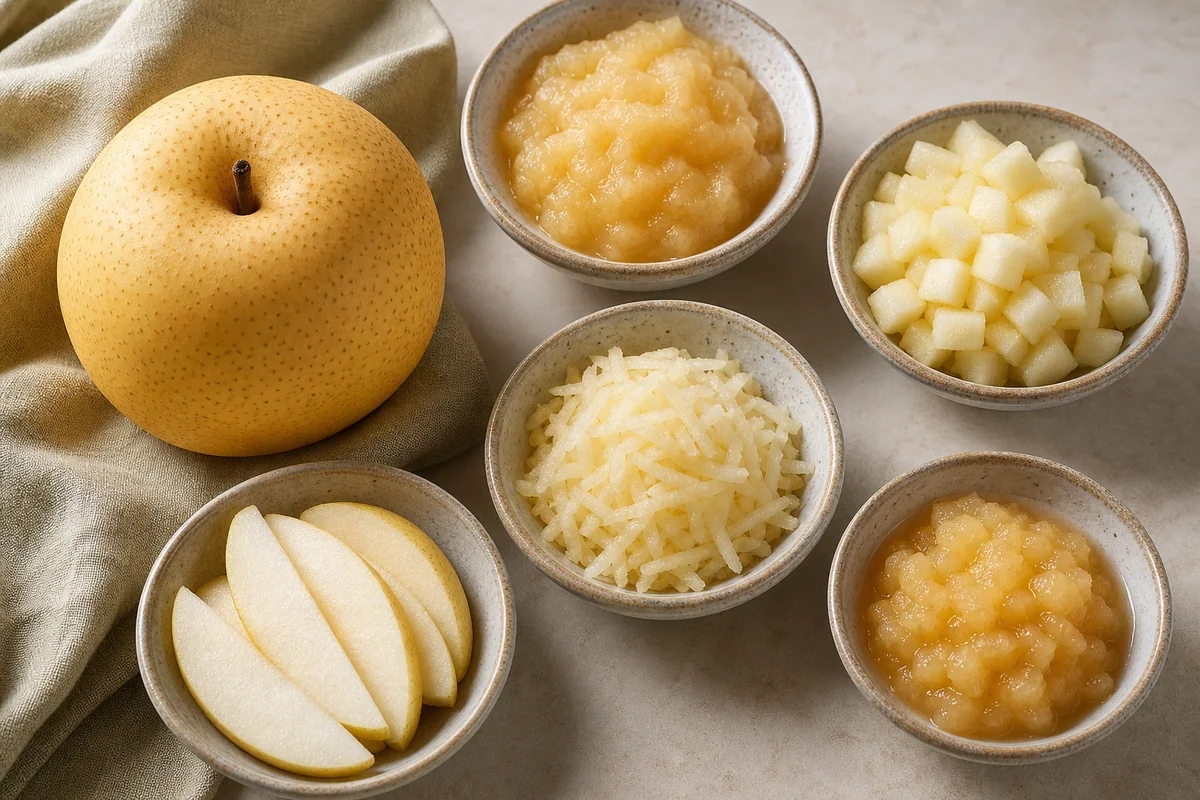
5 Best Asian Pear Substitutes You Can Trust
Ingredients
Equipment
Method
- Choose your substitute based on your dish: salad/slicing needs crisp fruit; cooked dishes can handle fruitier swaps.
- Use the listed ratio (1:1 or the adjusted ratios) and cut the substitute to the same size as your asian pear.
- If your swap tastes too flat or not “fruity,” add a small brightener (lemon/lime juice) and taste again.
- For soft substitutes (like pineapple or cucumber), reduce the amount and keep pieces larger so they don’t disappear.
- Chill crisp swaps (apple, jicama) for 10–20 minutes so they stay snappy during serving.
Notes
- Texture matters more than flavor for most uses—match crunch first, then adjust sweetness/brightness.
- If you’re swapping in a recipe that relies on mild sweetness, taste and add a little honey/sugar only after you swap.
Tried this recipe?
Let us know how it was!
Carrie is a food writer and editor with more than 15 years of experience. She has worked for some of the biggest names in the food industry, including Bon Appétit, Food & Wine, and Martha Stewart Living.
As the Editor in Chief of EpicureDelight, Carrie oversees all of the content on the site. She also manages the team of contributing writers and editors, who help to create delicious recipes, helpful tips, and informative articles that you’ll find on the site.
A native of the Chicago area, Carrie is passionate about all things food. She loves trying new restaurants and experimenting with new recipes in her kitchen. She’s also a graduate of the Culinary Institute of America, so she knows a thing or two about food!



