
Caciotta cheese has a way of disappearing from deli counters right when you need it most. The caciotta cheese substitute question comes up often because caciotta does two things quietly well: it stays mild enough to let other ingredients speak, and it melts into a smooth, cohesive layer without fighting the dish.
A good replacement needs to match both. Flavor-wise, you want something gentle and milky, not sharp or pungent.
Texture-wise, the cheese should soften and melt evenly rather than seize up or turn rubbery under heat.
The options below are ranked by how closely they hit that melt-and-flavor target. Pick based on your dish type, not just what's in the fridge.
For most dishes, fontina or mild provolone are the closest swaps for caciotta. Both melt smoothly and stay mild. Havarti works for creamy applications, low-moisture mozzarella for reliable baked melts, and young gouda when you want a slightly nuttier note.
Best Caciotta Cheese Substitutes (Melt + Flavor Reference)
Use the table below as a quick scan before committing to a swap. If you're making sandwiches or quick-melt applications, fontina and mild provolone are your top picks.
For longer bakes and gratins, low-moisture mozzarella and young gouda hold up better without releasing too much moisture.
If you want to understand how caciotta cheese in cooking actually behaves before choosing a swap, that context helps narrow things down fast. And if you're already working with a cheese blend that includes provolone, check out the best provolone cheese alternatives for a broader replacement picture.
| # | Substitute | Best For | Ratio | Key Note |
|---|---|---|---|---|
| 1 | Fontina (young) | Both | 1:1 | Smooth melt, mild richness |
| 2 | Provolone (mild) | Both | 1:1 | Firm slice, clean melt |
| 3 | Havarti (mild) | Cooking | 1:1 | Creamy melt, slight tang |
| 4 | Mozzarella (low-moisture) | Baking | 1:1 | Reliable melt, very mild |
| 5 | Young Gouda | Both | 1:1 | Nutty note, even melt |
1. Fontina
Young fontina is probably the most natural stand-in for caciotta. It melts into a smooth, even layer without clumping, and the flavor stays mild enough that it won't redirect the whole dish.
Where it earns its place is in gratins and baked pasta. Fontina softens gradually and forms a cohesive top layer rather than separating or going greasy.
If you need a detailed look at other options around this cheese, the fontina cheese substitute guide covers related swaps too.
- Best use: Baked pasta, gratins, flatbreads, panini
- Melt behavior: Smooth and cohesive, no greasiness when heated evenly
- Shred or slice: Shred for baking; slice thin for sandwiches
- Flavor check: Slightly richer than caciotta, so use 1:1 but expect a touch more depth
Skip if: your recipe needs a very neutral-tasting cheese. Fontina carries more flavor than caciotta, and in very simple preparations, that difference shows.
2. Provolone (Mild)
Mild provolone sits close to caciotta in firmness and sliceability. It holds its structure when cold and melts into a clean, cohesive layer under heat, without going stringy or leathery.
For sandwiches, it's reliable. Slice it thin and it melts fast under a broiler or in a panini press.
For baked applications, shred it rather than layer thick slices so it distributes more evenly.
- Best use: Sandwiches, pressed toasts, baked egg dishes, casseroles
- Slice vs shred: Thin slices for sandwiches; shred for bakes where you need even coverage
- Flavor note: Slightly smokier than caciotta if aged, so always go for the mildest label available
- Melt result: Firm, cohesive layer that doesn't pull apart excessively
Mild Provolone vs Caciotta
Works for: sandwiches, gratins, baked dishes where you want a clean melt without stringiness
Skip if: your recipe needs maximum stretch or a very neutral dairy flavor with no smoky edge
If provolone isn't working for your specific dish, the best provolone cheese alternatives list gives you further backup options.
3. Havarti (Mild, Plain)
Plain mild havarti melts into a genuinely creamy layer, which makes it a strong candidate for casseroles and toasted dishes where you want a soft, almost molten result. It also slices cleanly when cold, so it works on sandwiches before heating.
The one thing to watch is tang. Some havarti varieties have a noticeable lactic sharpness that caciotta lacks.
Check the best havarti cheese alternatives if you want to understand the flavor spectrum before committing.
- Best use: Casseroles, toasted open-face sandwiches, baked vegetables
- Melt feel: Creamy and flowing, slightly looser than caciotta
- Flavor adjustment: If it tastes tangier than expected, combine with an equal part low-moisture mozzarella to dial it back
- Grease prevention: Don't overheat; havarti can release fat quickly at very high temperatures, so keep heat moderate
Skip if: the dish is delicately flavored. Havarti's tang can punch above its weight in simple preparations where caciotta would normally disappear into the background.
4. Mozzarella (Low-Moisture, Part-Skim)
Low-moisture mozzarella is the safest bet for a clean, predictable melt. It won't release a flood of water, it layers flat, and it won't fight whatever seasonings surround it.
The tradeoff is flavor: it's noticeably blander than caciotta.
If you're concerned about how long your block will last before the swap is even necessary, this guide on storing mozzarella is worth a quick look.
- Best for: Pizza-style bakes, lasagna, stuffed breads, any dish where melt reliability matters more than flavor complexity
- Shred it: Always shred from a block rather than buying pre-shredded, which has anti-caking agents that slow melting
- Boost flavor: Add a small pinch of fine sea salt and a light grating of parmesan over the top before baking to compensate for blandness
- Texture result: Smooth, even melt with no stringy pull; stays cohesive
Skip if: the recipe depends on the cheese carrying any flavor weight. Mozzarella is a texture player here, not a flavor one.
5. Pecorino Romano (Finely Shredded)
Pecorino Romano is not a direct swap. It's sharper and saltier than caciotta in ways that can throw a dish off balance if you're not careful.
But in mixed-cheese recipes or when used at a reduced ratio, it can add body without overwhelming.
The key is restraint. Use it at a ¾:1 ratio rather than 1:1, and whenever possible, blend it with a neutral meltable cheese like mozzarella to soften the saltiness.
If you regularly work with assertive cheeses, understanding how to handle sake as a balancing ingredient in savory cooking can be surprisingly useful context for managing strong flavors in general. Consider exploring sake substitutes if you also need alternatives for the liquid components of a recipe.
- Best use: Mixed cheese blends on baked pasta, small amounts in stuffed recipes where flavor intensity is welcome
- Ratio: Use ¾ of the caciotta amount called for, not a full 1:1 swap
- Shredding tip: Fine shred only - coarse grated pecorino doesn't distribute evenly and creates salty pockets
- Balancing method: Mix with mozzarella (50/50) to bring salt and sharpness down to a caciotta-adjacent level
Skip if: your dish can't absorb extra salt. Pecorino Romano is significantly saltier than caciotta, and there's no easy fix once it's baked in.
6. Young Gouda
Young gouda melts smoothly and has a gentle sweet-nutty flavor that stays in the background without dominating. It's a practical choice across both quick-melt and longer bake situations.
If you find yourself reaching for it regularly and then running out, the replacements for gouda cheese guide has the backup plan.
| Use | Ratio | Notes |
|---|---|---|
| Quick melt (sandwich, panini) | 1:1 | Slice thin; melts fast under medium heat |
| Longer bake (gratin, casserole) | 1:1 | Shred medium-fine; cover pan first 10 min to encourage even melt |
| Topping (uncooked, room temp) | 1:1 | Slice or cube; flavor comes through more when not melted |
A couple of handling notes worth keeping in mind. Shred gouda at a medium thickness rather than very fine, because overly fine shreds can clump before they melt.
Also, if your dish cooks fast at high heat, add the gouda in the last few minutes so it melts evenly rather than firming up at the edges.
Skip if: you need a completely neutral flavor. Young gouda has a noticeable sweet-nutty character that caciotta doesn't, and in very simple dishes, that difference is audible.
Making Caciotta Cheese Substitutes Work in Any Recipe
The core decision is always the same: match the melt time first, then balance flavor intensity. A cheese that melts at the wrong rate will either turn greasy before the rest of the dish is ready or stay firm when everything else is done.
Get the melt behavior right and the flavor is usually easy to tweak. Understanding the full character of caciotta cheese in cooking also helps you know exactly how far your substitute needs to stretch.
- Melt timing: Quick-melt dishes (sandwiches, open-face toasts) need fontina or provolone sliced thin. Longer bakes need gouda or mozzarella shredded medium so they melt gradually without separating.
- Shredding and spreading: Always shred block cheese yourself and distribute in a thin, even layer. Thick patches melt unevenly and leave firm spots in baked dishes.
- Flavor balancing: If the substitute tastes sharper or saltier than caciotta (pecorino, older provolone), blend it 50/50 with mozzarella before adding to the recipe. That single step brings most strong cheeses back to caciotta's mild register.
Frequently Asked Questions
Young fontina is the closest match for baked dishes. It melts smoothly into a cohesive layer and stays mild, making it nearly interchangeable with caciotta in gratins and baked pasta.
Yes, low-moisture mozzarella works at a 1:1 ratio for melt-focused recipes. Expect a blander result; add a small salt pinch to compensate for the flavor difference.
Mild provolone is the best sandwich option. It melts into a firm, clean layer under heat without pulling into long strings the way mozzarella can.
Blend it 50/50 with low-moisture mozzarella before adding to the recipe. Reducing the ratio to ¾ of the original amount also helps keep saltiness in check.
For baked dishes, yes. Shredded cheese distributes in a thinner, more even layer and melts faster than thick slices, reducing the chance of firm patches in the final dish.
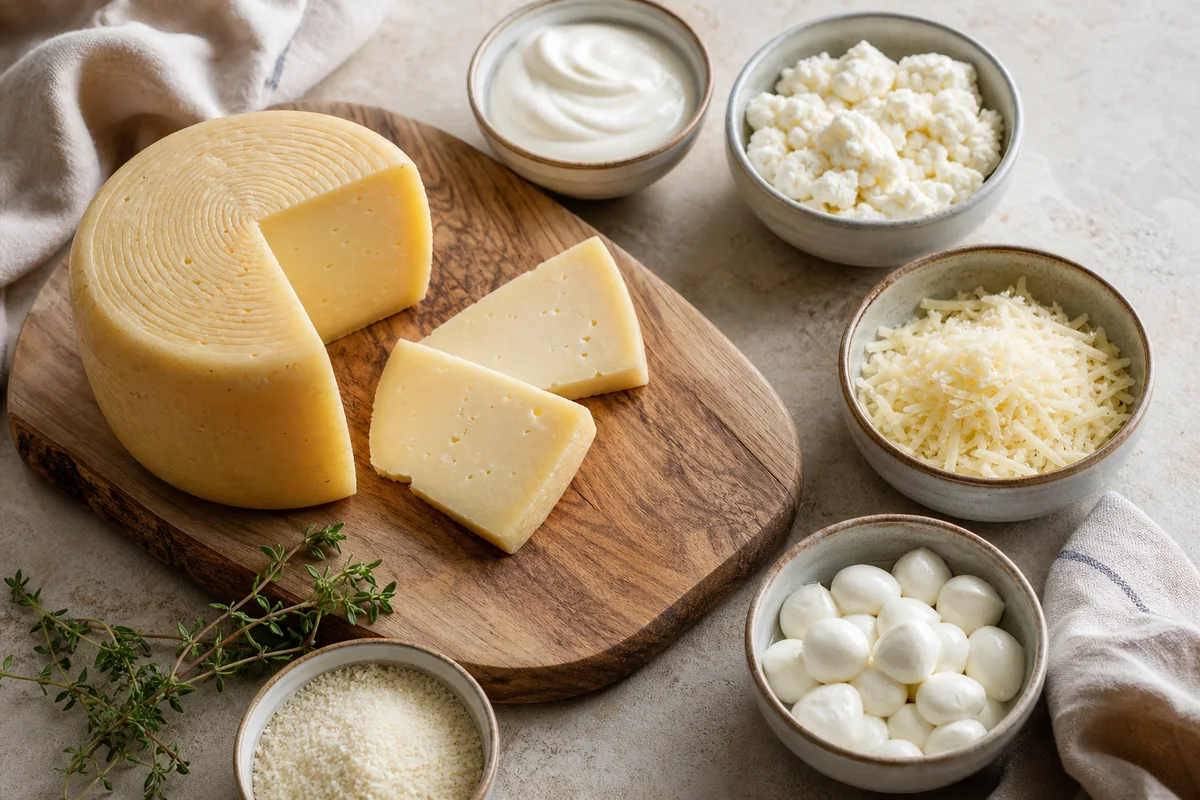
5 Best Caciotta Cheese Substitutes for Home Cooks
Ingredients
Method
- Decide your use: quick melt (sandwich) or longer bake (gratin/loaf), then choose the substitute that matches that melt behavior.
- Swap using the listed ratio: for direct melt recipes, use 1:1; for sharper cheeses, use the reduced ratio.
- For best texture, shred sliced cheeses and spread evenly so they melt in a thin layer instead of clumping.
- If the substitute tastes too sharp or salty, mix it with one neutral option (like mozzarella) before adding to the dish.
- If the substitute seems too firm, bake/heat a bit longer or cover the pan to trap moisture and improve melt.
Notes
- Caciotta is typically mild with a dependable melt; pick substitutes based on melt goal more than brand.
- Use finer shredding for a closer melt texture, especially with firmer cheeses.
Tried this recipe?
Let us know how it was!
Carrie is a food writer and editor with more than 15 years of experience. She has worked for some of the biggest names in the food industry, including Bon Appétit, Food & Wine, and Martha Stewart Living.
As the Editor in Chief of EpicureDelight, Carrie oversees all of the content on the site. She also manages the team of contributing writers and editors, who help to create delicious recipes, helpful tips, and informative articles that you’ll find on the site.
A native of the Chicago area, Carrie is passionate about all things food. She loves trying new restaurants and experimenting with new recipes in her kitchen. She’s also a graduate of the Culinary Institute of America, so she knows a thing or two about food!



