
Cascabel chiles have a personality that's harder to fake than most dried chiles. That rattle when you shake one isn't just novelty; the dried seeds signal a flavor that's genuinely earthy, gently toasted, and mild enough to let other ingredients breathe.
Finding a solid cascabel chili substitute means chasing those same qualities: mild heat, roasted depth, and a smooth body in sauces.
The good news is that several dried chiles land close. Guajillo and mulato are the first stops.
Ancho, New Mexico, and pasilla round out the dried-chile options. For powder-only emergencies, a cayenne-and-cumin blend can cover the heat gap, though it won't fully replace the roasted-chile character.
This article covers both dried-chile swaps and quick powder options, ranked by how close they get to cascabel's flavor in salsas, stews, and chile sauces.
Guajillo is the closest dried-chile swap for cascabel, matching its mild heat and earthy depth. Mulato and ancho are strong backup options. Pasilla goes darker. New Mexico keeps it simple and savory. For powder-only swaps, use cayenne plus cumin bloomed in oil.
5 Best Cascabel Chili Substitutes (Closest Match)
Cascabel's flavor profile sits in a specific zone: mild warmth, toasted nuttiness, and a smooth, slightly earthy finish. The table below maps each substitute against those markers.
If you want a deeper look at what makes those dried-chile traits tick, properly stored dried rounds hold flavor far longer than most cooks expect.
| # | Substitute | Best For | Ratio | Key Note |
|---|---|---|---|---|
| 1 | Guajillo | Both | 1:1 | Slightly tangier; roast first |
| 2 | Mulato | Both | 1:1 | Roasty, cocoa-leaning body |
| 3 | Ancho | Both | 1:1 | Milder, sweeter; reduce if needed |
| 4 | New Mexico | Both | 1:1 | Earthy, medium heat, simple |
| 5 | Pasilla | Both | 1:1 | Deeper, raisin-dark notes |
1. Guajillo Chiles
Guajillo is the dried chile most kitchens already have, and it earns the top spot for a reason. It is mild, earthy, and blends into sauces cleanly, which puts it right in cascabel's lane.
The one real difference is a fruity, tangy edge that can make a sauce taste slightly brighter or sharper than cascabel would.
A quick 10-20 second dry roast per side in a hot skillet pulls guajillo toward the toasted-earthy side and softens that brightness. If you're exploring picking a bolder red chile instead, guajillo still outperforms most options for this kind of swap.
- Flavor match: Earthy and mild with a tangy edge; roasting brings it closer to cascabel's nutty character
- Best for: Red salsas, chile sauces, enchilada bases, and braised meat
- Ratio: Use 1:1 by dried weight; if the sauce tastes sharp, reduce acid (vinegar or tomato) by about ¼
- Prep: Soak 10-15 minutes in hot water, then blend; roast first if you want a deeper toasted note
Skip if: your dish needs a neutral, roasty foundation with no brightness. Guajillo's tang may read noticeably sharper than cascabel in simple, light salsas.
2. Mulato Chiles
Mulato is quieter than guajillo but lands very close to cascabel in sauce texture and warmth. It leans toward roasty, cocoa-like depth rather than fruit, which makes it a natural fit for dark sauces, chili bases, and braises where cascabel's earthy smoothness is the whole point.
When blending, add the soaking liquid gradually. More liquid gives you a thinner, more cascabel-like body; less keeps it dense and concentrated.
For anyone deciding between dried chile options, swapping to a darker chile is often the smarter call for mole-adjacent dishes.
- Flavor match: Roasty and slightly cocoa-like; less bright than guajillo, very close to cascabel's mellow depth
- Heat: Mild, similar to cascabel; won't spike the heat unexpectedly
- Ratio and texture: Use 1:1 dried weight; blend with soaking liquid by tablespoon until you reach the body you want
Skip if: you need the sauce to stay light in color and flavor. Mulato pushes the dish noticeably darker and more chocolatey.
3. Ancho Chiles
Ancho is dried poblano, and it is widely available at most grocery stores. It brings real chile body to sauces, which makes it reliable when cascabel isn't on the shelf.
The catch is sweetness. Ancho runs milder and sweeter than cascabel, so it can tip a savory sauce in a direction that doesn't quite match.
A useful trick with ancho is to think of it as a flavor anchor for this earthy dried pepper's body, then correct the sweetness with less added tomato or a small amount of extra unsalted stock during blending.
| Use | Ratio | Notes |
|---|---|---|
| Chile sauce / paste | 1:1 | Ancho; reduce by 25% if sauce tastes too sweet |
| Chili bowl base | 1:1 | Ancho; add extra stock to thin and soften sweetness |
| Mole-style base | 1:1 | Ancho; works well, sweetness blends naturally here |
- Heat level: Milder than cascabel; if your recipe needs more warmth, add a small pinch of cayenne
- Sweetness control: If the dish tastes sweet, pull back by about ¼ of the ancho amount and add unsalted liquid
- Best for: Mole-like bases, red chili bowls, and braised proteins where mild depth is welcome
Skip if: the recipe depends on cascabel's savory-toasty quality. Ancho's sweetness can shift the whole flavor direction.
4. New Mexico Chiles
New Mexico chiles are a straightforward, reliable swap. They are earthy with medium warmth, and they blend into sauces without drama.
If you want a cascabel stand-in that doesn't ask much of you, this is it.
Start by working with this mild red chile the same way you would cascabel: soak, blend, taste. The earthiness is genuine, though it lacks cascabel's specific nutty, toasted note.
- Ratio: Use 1:1 dried weight as your baseline
- Soaking and blending: Soak 10-15 minutes in hot water; blend until smooth, then taste before adding to the dish
- If heat runs hot: Some New Mexico chile batches are warmer than expected; reduce by ¼ and add more soaking liquid to mellow
Skip if: you specifically need cascabel's toasted, nutty character. New Mexico reads more plainly earthy and won't give you that roasted roundness.
5. Pasilla Chiles
Pasilla brings a deeper, more complex flavor than most cascabel swaps. Think dried fruit, dark earth, and a slight raisin quality that shows up clearly in slow-cooked sauces and braises.
It is a great call when you want more flavor depth than cascabel typically provides.
Pasilla vs. Cascabel
Works for: dark chili bases, adobo sauces, braises, and stews where a richer, deeper flavor is welcome
Skip if: you need the lighter, roasted-and-nutty tone of cascabel; pasilla goes noticeably darker and fruitier
For stews and adobo-style sauces, pasilla can actually improve on cascabel. It pairs well with dishes that use bold sauce layers as a base.
- Flavor direction: Deep, raisin-like earth; more complex and darker than cascabel
- Ratio: Start at 1:1; if the flavor reads too intense, reduce to ¾ of the cascabel amount
- Liquid adjustment: Add a little extra soaking liquid during blending to smooth the intensity
- Best for: Stews, braises, adobo-style sauces, and slow-cooked chili bases
Making Cascabel Chili Substitutes Work
The method matters as much as the ingredient. For dried chiles, soak them in hot water for 10-15 minutes, then blend into a smooth paste, adding soaking liquid by the tablespoon to get the right body.
For powder swaps, bloom the spice in a teaspoon of oil for 20-30 seconds before mixing into your sauce; this removes raw harshness and mimics the toasted quality you'd get from a whole dried chile. Taste early.
Salt is almost always the first fix, and heat-forward spice swaps may also need a small acid adjustment if the dish tastes flat. If you're working with cumin as part of a powder blend, picking the right earthy base spice matters more than most cooks realize.
- Toast first: Dry-roast whole dried chiles 10-20 seconds per side in a hot skillet before soaking; this pulls out nutty, toasted notes that mimic cascabel's signature
- Thin with soaking liquid: Add the strained soaking water during blending to control body; it carries flavor that plain water doesn't
- Season at the end: Add salt for roundness, then a tiny pinch of acid (lime juice or a drop of vinegar) only if the substitute tastes flat or one-dimensional
Frequently Asked Questions
Yes, guajillo works at a 1:1 dried weight swap. It is slightly tangier than cascabel, so reduce added vinegar or bright tomato by a small amount if the sauce tastes too sharp.
Mulato is the best match for cascabel's roasted, nutty depth. Dry-roasting guajillo briefly in a skillet before soaking is a close second.
Start at ¾ of the cascabel amount and blend chipotle with extra water or stock. Adding more liquid dilutes the smoke without losing the chile flavor.
Tanginess usually comes from guajillo; reduce added acid in the recipe. Sweetness is typically ancho; cut the amount by 25% and thin with unsalted stock.
Yes, but the flavor is noticeably simpler. Use half the cascabel amount in mild chili powder plus a pinch of cumin, and bloom the blend in oil first.
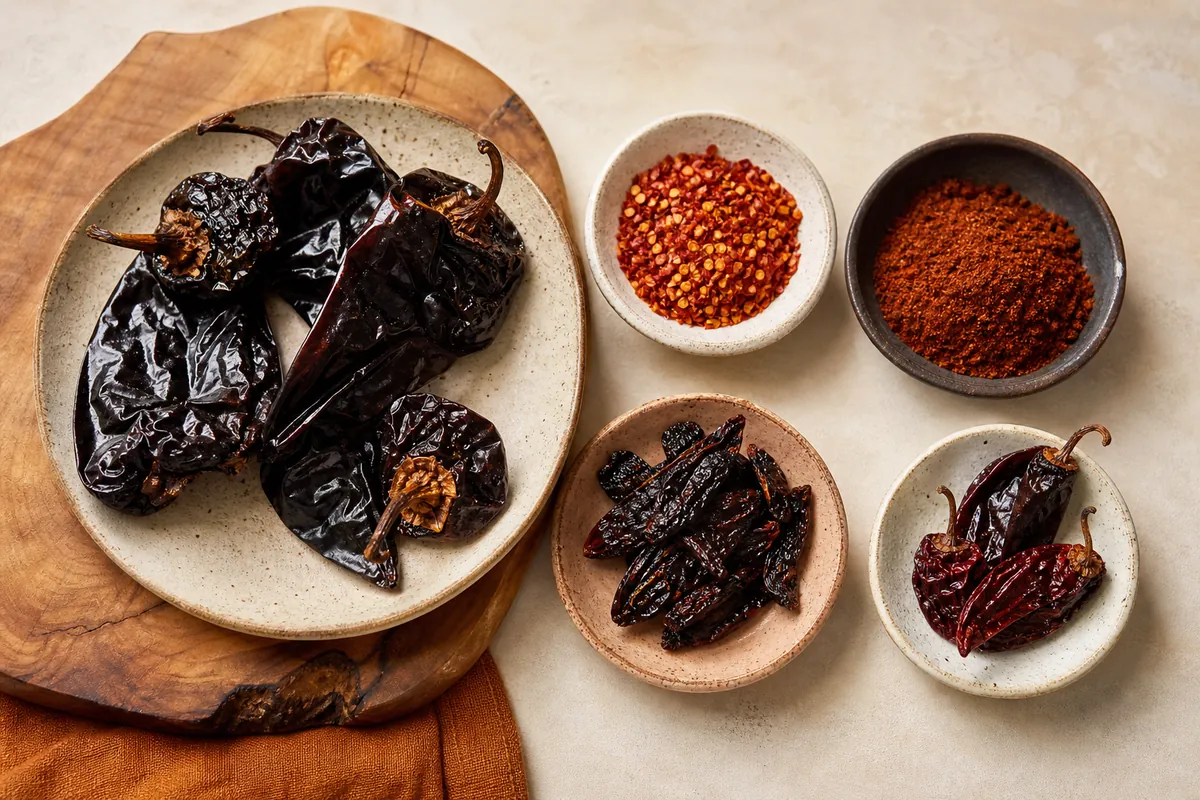
5 Best Cascabel Chili Substitutes (Closest Match)
Ingredients
Equipment
Method
- Soak dried chiles in hot water 10–15 minutes, then blend into a paste or sauce base; for jarred substitutions (chipotle), blend with a splash of soaking liquid.
- Start with the listed ratio for cascabel-style flavor, then taste—if you need more nutty toast, roast the dried substitute briefly in a dry pan before blending.
- If the substitute is tangier (often guajillo), reduce added vinegar/tomato brightness; if it’s smokier (chipotle), add a bit more water/stock to soften.
- Adjust seasoning at the end: add salt for roundness and a tiny pinch of acid only if the swap tastes flat.
Notes
- Ratio swaps assume you’re using the dried chile blended into sauce/paste; if using whole chiles, rehydrate first and blend to distribute flavor evenly.
- Taste early—cascabel can range mild-to-medium, so adjust the amount after soaking/blending.
Tried this recipe?
Let us know how it was!
Carrie is a food writer and editor with more than 15 years of experience. She has worked for some of the biggest names in the food industry, including Bon Appétit, Food & Wine, and Martha Stewart Living.
As the Editor in Chief of EpicureDelight, Carrie oversees all of the content on the site. She also manages the team of contributing writers and editors, who help to create delicious recipes, helpful tips, and informative articles that you’ll find on the site.
A native of the Chicago area, Carrie is passionate about all things food. She loves trying new restaurants and experimenting with new recipes in her kitchen. She’s also a graduate of the Culinary Institute of America, so she knows a thing or two about food!



