
That sharp, almost smoky punch you get from chile de arbol is not just heat. It is dried-chile character: a clean bite with earthy depth that generic hot sauce simply cannot replicate.
Finding a solid chile de arbol substitute means matching both of those qualities, not just reaching for the nearest spicy thing.
The ratio you use matters more than the substitute itself. Most options below perform best when dried, ground, or soaked before blending.
If your recipe calls for whole chiles in a sauce, pick a substitute you can actually rehydrate.
Chile de arbol delivers sharp, dry heat with earthy chile flavor. Cayenne is the fastest pantry swap. Dried bird's eye chili is the closest heat match. Guajillo plus cayenne gives the best flavor depth. Start lower on every ratio and build up gradually.
5 Best Chile De Arbol Substitutes Ranked by Heat and Flavor
The five options below are ranked by how closely they match arbol's heat-plus-dried-chile flavor. A short lead note per entry tells you which cooking context each one handles best.
| # | Substitute | Best For | Ratio | Key Note |
|---|---|---|---|---|
| 1 | Cayenne Pepper | Both | 1:1 | Add cumin for depth |
| 2 | Bird's Eye Chili (dried) | Both | ¾:1 | Soak before blending |
| 3 | Guajillo + Cayenne | Both | ¾:1 | Fruitier, needs acid finish |
| 4 | Chipotle Chili Powder | Both | ½:1 | Adds smoke, round heat |
| 5 | Pequin (dried, crushed) | Both | 1:1 | Toast first, then soak |
1. Cayenne Pepper
Cayenne is the first thing most cooks reach for, and it works well when your recipe blends the chile into a sauce or adobo. The heat level is close enough to arbol that a 1:1 start is fine.
The gap is flavor: cayenne lacks the earthy dried-chile complexity arbol brings on its own.
A small fix closes most of that gap. Add a pinch of cumin or a well-chosen smoky alternative after simmering and the sauce reads much closer to the original.
- In sauces and salsas: Blend cayenne with a bit of soaking liquid so it integrates rather than landing as a sharp spike of heat on the palate.
- As a powder swap: Use 1:1 for ground arbol powder; taste after the sauce simmers 2 minutes, then adjust.
- For dried-chile aroma: Add a small pinch of cumin at the end of cooking to layer in that missing earthiness.
Skip if: your recipe depends on the strained, complex dried-chile flavor of arbol in something like a refined red mole.
2. Bird's Eye Chili (Dried, Crushed)
Dried bird's eye chili sits closest to arbol in raw heat intensity. It has a clean, sharp bite without much smokiness, which makes it a natural match for salsas and braising liquids.
Because it can run hotter than arbol, the starting ratio is ¾:1.
Crush finely before using. Soak in warm water for 10-15 minutes, then blend with a small amount of that soaking liquid.
The soaking step removes woody bitterness and gives you a smoother, more integrated heat in the final sauce.
- Rehydration: Warm soak, 10-15 minutes, then drain and blend with 1-2 tablespoons of the soaking water.
- After blending: Simmer the sauce 2-3 minutes to soften the sharp edges.
- Ratio check: Start at ¾ of the arbol amount, then add a pinch more crushed chili only after tasting.
Skip if: your dish is meant to be mild or medium heat. Bird's eye can overshoot quickly, and pulling back is harder than building up.
3. Guajillo + Pinch of Cayenne
Guajillo on its own is fruitier and more gently smoky than arbol. It gives a sauce body and a slightly sweet, berry-forward finish.
That warmth is welcome, but arbol's sharpness is missing, so a small pinch of cayenne is what brings it back.
This combination works especially well in enchilada sauces and recipes where choosing a layered base chile matters more than raw heat. Use ¾ of the arbol amount for guajillo, then add cayenne to taste.
- Soak guajillo: 10-20 minutes in warm water until pliable, then blend with a splash of soaking liquid.
- Add cayenne: Start with ⅛ teaspoon per 2 dried guajillos and taste before adding more.
- Salt and acid: Guajillo reads sweeter than arbol, so finish with a small salt bump and a squeeze of lime.
Skip if: you need a sharp, bright arbol bite. Even with cayenne, guajillo steers the sauce warmer and fruitier.
4. Chipotle Chili Powder or Canned Chipotle
Chipotle brings real dried-chile character, but its defining trait is smoke. That smoke can be an asset in tacos, marinades, or black bean dishes.
In a delicate salsa verde, it will take over. The heat is rounder and slower than arbol's, so start at half the arbol amount.
Chipotle Chili Powder
Works for: marinades, adobos, braised meats, smoky sauces
Skip if: you need clean, bright arbol-style heat without smoke
Canned Chipotle in Adobo
Works for: rich sauces, bean dishes, thick dips needing smoke and body
Skip if: salt and sweetness from the adobo sauce would unbalance the dish
If you are using canned chipotle, reduce the adobo sauce separately before adding it. Too much adobo liquid makes the dish salty and sweet fast.
For picking the right chipotle form, powder gives cleaner control than canned.
- Start low: ½ teaspoon chipotle powder per 2 arbol chiles called for.
- Balance the smoke: Add a small squeeze of lime or a splash of cider vinegar after simmering.
- Build heat: Add cayenne in ⅛ teaspoon increments if the sauce feels flat after tasting.
5. Pequin Chili (Dried, Crushed)
Pequin is the substitute on this list that feels most like arbol. Both are small, dried, and carry a sharp heat with genuine earthy chile flavor.
Pequin can actually run slightly hotter than arbol, but the flavor profile sits close enough that a 1:1 ratio works as a starting point.
Toast whole pequin chiles briefly, around 10-15 seconds in a dry pan, before soaking. That short toast opens up the dried-chile aroma without burning the skin.
Soak for 10 minutes, then blend into your sauce for smooth, well-integrated heat. For other dried pepper options when pequin is also unavailable, crushed flakes are the next step down.
If bitterness shows up in the blended sauce, simmer 2-3 minutes longer and adjust with a small pinch of salt. A few drops of lime juice will also cut bitterness cleanly.
Skip if: you are using the chile as a garnish rather than blending it. Whole or coarsely crushed pequin stays gritty and sharp in that context.
Making Chile De Arbol Substitutes Work
The method is the same regardless of which substitute you choose: start below the listed ratio, rehydrate and blend thoroughly, then taste and adjust at the end. A sharp, pungent dried chile behaves differently in a blended sauce than it does in a dry rub, so building heat gradually is always safer than correcting an over-spiced batch.
If the sauce runs too hot, dilute it with unsalted tomato or stock before adding more acid.
- Toast and soak first: Dry-toast whole or crushed dried chiles 10-20 seconds, then soak 10-15 minutes in warm water before blending for a smoother, less bitter result.
- Simmer after blending: Cook the blended sauce 2-3 minutes to round off harsh or sharp spice notes and let the flavors bind.
- Finish with salt and acid: Taste at the end. If the sauce is flat, add salt first. If it tastes dull or one-dimensional, a small squeeze of lime or a splash of vinegar brings it forward.
Frequently Asked Questions
Yes, a 1:1 start is generally safe for ground cayenne or cayenne flakes. Add a pinch of cumin after simmering to recover some of the dried-chile earthiness arbol provides.
Yes, soaking whole or crushed dried chiles for 10-20 minutes before blending removes woodiness and produces a smoother sauce. Skip soaking only if you are using finely ground powder.
Rehydrated guajillo plus a pinch of cayenne gives the best body and flavor for blended salsas. It thickens similarly to arbol when properly soaked and blended.
Simmer the sauce 2-3 extra minutes after adding the flakes, then adjust with a small pinch of salt and a few drops of lime juice. Grinding the flakes before soaking also helps.
Yes, but start at half the arbol amount since chipotle is smokier and has a rounder, slower heat. Balance the result with a small acid finish like lime juice.
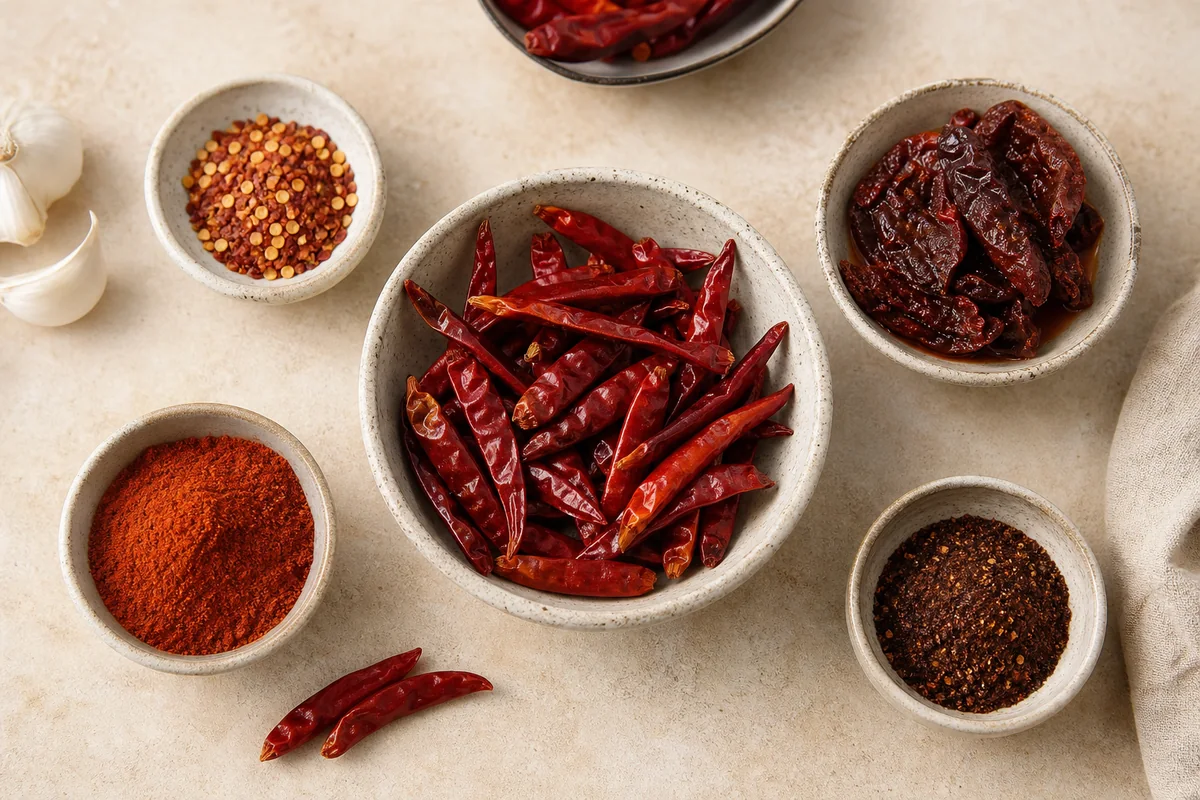
5 Best Chile De Arbol Substitutes for Better Results
Ingredients
Equipment
Method
- Match your use: if you’re blending into a sauce/salsa, choose a dried-chile (or ground) option that rehydrates well.
- Start with the listed ratio; if your dish is sensitive (tacos, light salsas), use the lower side and build heat gradually.
- If using whole dried chiles or dried flakes, briefly toast 10–20 seconds, then soak 10–15 minutes before blending for a smoother, less gritty sauce.
- Simmer the sauce 2–3 minutes after adding the substitute to round off harsh spice notes.
- Taste at the end: for more chile flavor add a bit more substitute; for more heat add cayenne in tiny pinches rather than doubling everything at once.
Notes
- For sauces/salsas: rehydrate and blend for best texture match.
- For powders: start with the lower ratio and add at the end to avoid bitterness.
Tried this recipe?
Let us know how it was!
Carrie is a food writer and editor with more than 15 years of experience. She has worked for some of the biggest names in the food industry, including Bon Appétit, Food & Wine, and Martha Stewart Living.
As the Editor in Chief of EpicureDelight, Carrie oversees all of the content on the site. She also manages the team of contributing writers and editors, who help to create delicious recipes, helpful tips, and informative articles that you’ll find on the site.
A native of the Chicago area, Carrie is passionate about all things food. She loves trying new restaurants and experimenting with new recipes in her kitchen. She’s also a graduate of the Culinary Institute of America, so she knows a thing or two about food!



